Head to head
Linen vs Cotton Yarn
Two plant fibers. One is at its best on day one, the other after five years.
By Sawyer V. · Published September 6, 2026
Disclosure: we earn a commission when you buy through the links on this page, at no extra cost to you. It never decides what we recommend or how we rank it - read the full disclosure.
The short answer
Linen is stronger, drapes better and gets softer with every wash, but starts stiff and costs several times as much. Cotton is soft immediately, cheap and widely stocked, but weaker and heavier for its bulk. Use linen for garments and bags you intend to keep; use cotton for cloths, first projects and anything where cost matters.
The comparison
| Linen | Cotton | |
|---|---|---|
| Fiber source | Flax stem (bast fiber) | Cotton seed pod (seed fiber) |
| Fiber length | Long - up to the height of the plant | Short - typically under 2in |
| Strength | Very high; higher still when wet | High; higher when wet |
| Drape | Excellent, and improves | Good, and heavy with it |
| Feel when new | Stiff, almost wiry | Soft immediately |
| Feel after 20 washes | Noticeably softer | Slightly softer, then stable |
| Absorbency | High | High |
| Elasticity | None at all | None at all |
| Creasing | Creases readily; part of the look | Creases less |
| Pilling | Almost none - fibers too long | Low |
| Cost | High | Low |
| Availability | Specialist shops | Every craft shop |
The difference comes from fiber length
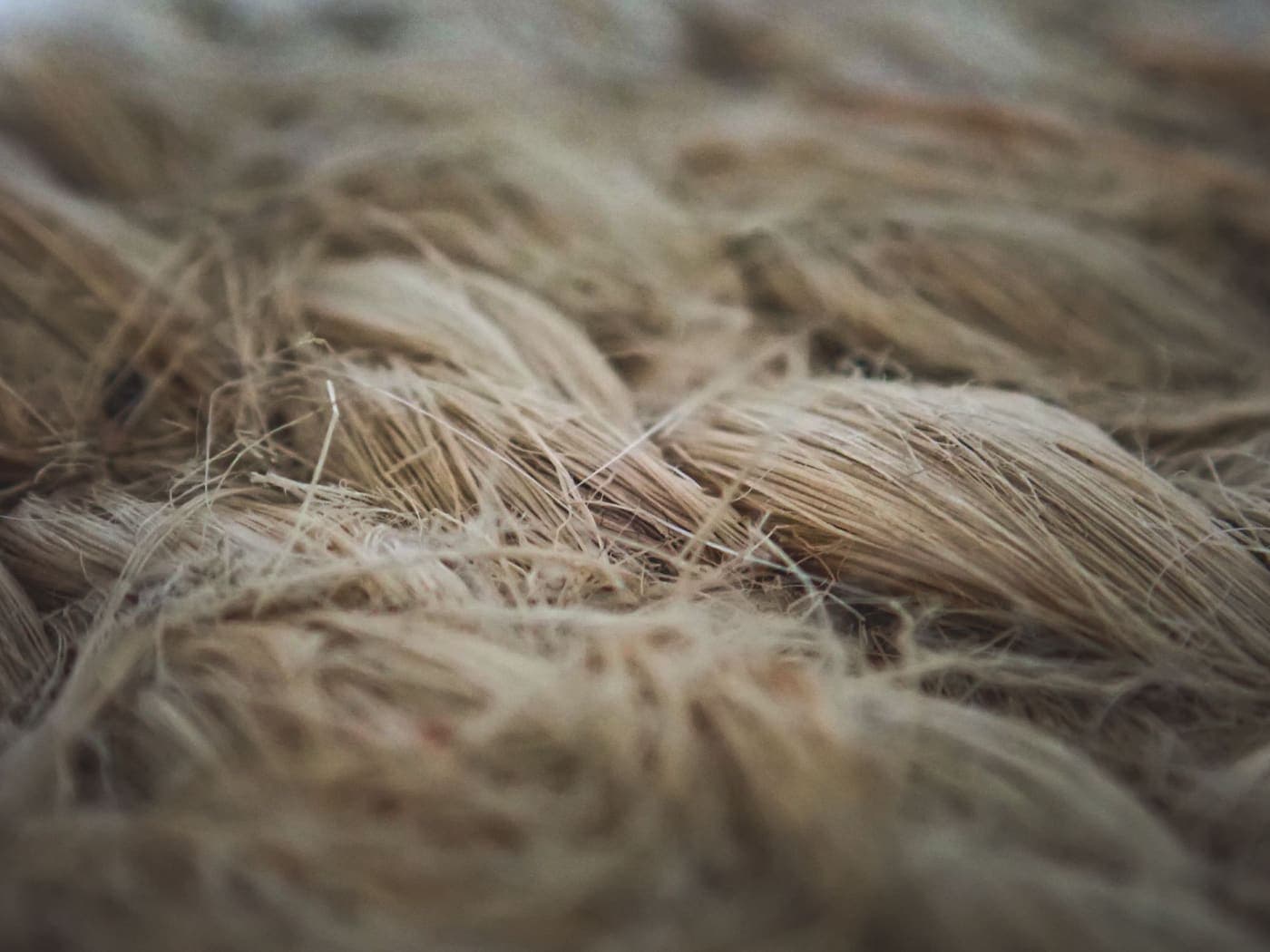
Almost everything in that table follows from one structural fact. Linen is a bast fiber taken from the stem of the flax plant, and the fibers are long - in wet-spun long-line linen such as Euroflax, they are not cut at all. Cotton is a seed fiber and the individual fibers are short, typically under two inches.
Long fibers make a strong, smooth yarn with very few fiber ends poking out of it. Short fibers make a softer, fuzzier yarn with a great many ends - which is why cotton feels nicer immediately and why it is the one that eventually gets fuzzy.
Linen softens; that is the whole pitch
A new linen garment feels stiff, and people who have not used it before frequently conclude the yarn is unpleasant. It is not - it is unfinished.
Linen fibers soften mechanically as they are flexed, so every wash and every wearing makes the fabric more supple. A linen top is at its worst the day you finish it and at its best after several years. That is a genuinely unusual property; almost every other textile degrades with use.
The practical consequence for a knitter or crocheter: block it, wash it, and judge it after the second wash rather than off the needles.
Where linen wins
- Summer garments. Breathable, absorbent, and it hangs beautifully as it relaxes.
- Market bags and totes. Strongest common plant fiber, and stronger wet - see best yarn for a market bag.
- Dish towels. Linen dries faster than cotton and lints less.
- Anything with drape. Linen falls in soft folds where cotton sits heavily.
- Things you want to keep for decades. It genuinely outlasts cotton.
Where cotton wins
- Dishcloths and washcloths. Cotton is more absorbent per gram and more scrubby - see best yarn for dishcloths.
- First projects. Cheap, forgiving of a mistake, available everywhere.
- Amigurumi. Crisp stitch definition, and cotton's slight fuzz helps hide a join.
- Anything on a budget. Cotton costs a fraction as much per yard.
- Colorwork and bright shades. Mercerized cotton holds saturated dye better than linen.
Both share the same weakness
Neither has any elasticity. There is no crimp in a plant fiber, so a stretched stitch stays stretched, ribbing does not grip and a heavy garment lengthens under its own weight.
The mitigation is the same for both: work at a firmer gauge than the band suggests, choose patterns that do not depend on ribbing to fit, and dry flat rather than hanging. Cotton yarn pros and cons covers this in full and every word applies to linen.
Working with linen, practically
- Expect it to fight you for an hour. Wet-spun linen is wiry off the ball. Your hands adjust.
- Use a smooth metal needle or hook. Linen is inelastic and grabby - the same argument as best needles for cotton yarn.
- Wind it into a cake. Linen sold in hanks is stiff enough that winding it is genuinely easier than working from the hank. See best yarn swifts.
- Wash the swatch, twice. Linen changes more between the first and second wash than most fibers do. Measure gauge after.
- Do not judge the fabric until it is washed. Off the needles, linen looks like a mistake.
Blends, which are common and sensible
Linen-cotton and linen-viscose blends exist in quantity, and they are a reasonable answer to linen's two problems - price and initial stiffness.
As with every blend, read the percentages rather than the name. A yarn that is 15 percent linen behaves essentially like the majority fiber; at 50 percent you get a genuine midpoint. The same arithmetic applies as in wool-acrylic blends.
The yarns behind this comparison
- No photo
Louet Euroflax Linen
Wet-spun long-line linen, sport weight, 270yd per 100g - the reference linen for this comparison.
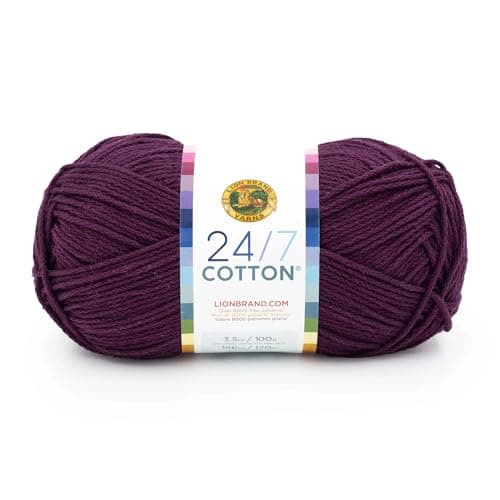
Lion Brand 24/7 Cotton
Mercerized cotton, worsted weight - the closest cotton gets to linen's smoothness and strength.
$6.99 - View on Amazon#ad disclosure - price as of October 21, 2026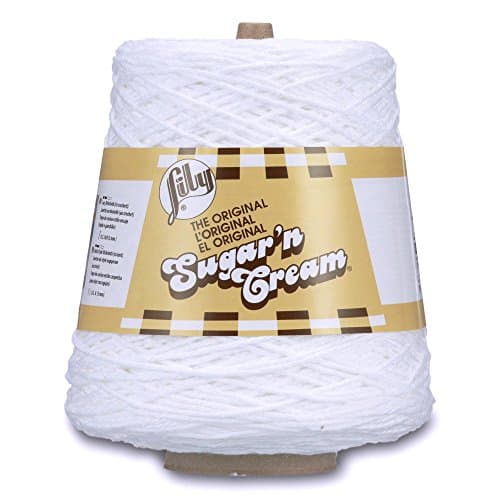
Lily Sugar'n Cream
Untreated cotton at the other end of the range: absorbent, matte, cheap, and softest immediately.
$17.88 - View on Amazon#ad disclosure - price as of October 21, 2026
Questions people actually ask
Is linen or cotton yarn better?
Linen is stronger, drapes better and softens with every wash; cotton is cheaper, softer immediately and available everywhere. Use linen for garments and bags you intend to keep, cotton for cloths, first projects and anything cost-sensitive.
Why is linen yarn so stiff?
Because the flax fibers are long and have not been broken down. Linen softens mechanically as it is flexed, so every wash and wearing makes it more supple - it is at its worst on day one.
Is linen yarn hard to knit with?
For the first hour, yes. It is wiry and completely inelastic, so it takes more force per stitch. A smooth metal needle helps, and most people adjust within a project.
Does linen yarn shrink?
Slightly on the first wash, then it is stable - the same one-time settling as cotton. It does not felt, and it will not shrink progressively the way untreated wool can.
Is linen yarn worth the price?
For anything you plan to keep for years, yes - it outlasts cotton and improves rather than degrading. For a dishcloth or a first project it is money spent on properties you will not use.