Guide
Best Needles for Cotton Yarn
Cotton does not give. That single fact reverses most of the usual needle advice.
By Sawyer V. · Published September 6, 2026
Disclosure: we earn a commission when you buy through the links on this page, at no extra cost to you. It never decides what we recommend or how we rank it - read the full disclosure.
The short answer
Use a smooth metal needle with a moderate point. Cotton has no elasticity, so every stitch is worked at exactly the size your needle makes it and nothing can be eased - a slick surface reduces the force each stitch takes. Start at the ball band size and go down half a size if the fabric is floppy.
The property that changes everything: no give
Wool has crimp, which acts as a spring. Acrylic has some stretch. Cotton has neither. A cotton stitch sits where the needle put it and will not be persuaded to be a fraction bigger or smaller.
Three consequences follow, and they are the whole of this page.
- Every stitch takes more force. There is no give to absorb a slightly tight moment, so your hands do the work instead.
- Gauge is exact and unforgiving. You cannot block a cotton garment into shape the way you can block wool. See gauge and swatching.
- A tight stitch stays tight. If you strangle a stitch you will have to work into that exact hole on the next row, at the size you left it.
Why metal, when the usual advice is bamboo
Our bamboo versus metal page frames the choice as grip against glide, matched to your tension and your yarn. Cotton shifts the balance decisively toward glide.
Cotton is already a grabby fiber - it has a matte, slightly fuzzy surface and it does not slide easily. Adding a grippy needle to a grabby yarn means every stitch fights you twice. A polished metal needle is the counterweight.
| Material | With cotton | Buy it if |
|---|---|---|
| Stainless steel | Slickest; least force per stitch | You knit at average or tight tension |
| Nickel-plated brass | Very slick, slightly warmer in the hand | Cold metal bothers you |
| Anodized aluminum | Slick and cheap | You want one size for one dishcloth |
| Laminated birch | Some grip; slower | You knit loosely and drop stitches |
| Bamboo | Most grip; slowest | You are a beginner, or working very fine cotton |
The exception is a genuinely loose knitter. If your stitches slide off the tip, grip beats glide regardless of fiber - that is the same logic the beginners page uses.
Points: moderate, not lace-sharp
Cotton is usually plied firmly and mercerized cotton is smooth, so splitting is less of a risk than with a soft wool single. That argues for a sharper tip.
But cotton's stitches are tight and unyielding, and a very sharp point pushed into a tight stitch goes through your fingertip rather than through the yarn. A moderate taper is the comfortable middle. If you are working cotton lace, that changes - see best knitting needles for lace.
Sizes, and the half-size trick
Cotton ball bands quote a gauge like any other yarn - Lion Brand 24/7 Cotton is 19 stitches to 4in on 5mm; Lily Sugar'n Cream is 20 stitches to 4in on 4.5mm. Those figures are honest starting points and cotton is the fiber most likely to need adjusting from them.
- Garments: start at the band size, then go down half a size if the fabric drapes limply. Cotton is heavy and a loose fabric will stretch downward and stay stretched.
- Dishcloths and washcloths: the band size, or slightly under. A denser fabric scrubs better and lasts longer. See best yarn for dishcloths.
- Market bags: two or three sizes up, deliberately, to make an open mesh that stretches over its contents. See best yarn for a market bag.
- Amigurumi in cotton: one or two sizes down, so stuffing does not show.
Those weight categories come from the Craft Yarn Council standard.
Look after your hands
This is the part cotton advice usually skips. An inelastic yarn worked at a firm gauge is measurably harder on wrists and thumbs than wool, and a large cotton project is where people first notice repetitive strain.
Three things help, in order of effect: a slicker needle, a slightly larger needle, and shorter sessions. Our needles for arthritis page is written for painful hands but the load-reduction advice applies to anyone knitting a lot of cotton.
Mercerized or not changes the answer slightly
Mercerized cotton is treated under tension, which leaves it smoother, stronger and more lustrous. It slides better than untreated cotton, so the needle has less work to do.
Untreated cotton - the classic dishcloth yarn - is fuzzier and grabbier, and it is where a slick needle earns its keep most. The full comparison is in cotton vs acrylic and cotton yarn pros and cons.
What we would buy for cotton
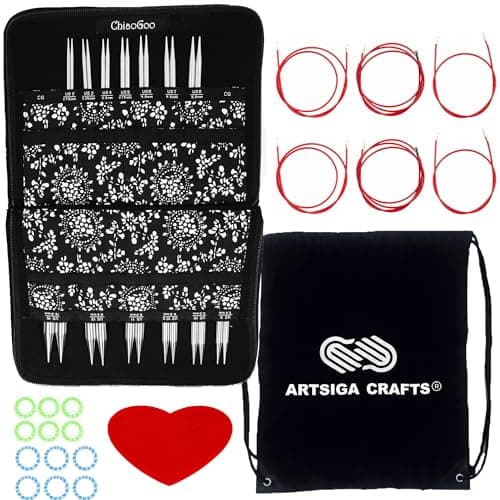
ChiaoGoo TWIST Red Lace Interchangeable Set (Complete, 5in tips)
Slick stainless with a moderately sharp point - the combination that moves an inelastic yarn along with the least force.
$216.80 - View on Amazon#ad disclosure - price as of October 22, 2026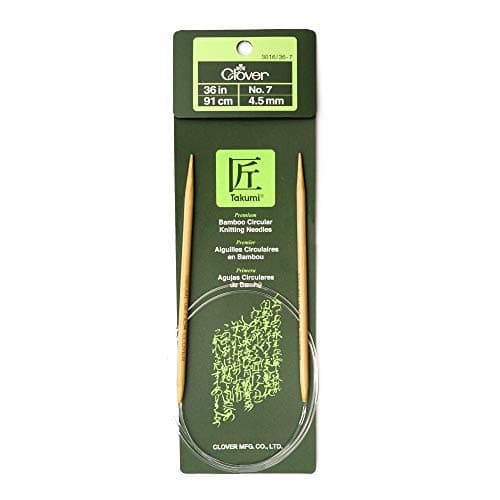
Clover Takumi Bamboo Circular Needles
The opposite answer, for a tight knitter: bamboo slows cotton down, which some people need rather than resent.
$9.86 - View on Amazon#ad disclosure - price as of October 22, 2026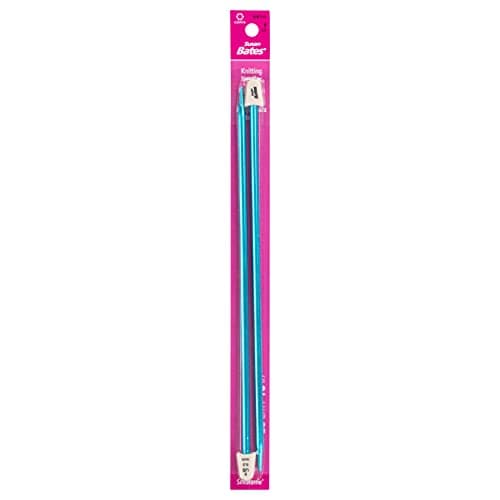
Susan Bates Silvalume Single Point Knitting Needles
The cheap way to own one size for a dishcloth or a washcloth, in slick anodized aluminum.
$8.12 - View on Amazon$8.686% off · #ad disclosure - price as of October 22, 2026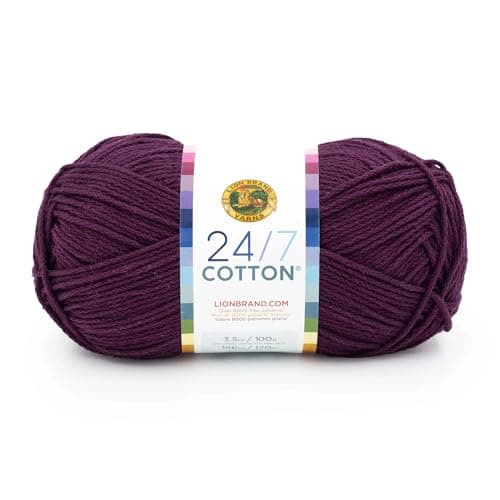
Lion Brand 24/7 Cotton
Mercerized cotton - smoother and stronger than untreated, and much kinder to work with.
$6.99 - View on Amazon#ad disclosure - price as of October 22, 2026
Questions people actually ask
What knitting needles are best for cotton yarn?
Smooth metal with a moderate point. Cotton is a grabby, inelastic fiber, so a slick surface reduces the force each stitch takes. Bamboo is the exception for very loose knitters who drop stitches.
What size needles for cotton yarn?
Start at the ball band figure - around 4.5mm to 5mm for worsted cotton - then go down half a size if the fabric hangs limply, or two or three sizes up if you want an open mesh for a bag.
Why is cotton yarn hard to knit with?
It has no elasticity. Every stitch is worked at exactly the size the needle makes it, nothing can be eased, and your hands supply the force a springy fiber would otherwise absorb.
Do bamboo needles work with cotton?
They work, and they are slower. Bamboo grips and cotton is already grabby, so most knitters find the combination hard work. It suits a loose knitter who drops stitches off metal.
Can you block cotton knitting?
Only a little. Cotton sets by drying flat rather than being reshaped, so unlike wool it cannot be blocked into the measurements you wanted. Get the gauge right before you start.
Sources
- ChiaoGoo TWIST Red Lace Complete interchangeable set specification
- Clover Takumi bamboo circular needles
- Susan Bates Silvalume single point needles - retail specification
- Lion Brand - 24/7 Cotton specification
- Yarnspirations - Lily Sugar'n Cream specification
- Craft Yarn Council - Standard Yarn Weight System