Guide
Best Needles for Acrylic Yarn
Slippery enough to slide, soft enough to split. Blunt and grippy beats sharp and fast.
By Sawyer V. · Published September 4, 2026
Disclosure: we earn a commission when you buy through the links on this page, at no extra cost to you. It never decides what we recommend or how we rank it - read the full disclosure.
The short answer
Use bamboo or wood tips with a moderate rather than sharp point. Acrylic is smooth enough that stitches slide off metal, and softly-spun enough that a very sharp point splits the plies rather than picking up the whole strand. For worsted acrylic, 5 to 5.5mm - which is what most acrylic labels suggest.
| # | Product | Best for | Material | Sizes | Price |
|---|---|---|---|---|---|
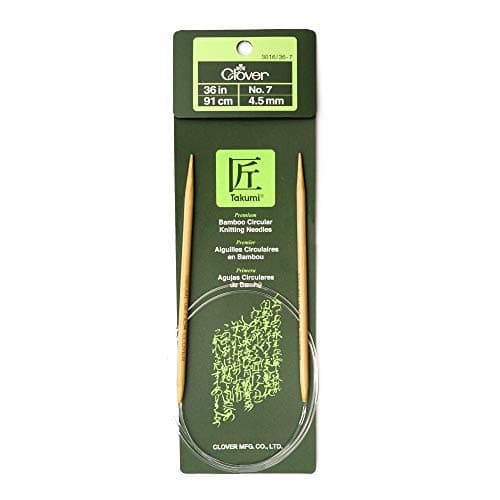
| 1 | Clover Takumi Bamboo Circular NeedlesBamboo grip and a moderate point - the natural match for smooth acrylic. | Acrylic that slides | Bamboo | 2.00-15.00mm, 9-36in | $9.86 - View on Amazon#ad disclosure - price as of October 20, 2026 |
| 2 | 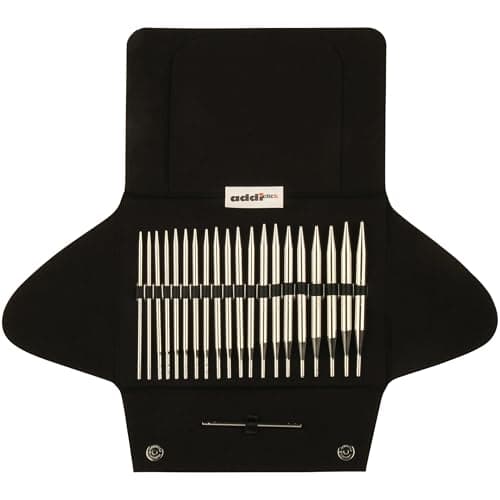 addi Click Turbo Interchangeable Needle SetBlunt Turbo tips do not split soft acrylic, and metal keeps the pace up. addi Click Turbo Interchangeable Needle SetBlunt Turbo tips do not split soft acrylic, and metal keeps the pace up. | Speed without splitting | Nickel-plated brass | US 4-15 (3.5-10mm) | $216.00 - View on Amazon#ad disclosure - price as of October 20, 2026 |
| 3 | 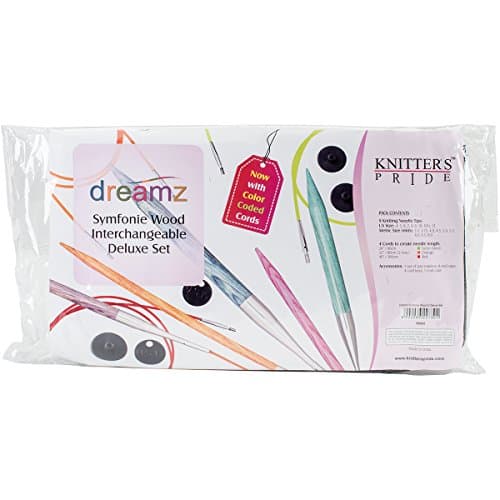 Knitter's Pride Dreamz Deluxe Interchangeable SetWood tips across nine sizes - grip and a moderate point, in set form. Knitter's Pride Dreamz Deluxe Interchangeable SetWood tips across nine sizes - grip and a moderate point, in set form. | A full range with grip | Laminated birch | US 4-11 (3.5-8.0mm) | Check price on Amazon#ad disclosure |
| 4 | 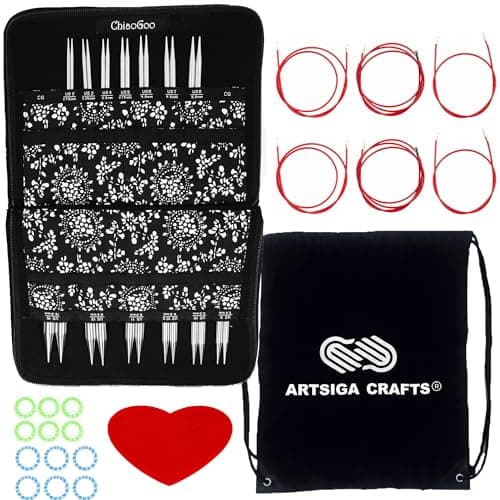 ChiaoGoo TWIST Red Lace Interchangeable Set (Complete, 5in tips)Our overall best set, and lace-sharp tips are the wrong profile for splitty acrylic. ChiaoGoo TWIST Red Lace Interchangeable Set (Complete, 5in tips)Our overall best set, and lace-sharp tips are the wrong profile for splitty acrylic. | Not soft acrylic | Stainless steel | US 2-15 (2.75-10mm) | $216.80 - View on Amazon#ad disclosure - price as of October 20, 2026 |
Clover Takumi Bamboo Circular Needles
Clover · Best for acrylic that slides
Fixed-length bamboo circulars with tapered tips and a soft cord - the grippiest tip material on this page, sold one length and size at a time.
- Material
- Bamboo tips, flexible soft cord
- Point
- Tapered
- Sizes
- No. 0 (2.00mm) to No. 19 (15.00mm)
- Cable lengths
- 9in, 16in, 24in, 29in, 36in
- Sold as
- Fixed circular, one size and length per pack
Who it suits
Anyone knitting a large acrylic project, which is most blanket and afghan knitters.
Why it is here
Bamboo tips with tapered rather than sharp points. Acrylic is smooth enough that stitches slide on metal, and soft enough that a very sharp point splits the plies - bamboo avoids both problems at once.
What you give up
Slower than metal, and one size and length per needle. On a blanket the speed difference adds up.
Specifications from Clover Takumi bamboo circular needles. We have not handled this item - see how we pick.
addi Click Turbo Interchangeable Needle Set
addi · Best for speed without splitting
Ten pairs of blunt-tipped nickel-plated tips joined by a twist-and-click mechanism instead of a screw thread.
- Tips
- 10 pairs, 5in, US 4-15 (3.5-10mm)
- Tip finish
- Nickel plated, Turbo (blunt) point
- Join
- Twist-and-click locking mechanism, no key needed
- Cords
- 3 cords making 24in, 32in and 40in circulars
- Also included
- Click connector and addiGrip tip handle
Who it suits
Anyone who wants metal speed on a long acrylic project and has been fighting split stitches.
Why it is here
Nickel-plated tips with a deliberately blunt Turbo point. Blunt is the right profile for loosely-plied acrylic, and the click join means no key to lose over a long project.
What you give up
Metal is slippery, so a loose knitter will still drop stitches. And blunt tips are poor for any lace panel in the pattern.
Specifications from addi Click Turbo set specification. We have not handled this item - see how we pick.
Knitter's Pride Dreamz Deluxe Interchangeable Set
Knitter's Pride · Best for a full range with grip
Nine pairs of laminated-birch tips, color-coded by size, on swivel cables - the usual first interchangeable set for anyone who does not get on with metal.
- Tips
- 9 pairs, 4.5in, US 4-11 (3.5-8.0mm)
- Tip material
- Densified laminated birch, polished
- Cables
- Nylon-coated stainless steel, 360-degree swivel, silver connectors
- Color coding
- A different wood color per size
- Join
- Screw join, key supplied
Who it suits
Anyone knitting acrylic regularly who wants a full range rather than buying singles.
Why it is here
Laminated birch tips, US 4-11, on swivel cables. Wood grip suits acrylic for the same reason bamboo does, and the swivel cables help on the long projects acrylic is usually used for.
What you give up
Stops at US 11 (8mm), so a super bulky acrylic blanket needs a separate needle.
Specifications from Knitter's Pride Dreamz Deluxe set specification. We have not handled this item - see how we pick.
ChiaoGoo TWIST Red Lace Interchangeable Set (Complete, 5in tips)
ChiaoGoo · Best for not soft acrylic
Thirteen pairs of surgical stainless lace tips on memory-free red nylon-coated steel cables, with a lifeline hole through every tip.
- Tips
- 13 pairs, 5in (13cm), US 2-15 (2.75-10mm)
- Tip material
- Surgical-grade stainless steel, lace point
- Cables
- Multi-strand steel core, red nylon coating; 2 x 14in, 2 x 22in, 2 x 30in
- Notable
- Lifeline hole in each tip; memory-free cable
- Also included
- Stitch markers, two keys, needle gauge, stoppers, connector, case
Who it suits
Not for plain acrylic work, despite being an excellent set. Use it for wool, lace and fine work.
Why it is here
Surgical stainless lace tips - deliberately sharp. Sharp points slide between the plies of a loosely-spun acrylic instead of picking up the whole strand, which is the classic acrylic splitting complaint.
What you give up
If you own it and are splitting stitches, a firmer, more tightly-plied acrylic will help - or use it for the wool projects and keep a bamboo circular for acrylic.
Specifications from ChiaoGoo TWIST Red Lace set specification. We have not handled this item - see how we pick.
Acrylic's two awkward properties
It is smooth. Acrylic is an extruded filament with a slick surface, so stitches move easily on a metal needle - and slide off the tip if your tension is loose.
It splits. The softer acrylics are spun with a low twist to feel pleasant, and low twist means the plies separate. A sharp needle tip goes between them instead of under the whole strand.
Bamboo and wood address both at once: they grip enough to hold stitches, and they are not made in a lace-sharp profile. That is why they are the recommendation here even though metal is the general-purpose default.
The yarn matters as much as the needle
Not all acrylic splits equally, and choosing a firmer yarn is often a better fix than changing needles:
| Yarn | Character | Splitting |
|---|---|---|
| Lion Brand Basic Stitch Anti-Pilling | Smooth, tightly constructed | Low - the tight construction holds the plies together |
| Red Heart Super Saver | Firm, coarser hand | Low - firm twist |
| Lion Brand Heartland | Soft, looser | Moderate |
| Caron Simply Soft | Very soft and lofty | Higher - softness comes from low twist |
If you are two rows into a project and splitting constantly, changing the yarn is faster than changing the needle. See best yarn for beginners for the firmer options.
Size
The standard puts worsted at 4.5 to 5.5mm (US 7-9). Most acrylic yarn labels suggest the middle or upper part of that:
| Yarn | Published needle | Published knit gauge |
|---|---|---|
| Red Heart Super Saver | 5mm (US 8) | 17 sts x 23 rows / 4in |
| Caron Simply Soft | 5mm (US 8) | 18 sts x 24 rows / 4in |
| Lion Brand Basic Stitch Anti-Pilling | 5mm (US 8) | 18 sts x 26 rows / 4in |
| Lion Brand Heartland | 5.5mm (US 9) | 16 sts x 22 rows / 4in |
5mm is the consensus starting point. Go up for drape on a blanket; go down for a denser fabric on a bag or a toy.
The other acrylic property that changes your planning
Acrylic does not block. Wetting and pinning acrylic does very little, and steam blocking permanently relaxes the fiber - a one-way change knitters call killing the acrylic.
That means the fabric you knit is the fabric you get: uneven tension will not even out, and a shape that depends on blocking will not appear. Practically, it argues for going up a needle size rather than down, since a slightly loose acrylic fabric is more forgiving than a tight one that cannot be relaxed. The full picture is in acrylic vs wool.
How we picked
We ranked tip material and point profile against acrylic's two failure modes, and cross-checked sizing against the yarn labels' own published recommendations. We have not knitted with any of these needles. How we pick is the method.
Questions people actually ask
What needles are best for acrylic yarn?
Bamboo or wood with a moderate point. They grip enough that stitches do not slide off, and they are not sharp enough to split loosely-plied acrylic.
Why does my acrylic yarn split when knitting?
Soft acrylics are spun with a low twist, so the plies separate easily and a sharp needle tip goes between them. A blunter tip and a more tightly-plied yarn both fix it.
What size needles for worsted acrylic?
5mm (US 8) is the consensus on most acrylic labels. The standard range for worsted is 4.5 to 5.5mm, so 5.5mm is right if you want a drapier fabric.
Can you block acrylic?
Not with water in the way wool blocks. Acrylic can be steam blocked, which permanently relaxes the fiber into a softer, drapier fabric - a one-way change that cannot be reversed.
Are metal needles bad for acrylic?
Not bad, just less suited. Acrylic is smooth, so stitches slide on metal - which is fine if you knit tightly and a problem if you knit loosely. If you use metal, choose a blunt point rather than a sharp one.
Sources
- Craft Yarn Council - Standard Yarn Weight System
- Clover Takumi bamboo circular needles
- addi Click Turbo interchangeable set specification
- Knitter's Pride Dreamz Deluxe interchangeable set specification
- ChiaoGoo TWIST Red Lace Complete interchangeable set specification
- Yarnspirations - Red Heart Super Saver specification
- Yarnspirations - Caron Simply Soft specification
- Lion Brand - Basic Stitch Anti-Pilling specification
- Lion Brand - Heartland specification