Head to head
Bamboo vs Metal Knitting Needles
One grips, one glides. Your tension decides which one is helping you.
By Sawyer V. · Published September 4, 2026
Disclosure: we earn a commission when you buy through the links on this page, at no extra cost to you. It never decides what we recommend or how we rank it - read the full disclosure.
The short answer
Bamboo grips the yarn and metal lets it slide. If you knit loosely or use slippery yarn, bamboo stops stitches falling off the tip. If you knit tightly or use grabby wool, metal moves the stitches along without a fight. Beginners should start with bamboo, because uneven tension plus a slippery needle means dropped stitches.
This is the most-asked needle question and the answer is genuinely not preference - it is a match between the needle's surface and your own tension.
The comparison
| Bamboo / wood | Metal | |
|---|---|---|
| Surface | Grippy | Slick |
| Speed | Slower | Faster |
| Dropped stitches | Rare - stitches stay put | More likely with loose tension |
| Weight | Very light | Heavier |
| Warmth | Warm immediately | Cold until your hands warm it |
| Durability | Small sizes can snap; finish wears | Effectively permanent |
| Points | Usually tapered, moderate | Available very sharp |
| Noise | Quiet | Audible click |
| Best with | Slippery yarn, loose knitters, beginners | Grabby yarn, tight knitters, speed |
The match that matters: your tension
Think about it as a pairing problem rather than a quality question.
- Loose knitter + metal needle = dropped stitches. The stitches are already loose on the needle and the slick surface lets them slide off the tip.
- Tight knitter + bamboo needle = hard work. The stitches already grip the needle and the grippy surface adds to it. Every stitch takes force.
- Loose knitter + bamboo = comfortable. The grip compensates for the loose stitches.
- Tight knitter + metal = fast. The slick surface compensates for the tight stitches.
Most people are somewhere between, which is why most people can use either. If you are clearly at one end, the match is worth getting right.
The second match: your yarn
The same logic applies to fiber. Slippery yarns - silk blends, bamboo-viscose, some very smooth superwash - slide on metal and are much easier on bamboo. Grabby yarns - untreated wool, cotton, most acrylic - move easily on metal and drag on bamboo.
This is why plenty of knitters own both and choose per project rather than having a favorite. It is also why best needles for acrylic yarn reaches a different conclusion from this page's general advice.
Why beginners should start with bamboo
Beginner tension is uneven by definition - it evens out with practice and there is no shortcut. Uneven tension on a slick metal needle means stitches slide off, and picking up a dropped stitch is a genuinely discouraging thing to have to learn in your first hour.
Bamboo holds the stitches where you put them. It is slower, which is a problem worth having in a few months rather than now. Best knitting needles for beginners has the full first-purchase advice.
Warmth, weight and hands
Two properties that matter more the longer you knit and the more your hands complain.
Weight. Bamboo is very light. Over a long project on a large needle that is a real, cumulative difference, and it is why bamboo comes up so often for painful hands - see best knitting needles for arthritis.
Warmth. Bamboo is warm to the touch immediately; metal is cold until your hands warm it. If cold makes your hands stiff, that is not a small thing.
Durability, honestly
Metal effectively lasts forever. Bamboo does not: the finish wears with use, and the smallest sizes - 2mm and 2.25mm - are thin enough to snap under a sharp tug. If you knit socks on DPNs, bamboo in those sizes is a consumable.
Against that, bamboo tips that have been used a lot become smoother and, many knitters find, more pleasant. It is a wearing-in period rather than pure decline.
Point sharpness is a separate variable
Sharpness is not the same as material, and people conflate them. Metal is available very sharp - ChiaoGoo lace tips are at that end - and also deliberately blunt, as addi Turbo tips are. Bamboo is generally moderate.
If you knit lace or complicated decreases, you want a sharp point regardless of material. If soft yarn splits under your needle, you want a blunter one.
What we would buy
- First needle: a 5mm bamboo circular. Grip while your tension settles.
- First set, if bamboo suited you: a wood set such as Knitter's Pride Dreamz - the format is compared in interchangeable needle sets.
- First set, if bamboo felt slow: a steel set such as ChiaoGoo TWIST - see best knitting needles.
- Working with slippery yarn: bamboo, whatever you normally use.
- Working with sticky untreated wool: metal, whatever you normally use.
One of each material
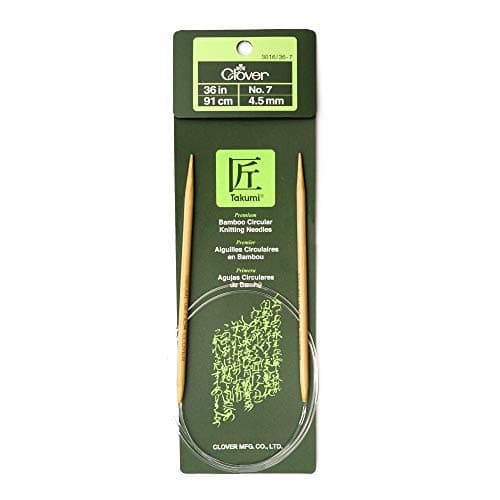
Clover Takumi Bamboo Circular Needles
Bamboo: grippy, warm, light, 2.00-15.00mm in five cable lengths.
$9.86 - View on Amazon#ad disclosure - price as of October 20, 2026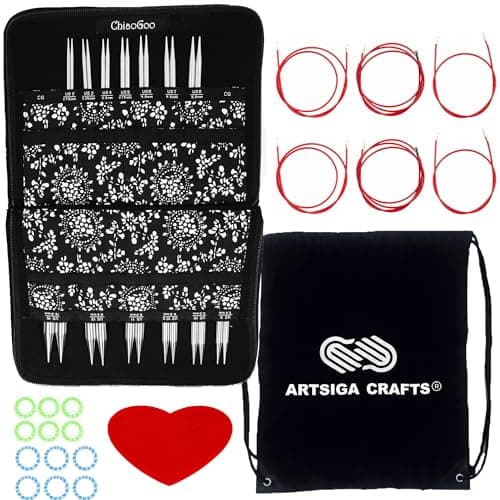
ChiaoGoo TWIST Red Lace Interchangeable Set (Complete, 5in tips)
Steel: fast, slick, sharp, and the only interchangeable set here that reaches US 2.
$216.80 - View on Amazon#ad disclosure - price as of October 20, 2026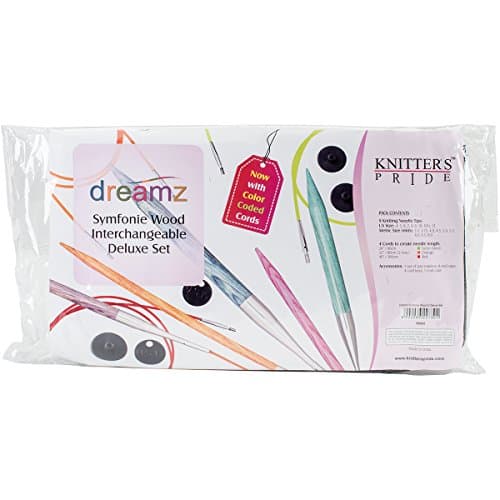
Knitter's Pride Dreamz Deluxe Interchangeable Set
Laminated birch: the wood set, if bamboo suited you and you now want a range.
Questions people actually ask
Are bamboo or metal knitting needles better?
Neither in the abstract - they suit different knitters. Bamboo grips and suits loose knitters, slippery yarn and beginners. Metal glides and suits tight knitters, grabby yarn and speed.
Which knitting needles are best for beginners?
Bamboo. Beginner tension is uneven, and a grippy surface stops stitches sliding off the tip - which is the most demoralizing thing that can happen in your first hour.
Are metal knitting needles faster?
Yes, modestly. The slick surface lets stitches move along with less friction. The size of the difference depends far more on your own tension than on the needle.
Do bamboo needles break?
The smallest sizes can. At 2mm and 2.25mm the shaft is thin enough to snap under a sharp tug, so bamboo DPNs in sock sizes are a consumable rather than a lifetime purchase.
What needles should I use for slippery yarn?
Bamboo or wood. Slippery yarn on a slick metal needle is how stitches end up on the floor.