Reference
Yarn Weight Chart
The whole standard in one table - eight categories, both gauges, both tool ranges.
By Sawyer V. · Published September 4, 2026
Disclosure: we earn a commission when you buy through the links on this page, at no extra cost to you. It never decides what we recommend or how we rank it - read the full disclosure.
The short answer
Yarn weight is thickness, not mass. The industry uses eight numbered categories, 0 (Lace) through 7 (Jumbo), and each one carries a published gauge range and a recommended needle and hook range. Worsted - the yarn most patterns assume - is category 4: 16 to 20 knit stitches over 4 inches on a 4.5 to 5.5mm needle.
The single most useful number on a yarn label is the little numbered skein symbol. It tells you which category the yarn belongs to, which tells you what needle or hook to reach for, which tells you whether the pattern in your hand will work with the yarn in your basket. Everything else on the label is downstream of it.
Below is the complete standard, reproduced from the Craft Yarn Council's published system. We have not adjusted, averaged or simplified any of it - where a range looks wide, the range genuinely is that wide.
The full standard yarn weight system
| Category | Name | Yarn types | Knit gauge / 4in | Needle (mm) | Needle (US) | Crochet gauge / 4in | Hook (mm) | Hook (US) |
|---|---|---|---|---|---|---|---|---|
| 0 | Lace | Fingering, 10-count crochet thread | 33-40 sts | 1.5-2.25 | 000-1 | 32-42 dc | Steel 1.6-1.4; regular 2.25 | Steel 6, 7, 8; regular B-1 |
| 1 | Super Fine | Sock, fingering, baby | 27-32 sts | 2.25-3.25 | 1 to 3 | 21-32 sts | 2.25-3.5 | B-1 to E-4 |
| 2 | Fine | Sport, baby | 23-26 sts | 3.25-3.75 | 3 to 5 | 16-20 sts | 3.5-4.5 | E-4 to 7 |
| 3 | Light | DK, light worsted | 21-24 sts | 3.75-4.5 | 5 to 7 | 12-17 sts | 4.5-5.5 | 7 to I-9 |
| 4 | Medium | Worsted, afghan, aran | 16-20 sts | 4.5-5.5 | 7 to 9 | 11-14 sts | 5.5-6.5 | I-9 to K-10.5 |
| 5 | Bulky | Chunky, craft, rug | 12-15 sts | 5.5-8 | 9 to 11 | 8-11 sts | 6.5-9 | K-10.5 to M-13 |
| 6 | Super Bulky | Super bulky, roving | 7-11 sts | 8-12.75 | 11 to 17 | 7-9 sts | 9-15 | M-13 to Q |
| 7 | Jumbo | Jumbo, roving | 6 sts and fewer | 12.75 and larger | 17 and larger | 6 sts and fewer | 15 and larger | Q and larger |
How to read a range without getting it wrong
The gauge column is the definition and the tool column is a suggestion. That order matters and most people have it backwards. A yarn is category 4 because it knits at 16 to 20 stitches over 4 inches - not because the label says to use a 5mm needle. If you knit tightly, you may need a 5.5mm to land inside that range; if you knit loosely, a 4.5mm. Both of you are using category 4 yarn correctly.
This is also why two yarns that share a category can behave differently. Worsted covers a wide band. Red Heart Super Saver knits at 17 stitches over 4 inches on a 5mm needle; Patons Classic Wool knits at 20 stitches over 4 inches on a 4.5mm. Both are category 4. Swap one for the other in a pattern and your fabric changes, even though the label symbol is identical.
The categories people actually get stuck between
DK versus worsted (3 versus 4)
This is the most common substitution question in the craft, because the two categories overlap in practice. Category 3 tops out at 21 stitches per 4in; category 4 starts at 20. A yarn labeled light worsted sits on the seam. If a pattern calls for DK and you have worsted, you will get a bigger, denser garment unless you go down a needle size and recheck gauge - the full method is in how to substitute yarn.
Bulky versus super bulky (5 versus 6)
Category 5 runs 12 to 15 stitches per 4in; category 6 runs 7 to 11. That is close to a doubling of thickness across the boundary, and it is why a super bulky substitution into a bulky pattern goes wrong so visibly. Chenille blanket yarns such as Bernat Blanket sit firmly in category 6 at 8 stitches per 4in.
Fingering, sock and lace (0 versus 1)
Sock yarn is category 1, not 0, despite being routinely called fingering. Category 0 is genuinely finer - lace weight and 10-count crochet thread. If a sock pattern says fingering and the yarn says lace, you are two steps out, not one.
What the label does not tell you
The weight symbol says nothing about fiber, and fiber is what decides how the finished object behaves. A category 4 cotton and a category 4 wool knit to the same gauge and then do completely different things: the wool has memory and springs back, the cotton hangs and grows. That is a separate question, answered in the fiber guide.
It also says nothing about yardage. Two 100g skeins of category 4 yarn can differ by 50 yards or more depending on fiber density - wool is bulkier per gram than cotton. When you are buying for a project, count yards, never skeins. How much yarn do I need sets out the arithmetic.
Using this chart to buy tools
If you are buying your first set of needles or hooks, the chart tells you where to concentrate. Categories 3 through 5 - DK, worsted and bulky - cover the overwhelming majority of published patterns for garments, blankets and accessories. That is 3.75mm to 9mm in hooks and 3.75mm to 8mm in needles.
Any set that covers that band will handle almost everything you will make in your first two years. Sets that go far below 2.25mm are for thread crochet and lace, which is a different craft with different tools. See the needle size chart and hook size chart for the size-by-size detail, or go straight to the interchangeable needle sets and crochet hook sets we would buy.
One yarn per weight band
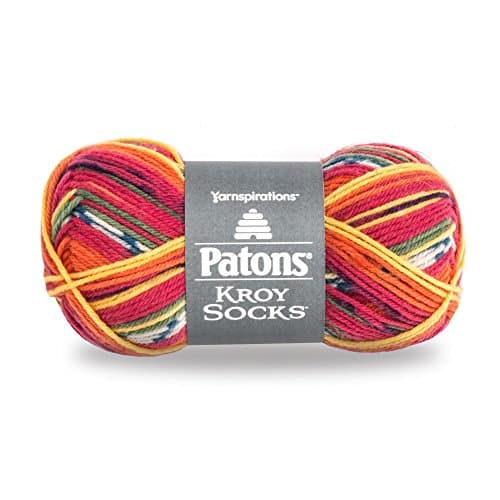
Patons Kroy Socks
Weight 1, super fine: 32 sts x 40 rows on 2.75mm.
$9.99 - View on Amazon#ad disclosure - price as of October 20, 2026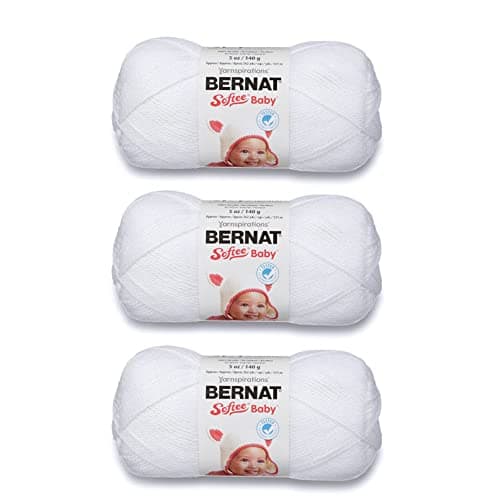
Bernat Softee Baby
Weight 3, DK: 22 sts x 30 rows on 4mm.
$23.48 - View on Amazon#ad disclosure - price as of October 20, 2026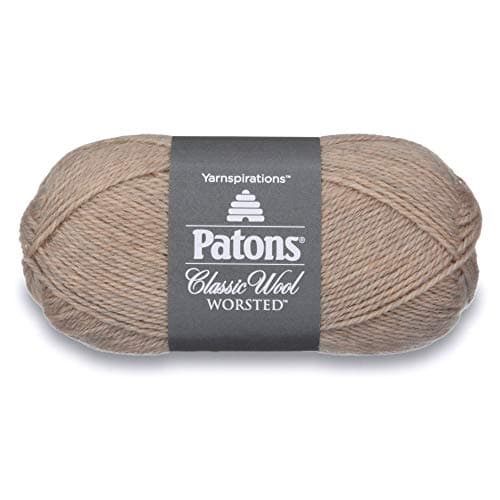
Patons Classic Wool Worsted
Weight 4, worsted: 20 sts x 26 rows on 4.5mm.
$11.79 - View on Amazon#ad disclosure - price as of October 20, 2026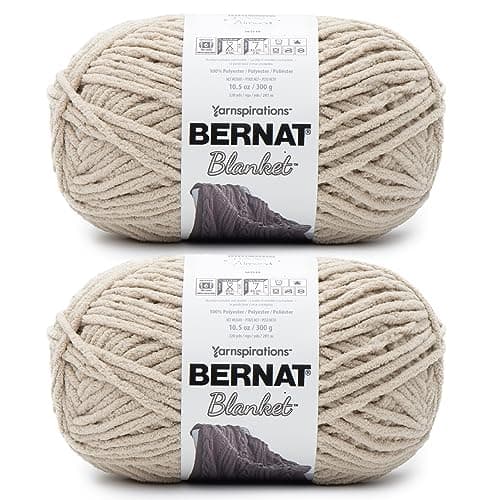
Bernat Blanket
Weight 6, super bulky: 8 sts x 13 rows on 8mm.
$20.96 - View on Amazon#ad disclosure - price as of October 20, 2026
Questions people actually ask
What weight is worsted yarn?
Worsted is category 4, Medium. It knits at 16 to 20 stitches over 4 inches on a 4.5 to 5.5mm needle, and crochets at 11 to 14 single crochet over 4 inches on a 5.5 to 6.5mm hook.
Is aran the same as worsted?
In the American system, yes - the standard lists worsted, afghan and aran together in category 4. In British usage aran is often treated as a step heavier than worsted, so a UK pattern calling for aran may want the thicker end of the category 4 band.
Can I use DK yarn in a worsted pattern?
Not without changing the numbers. DK is category 3 and worsted is category 4, so you will get a smaller, looser fabric at the same stitch count. Either hold the DK double, or rework the pattern to your own gauge - the method is in how to substitute yarn.
Why do two worsted yarns knit differently?
Because category 4 is a band, not a point. It spans 16 to 20 stitches over 4 inches, and different yarns sit at different places in that band. Always swatch when you swap yarns, even within a category.
What does the number in the little skein symbol mean?
It is the standard weight category, 0 to 7. It is the same system as the table on this page, and it is the fastest way to check that a yarn matches the pattern you want to make.