Reference
How Much Yarn Do I Need
Finished area, times a factor you measure yourself. The arithmetic, not a guess.
By Sawyer V. · Published September 4, 2026
Disclosure: we earn a commission when you buy through the links on this page, at no extra cost to you. It never decides what we recommend or how we rank it - read the full disclosure.
The short answer
There is no single correct answer, because a blanket is anywhere from 1,000 to 4,500 yards depending on its finished size, the yarn weight and the stitch. The reliable method is: work out the finished area in square inches, measure how many yards your own swatch uses per square inch, and multiply. This page gives you the area table and the arithmetic.
Every page that answers this question with one number is guessing on your behalf. The honest version takes two minutes longer and does not leave you three skeins short in a discontinued dye lot.
The method, in three steps
- Work out the finished area. Width in inches, times length in inches. A 50 x 60in throw is 3,000 square inches. The table below has the common sizes already multiplied out.
- Measure your own yards per square inch. Make a swatch at the gauge and stitch you will actually use, at least 4 x 4in. Note the yardage you used - either measure the yarn before you start, or weigh the swatch and convert using the skein's published yards per gram. Divide yards used by swatch area in square inches.
- Multiply, then add a margin. Area times yards per square inch gives the working figure. Add 10 percent for a plain piece, 15 to 20 percent if there is a border, seaming, colorwork or fringe.
Finished area for common blanket sizes
Blanket sizes are conventionally set from the mattress they cover, plus overhang. The mattress dimensions below are the standard US sizes; the blanket dimensions are the mattress plus a typical drop, and the area column is simply width times length.
| Blanket | Based on | Finished size (in) | Area (sq in) |
|---|---|---|---|
| Lovey | - | 12 x 12 | 144 |
| Pram / stroller | - | 30 x 35 | 1,050 |
| Crib | - | 30 x 45 | 1,350 |
| Baby blanket | - | 36 x 42 | 1,512 |
| Lapghan | - | 36 x 48 | 1,728 |
| Throw | - | 50 x 60 | 3,000 |
| Afghan | - | 50 x 65 | 3,250 |
| Twin coverlet | Twin mattress 38 x 75 | 66 x 90 | 5,940 |
| Full / Queen coverlet | Queen mattress 60 x 80 | 90 x 90 | 8,100 |
| King coverlet | King mattress 76 x 80 | 108 x 90 | 9,720 |
The jump matters. A king coverlet is 3.2 times the area of a 50 x 60in throw. If a pattern's yardage was written for a throw and you are sizing up to a king, you need more than three times the yarn - not a skein or two extra.
Yards per skein for the yarns people actually use
Once you have a yardage figure, this converts it into a shopping list. All figures are the manufacturers' published yardage.
| Yarn | Weight | Skein | Yards |
|---|---|---|---|
| Red Heart Super Saver | 4 Medium | 7oz / 198g | 364 |
| Lion Brand Heartland | 4 Medium | 5oz / 142g | 251 |
| Caron Simply Soft | 4 Medium | 6oz / 170g | 315 |
| Lion Brand Wool-Ease | 4 Medium | 3oz / 85g | 197 |
| Lion Brand Basic Stitch Anti-Pilling | 4 Medium | 3.5oz / 100g | 185 |
| Patons Classic Wool Worsted | 4 Medium | 3.5oz / 100g | 194 |
| Cascade 220 Superwash Merino | DK to light worsted | 3.5oz / 100g | 220 |
| Lion Brand 24/7 Cotton | Worsted | 3.5oz / 100g | 186 |
| Lily Sugar'n Cream | 4 Medium | 2.5oz / 71g | 120 |
| Bernat Softee Baby | 3 DK | 5oz / 140g | 362 |
| Bernat Blanket | 6 Super Bulky | 5.3oz / 150g | 108 |
| Bernat Baby Blanket | 6 Super Bulky | 3.5oz / 100g | 72 |
| Patons Kroy Socks | 1 Super Fine | 1.8oz / 50g | 166 |
Look at the two chenille yarns. Bernat Blanket gives you 108 yards a ball. A 50 x 60in throw in super bulky needs a lot of balls, and the yarn is bulky enough that the ball count surprises people every time. This is the single most common cause of a half-finished chenille blanket in a cupboard.
Worked example
Say you are making a 50 x 60in throw in worsted weight, single crochet, and your 4 x 4in swatch used 22 yards.
- Swatch area = 4 x 4 = 16 square inches. Yards per square inch = 22 / 16 = 1.375.
- Blanket area = 50 x 60 = 3,000 square inches.
- Yarn needed = 3,000 x 1.375 = 4,125 yards.
- Add 10 percent for the border and ends = about 4,540 yards.
- In Red Heart Super Saver at 364 yards a skein: 4,540 / 364 = 12.5 skeins, so buy 13.
Change one input and watch it move: the same blanket in double crochet rather than single crochet typically uses noticeably less yarn for the same area, because taller stitches cover more ground per yard. That is exactly why one published number cannot serve everybody.
Rules of thumb that are actually safe
- Buy all your yarn at once, in one dye lot. Running short mid-project is the expensive failure, not over-buying by one skein.
- Round up to a whole skein, always. A partial skein is a swatch, a repair, or the start of the next thing.
- Weigh, do not guess, when you are close. A kitchen scale plus the skein's published yards-per-gram turns any remnant into an exact yardage.
- Yardage scales with area, not with the longest side. Doubling both dimensions quadruples the yarn.
If you are substituting a different yarn from the one in the pattern, run the numbers through how to substitute yarn first - the yardage changes as soon as the weight or the fiber does. And if you have not chosen the yarn yet, best yarn for a blanket and best yarn for a baby blanket are the places to start.
Yardage per ball, for the arithmetic on this page
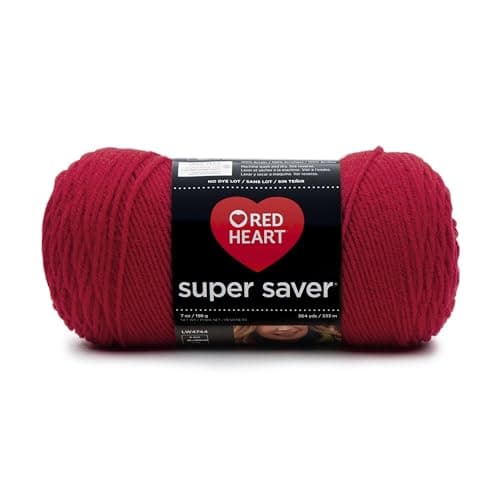
Red Heart Super Saver
364yd per 198g - the most yards per ball of anything here.
$4.18 - View on Amazon#ad disclosure - price as of October 20, 2026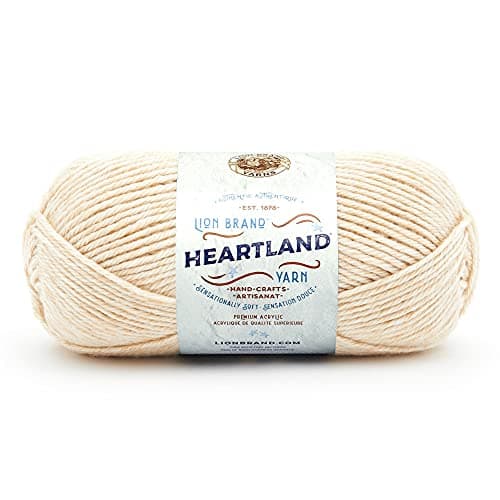
Lion Brand Heartland
251yd per 142g, worsted.
Cascade 220 Superwash Merino
220yd per 100g, DK to light worsted.
$19.00 - View on Amazon$21.0010% off · #ad disclosure - price as of October 20, 2026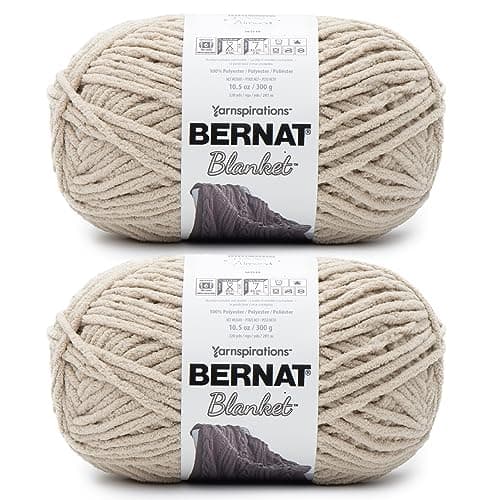
Bernat Blanket
108yd per 150g. Super bulky eats yardage, which is what surprises people.
$20.96 - View on Amazon#ad disclosure - price as of October 20, 2026
Questions people actually ask
How much yarn do I need for a blanket?
It depends on size, weight and stitch, which is why one number is never right. Work out the finished area from the table on this page, measure yards per square inch from your own swatch, multiply, then add 10 to 15 percent.
How much yarn for a baby blanket?
A 36 x 42in baby blanket is 1,512 square inches - roughly half the area of a 50 x 60in throw. Use the same area method; the arithmetic is identical, only the area changes.
How many skeins of Bernat Blanket for a throw?
Bernat Blanket is 108 yards per 150g ball, so ball counts run high on any full-size throw. Work out your yardage by the area method first, then divide by 108 and round up - and buy the whole lot at once.
Does crochet use more yarn than knitting?
For the same finished area, crochet generally uses more yarn than knitting, because crochet stitches wrap the yarn more times. The difference varies by stitch, which is another reason to measure your own swatch rather than trust a conversion factor.
How much extra yarn should I buy?
Ten percent for a plain piece, 15 to 20 percent if there is a border, seaming, colorwork or fringe. Always round up to a whole skein and buy the whole project in one dye lot.