The picks
Best Yarn for a Temperature Blanket
You are not choosing a yarn. You are betting that a shade you buy in January will still be on the shelf, and still match, in November.
By Sawyer V. · Published September 24, 2026
Disclosure: we earn a commission when you buy through the links on this page, at no extra cost to you. It never decides what we recommend or how we rank it - read the full disclosure.
The short answer
Choose on shade range, dye-lot behavior and the chance the yarn is still stocked in twelve months - not on fiber. A worsted acrylic from a major line is the right answer for almost everyone, because those lines carry enough shades for a temperature scale, stay in production, and are cheap enough to buy in the quantity a full-size blanket needs. Buy your whole scale up front, keep a ball band from every shade, and write down which shade maps to which temperature band before you start.
| # | Product | Best for | Fiber | Yards/skein | Price |
|---|---|---|---|---|---|
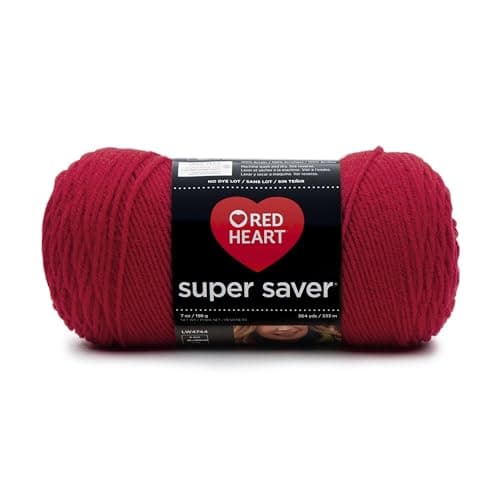
| 1 | Red Heart Super SaverThe solids carry no dye lot at all, which removes the single biggest risk in the project. | A year-long project you cannot afford to have discontinued | 100% acrylic | 364yd / 198g | $4.29 - View on Amazon#ad disclosure - price as of September 24, 2026 |
| 2 | 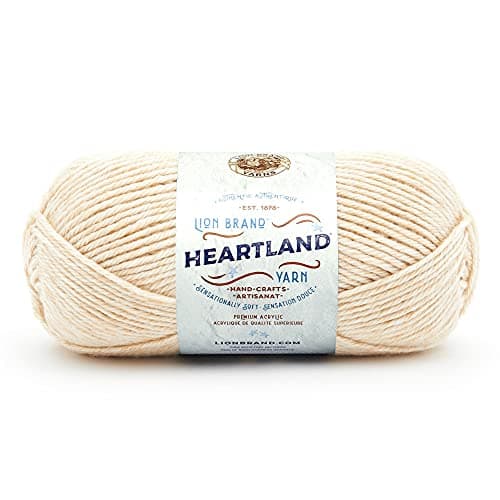 Lion Brand HeartlandMuch softer than the budget acrylics, with enough yardage per skein to stay practical. Lion Brand HeartlandMuch softer than the budget acrylics, with enough yardage per skein to stay practical. | A blanket that will live on a sofa | 100% acrylic | 251yd / 142g | $12.42 - View on Amazon#ad disclosure - price as of September 24, 2026 |
| 3 | 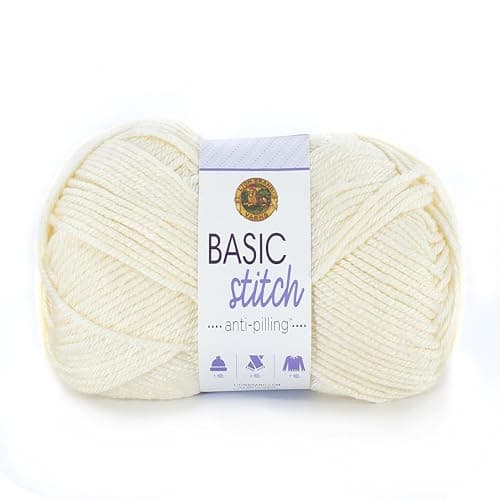 Lion Brand Basic Stitch Anti-PillingSold specifically on the failure mode that ends most acrylic blankets. Lion Brand Basic Stitch Anti-PillingSold specifically on the failure mode that ends most acrylic blankets. | Something that will be dragged around for years | 100% acrylic | 185yd / 100g | $5.99 - View on Amazon#ad disclosure - price as of September 24, 2026 |
| 4 | 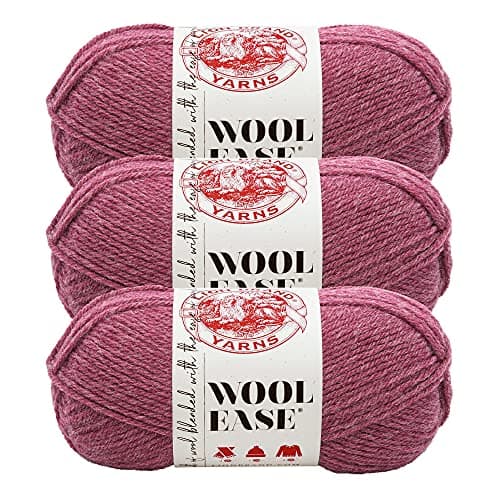 Lion Brand Wool-EaseTwenty percent wool, and it still goes through the machine and the dryer. Lion Brand Wool-EaseTwenty percent wool, and it still goes through the machine and the dryer. | A warmer blanket that still machine washes | 80% acrylic, 20% wool | 197yd / 85g | $18.00 - View on Amazon#ad disclosure - price as of September 24, 2026 |
| 5 | 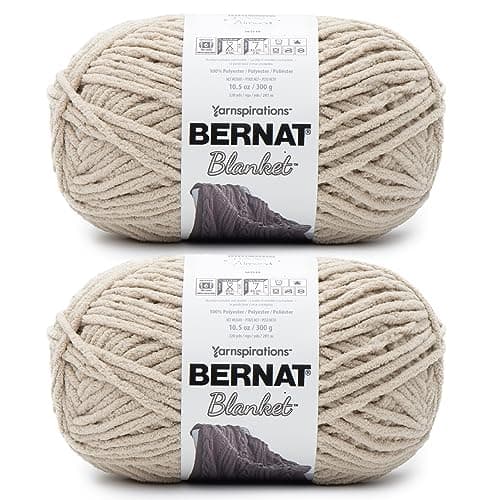 Bernat BlanketLovely yarn, wrong project - 365 rows of it is a piece of furniture. Bernat BlanketLovely yarn, wrong project - 365 rows of it is a piece of furniture. | A fast chunky throw in two or three colors | 100% polyester chenille | 108yd / 150g | $20.96 - View on Amazon#ad disclosure - price as of September 24, 2026 |
Red Heart Super Saver
Red Heart · Best for a year-long project you cannot afford to have discontinued
The 7oz workhorse acrylic. Coarser than the softer acrylics here, and the cheapest yardage on the shelf by a distance.
- Fiber
- 100% acrylic
- Weight
- 4 Medium / worsted
- Skein
- 7oz / 198g, 364yd / 333m (no-dye-lot solids)
- Gauge
- 17 sts x 23 rows on 5mm (US 8)
- Hook
- 5.5mm (US I/9), 12 sc x 15 rows
- Care
- Machine wash warm gentle, tumble dry low, no bleach
Who it suits
Anyone starting a 365-row blanket who will be buying more yarn in six months.
Why it is here
100% acrylic, category 4 medium, 364yd to a 198g skein, published at 17 sts x 23 rows on 5mm and 12 single crochet x 15 rows on 5.5mm. The solid shades are sold with no dye lot, so a skein bought in November is made to match one bought in January - which is exactly the guarantee this project needs. The yardage per skein is also the highest here by a wide margin.
What you give up
It is the coarsest yarn on this page out of the ball and it squeaks. It softens with washing rather than before, so the finished blanket is nicer than the work in progress.
Specifications from Yarnspirations product page. We have not handled this item - see how we pick.
Lion Brand Heartland
Lion Brand · Best for a blanket that will live on a sofa
A soft all-acrylic worsted in a 5oz skein - a lot of yardage per skein, which matters when a blanket needs eight of them.
- Fiber
- 100% acrylic (solids); 94% acrylic, 6% rayon (tweeds)
- Weight
- 4 Medium / worsted
- Skein
- 5oz / 142g, 251yd / 230m (solids)
- Gauge
- 16 sts x 22 rows on US 9 (5.5mm)
- Hook
- J-10 (6mm), 12 sc x 15 rows
- Care
- Machine wash gentle, tumble dry low, no bleach
Who it suits
Anyone who wants the finished blanket to feel good rather than merely exist.
Why it is here
100% acrylic in the solid shades, category 4 medium, 251yd per 142g skein, published at 16 sts x 22 rows on a US 9 (5.5mm) and 12 single crochet on a J-10 (6mm). It is a national-parks shade range, which is unusually deep in the muted mid-tones a temperature scale needs for the in-between days.
What you give up
It carries dye lots, so buy your full quantity of each shade together and keep the bands. The tweed shades are 94% acrylic and 6% rayon, which is a different fiber content from the solids - do not mix the two in one blanket.
Specifications from Lion Brand product page. We have not handled this item - see how we pick.
Lion Brand Basic Stitch Anti-Pilling
Lion Brand · Best for something that will be dragged around for years
An acrylic worsted sold specifically on its pilling behavior, which is the one complaint that ends most acrylic garments.
- Fiber
- 100% acrylic
- Weight
- 4 Medium / worsted
- Skein
- 3.5oz / 100g, 185yd
- Gauge
- 18 sts x 26 rows on US 8 (5mm)
- Hook
- H-8 (5mm), 16 sc x 18 rows
- Care
- Machine wash, machine dry
Who it suits
Anyone whose last acrylic blanket went bobbly within a year.
Why it is here
100% acrylic, category 4 medium, 185yd per 100g skein, published at 18 sts x 26 rows on a US 8 (5mm) and 16 single crochet x 18 rows on an H-8 (5mm). Pilling is the complaint that ends an acrylic blanket's life, and this is the one yarn here that is marketed on solving it.
What you give up
185 yards per skein is the lowest of the four acrylics here, so a full-size blanket needs a lot of skeins and the cost adds up. It also carries dye lots.
Specifications from Lion Brand product page. We have not handled this item - see how we pick.
Lion Brand Wool-Ease
Lion Brand · Best for a warmer blanket that still machine washes
An 80/20 acrylic-wool worsted that machine washes and dries, and is the single most sensible first step away from all-acrylic.
- Fiber
- 80% acrylic, 20% wool (solids, heathers, twists)
- Weight
- 4 Medium / worsted
- Skein
- 3oz / 85g, 197yd / 180m
- Gauge
- 18 sts x 24 rows on US 8 (5mm)
- Hook
- J-10 (6mm), 13.2 sc x 16 rows
- Care
- Machine wash, water not above 105F; machine dry
Who it suits
Anyone who wants the blanket to feel like more than acrylic without a hand-wash rule.
Why it is here
80% acrylic and 20% wool, category 4 medium, 197yd per 85g skein, published at 18 sts x 24 rows on a US 8 (5mm) and 13.2 single crochet x 16 rows on a J-10 (6mm). Machine wash and machine dry per the band, in water not above 105F - which matters on a blanket that will be washed dozens of times.
What you give up
85g skeins mean the most skeins of any option here for a given size, and the shade range is narrower than the all-acrylic lines. The wool content also makes it the most expensive per yard on this page.
Specifications from Lion Brand product page. We have not handled this item - see how we pick.
Bernat Blanket
Bernat · Best for a fast chunky throw in two or three colors
Polyester chenille at 108 yards to a 150g ball. Fast, warm, machine washable, and it will shed and worm if the tension is loose.
- Fiber
- 100% polyester (chenille)
- Weight
- 6 Super Bulky
- Ball
- 5.3oz / 150g, 108yd / 98m
- Gauge
- 8 sts x 13 rows on 8mm (US 11)
- Hook
- 8mm (US L/11), 7 sc x 8 rows
- Care
- Machine wash delicate, tumble dry gentle
Who it suits
Not temperature blanket makers. For a quick chunky throw it is exactly the right thing.
Why it is here
100% polyester chenille, category 6 super bulky, 108yd per 150g ball.
What you give up
Three problems at once for this project. The weight class means 365 rows produces something enormous and very heavy; 108 yards a ball means a punishing ball count; and chenille shade ranges are far smaller than acrylic ones, so a 20-step temperature scale is not available. See [best yarn for a blanket](/yarn-by-project/best-yarn-for-a-blanket) for where it does belong.
Specifications from Yarnspirations product page. We have not handled this item - see how we pick.
What a temperature blanket actually demands
A temperature blanket is one row, square or stripe per day for a year, in a color that represents that day's temperature. The craft is ordinary. The constraints are not.
- A long, evenly spaced shade range. A useful scale needs somewhere between 10 and 20 shades that read as a sequence, not as a set of unrelated colors.
- Availability for twelve months. You will be buying more yarn in month eight. A discontinued shade in month eight is a real problem.
- Dye-lot discipline. A mid-project dye lot change shows as a visible band across the blanket.
- Affordable bulk. A full-size blanket in worsted runs to thousands of yards.
- One weight, one fiber, throughout. Mixing weights makes rows that do not match in height.
Building the temperature scale
The scale is the design decision, and it is made before the first stitch. There is no standard - what follows is the structure most people use.
| Band | Typical use | Shade family |
|---|---|---|
| Below freezing | Coldest days | White, pale gray, palest blue |
| Cold | Winter average | Mid and deep blues |
| Cool | Spring and fall | Teal and blue-green |
| Mild | The commonest band | Greens |
| Warm | Summer average | Yellows and golds |
| Hot | Heat waves | Oranges through reds |
| Extreme | A handful of days | Deep red or magenta |
- Use 5-degree bands in a temperate climate and wider ones somewhere with big swings.
- Check your own climate first. If most of your year lands in two bands, the blanket will be two colors - widen the cold end and narrow the warm one, or the reverse.
- Pick one temperature per day and stick to it - daily high is the usual choice, and mixing high and low mid-year ruins the sequence.
- Historical daily records are public. The US national climate archive publishes them by station, so you can test a scale against last year before committing.
- Buy two skeins of the middle shades and one of the extremes. The middle bands take the most yarn by a wide margin.
Buying, so you do not get caught out
- Buy the whole scale before you start, at least one skein of every shade.
- Buy the mid-range shades in quantity, because that is where most of the year will land.
- Keep one ball band from every shade in a bag with the project. Shade names are not printed on the yarn.
- Photograph the scale with the shade names visible, so a reorder in month nine is accurate.
- Record the dye lots for anything that has them.
- Check the yardage arithmetic first - how much yarn do I need covers the method for blanket sizes.
Knit or crochet, and the row problem
Either works, and the choice mostly changes how wide the blanket ends up. A row per day for 365 days is a long blanket, which is why most people work along the long edge or use squares.
- One row per day, worked along the length, gives a blanket that is 365 rows wide - plan the stitch count accordingly.
- One square per day is more portable and lets you carry the project anywhere, at the cost of a great deal of seaming and end-weaving.
- One stripe per week, using the week's average, is the honest compromise for a first attempt.
- Granny stripes are the commonest crochet choice, because they grow quickly and the ends are easy to manage.
- Weave in ends as you go. Three hundred and sixty-five color changes left to the end is how these projects die.
How to weave in ends and best yarn for granny squares are the two most relevant techniques.
How we picked
Every yarn here is already listed on this site, and every figure quoted comes from the manufacturer's published specification - fiber content, weight class, yardage per skein, and the stated knit and crochet gauges. The ranking is on the three things this project actually needs: shade range, dye-lot behavior and the odds the line is still in production a year from now. We have not tested these yarns over a year and do not claim to have.
What we would buy
- The safe choice: no-dye-lot acrylic with the most yards per skein.
- Softer, for a sofa blanket: a deep muted shade range.
- If your last blanket pilled: the anti-pilling acrylic.
- Warmer, still machine washable: 80/20 acrylic and wool.
- Not for this project: super bulky chenille.
Questions people actually ask
What yarn should I use for a temperature blanket?
A worsted acrylic from a major line, because those carry enough shades for a temperature scale, stay in production for the year you need them, and are affordable in the quantity a full-size blanket takes. Red Heart Super Saver's solids carry no dye lot, which is the most useful property of all here.
How many colors do I need for a temperature blanket?
Most scales use between 10 and 20 shades. Fewer than 10 and the blanket reads as stripes rather than a gradient; more than 20 and adjacent shades stop being distinguishable in the finished fabric.
How much yarn does a temperature blanket take?
Thousands of yards in worsted, concentrated in the middle of your scale. Work out the finished area first and buy the mid-range shades in quantity - the extremes may only be needed for a handful of days.
Do dye lots matter for a temperature blanket?
Very much, because you will be buying the same shade repeatedly across a year and a lot change shows as a visible band. Either choose a no-dye-lot yarn or buy your full quantity of each shade at the start and record the lot numbers.
Can I use chunky yarn for a temperature blanket?
It is a poor fit. Super bulky chenille gives around 108 yards a ball, so the ball count is punishing, 365 rows of it produces something enormous, and chenille shade ranges are too small for a proper temperature scale.
Sources
- Craft Yarn Council - Standard Yarn Weight System
- Yarnspirations - Red Heart Super Saver specification
- Lion Brand - Heartland specification
- Lion Brand - Basic Stitch Anti-Pilling specification
- Lion Brand - Wool-Ease specification
- Yarnspirations - Bernat Blanket specification
- NOAA National Centers for Environmental Information - Climate Data Online