Reference
Knitting Needle Size Chart
US to metric, and which size each yarn weight actually calls for.
By Sawyer V. · Published September 4, 2026
Disclosure: we earn a commission when you buy through the links on this page, at no extra cost to you. It never decides what we recommend or how we rank it - read the full disclosure.
The short answer
For worsted weight yarn, use a 4.5 to 5.5mm needle - US 7 to US 9. For DK use 3.75 to 4.5mm (US 5 to 7), for bulky 5.5 to 8mm (US 9 to 11), and for sock or fingering 2.25 to 3.25mm (US 1 to 3). These are the ranges published in the standard yarn weight system; your own gauge decides where inside the range you land.
American needle sizing is a numbering convention with no arithmetic behind it, so it has to be looked up rather than calculated. Worse, several US sizes have no exact metric twin - US 10.5 is commonly sold as 6.5mm and sometimes as 6.0mm, and the gap between US 11 (8mm) and US 10.5 is one of the largest jumps in the system.
This page is the lookup, plus the part most charts leave out: what to do when the size you need does not exist in your set.
Needle size by yarn weight
| Yarn weight | Common names | Needle (mm) | Needle (US) | Knit gauge / 4in |
|---|---|---|---|---|
| 0 Lace | Lace, 10-count thread | 1.5-2.25 | 000 to 1 | 33-40 sts |
| 1 Super Fine | Sock, fingering, baby | 2.25-3.25 | 1 to 3 | 27-32 sts |
| 2 Fine | Sport, baby | 3.25-3.75 | 3 to 5 | 23-26 sts |
| 3 Light | DK, light worsted | 3.75-4.5 | 5 to 7 | 21-24 sts |
| 4 Medium | Worsted, afghan, aran | 4.5-5.5 | 7 to 9 | 16-20 sts |
| 5 Bulky | Chunky, craft, rug | 5.5-8 | 9 to 11 | 12-15 sts |
| 6 Super Bulky | Super bulky, roving | 8-12.75 | 11 to 17 | 7-11 sts |
| 7 Jumbo | Jumbo, roving | 12.75 and larger | 17 and larger | 6 sts and fewer |
US to metric needle conversions
The list below is the conversion set used across the standard and by the major manufacturers. Sizes marked with an asterisk are the ones where brands genuinely differ, so check the needle itself rather than trusting the number.
| US size | Metric (mm) | Typical use |
|---|---|---|
| 000 | 1.5 | Lace, fine thread |
| 00 | 1.75 | Lace |
| 0 | 2.0 | Lace, fine sock |
| 1 | 2.25 | Sock, fingering |
| 1.5 | 2.5 | Sock |
| 2 | 2.75 | Sock, fingering |
| 2.5 | 3.0 | Sock, sport |
| 3 | 3.25 | Fingering to sport |
| 4 | 3.5 | Sport |
| 5 | 3.75 | DK |
| 6 | 4.0 | DK |
| 7 | 4.5 | DK to worsted |
| 8 | 5.0 | Worsted |
| 9 | 5.5 | Worsted to bulky |
| 10 | 6.0 | Bulky |
| 10.5* | 6.5 | Bulky (occasionally sold as 6.0mm) |
| 11 | 8.0 | Bulky to super bulky |
| 13 | 9.0 | Super bulky |
| 15 | 10.0 | Super bulky |
| 17 | 12.75 | Super bulky to jumbo |
| 19 | 15.0 | Jumbo |
| 35 | 19.0 | Jumbo |
| 50 | 25.0 | Jumbo |
The sizes your set will be missing
Almost every interchangeable set starts at US 4 (3.5mm) and stops at US 15 (10mm) or lower. Two consequences follow, and both cost people money.
Sock sizes are not in the set. Fingering yarn wants 2.25 to 3.25mm, which is below where interchangeable tips are made - the cable join cannot be drilled that small without weakening it. The ChiaoGoo Twist Complete set starts at US 2 (2.75mm) and is unusual for going that low; most stop at 3.5mm. If you knit socks, budget separately for fixed circulars or DPNs - see the best circular needles for socks, and for the 2mm end specifically, best US size 0 knitting needles.
Jumbo sizes are not in the set either. Anything above 10mm is bought individually. That is fine, because you will use those sizes for one arm-knit blanket and then not again.
Needle length, which the charts never mention
Diameter is only half of a needle specification. The other half is length, and for circulars it decides whether the project is possible at all.
- 9in and 12in circulars - hats and sleeves worked in the round, if your hands tolerate the short tips.
- 16in - hats, cowls, yokes. The most-used single length in most people's collection.
- 24in and 32in - sweater bodies, shawls, and anything worked flat that will not fit on a straight needle.
- 40in and 47in - blankets, and magic loop for small circumferences. See the best needles for magic loop.
A circular needle cannot work a circumference smaller than roughly its own length, which is why a 16in circular cannot knit a sleeve cuff. Magic loop with a 32in or longer cable is the usual answer.
Using this chart with a pattern
A pattern states a needle size and a gauge. The gauge is binding; the needle size is not. If the pattern says US 8 and 18 stitches to 4 inches, and you get 20 stitches on a US 8, go up to a US 9 and swatch again. You are matching the fabric, not the tool.
This is the single most common cause of a garment coming out the wrong size, and it is why the needle chart is a starting point rather than an instruction. If you are picking a first set of needles from scratch, the best knitting needles for beginners covers what to buy in what order, and the yarn weight chart explains where the gauge ranges come from.
Needles that cover the chart
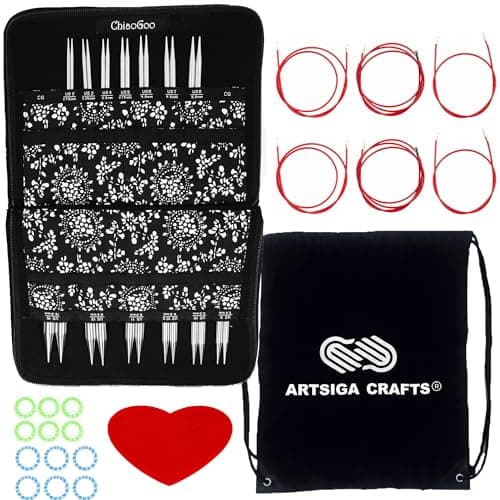
ChiaoGoo TWIST Red Lace Interchangeable Set (Complete, 5in tips)
US 2 to US 15 (2.75-10mm) in one interchangeable set, with the size on every tip.
$216.80 - View on Amazon#ad disclosure - price as of October 20, 2026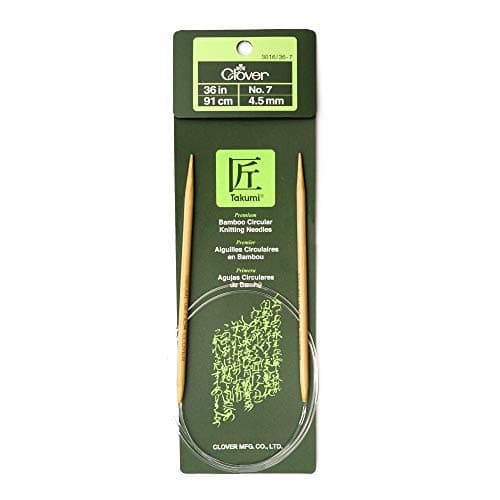
Clover Takumi Bamboo Circular Needles
2.00mm to 15.00mm as fixed circulars, one size and length at a time.
$9.86 - View on Amazon#ad disclosure - price as of October 20, 2026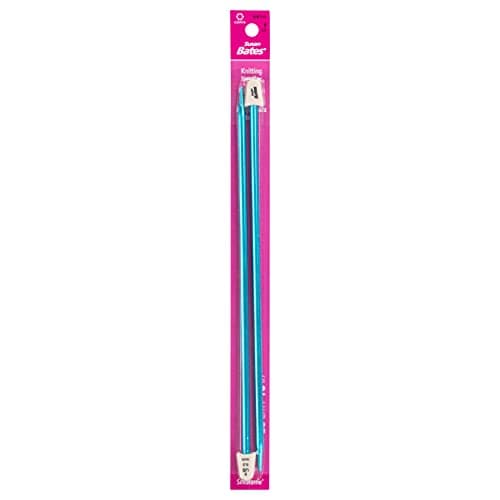
Susan Bates Silvalume Single Point Knitting Needles
US 0 to US 15 as straights, with US and metric printed on the knob.
$8.12 - View on Amazon$8.686% off · #ad disclosure - price as of October 20, 2026
Questions people actually ask
What size knitting needles for worsted weight yarn?
4.5 to 5.5mm, which is US 7 to US 9. US 8 (5mm) is the most common starting point, and most worsted yarn labels suggest it.
Is US 10.5 6.5mm or 6mm?
It depends on the brand. US 10.5 is most often 6.5mm, but some manufacturers sell it as 6.0mm. Check the millimeter marking on the needle rather than the US number.
What size needles do I need for sock yarn?
2.25 to 3.25mm, which is US 1 to US 3. Most sock patterns land on 2.25 or 2.5mm for a dense, hard-wearing fabric.
Why does my gauge not match the needle size on the label?
Because the label gives an average, not a rule. Tension varies between knitters by a needle size or two in either direction. Match the pattern gauge and ignore the suggested needle size if you have to.
What length circular needle should I buy first?
16in if you knit hats, 32in if you knit sweaters or anything flat. A 32in cable can also do small circumferences with magic loop, which makes it the more flexible single purchase.