Head to head
Upgrading From Acrylic
The first real yarn purchase, in the order that will not waste your money.
By Sawyer V. · Published September 4, 2026
Disclosure: we earn a commission when you buy through the links on this page, at no extra cost to you. It never decides what we recommend or how we rank it - read the full disclosure.
The short answer
Upgrade the projects where the fiber does something acrylic cannot: fitted garments, hats, mittens and socks, all of which need springback or warmth when damp. Do not upgrade blankets, baby items or anything washed weekly - acrylic is the correct specification there, not a compromise. The first purchase worth making is one sweater's worth of wool or superwash merino.
This page assumes a specific situation, because it is the most common one: you have made a few acrylic scarves, you enjoy this, and you are looking at a wall of yarn wondering which of it is worth the money. The craft's usual answer - all of it, acrylic is bad - is wrong, expensive and a bit snobbish. Here is a more useful one.
First: acrylic is not a beginner fiber you graduate from
It is a fiber with a specific profile. It is cheap per yard, machine washable and dryable, warm when dry, and has essentially no memory. Those properties make it the correct choice for a large set of projects, permanently - not a stage you pass through.
| Project | Why acrylic wins |
|---|---|
| Blankets and throws | Washed often, huge yardage, nothing structural to lose |
| Baby items | Washed constantly by someone who will not read a care label |
| Children's garments | Outgrown before they wear out; washed at high volume |
| Charity knitting | Recipients cannot be assumed to hand wash anything |
| Amigurumi for a small child | Light, washable, and dragged around |
| Anything a machine dryer will meet | Wool felts; superwash costs several times more |
If most of what you make is on that list, the honest advice is that you do not need to upgrade anything. Spend the money on better tools instead - a set that stays in tune with your hands does more for the experience than a fiber swap on a blanket ever will.
Where the upgrade genuinely changes the object
Wool does three things acrylic cannot do at any price:
- It springs back. Wool fiber is crimped and scaled, so stretched fabric returns. That is why a wool cuff still grips after a season and an acrylic one does not. Everything fitted depends on it.
- It blocks. Wetting and pinning wool resets the fabric - stitches even out, lace opens, shaping sets and holds. Acrylic can be steam-relaxed, which is a one-way change, not the same tool.
- It insulates while damp. Wool absorbs a large share of its own weight in moisture before it feels wet and stays warm through it. Acrylic goes cold.
Those three properties define the upgrade list exactly: fitted garments, hats, mittens, socks, and anything whose shape depends on blocking. The full comparison is in acrylic vs wool.
The order to buy in
Step 1 - a wool-blend hat or mittens
Small, cheap, fast, and it demonstrates the single property that matters. Knit a ribbed hat brim in Lion Brand Wool-Ease - 80 percent acrylic, 20 percent wool - and compare it against the same brim in pure acrylic after a month of wear. That fifth of wool is visible in how the brim behaves, and the experiment costs one skein.
This step exists because it is cheap and because it teaches the thing. Do not skip it to go straight to a sweater's worth of merino.
Step 2 - one sweater's worth of real wool
This is the purchase that changes what you think yarn is. Two routes, and they are genuinely different:
- Untreated wool - Patons Classic Wool, 100% wool, 194 yards a ball, hand wash. The cheapest way to feel what blocking actually does, and the right choice if the sweater has cables.
- Superwash merino - Cascade 220 Superwash Merino, 220 yards a skein, machine washable, fine enough not to itch. The right choice if you will not hand wash a sweater, and be honest about whether you will.
Buy the whole sweater at once, in one dye lot. Work out the yardage properly first with how much yarn do I need - a sweater is a bigger purchase than a scarf by a long way, and running out mid-body is the expensive failure.
Step 3 - fine merino for anything next to skin
If a wool garment has ever itched you, this is where the money goes. Prickle is mechanical: textile research puts the threshold at roughly 30 micrometers of fiber diameter, above which fiber ends do not bend against skin and register as itch. Merino runs roughly 11.5 to 22 microns, comfortably under it.
Note what this means: you do not need alpaca or cashmere to solve an itch problem. Fine merino solves it, at a fraction of the price. Best non-itchy yarn for sweaters has the detail.
Step 4 - a specialist fiber, for one project
Alpaca for a shawl, cotton for a summer top, a cashmere blend for a cowl. By this point you know what fabric you want and can choose the fiber to produce it, which is the actual skill.
Buy a scarf's or a cowl's worth, not a sweater's worth. Specialist fibers behave in specific ways - alpaca has almost no memory, cashmere pills - and a small project is the cheap way to find out whether you like what they do.
What the money actually buys, per pound
Worth being blunt about, because the price gaps are large and not all of them buy something.
| Upgrade | What you get | Worth it for |
|---|---|---|
| Acrylic to wool blend | Some springback, warmer hand, still machine wash | Hats, cuffs, anything ribbed |
| Blend to pure wool | Full springback, real blocking, wet warmth | Fitted garments, cables, outerwear |
| Wool to merino | Softness next to skin. No structural change at all | Anything worn against bare skin |
| Merino to cashmere | Lighter handle and halo, at a durability cost | Small, gently-worn pieces only |
| Any fiber to hand-dyed | Color. No performance change whatsoever | When you want that specific color |
The last two rows are where money most often goes without buying anything the finished object needs. Hand-dyed yarn is beautiful and it does not knit better.
The mistakes this upgrade usually involves
- Buying a sweater's worth of an unfamiliar fiber. Make a hat in it first. Always.
- Buying hand wash without meaning it. Be honest about your laundry. If you will not hand wash, buy superwash and accept that it grows - see does superwash wool block.
- Substituting into a pattern without swatching. New fiber, new gauge, new behavior. The five checks are in how to substitute yarn.
- Upgrading the blanket. It is the single biggest yardage commitment you will make and the project where wool helps least. Spend it on a sweater instead.
- Skipping the blend step. A 20-percent-wool blend teaches you what springback is for the price of one skein.
- Assuming expensive means suitable. Alpaca is expensive and wrong for socks. Cashmere is expensive and wrong for a bag. The fiber has to match the object.
A concrete first order
If you want a single shopping list rather than a framework:
- One skein of an 80/20 acrylic-wool blend. Make a ribbed hat. Wear it for a month.
- One skein of untreated wool. Knit a swatch, block it wet, and watch what happens to the stitches. This is the moment the upgrade makes sense.
- Then, and only then, a sweater's worth of whichever of those two you preferred.
Total cost of the first two steps is a fraction of a sweater's yarn, and it will tell you more than any amount of reading - including this page.
The three yarns this page is about
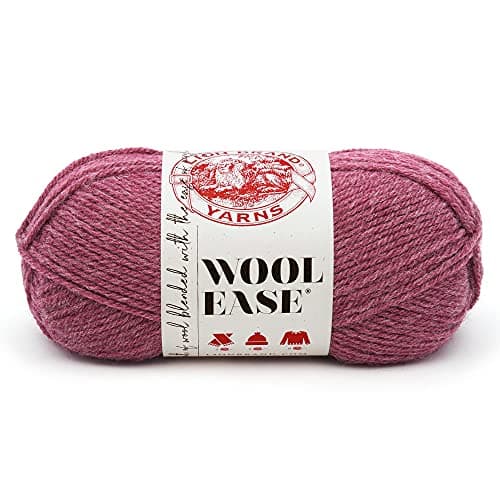
Lion Brand Wool-Ease
The first step: 80% acrylic, 20% wool, machine washable, barely more expensive.
$11.77 - View on Amazon#ad disclosure - price as of October 20, 2026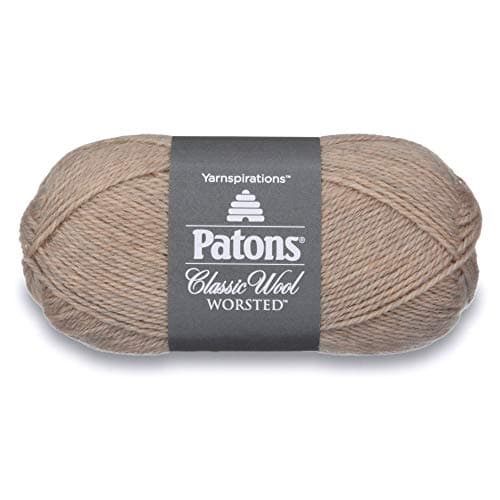
Patons Classic Wool Worsted
The second step: 100% untreated wool, hand wash, and the first time blocking will impress you.
$11.79 - View on Amazon#ad disclosure - price as of October 20, 2026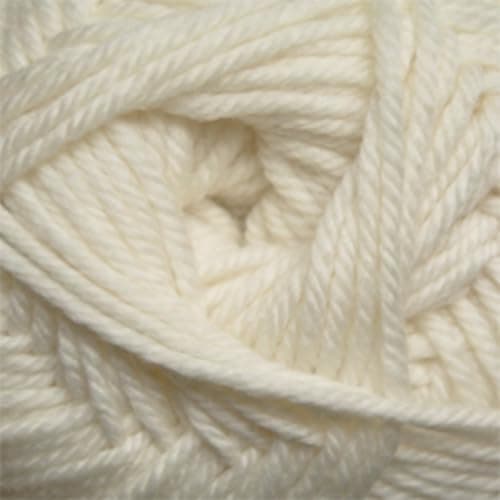
Cascade 220 Superwash Merino
The soft step: superwash merino, machine washable, and noticeably nicer against skin.
$19.00 - View on Amazon$21.0010% off · #ad disclosure - price as of October 20, 2026
Questions people actually ask
Is wool really better than acrylic?
For anything fitted, ribbed or blocked, yes - wool springs back and blocks, and acrylic does neither. For blankets, baby items and anything washed weekly, acrylic is genuinely the better choice rather than the cheaper one.
What is the first wool yarn I should buy?
One skein of an 80/20 acrylic-wool blend, made into a ribbed hat. It costs very little and it shows you exactly what springback does, which is the thing you are actually buying.
Should I upgrade my blanket yarn?
No. A blanket is the largest yardage commitment you will make and the project where wool's advantages matter least. Spend the money on a sweater instead.
Do I need merino, or is regular wool enough?
Regular wool has the same springback, blocking response and wet warmth. Merino is finer and does not itch, so it is worth the extra only for garments worn against bare skin.
Is hand-dyed yarn better quality?
Not inherently. Hand-dyeing changes the color, not the fiber or the construction. Buy it because you want that color, not because you expect it to perform better.
How do I know if a yarn will itch before I buy it?
Check the fiber and the grade. Merino and other fine fibers sit under the roughly 30-micron prickle threshold; generic wool and tweeds often do not. If in doubt, buy one ball and make a swatch you can hold against your neck.