Guide
Are Wool-Acrylic Blends Any Good
Yes, and read the ratio - 80/20 is a different yarn from 50/50.
By Sawyer V. · Published September 4, 2026
Disclosure: we earn a commission when you buy through the links on this page, at no extra cost to you. It never decides what we recommend or how we rank it - read the full disclosure.
The short answer
Yes, for the right jobs. A wool-acrylic blend is machine washable, cheaper than wool, and gets back some of the springback that pure acrylic lacks. The ratio decides everything: at 80 percent acrylic and 20 percent wool you have a slightly better acrylic, not a slightly cheaper wool. That is often exactly what you want.
Blends get dismissed by purists and oversold by marketing. The truth is dull and useful: the wool percentage does proportionate work, and knowing what each band buys you turns the label into a specification.
What each ratio actually gives you
| Wool content | Behaves like | Good for |
|---|---|---|
| 10-20% | Improved acrylic - a little more spring, warmer hand | Blankets, kids' garments, high-wash items |
| 30-50% | Genuine middle ground - real springback, still machine washable | Everyday sweaters, hats, cardigans |
| 60-80% | Mostly wool, with added strength and washability | Garments you want to last and still machine wash |
| Wool + nylon (75/25) | Wool with abrasion resistance | Socks - the standard sock construction |
The most widely available blend is 80/20 acrylic-wool. Lion Brand Wool-Ease is the archetype: 80 percent acrylic, 20 percent wool, machine wash and machine dry, 197 yards to a 3oz skein. It is a better acrylic, not a discounted wool, and it is a genuinely useful yarn on those terms.
What blending gets you
- Machine washability at close to acrylic cost. The main reason blends exist and the main reason to buy one.
- Some springback. Enough that ribbing on a hat brim still grips after a season, which pure acrylic will not manage.
- Better warmth than pure acrylic, roughly in proportion to the wool content.
- Better blocking response than pure acrylic - not wool's transformation, but the fabric does relax and settle.
- Lower cost per yard than pure wool, which matters enormously on a blanket.
What blending does not get you
- Full wool memory. At 20 percent wool, ribbing still relaxes - slower than pure acrylic, faster than pure wool.
- Wool's wet warmth. The acrylic fraction still goes cold when wet, and cold when wet is a whole-fabric property.
- A solution to the microplastic question. A blend still sheds its acrylic component - see does acrylic yarn shed microplastics. It reduces the synthetic fraction; it does not remove it.
- Wool's blocking transformation. You cannot set a lace pattern open in an 80/20 blend the way you can in pure wool.
- Predictable felting. Blends felt partially and unevenly. Never use one for a felting project.
The case where the blend is the right answer
It is more common than the craft admits. Buy the blend when all of these are true:
- The object will be machine washed, often, by someone who will not check a label.
- It needs to hold some shape - it has ribbing, or it is a garment rather than a rectangle.
- Yardage cost matters, because the project is large.
- Nobody involved is going to hand wash anything.
Baby garments, children's sweaters, hats for people who lose hats, and charity knitting all sit squarely in that box. Superwash wool is the other answer to the same brief, at two to three times the price - the trade-off is in superwash vs non-superwash.
The case where the blend is the wrong answer
- Anything you will block to shape. Lace, or a garment whose fit depends on blocking. Use wool.
- Anything felted. Blends felt unpredictably.
- A heirloom piece. If it is going to last thirty years, the fiber deserves to be wool.
- A summer garment. Neither fiber breathes well; cotton or linen is the answer.
- A project chosen specifically to avoid synthetics. A blend is a synthetic yarn with wool in it.
Reading the label properly
Three habits worth forming:
- Read the percentages, always. 'Wool blend' on the front means nothing. The composition line is the specification.
- Check the care instructions separately. Not every blend is machine washable, and blends with a high untreated-wool fraction may not be.
- Check the yardage. Blends vary widely in yards per gram - Wool-Ease is 197 yards to a 3oz skein, which is a lot less per skein than a 7oz acrylic. Always convert to yards before comparing prices, using the arithmetic in how much yarn do I need.
If you are working out where a blend fits against the pure fibers, acrylic vs wool sets out both ends of the spectrum, and the fiber comparison table has blends in the same grid as everything else.
The blends this page is about
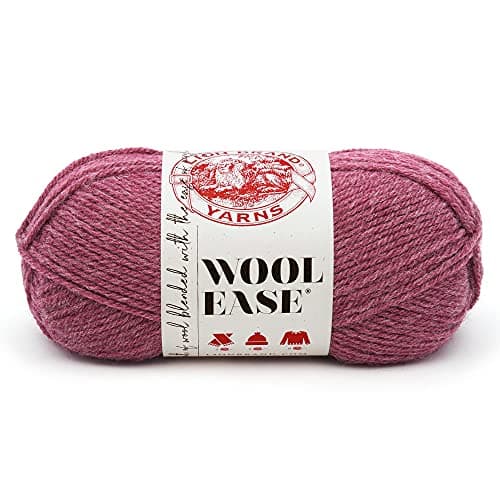
Lion Brand Wool-Ease
80% acrylic, 20% wool - the ratio most of this page's arithmetic is describing.
$11.77 - View on Amazon#ad disclosure - price as of October 20, 2026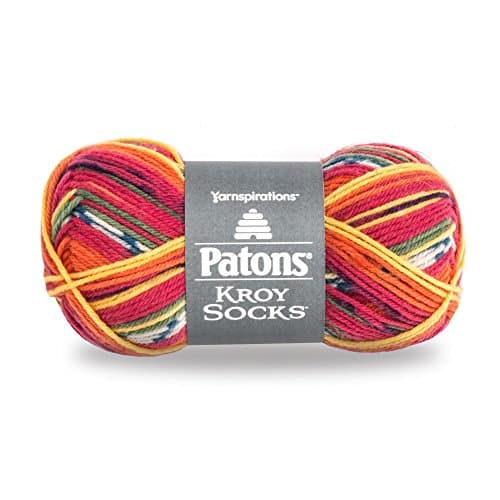
Patons Kroy Socks
75% wool, 25% nylon - a blend where the minority fiber is added for abrasion rather than for cost.
$9.99 - View on Amazon#ad disclosure - price as of October 20, 2026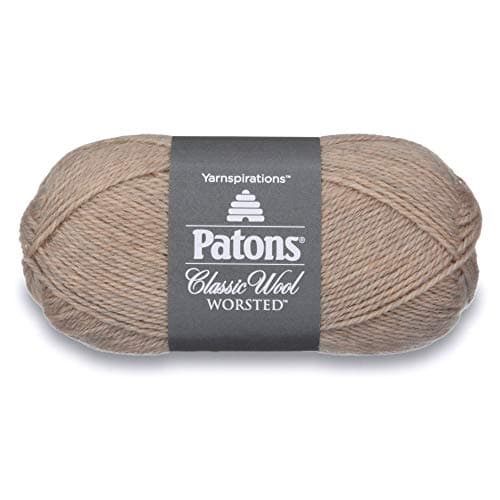
Patons Classic Wool Worsted
100% wool, unblended. Every blend on this page is judged against it.
$11.79 - View on Amazon#ad disclosure - price as of October 20, 2026
Questions people actually ask
Is an acrylic and wool blend good?
For machine-washed garments that need to hold some shape, yes. It costs close to acrylic, washes like acrylic and springs back better than acrylic. It does not behave like wool, and the ratio decides how close it gets.
Does an acrylic and wool blend shrink?
Less than pure untreated wool, because the acrylic fraction does not felt - but it can still felt partially and unevenly if the wool fraction is high and the wash is hot. Follow the label; do not assume machine washable without checking.
Is acrylic and wool itchy?
It depends on the wool, not on the blend. A blend using coarse wool can prickle just as a pure coarse wool would, because prickle comes from fibers coarser than about 30 micrometers regardless of what they are blended with.
What is the best wool-acrylic ratio?
For machine-washed everyday garments, 30 to 50 percent wool is the genuine middle ground. For blankets and high-wash items, 10 to 20 percent is plenty and keeps the cost down.
Can you felt a wool-acrylic blend?
Not reliably. Only the wool fraction felts, so the result is uneven and unpredictable. Felting projects need untreated pure wool.