Reference
How to Tell If Yarn Is Wool or Acrylic
An unlabeled skein tells you what it is in about four seconds.
By Sawyer V. · Published October 6, 2026
Disclosure: we earn a commission when you buy through the links on this page, at no extra cost to you. It never decides what we recommend or how we rank it - read the full disclosure.
The short answer
Burn a short length and watch three things: how it burns, what it smells of, and what is left. Wool burns slowly, shrinks away from the flame, smells strongly of burning hair and leaves a black, hollow, irregular bead that crushes to gritty powder - and it self-extinguishes when you take the flame away. Acrylic melts rather than burns, gives off black smoke, smells faintly fishy and leaves a hard irregular bead that does not crush. Cotton burns fast like paper, smells of burning leaves and leaves a fine feathery gray ash. If you cannot cut a length off, the hot-water test and the stretch test will usually separate wool from acrylic without a flame.
The burn test, step by step
This takes two minutes and settles the question definitively. Do it over a sink, with a bowl of water next to you.
- Cut a 4-6 inch length and untwist it slightly so the fibers can catch.
- Hold it with metal tweezers, never your fingers, over a ceramic dish or a sink.
- Bring a flame to the end slowly and watch what the fiber does as it approaches - some fibers shrink away before they touch it.
- Hold it in the flame for two seconds, then pull it out. The behavior after you remove the flame is the most useful observation.
- Smell the smoke, by wafting it toward you rather than putting your face over it.
- Let the residue cool, then press it. Crumbly or hard is the final piece of evidence.
The chart
| Fiber | In the flame | Odor | Residue |
|---|---|---|---|
| Wool | Burns but does not melt; shrinks from the flame; self-extinguishing | Strong burning hair | Black hollow irregular bead, crushes to gritty black powder |
| Cotton | Burns but does not melt; burns readily | Burning paper, leaves or wood | Fine feathery gray ash |
| Linen | Same as cotton | Same as cotton | Same as cotton |
| Rayon / viscose | Same as cotton | Same as cotton | Same as cotton |
| Acrylic | Melts; shrinks from flame; burns with black smoke | Fishy | Hard irregularly shaped bead |
| Nylon | Melts; shrinks from flame | Like celery | Hard cream-colored bead that darkens |
| Polyester | Melts; shrinks from flame; black smoke | Sweet chemical | Hard cream-colored bead that darkens |
Reading the result
- Smelled like burning hair and left something you can crush? Wool or another animal protein fiber - alpaca, mohair and silk all behave the same way, because they are all protein. This test cannot tell them apart.
- Melted into a hard bead you cannot crush? A synthetic. Use the odor to narrow it: fishy is acrylic, celery is nylon, sweet is polyester.
- Burned fast and left gray ash? A cellulose fiber - cotton, linen, rayon, bamboo viscose. Again, this test cannot separate them.
- Did both? It is a blend, and that is the most common result in practice. A wool-acrylic yarn chars in places and beads in others, and you will smell both. Wool-acrylic blends covers what to expect from those.
- Self-extinguished immediately? Strong evidence for wool. Protein fibers have a high ignition temperature and stop burning when the flame leaves. This is also why wool is the safer fiber around open flame.
Three tests with no flame
Sometimes you cannot spare a length, or you are testing a finished garment, or a flame is simply not practical. These are less conclusive and they are usually enough to separate wool from acrylic.
| Test | What to do | Wool | Acrylic |
|---|---|---|---|
| Hot water | Soak a short length in very hot water for a minute | Smells distinctly of wet sheep | Smells of nothing |
| Stretch and release | Pull a strand firmly and let go | Springs back - wool has crimp and recovery | Stays stretched or breaks |
| Felt test | Rub a short length hard between wet, soapy palms | Starts to mat and cling - unless it is superwash | Nothing happens |
| Appearance in sunlight | Look at the strand in direct light | Matte, with visible fiber ends standing out | Often has a slight plastic sheen |
| Weight for the thickness | Hold a known wool and the mystery yarn together | Lighter and springier for its bulk | Denser and more inert |
The felt test has a known false negative: superwash wool is treated specifically so the scales cannot interlock, so it will not felt and will look like acrylic on this test. If the hot-water test says sheep and the felt test says nothing, you are almost certainly holding superwash wool. Superwash vs non-superwash explains the treatment.
Why it is worth knowing
- Care. An untreated wool garment put through a hot machine wash is destroyed permanently, and nothing recovers it. Does wool yarn shrink covers what actually happens.
- Blocking. Wool blocks and holds the new shape; acrylic does not block at all in the usual sense - heat 'kills' it into a permanent limp drape. Knowing which you have changes your finishing plan entirely.
- Flammability. Acrylic melts and the molten fiber sticks to skin; wool chars and self-extinguishes. That difference is why wool is the better fiber for anything near a fire and why hand-knit acrylic should not be used as children's sleepwear. The US standard is 16 CFR Part 1610.
- Substitution. A pattern written for wool will not behave the same in acrylic - the gauge may match and the drape will not.
- Destash honesty. If you are selling or gifting unlabeled yarn, the recipient needs to know. 'Probably wool' is not a fiber content.
What this test cannot do
- It cannot give you a percentage. A blend burns like a blend and there is no way to read 80/20 off a bead.
- It cannot separate wool from alpaca, mohair or silk. All protein, all burning hair.
- It cannot separate cotton from linen, rayon or bamboo. All cellulose, all gray ash.
- It cannot tell you the weight. For that, use wraps per inch, which identifies an unlabeled yarn's thickness, or the yarn weight chart.
- It cannot tell you yardage. Weigh the ball and compare against a known yarn of the same fiber and thickness - how much yarn do I need has the method.
Between this page and wraps per inch you can recover almost everything a lost ball band contained: fiber family, thickness, and from those two the needle size and gauge range. The one thing you cannot recover is the dye lot.
Known references to test against
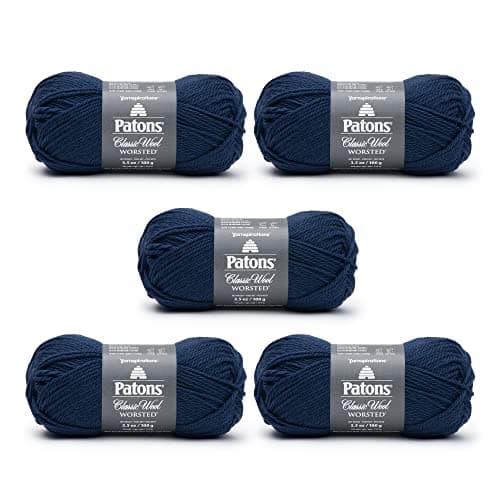
Patons Classic Wool Worsted
Untreated 100% wool. Keep a short length as your wool reference - it chars, smells of burning hair and self-extinguishes.
$43.18 - View on Amazon#ad disclosure - price as of October 7, 2026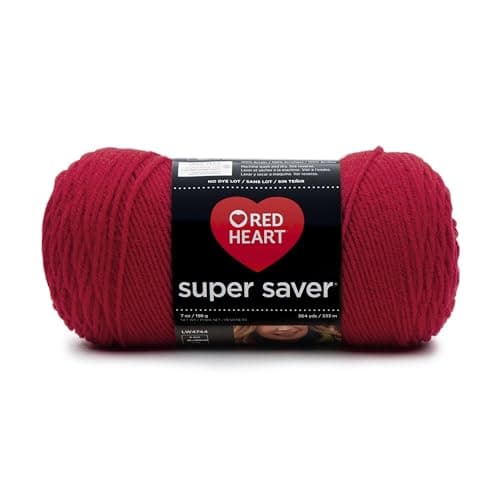
Red Heart Super Saver
100% acrylic. The acrylic reference: it melts, smells faintly fishy and leaves a hard bead.
$4.29 - View on Amazon#ad disclosure - price as of October 7, 2026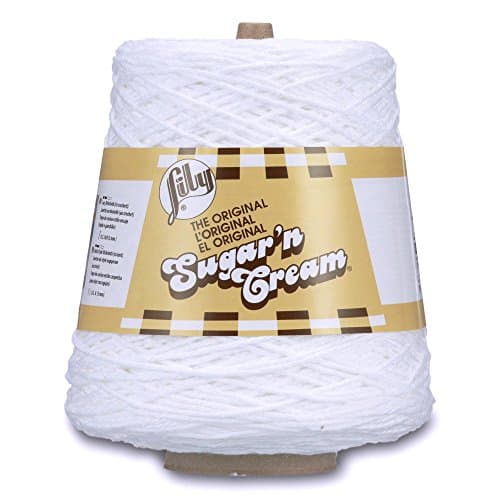
Lily Sugar'n Cream
100% cotton. The cotton reference: burns like paper and leaves a soft gray ash.
$19.42 - View on Amazon#ad disclosure - price as of October 7, 2026
Cascade 220 Superwash Merino
Superwash merino. Useful second wool reference - it behaves as wool, because the treatment changes the surface and not the protein.
$21.00 - View on Amazon#ad disclosure - price as of October 7, 2026
Questions people actually ask
How can you tell if yarn is wool or acrylic?
Burn a short length. Wool chars rather than melts, smells strongly of burning hair, self-extinguishes when the flame is removed, and leaves a black hollow bead that crushes to powder. Acrylic melts, gives off black smoke, smells faintly fishy and leaves a hard bead you cannot crush.
How do you tell if yarn is wool without burning it?
Soak a short length in very hot water for a minute - wool smells distinctly of wet sheep and acrylic smells of nothing. Then stretch a strand and release it: wool springs back because of its crimp, acrylic stays stretched or breaks. Neither is conclusive alone, but together they are usually enough.
What does wool smell like when burned?
Burning hair, strongly - because wool is keratin, the same protein family as hair. Alpaca, mohair and silk smell the same way for the same reason, so the test identifies the fiber family rather than the specific animal.
Does acrylic yarn melt or burn?
It melts. Acrylic is thermoplastic, so in a flame it liquefies, burns with a smoky flame and cools into a hard irregular bead. That is also the safety difference: molten synthetic sticks to skin and keeps burning, where wool chars and stops.
Will the burn test work on a blend?
It tells you a blend is a blend, which is useful, but not the ratio. A wool-acrylic yarn chars in places and beads in others and smells of both burning hair and fish. There is no way to read a percentage off the residue.
Why won't my wool felt in the felt test?
It is almost certainly superwash. The treatment smooths or coats the scales specifically so they cannot interlock, which is what felting is. If the hot-water test says wet sheep but the felt test does nothing, you are holding superwash wool.
Sources
- FabricLink University - Fabric burn test characteristics
- The Woolmark Company - What is the wool fiber
- The Woolmark Company - Machine washable wool
- 16 CFR Part 1610 - Standard for the Flammability of Clothing Textiles
- Yarnspirations - Patons Classic Wool Worsted specification
- Yarnspirations - Red Heart Super Saver specification
- Yarnspirations - Lily Sugar'n Cream specification
- Cascade Yarns - 220 Superwash Merino specification
- Craft Yarn Council - Standard Yarn Weight System