Head to head
Superwash vs Non-Superwash Wool
One survives your washing machine. The other holds its shape. Here is what the treatment does.
By Sawyer V. · Published September 4, 2026
Disclosure: we earn a commission when you buy through the links on this page, at no extra cost to you. It never decides what we recommend or how we rank it - read the full disclosure.
The short answer
Superwash wool has had its surface scales stripped or coated so the fibers cannot lock together and felt, which makes it machine washable. The trade is that it loses some springback, grows when wet and blocks larger, takes dye more intensely, and is produced by a chemically intensive process. Non-superwash wool keeps full elasticity and blocks predictably, but felts if it meets a washing machine.
Wool felts because each fiber is covered in overlapping scales, like roof tiles. Agitation plus heat plus moisture makes those scales ratchet past each other and lock - permanently, and with dramatic shrinkage. Superwash is the industrial answer to that, and it works.
What the treatment actually is
About three quarters of superwash wool is treated by the chlorine-Hercosett process, which does two things in sequence:
- Chlorination. A controlled oxidation with chlorine partially etches and softens the cuticle scales, blunting the ratchet.
- Resin coating. A cationic polyamide-epichlorohydrin resin - Hercosett 125 is the common one - is applied and fixed, forming a smooth polymer film along the fiber that stops the remaining scales engaging.
The result is a wool fiber wearing a very thin plastic coat. That is not a metaphor: the polymer is petrochemical and effectively non-biodegradable, which is the root of the sustainability objection to superwash.
How it changes the yarn in your hands
| Superwash | Non-superwash | |
|---|---|---|
| Machine wash | Yes, per the label | No - it will felt |
| Springback | Reduced | Full |
| Behavior when wet | Grows, sometimes a lot | Swells slightly, recovers |
| Blocking | Blocks larger; may not fully return | Blocks predictably and holds |
| Dye uptake | Higher - colors read more saturated | Softer, more muted |
| Surface | Smoother, slightly slick, more sheen | Matte, more grip |
| Stitch definition | Crisp | Softer, blooms after washing |
| Environmental load | Chlorination wastewater and a synthetic polymer | Scouring only |
The growth problem, which surprises people mid-project
Because the scales no longer grip, a wet superwash fabric has less holding it in place. Superwash garments frequently grow when washed and blocked - in length especially, since gravity does the work - and often do not return to their pre-wash dimensions.
Two things follow, and both are practical:
- Block your swatch the way you will wash the garment. A superwash swatch measured dry and unblocked can be a full size out from the same swatch measured after a soak. This is not optional with superwash.
- Consider knitting slightly shorter than the pattern's finished length in a superwash yarn, and let the first wash bring it to length.
Grip, and why it matters for construction
Non-superwash wool is slightly sticky against itself. That grip is what makes wool forgiving in ways people notice without naming: stitches sit where you put them, seams hold, steeks are possible at all, and colorwork floats bed into the fabric after a wash.
Superwash is slicker. Colorwork floats do not settle as well, and dropped stitches run further and faster. Neither is fatal - it just means superwash is less forgiving of construction shortcuts.
Which to choose
- Baby items - superwash, almost always. Nobody hand washes a baby blanket. Alternatives that avoid the question entirely are in best yarn for a baby blanket.
- Socks - superwash, blended with nylon. Socks get washed constantly and need the durability.
- Gifts for non-knitters - superwash. A hand-wash label on a gift is a felted gift.
- Colorwork and steeked garments - non-superwash. You need the grip.
- Anything blocked to a precise shape - non-superwash. It sets and holds.
- Felting projects - non-superwash, obviously. Superwash cannot felt; that is the entire point of it.
The environmental side, stated plainly
The chlorination and coating steps generate wastewater containing adsorbable organic halogens (AOX), and the discharge is regulated in developed economies with treatment requirements attached. The Hercosett polymer itself is petrochemical and does not biodegrade, so a superwash garment sheds a synthetic coating into wash water over its life.
There are chlorine-free anti-felting routes, including enzymatic and plasma treatments, but they are a minority of production and are not usually identified on a yarn label. In practice, if a label says superwash and nothing else, assume chlorine-Hercosett.
One question we get asked and will not overstate: superwash is not a PFAS treatment. The resin involved is a polyamide-epichlorohydrin, which is a different chemistry entirely. That is worked through properly, with sources, in does superwash wool contain PFAS.
One of each, to feel the difference
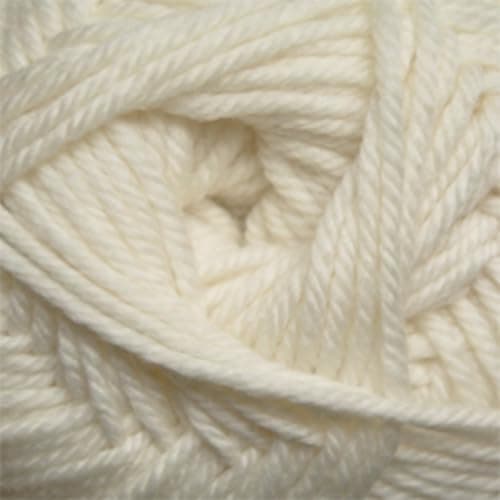
Cascade 220 Superwash Merino
Superwash: machine washable, smoother, and it grows when it is wet.
$19.00 - View on Amazon$21.0010% off · #ad disclosure - price as of October 20, 2026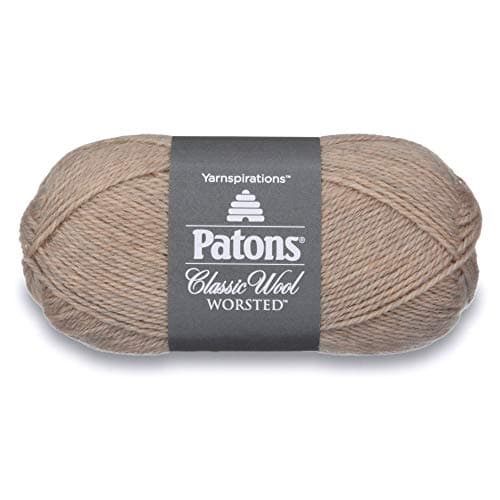
Patons Classic Wool Worsted
Untreated: springier, warmer, and it felts if you look at it wrong.
$11.79 - View on Amazon#ad disclosure - price as of October 20, 2026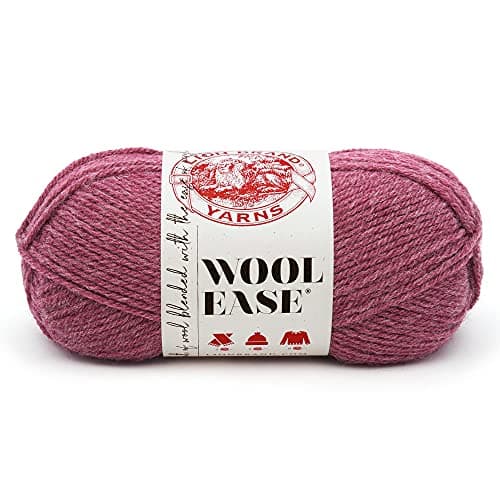
Lion Brand Wool-Ease
The third option, where acrylic does the washability job instead of a chemical treatment.
$11.77 - View on Amazon#ad disclosure - price as of October 20, 2026
Questions people actually ask
What is the difference between superwash and non-superwash yarn?
Superwash wool has been treated so its surface scales cannot lock together, which prevents felting and makes it machine washable. Non-superwash wool keeps its scales, so it felts in a machine but retains more springback and blocks more predictably.
Does superwash wool block?
Yes, but differently. It grows more when wet and often does not fully return to its pre-blocking dimensions, so block your swatch exactly as you intend to wash the garment before you trust your gauge.
Is all merino wool superwash?
No. Merino describes the sheep breed and the resulting fiber fineness; superwash describes a treatment applied afterwards. Merino is sold in both treated and untreated form, and the label will say which.
Does superwash wool bleed?
Superwash takes dye more readily than untreated wool, which produces more saturated colors and makes excess dye more likely to rinse out on the first wash. Soak a new project separately in cool water first, especially in deep or saturated shades.
Can superwash wool be felted?
No. Preventing felting is the entire purpose of the treatment. If a pattern calls for felting or fulling, it needs untreated wool.
Is superwash wool still wool?
Yes - the fiber is wool, with a thin polymer coating and partially etched surface scales. It behaves like a slightly slicker, less elastic wool, not like a synthetic.