Guide
Does Superwash Wool Contain PFAS
Almost certainly not - but the real concern with superwash is a different chemistry entirely.
By Sawyer V. · Published September 4, 2026
Disclosure: we earn a commission when you buy through the links on this page, at no extra cost to you. It never decides what we recommend or how we rank it - read the full disclosure.
The short answer
The standard superwash process - chlorine-Hercosett, used on roughly three quarters of superwash wool - applies a cationic polyamide-epichlorohydrin resin. That is not a per- or polyfluoroalkyl substance: it contains no fluorinated carbon chain, which is what defines PFAS. PFAS in textiles is associated with durable water- and stain-repellent finishes, which are a different treatment applied for a different purpose.
This question gets asked a lot and gets answered badly in both directions - either a flat denial with no chemistry behind it, or a vague implication that superwash is 'full of forever chemicals'. Here is what the sources actually support, and where the honest uncertainty sits.
What PFAS means
PFAS - per- and polyfluoroalkyl substances - are a large family of synthetic chemicals defined by a chain of carbon atoms bonded to fluorine. That carbon-fluorine bond is exceptionally stable, which is what makes the compounds persistent in the environment and gives them the 'forever chemicals' name. The US EPA maintains an overview of the health and environmental risk research.
The defining feature is the fluorinated chain. A chemical is a PFAS or it is not, based on its structure - not on whether it is synthetic, persistent or unpleasant.
What the superwash treatment uses
The dominant anti-felting process is chlorine-Hercosett, which runs in two steps:
- Chlorination. Controlled oxidation with chlorine partially etches and softens the scales on the wool cuticle.
- Resin coating. A cationic polyamide-epichlorohydrin (PAE) resin - Hercosett 125 being the common commercial example - is applied and cured, laying a thin polymer film along the fiber.
Polyamide-epichlorohydrin chemistry involves chlorine, not fluorine. The persistent halogen concern with superwash is adsorbable organic halogens (AOX) in the process wastewater - chlorinated, not fluorinated compounds. On structure alone, the standard superwash resin is not a PFAS.
Where PFAS in textiles actually comes from
The documented PFAS use in textiles is durable water repellent (DWR) finishing: the treatment that makes a rain shell bead water and a sofa resist a spilled drink. Peer-reviewed work has measured PFAS release from DWR-treated clothing during ordinary use and washing, and it is a genuine and well-evidenced exposure route.
That is a completely different treatment from anti-felting, applied for a completely different reason. A yarn is unlikely to carry a DWR finish - there is no reason to make knitting yarn water-repellent, and every reason not to, since it would resist dye and blocking.
What we cannot rule out
Two honest caveats, because this is a safety-adjacent question and we would rather flag them than sound more certain than we are:
- We could not audit any specific mill's full chemical inventory. Yarn labels state fiber content and care, not processing chemistry. We are reasoning from the published description of the standard process, which is well documented, to conclusions about products we cannot individually verify.
- Superwash is a category, not a single process. Enzymatic, plasma and other chlorine-free anti-felting routes exist and are not identified on labels. None of the published descriptions we found describe a fluorochemical route, but 'we found no evidence of' is a weaker statement than 'there is none'.
If a specific yarn matters to you, the manufacturer is the right place to ask, and a manufacturer that will not answer is telling you something.
The concern that is real
Superwash has a genuine environmental case against it, and it is not PFAS. It is that the process generates chlorinated wastewater requiring regulated treatment, and that the Hercosett polymer is a petrochemical, non-biodegradable coating bonded to a fiber whose selling point is that it is natural and biodegradable.
If you are choosing yarn on environmental grounds, that is the trade to weigh - and to weigh against the alternative, which is usually acrylic, an entirely synthetic fiber with its own shedding profile. Neither option is clean. The full picture of what the treatment does to the fiber is in superwash vs non-superwash.
The practical middle ground for most people: use untreated wool where the item will be hand washed or rarely washed, and reserve superwash for the things that genuinely need a machine - baby items, socks, and gifts for people who will not read a care label. Best yarn for a baby blanket works through that specific decision.
The two yarns this decision is between
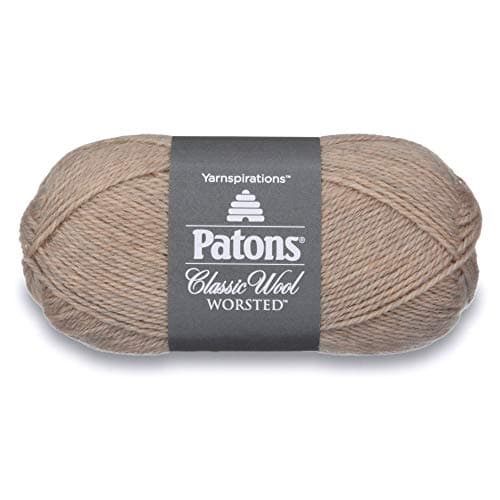
Patons Classic Wool Worsted
Untreated wool: no chlorine step, no polymer coating, hand wash only.
$11.79 - View on Amazon#ad disclosure - price as of October 20, 2026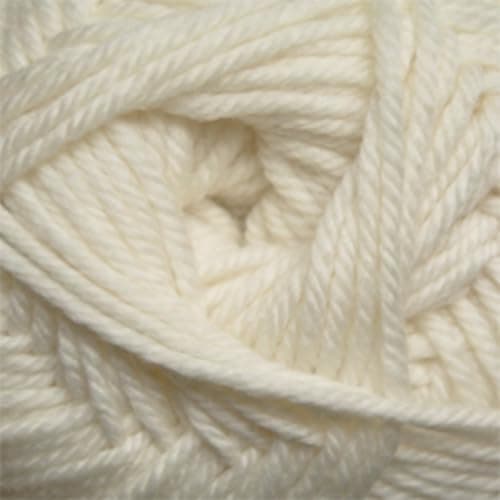
Cascade 220 Superwash Merino
Superwash merino, for the things that genuinely need a machine - baby items, socks, gifts.
$19.00 - View on Amazon$21.0010% off · #ad disclosure - price as of October 20, 2026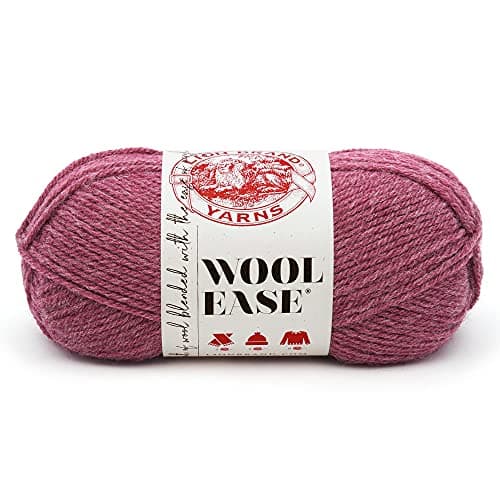
Lion Brand Wool-Ease
The third route: let acrylic content do the washability job instead of a treatment.
$11.77 - View on Amazon#ad disclosure - price as of October 20, 2026
Questions people actually ask
Does superwash wool contain PFAS?
The standard chlorine-Hercosett treatment uses a polyamide-epichlorohydrin resin, which contains no fluorinated carbon chain and is therefore not a PFAS. We found no published evidence of PFAS in standard superwash processing, though we cannot audit individual mills.
Does superwash wool contain plastic?
Yes, in a thin layer. The anti-felting resin is a petrochemical polymer film bonded to the fiber surface. It is not a PFAS, but it is a synthetic, effectively non-biodegradable coating on a natural fiber.
Is superwash wool safe to wear next to skin?
We found no published evidence of a skin-safety problem with finished superwash wool. The documented concerns are environmental - chlorinated process wastewater and a non-biodegradable coating - rather than about wearing the finished yarn.
Which textiles do contain PFAS?
Durable water repellent and stain-repellent finishes are the documented source - rain shells, technical outerwear, treated upholstery and carpet. Peer-reviewed work has measured PFAS release from DWR clothing during normal use.
Is there a chlorine-free superwash?
Enzymatic and plasma-based anti-felting treatments exist, but they are a minority of production and are not usually identified on a yarn label. If it matters to you, ask the manufacturer directly.