Guide
Blocking Superwash Wool
It blocks. It also grows, and mostly stays grown. Plan for that before you cast on.
By Sawyer V. · Published September 4, 2026
Disclosure: we earn a commission when you buy through the links on this page, at no extra cost to you. It never decides what we recommend or how we rank it - read the full disclosure.
The short answer
Yes, superwash wool blocks - and it typically blocks larger than untreated wool and does not fully return. That is because the anti-felting treatment removes the surface grip that normally holds stitches in place. Block your swatch exactly as you will wash the finished garment, measure it after it dries, and use those numbers rather than the pattern's.
Superwash blocking is not harder than ordinary blocking; it is just less forgiving of a swatch you did not wash. The whole problem is the gap between an unblocked swatch and a washed garment.
Why superwash grows
Untreated wool fibers are covered in overlapping scales that grip each other slightly. That grip is what stops a wet fabric sagging under its own weight - the stitches hold their neighbors in place.
The superwash process strips or coats those scales so that they cannot lock together and felt, which is the point. It also removes the grip. A wet superwash fabric has much less internal friction, so gravity does more, and the fabric lengthens. When it dries in the stretched position, it largely stays there.
The mechanism is set out in more detail in superwash vs non-superwash.
How to swatch superwash properly
This is the part that decides whether the garment fits, and it is where the extra care goes.
- Knit a swatch at least 6 x 6 inches in the pattern stitch. Bigger than you think, so edge distortion does not contaminate the measurement.
- Measure it dry and unblocked, and write that down. You will want the comparison.
- Soak it for at least 20 minutes in cool water with a little wool wash, the same way you will wash the garment.
- Squeeze out water without wringing, roll in a towel, press.
- Lay it flat without stretching it and let it dry completely. Do not pin it to size - you want to see what it does on its own.
- Measure again. The difference between the two numbers is your growth factor, and it is a real property of this yarn at this gauge.
If the swatch grew meaningfully in length, the garment will grow more, because it is heavier and gravity has more to work with.
Designing around the growth
- Knit the body and sleeves shorter than the pattern's finished length, in proportion to your measured growth, and let the first wash bring them to length.
- Prefer top-down construction where you can try it on and stop knitting when the length is right - though remember it will still grow after the first wash.
- Choose stitch patterns with structure. Ribbing, cables and textured stitches resist growth better than plain stockinette.
- Avoid heavy superwash for long garments. A long superwash cardigan carries a lot of weight over a lot of length, which is the worst case for this failure.
- Consider a blend. Superwash blended with nylon or a little acrylic recovers noticeably better than pure superwash.
How to block, step by step
- Soak in cool water with wool wash for 20 minutes. Do not agitate - superwash will not felt, but agitation still distorts.
- Squeeze, do not wring. Support the weight of the wet fabric with both hands; a wet superwash garment stretches under its own weight while you carry it.
- Roll in a towel and press to get most of the water out. The wetter it goes onto the mat, the more it will grow.
- Lay flat on blocking mats and pat to the measurements you want. Pin only lightly, and only where you need a shape held.
- Do not stretch to size. With untreated wool, stretching to size is normal and the fiber recovers. With superwash it is close to permanent, so put the fabric where you want it rather than pulling it there.
- Dry completely before moving it. A gridded mat set makes squaring a piece far easier.
Gridded interlocking foam mats are the right tool - our blocking mat picks go through what to look for.
Steam blocking superwash
Steam works and is faster, and it is the sensible choice for small adjustments and for setting a hem or a button band. Hold the iron above the fabric and let the steam do the work; do not press the plate onto the surface, which will flatten and glaze the stitches.
Steam is less thorough than a full soak - it will not even out uneven tension the way a wet block does - so use it for touch-ups rather than for the first block of a garment.
If it has already grown
Rewash and dry flat without stretching, and you will often recover part of the length - not all of it. Some superwash yarns return more than others and there is no way to know in advance except by having swatched.
If it has grown badly and will not come back, the honest options are to reblock shorter and accept an imperfect result, to reknit the affected section, or to treat the garment as it now is. That is a real cost of superwash, and it is the reason we would use untreated wool for a fitted garment you will hand wash anyway - see acrylic vs wool for where each fiber earns its place.
What blocking actually needs
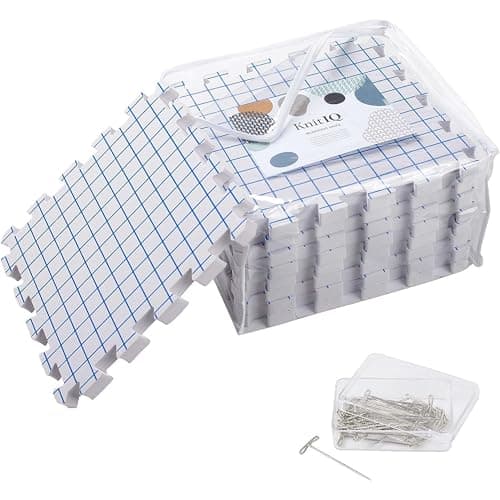
KnitIQ Blocking Mats
Nine interlocking gridded foam boards with T-pins. A flat, square, pinnable surface is most of what blocking is.
$49.99 - View on Amazon$54.999% off · #ad disclosure - price as of October 20, 2026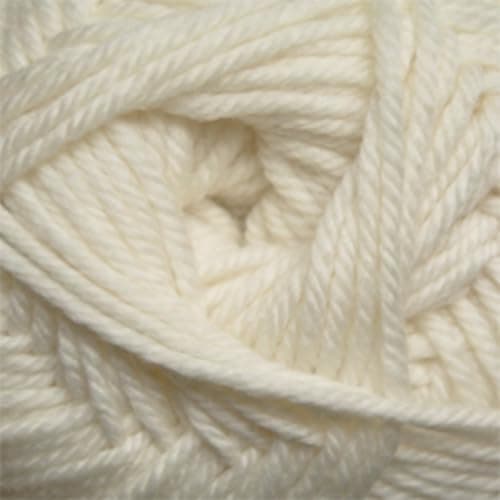
Cascade 220 Superwash Merino
The superwash merino this page is about, and the fiber most likely to grow on you.
$19.00 - View on Amazon$21.0010% off · #ad disclosure - price as of October 20, 2026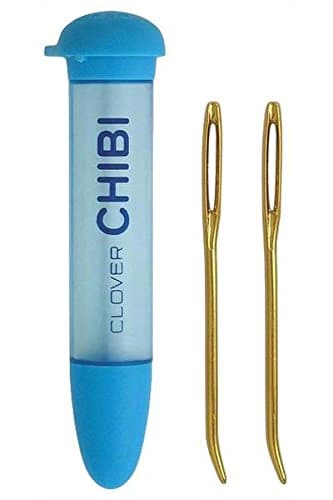
Clover Chibi Darning Needle Set (Bent Tip)
Blunt bent-tip needles, for the ends you weave in before the piece goes in the water.
$9.14 - View on Amazon#ad disclosure - price as of October 20, 2026
Questions people actually ask
Does superwash wool block well?
It blocks, and it blocks larger than untreated wool. The treatment removes the surface grip that normally holds stitches in place, so wet fabric grows and largely stays grown. Swatch and block exactly as you will wash the garment.
Why did my superwash sweater grow after washing?
Because the anti-felting treatment removed the scale grip between fibers, so gravity lengthens the wet fabric and it dries in that position. It is normal behavior for the yarn, not a mistake in your knitting.
Can you steam block superwash wool?
Yes. Hold the iron above the fabric and let the steam do the work rather than pressing the plate down, which flattens the stitches. Steam is good for touch-ups and less thorough than a full soak for a first block.
How do I stop superwash from stretching?
Support the wet fabric fully when you move it, press out as much water as possible before laying it flat, lay it out without stretching, and choose structured stitch patterns for anything long or heavy.
Should I knit superwash garments shorter?
Usually yes. Measure your swatch before and after a wash to get your growth factor, then shorten the body and sleeves in proportion and let the first wash bring them to length.