The picks
Best Blocking Mats
Thick enough to hold a pin, gridded enough to square a piece. That is the whole spec.
By Sawyer V. · Published September 4, 2026
Disclosure: we earn a commission when you buy through the links on this page, at no extra cost to you. It never decides what we recommend or how we rank it - read the full disclosure.
The short answer
Blocking mats need two things: enough foam thickness to hold a T-pin upright without it pushing through, and a printed grid so you can square a piece to a measurement. The KnitIQ set at 0.75in thick with printed gridlines and T-pins included covers both.
| # | Product | Best for | Set | Thickness | Price |
|---|---|---|---|---|---|
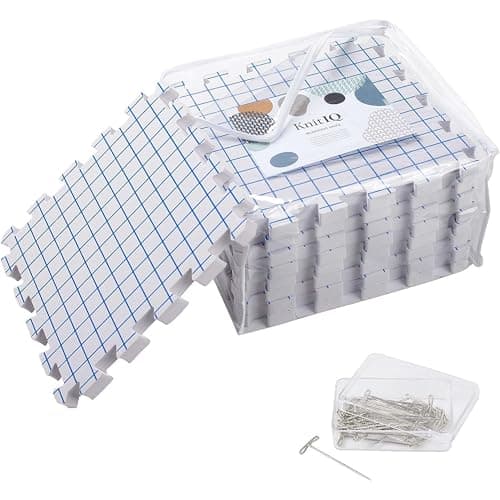
| 1 | KnitIQ Blocking MatsNine interlocking EVA foam boards with a printed grid, and the T-pins included. | Squaring a piece properly | 9 boards | 0.75in (1.9cm) | $49.99 - View on Amazon |
| 2 | 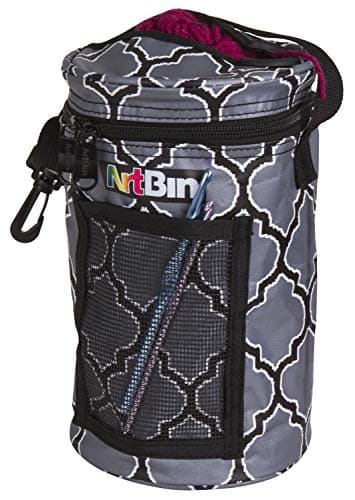 ArtBin Yarn DrumStorage, not blocking. Listed because accessory shopping conflates them. ArtBin Yarn DrumStorage, not blocking. Listed because accessory shopping conflates them. | Not blocking | 8 skeins | Storage only | $12.99 - View on Amazon#ad disclosure - price as of October 20, 2026 |
KnitIQ Blocking Mats
KnitIQ · Best for squaring a piece properly
Nine interlocking EVA foam squares with a printed grid, sold with the T-pins you actually need to hold a wet piece down.
- Set
- 9 interlocking boards plus T-pins and a storage bag
- Board size
- 12.6 x 12.6in, 0.75in (1.9cm) thick
- Material
- EVA foam, heat and steam resistant
- Grid
- Printed gridlines for squaring a piece
Who it suits
Anyone blocking lace, a sweater piece, or granny squares that need to match each other.
Why it is here
Nine boards at 12.6 x 12.6in and 0.75in (1.9cm) thick, in heat and steam resistant EVA foam, with printed gridlines and T-pins and a storage bag supplied.
What you give up
Nine boards is about 37in square when assembled, which is not enough for a full adult sweater body in one piece - you block pieces separately or in stages.
Specifications from KnitIQ product page. We have not handled this item - see how we pick.
ArtBin Yarn Drum
ArtBin · Best for not blocking
A 12-inch canvas drum with a slot in the lid, so the working yarn feeds out while the skeins stay put and stay clean.
- Dimensions
- 12in diameter x 12.75in high
- Capacity
- Up to 8 standard skeins
- Feed
- Slot in the top of the lid
- Material
- 600D poly-canvas with a textured PVC base
- 8 x 3in front pocket
- Carry
- Adjustable shoulder strap and top handle
Who it suits
Not anyone shopping for blocking mats.
Why it is here
A 12in canvas drum holding up to 8 skeins with a feed slot in the lid. Useful, and it has nothing to do with blocking.
What you give up
If storage is what you actually want, see [best knitting bags](/accessories/best-knitting-bags).
Specifications from ArtBin Yarn Drum specification. We have not handled this item - see how we pick.
What blocking does
Blocking is wetting or steaming a finished piece and pinning it to shape while it dries. On wool it is genuinely transformative: uneven stitches even out, lace opens, shaping sets, and a lumpy swatch becomes fabric.
It is not a cosmetic step. A lace shawl that has not been blocked does not look like lace - the pattern only appears when the fabric is stretched open and dried in that position.
What blocking does not do is fix acrylic. Acrylic does not wet block; it can only be steam relaxed, which is a one-way change. See acrylic vs wool.
The specifications that matter
| Specification | Why |
|---|---|
| Thickness | 0.5in minimum. Thinner foam lets T-pins push through or lean over. |
| Grid | Printed gridlines are what let you square a piece to an actual measurement. |
| Interlocking | Jigsaw edges let you build the exact area a project needs. |
| Heat resistance | Necessary if you steam block on the mat. |
| Pins included | T-pins are rustproof and hold at an angle. Sewing pins are not a substitute. |
| Total area | Nine 12.6in boards is about 37in square - enough for pieces, not a whole sweater. |
Do you need dedicated mats?
Not necessarily, and it is worth saying so:
- Towels on a spare bed work for a simple piece that only needs laying flat. Free, and you cannot pin precisely or measure against a grid.
- Children's foam play mats are the classic budget substitute - similar EVA foam, similar thickness, no useful grid, and often a printed pattern that transfers to wet fabric.
- Dedicated mats buy you the grid, guaranteed heat resistance and edges that interlock cleanly.
If you block often - lace, garments, or squares that must match - the grid alone justifies the purchase. If you block a scarf twice a year, towels are fine.
How to block, briefly
- Soak in cool water with wool wash for about 20 minutes. Do not agitate.
- Squeeze, do not wring, then roll in a towel and press out the water.
- Lay out on the mats and pin to the measurements you want, using T-pins at an angle.
- Dry completely before unpinning. Moving it early undoes the work.
Superwash wool needs particular care here - it grows when wet and often does not fully recover, so you lay it where you want it rather than stretching it there. Blocking superwash wool covers it properly.
Pins, and why T-pins specifically
A blocking pin has to hold wet fabric under tension for hours without rusting into it, and it has to go in at an angle so that the head does not pull straight out. T-pins do both: the crossbar gives you something to push against and something to pull out by, and rustproof stainless steel means no orange marks on a pale wool.
Dressmaking pins are the usual substitute and they are the wrong tool - they are short, they go in vertically, and many are nickel-plated steel that will mark wet wool. Blocking wires are the other option: a thin flexible wire threaded through the edge stitches of a straight edge, which produces a perfectly straight line no number of pins will match. For a shawl with long straight edges they are worth owning; for everything else, T-pins.
How many mats to buy
Nine 12.6in boards assemble to roughly 37in square, which is enough for a shawl, a scarf, or individual sweater pieces blocked one at a time. It is not enough for a full adult sweater body laid flat in one go.
| Project | Fits a 37in square? |
|---|---|
| Swatch | Easily - one board is enough |
| Scarf | Yes, folded into a wide L or blocked in two stages |
| Triangular shawl | Usually - most fit diagonally |
| Sweater front or back panel | Yes, one panel at a time |
| Sweater body worked in the round | No - block in stages, or buy a second set |
| Baby blanket | Tight. A 36 x 42in blanket needs a second set |
| Granny squares | Several at once, which is the point |
Buying a second set later is easy because the boards interlock, so there is no need to over-buy at the start. Start with nine and add if a project demands it.
Steam blocking on the same mats
Steam is faster than a full soak and it is the right tool for touch-ups: setting a hem, flattening a rolled button band, evening out a cuff. Hold the iron above the fabric and let the steam do the work - pressing the plate onto the surface flattens and glazes the stitches, and on acrylic it is irreversible.
That is why heat resistance matters in a mat: EVA foam that is not rated for it can distort or off-gas under a steam iron. KnitIQ specify their boards as heat and steam resistant, which is the property to look for if you steam at all.
How we picked
Specifications are the manufacturer's published figures - board count, dimensions, thickness, material and what is included. We have not blocked anything on these mats. How we pick is the method.
Questions people actually ask
What are the best blocking mats for knitting?
The KnitIQ set - nine interlocking EVA foam boards at 0.75in thick with printed gridlines, supplied with T-pins and a storage bag.
How thick should blocking mats be?
At least 0.5in, and 0.75in is better. Thinner foam lets T-pins push through or lean over, which defeats the purpose.
Can I use foam play mats for blocking?
Often yes - they are similar EVA foam at a similar thickness. Check for a printed surface pattern that could transfer to wet fabric, and accept that you lose the measuring grid.
Do I need to block acrylic?
You cannot wet block it. Acrylic can be steam blocked, which permanently relaxes the fiber into a softer, drapier fabric - a one-way change that cannot be undone.
How many blocking mats do I need?
Nine 12.6in boards give about 37in square, which covers a shawl or individual sweater pieces. A full adult sweater body in one piece needs more, or blocking in stages.