Head to head
Acrylic vs Wool Yarn
Acrylic wins more often than the craft admits. It also loses badly, in three specific places.
By Sawyer V. · Published September 4, 2026
Disclosure: we earn a commission when you buy through the links on this page, at no extra cost to you. It never decides what we recommend or how we rank it - read the full disclosure.
The short answer
Wool wins where the fabric has to hold a shape: ribbing, cables, fitted garments, anything you will block. Acrylic wins where the object gets washed constantly, has to be cheap in volume, or will be given to someone who will not hand wash it. For a first sweater, wool. For a baby blanket that gets washed twice a week, acrylic - and that is not a compromise.
The craft is unusually snobbish about this, and the snobbery costs beginners money. Wool is the better fiber at a long list of things, and none of them matter for a machine-washed throw. What follows is the comparison on the six axes that actually decide a project, with the trade-off stated in both directions.
The short version
| Acrylic | Wool | |
|---|---|---|
| Memory / springback | Poor. Ribbing relaxes and does not recover. | Strong. Ribbing and cables hold. |
| Blocking | Steam only, and it is semi-permanent 'killing' the fabric. | Wet blocking reshapes and sets the fabric. |
| Warmth when damp | Cold. Holds water against you. | Still warm. Absorbs up to a third of its weight. |
| Machine wash | Yes, and machine dry. | Only if superwash-treated. |
| Pilling | Varies enormously by brand. | Varies by construction; woolen-spun pills more. |
| Cost per 100g | Lowest of any fiber. | Two to ten times acrylic. |
| Best at | Blankets, kids' items, charity knitting, high-wash garments. | Sweaters, hats, socks, anything shaped. |
Memory is the real difference
If you take one thing from this page: wool springs back and acrylic does not. Wool fiber is a natural coil with scales along its length; stretch it and it wants to return. Acrylic is an extruded synthetic filament with no such structure - stretch it repeatedly and it stays stretched.
That single property explains almost every complaint about acrylic garments. The cuffs on an acrylic sweater go loose and stay loose. An acrylic hat brim widens over a winter. Acrylic cables flatten out and lose the raised, sculptural quality that made you knit cables in the first place. None of this is a manufacturing defect; it is what the fiber is.
It also explains why acrylic is genuinely fine for a blanket. A blanket has no ribbing to relax, no cuff to widen, and no shaping to lose. There is nothing for the missing memory to ruin.
Blocking: wool changes, acrylic does not
Blocking is wetting or steaming a finished piece and pinning it to shape while it dries. On wool it is transformative - stitches even out, lace opens up, a lumpy swatch becomes fabric. The wool takes the new shape and holds it.
Acrylic does not wet block. It can be steam blocked, which crafters call killing the acrylic: applied heat permanently relaxes the fiber, producing a softer, drapier fabric that will never spring back again. It is a one-way operation and worth knowing about, but it is not the same tool. If a pattern's shape depends on blocking, it depends on wool.
There is a complication on the wool side too, which is that superwash-treated wool blocks differently from untreated wool - it grows more and recovers less. That is covered in does superwash wool block.
Warmth, and the wet-weather case
Both fibers insulate by trapping air, and a thick acrylic fabric is warm. The difference shows up when the fabric gets wet. Wool absorbs a large share of its own weight in moisture before it feels wet, and it insulates while damp. Acrylic does not absorb; water sits in the fabric and against your skin, and the garment goes cold.
For an indoor blanket this is irrelevant. For a hat you will wear in rain or snow, it is the whole argument.
Washing: the axis where acrylic simply wins
Untreated wool felts in a washing machine - agitation plus heat locks the scales together and the fabric shrinks irreversibly and dramatically. Patons Classic Wool is hand wash and dry flat, and that is typical of untreated wool.
Acrylic goes in the machine and the dryer. Red Heart Super Saver is machine wash warm and tumble dry low; Lion Brand Heartland is machine wash gentle, tumble dry low.
Superwash wool closes most of this gap - it is wool treated to be machine washable - at the cost of some springback and a chemically intensive process. Superwash versus non-superwash works through the trade.
Softness, itch, and what is actually happening
Wool itch is a mechanical effect, not an allergic one. Textile research puts the prickle threshold at roughly 30 micrometers of fiber diameter: fibers coarser than that are stiff enough that their ends do not bend when pressed against skin, so they push into it and trigger the nerve endings that register as itch. What matters is not the average fineness but the proportion of fibers above that threshold.
That is why merino - typically in the 11.5 to 22 micron range - does not itch while a coarse tweed does, and why 'I am allergic to wool' is almost always 'this wool is coarse'. Someone who reacts to a scratchy jumper will usually be fine in merino. The full argument is in best non-itchy yarn for sweaters.
Acrylic can be very soft - Caron Simply Soft is named for it - and softness is the axis on which acrylic competes most credibly. It just achieves the softness with drape rather than loft, which is why soft acrylics hang rather than stand.
Pilling, which is a construction question more than a fiber question
Both fibers pill. What decides it is yarn construction - how tightly the fiber is spun and how long the individual fibers are - not whether the label says wool or acrylic. Acrylic pills are more visible and harder to remove because the fiber is strong: the pill stays attached where a wool pill breaks off.
Some acrylics are engineered against it. Lion Brand Basic Stitch Anti-Pilling is sold specifically on that property. The mechanism, and what actually helps, is in why yarn pills.
Cost, honestly
Acrylic is the cheapest yarn on the shelf per yard, by a wide margin. A 7oz skein of Red Heart Super Saver carries 364 yards; a 100g ball of Patons Classic Wool carries 194. For a large blanket, that gap is the difference between a project you start and one you do not.
The middle ground is a blend. Lion Brand Wool-Ease is 80 percent acrylic and 20 percent wool, machine washable, and gets you some springback for close to acrylic money. Whether blends are a genuine best-of-both or a compromise is worked through in are wool acrylic blends any good.
How to choose, in one paragraph
Choose wool for a fitted garment, anything with ribbing or cables, anything you want to block, hats and mittens for real weather, and socks. Choose acrylic for blankets, anything for a small child, charity knitting, anything the recipient will machine wash, and any project where the yardage cost decides whether it happens. Choose a blend when you want machine washability with some structure, or when you are stepping up from all-acrylic and are not ready for hand washing.
If this is your first move away from acrylic, the sequence that works - and the one that does not - is set out in upgrading from acrylic.
The yarns on both sides of this comparison
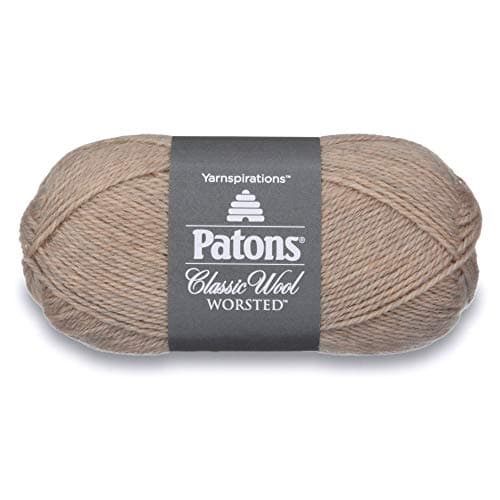
Patons Classic Wool Worsted
The wool side: untreated, warm when damp, springy, hand wash only.
$11.79 - View on Amazon#ad disclosure - price as of October 20, 2026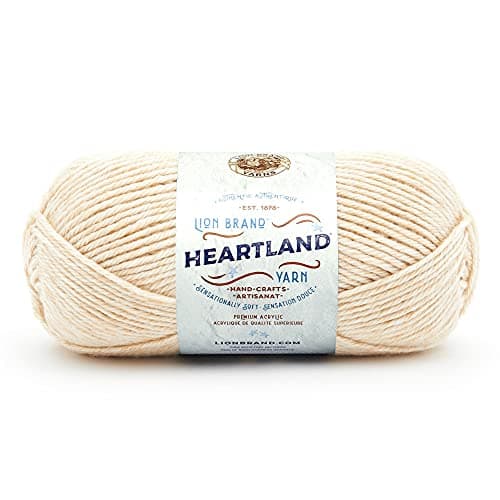
Lion Brand Heartland
The acrylic side at its best: soft, heathered, machine wash and tumble dry.
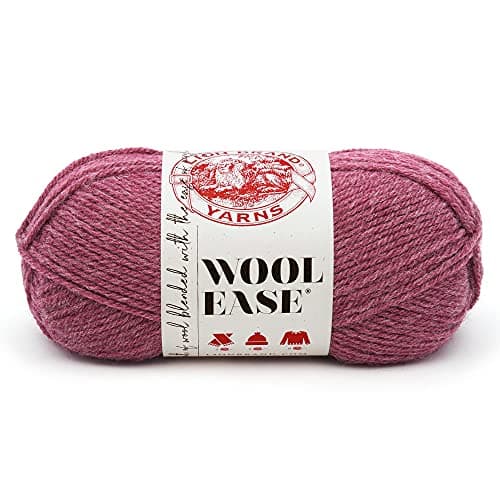
Lion Brand Wool-Ease
The 80/20 blend, for when the honest answer is that you want some of both.
$11.77 - View on Amazon#ad disclosure - price as of October 20, 2026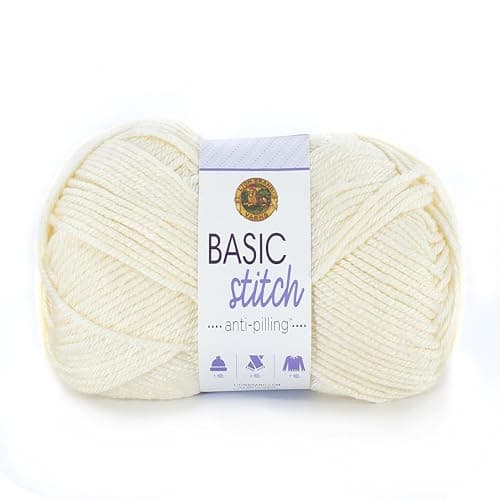
Lion Brand Basic Stitch Anti-Pilling
Acrylic spun against the failure this page holds against acrylic.
$5.99 - View on Amazon$11.7649% off · #ad disclosure - price as of October 20, 2026
Questions people actually ask
Is wool always better than acrylic?
No. Wool is better where the fabric has to hold a shape or stay warm when damp. Acrylic is better where the object gets machine washed constantly, needs to be cheap in volume, or is going to someone who will not hand wash it.
Does acrylic yarn absorb water?
Barely. Acrylic is hydrophobic, so water sits in the spaces between fibers rather than inside them. That is why acrylic dries quickly and why it feels cold when wet - the moisture stays against your skin instead of being taken up by the fiber.
Does acrylic yarn bleed when washed?
Modern acrylic is dyed with disperse dyes that bond well, so bleeding is uncommon in reputable brands. Deep reds and navies are the usual exceptions. Wash a new dark project separately the first time, cold, and check the water.
Is acrylic a wool?
No. Acrylic is a synthetic fiber made from a petroleum-derived polymer, extruded into filament. Wool is a protein fiber grown by sheep. They are chemically unrelated - acrylic imitates some of wool's behavior, and matches none of its structure.
Can you block acrylic yarn?
Not with water, in the way wool blocks. Acrylic can be steam blocked, which permanently relaxes the fiber into a softer, drapier fabric. It is a one-way change and cannot be reversed, so test on a swatch first.
Which is warmer, acrylic or wool?
For the same thickness of dry fabric, they are comparable. Wool is substantially warmer once either one is damp, because wool insulates while wet and acrylic does not.