The picks
Best Yarn for a Scarf
No shaping to lose, so this is the one project where softness genuinely wins.
By Sawyer V. · Published September 4, 2026
Disclosure: we earn a commission when you buy through the links on this page, at no extra cost to you. It never decides what we recommend or how we rank it - read the full disclosure.
The short answer
For a scarf, choose for drape and softness. Caron Simply Soft is the best all-round pick because the very properties that make it a poor sweater yarn - softness and drape with no springback - are exactly right around a neck. For outdoor warmth choose fine merino; for speed choose super bulky chenille.
| # | Product | Best for | Fiber | Yards/skein | Price |
|---|---|---|---|---|---|
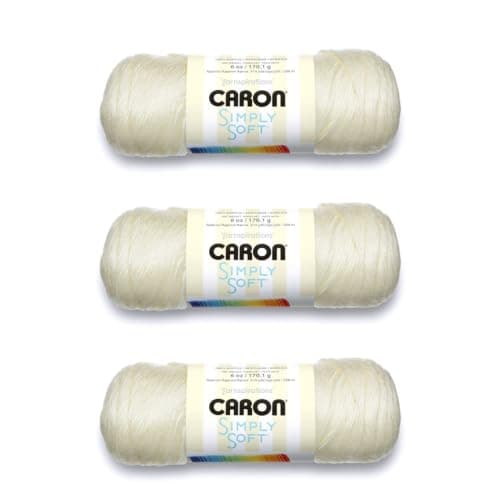
| 1 | Caron Simply SoftThe drape that ruins a sweater is exactly right in a scarf. | Softness against the neck | 100% acrylic | 315 | $14.55 - View on Amazon |
| 2 | 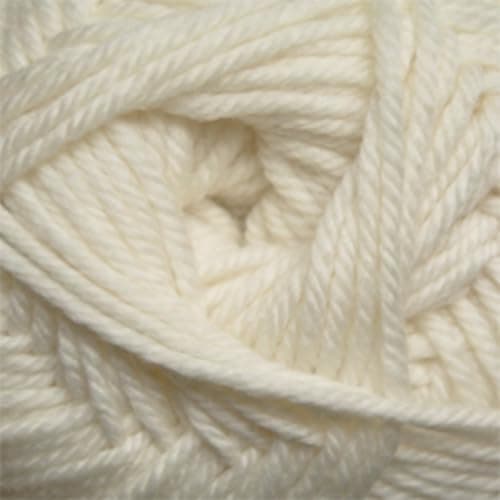 Cascade 220 Superwash MerinoFine merino - warm when wet, soft against skin, machine washable. Cascade 220 Superwash MerinoFine merino - warm when wet, soft against skin, machine washable. | Warmth that survives being damp | 100% superwash merino | 220 | $19.00 - View on Amazon |
| 3 | 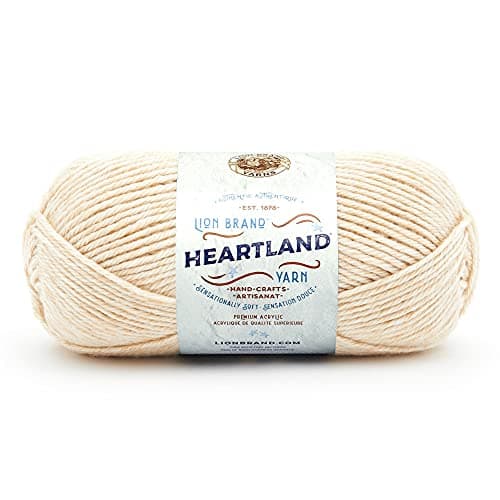 Lion Brand Heartland251 yards of soft acrylic per skein - usually one skein per scarf. Lion Brand Heartland251 yards of soft acrylic per skein - usually one skein per scarf. | A soft scarf, cheaply | 100% acrylic (solids) | 251 | Check price on Amazon#ad disclosure |
| 4 | 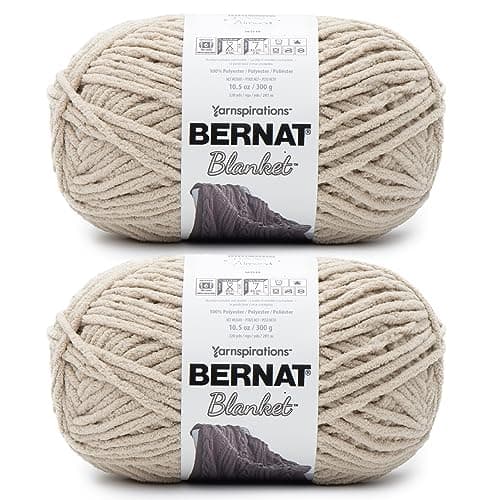 Bernat BlanketSuper bulky chenille - plush, quick, and bulky around the neck. Bernat BlanketSuper bulky chenille - plush, quick, and bulky around the neck. | A scarf finished this evening | 100% polyester | 108 | $20.96 - View on Amazon#ad disclosure - price as of October 20, 2026 |
| 5 | 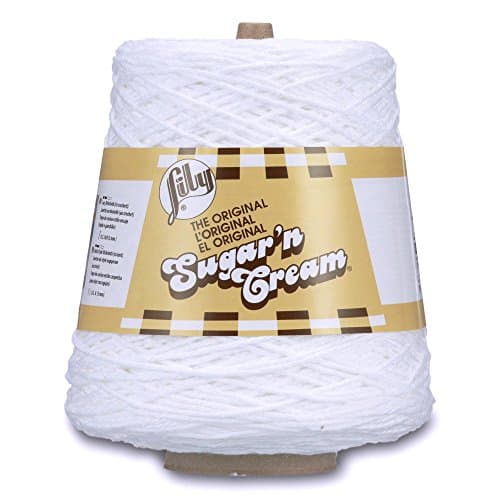 Lily Sugar'n CreamUnmercerized cotton makes a stiff, heavy scarf that nobody wears. Lily Sugar'n CreamUnmercerized cotton makes a stiff, heavy scarf that nobody wears. | Not scarves | 100% cotton | 120 | $17.88 - View on Amazon#ad disclosure - price as of October 20, 2026 |
Caron Simply Soft
Caron · Best for softness against the neck
A softer, shinier acrylic worsted with noticeable drape - which is exactly why it is a poor choice for anything that needs to hold a shape.
- Fiber
- 100% acrylic
- Weight
- 4 Medium / worsted
- Skein
- 6oz / 170g, 315yd / 288m
- Gauge
- 18 sts x 24 rows on 5mm (US 8)
- Hook
- 5mm (US H/8), 13 sc x 14 rows
- Care
- Machine wash cool, dry flat, no bleach
Who it suits
Anyone making a scarf they want to actually wear, especially a first scarf.
Why it is here
100% acrylic, 315 yards to a 170g skein, 18 sts x 24 rows on 5mm. Its softness comes from a smooth, lofty construction that produces drape rather than structure - which is a defect in a cuff and an asset around a neck.
What you give up
Published care is machine wash cool and dry flat, not tumble dry. Soft lofty acrylic is also more prone to pilling at friction points, like where a coat collar rubs.
Specifications from Yarnspirations product page. We have not handled this item - see how we pick.
Cascade 220 Superwash Merino
Cascade Yarns · Best for warmth that survives being damp
Machine-washable merino at 220 yards to the 100g skein - the standard answer when a sweater pattern says worsted and you want to be able to wash it.
- Fiber
- 100% superwash merino wool
- Skein
- 3.5oz / 100g, 220yd / 200m
- Gauge
- 20 sts x 28 rows in stockinette on US 7
- Weight class
- DK to light worsted
- Care
- Superwash treated - machine washable
Who it suits
Anyone who will wear this scarf outdoors in real weather rather than indoors as an accessory.
Why it is here
100% superwash merino at 220 yards a skein. Fine merino sits well under the roughly 30-micron prickle threshold, so it does not itch, and wool insulates while damp where acrylic does not.
What you give up
Several times the price of the acrylics, and superwash grows when blocked - which matters less on a scarf than on anything fitted.
Specifications from Cascade Yarns product page. We have not handled this item - see how we pick.
Lion Brand Heartland
Lion Brand · Best for a soft scarf, cheaply
A soft all-acrylic worsted in a 5oz skein - a lot of yardage per skein, which matters when a blanket needs eight of them.
- Fiber
- 100% acrylic (solids); 94% acrylic, 6% rayon (tweeds)
- Weight
- 4 Medium / worsted
- Skein
- 5oz / 142g, 251yd / 230m (solids)
- Gauge
- 16 sts x 22 rows on US 9 (5.5mm)
- Hook
- J-10 (6mm), 12 sc x 15 rows
- Care
- Machine wash gentle, tumble dry low, no bleach
Who it suits
Anyone making several scarves, for gifts or for charity knitting.
Why it is here
100% acrylic (solids) at 251 yards per 142g skein, 16 sts x 22 rows on US 9. A standard adult scarf usually comes out of a single skein, which means no joins and no dye-lot worry.
What you give up
Machine wash gentle and tumble dry low - a step fussier than a basic acrylic.
Specifications from Lion Brand product page. We have not handled this item - see how we pick.
Bernat Blanket
Bernat · Best for a scarf finished this evening
Polyester chenille at 108 yards to a 150g ball. Fast, warm, machine washable, and it will shed and worm if the tension is loose.
- Fiber
- 100% polyester (chenille)
- Weight
- 6 Super Bulky
- Ball
- 5.3oz / 150g, 108yd / 98m
- Gauge
- 8 sts x 13 rows on 8mm (US 11)
- Hook
- 8mm (US L/11), 7 sc x 8 rows
- Care
- Machine wash delicate, tumble dry gentle
Who it suits
Anyone who wants a finished scarf today, or a very warm cowl.
Why it is here
100% polyester at category 6, 8 sts x 13 rows on 8mm. A scarf at that gauge is a couple of hours of work rather than a couple of evenings.
What you give up
It is thick. A chenille scarf sits high and bulky under a coat collar, and at 108 yards a ball it is not as cheap as it looks.
Specifications from Yarnspirations product page. We have not handled this item - see how we pick.
Lily Sugar'n Cream
Lily · Best for not scarves
Unmercerized cotton in a small 2.5oz ball. Absorbent, hard-wearing, and the reason every dishcloth pattern ever written specifies it.
- Fiber
- 100% cotton
- Weight
- 4 Medium / worsted
- Ball
- 2.5oz / 71g, 120yd / 109m
- Gauge
- 20 sts x 26 rows on 4.5mm (US 7)
- Hook
- 5mm (US H/8), 13 sc x 14 rows
- Care
- Machine wash not above 86F delicate, tumble dry low
Who it suits
Nobody, for a scarf. It is a superb dishcloth and bag yarn and a poor neckwear yarn.
Why it is here
100% unmercerized cotton with no elasticity and a firm hand. The fabric hangs heavily, does not soften much with wear, and holds moisture against the skin.
What you give up
Cotton scarves also stretch lengthwise under their own weight and never recover. Keep this yarn for dishcloths, where its absorbency is the point.
Specifications from Yarnspirations product page. We have not handled this item - see how we pick.
Why a scarf changes the rules
Every other page on this site ranks partly on memory - the fabric's willingness to spring back. A scarf has no cuff, no ribbing, no shaping and no fit. There is nothing for missing memory to ruin.
That means the soft, drapey acrylics that we would steer you away from for a sweater are genuinely the right answer here. It is worth saying plainly, because the craft's default advice - always use better fiber - is wrong for this project.
How much yarn a scarf needs
A standard adult scarf is roughly 8 inches wide by 60 inches long, which is about 480 square inches. That is small enough that most worsted yarns will do it in one or two skeins, which has two useful consequences: no dye-lot risk, and few ends to weave in.
It also means the yarn cost is low in absolute terms, so a scarf is the sensible place to try a fiber you have not used before. If you want to know what merino or alpaca actually feel like as fabric, make a scarf rather than committing to a sweater's worth.
Stitch choice matters as much as fiber
- Garter stitch and seed stitch lie flat. Stockinette curls at the edges - on a scarf, badly enough to spoil it. This catches out almost every first-time scarf knitter.
- Ribbing makes a scarf that hugs, and uses noticeably more yarn for the same finished length.
- A wide loose stitch drapes; a tight stitch stands. For scarves, drape.
- Crochet scarves grow faster and use more yarn per area than knitted ones - see knitting vs crochet.
If the scarf must not itch
A scarf sits directly against the neck, which is more sensitive than almost anywhere else on the body. Prickle comes from fibers coarser than roughly 30 micrometers pressing into skin - which rules out coarse wool entirely and makes fine merino the natural wool choice.
Acrylic sidesteps the question entirely, since it is a smooth extruded filament with no coarse fiber ends. If someone has previously complained about a wool scarf, either go fine merino or go acrylic - do not go generic wool. More on this in best non-itchy yarn for sweaters and can acrylic yarn cause allergies.
How we picked
Specifications came from the manufacturers' published product pages, and we ranked on drape and softness rather than on structure, because a scarf has no structure to hold. We have not worn any of these. How we pick sets out the method, and the fiber background is in the fiber comparison table.
Questions people actually ask
What is the best yarn for a scarf?
A soft worsted with good drape. Caron Simply Soft is the strongest all-round pick because its softness and drape are exactly what a scarf wants, and it comes in a generous 315-yard skein.
How much yarn do I need for a scarf?
A standard 8 x 60in adult scarf is about 480 square inches, which most worsted yarns cover in one or two skeins. Ribbed scarves use noticeably more than flat-stitch ones.
Why does my knitted scarf curl at the edges?
You are knitting in stockinette, which always curls. Use garter stitch, seed stitch or ribbing, or add a garter-stitch border several stitches wide on each edge.
Is wool or acrylic better for a scarf?
Acrylic is softer and cheaper and perfectly good indoors. Wool is warmer in real weather and stays warm when damp. For a scarf worn outside in winter, fine merino is worth the extra.
What yarn is warmest for a scarf?
Per gram, alpaca and fine wool lead. For warmth that survives snow or rain, wool - it insulates while damp, and acrylic does not.
Sources
- Yarnspirations - Caron Simply Soft specification
- Cascade Yarns - 220 Superwash Merino specification
- Lion Brand - Heartland specification
- Yarnspirations - Bernat Blanket specification
- Yarnspirations - Lily Sugar'n Cream specification
- Farm & Fiber Knits - Understanding the prickle factor (fiber diameter and skin comfort)