Guide
Can Acrylic Yarn Cause Allergies
Usually the dye, not the fiber - and wool itch is not an allergy at all.
By Sawyer V. · Published September 4, 2026
Disclosure: we earn a commission when you buy through the links on this page, at no extra cost to you. It never decides what we recommend or how we rank it - read the full disclosure.
The short answer
True allergy to the acrylic polymer itself is not well documented. What dermatology research does document in textile-related contact dermatitis is reaction to disperse dyes - used to color acrylic, polyester and nylon - and to formaldehyde-based textile resins. If yarn makes your skin react, the dye or the finish is the more likely cause than the fiber.
This is a health-adjacent question, so the standard on this page is higher: everything below is either from published dermatology literature or is explicitly flagged as something we do not know. If you have a persistent skin reaction, a clinician who can patch test you will find the answer; a yarn website cannot.
What the literature documents
Reviews of textile contact dermatitis converge on two culprit groups, and the fiber is not one of them.
Disperse dyes
Disperse dyes are the dye class used to color synthetic fibers - polyester, acrylic, acetate and polyamide. They are described in the literature as among the most common textile allergens. A textile dye mix of eight disperse dyes has been part of the European baseline patch test series since 2015, and sensitization to that mix in patients referred for patch testing has been estimated at roughly 1.5 to 3.7 percent.
The named offenders that recur in case series include Disperse Blue 106 and Disperse Blue 124. Note what that means practically: the reaction tracks the color, not the fiber. The same acrylic yarn in a different shade may be fine.
Formaldehyde textile resins
Formaldehyde-based resins have been used since the 1920s to produce permanent-press and easy-care finishes. The literature describes them as potent sensitizers in susceptible people, and characterizes formaldehyde textile resin dermatitis as clinically important and probably underdiagnosed, even as free formaldehyde levels in textiles have fallen.
These finishes are far more common in manufactured garments than in yarn sold by the ball, which is one reason a reaction to a shop-bought sweater does not necessarily predict a reaction to yarn.
Wool itch is a different phenomenon entirely
Most people who say they are allergic to wool are describing prickle, which is mechanical rather than immunological. Textile research places the prickle threshold at roughly 30 micrometers of fiber diameter: coarser fibers are stiff enough that their protruding ends do not buckle against skin, so they press into it and stimulate the nerve endings that register as itch.
What matters is not the average fineness but the proportion of fibers above that threshold - a small coarse tail in an otherwise fine yarn is enough. That is why fine merino, at roughly 11.5 to 22 microns, is comfortable for most people who cannot tolerate a coarse tweed.
The practical test: if fine merino is comfortable and coarse wool is not, that is prickle. If every wool causes a reaction regardless of fineness, and it appears hours later rather than immediately, that is worth a clinical opinion. Best non-itchy yarn for sweaters covers the fiber choices.
Working out your own trigger
A cheap and reasonably informative sequence, short of patch testing:
- Wash the yarn or the swatch first. Loose surface dye and residual processing chemistry rinse out. If a washed swatch is fine and an unwashed one is not, the fiber is not the problem.
- Try a different color in the same yarn. If a pale or undyed version is comfortable and a saturated one is not, you are looking at dye.
- Try a different brand of the same fiber. Different processing, different finishes.
- Try a natural fiber in a fine grade. If fine merino is fine and coarse wool is not, it is prickle.
- Note the timing. Immediate stinging on contact points toward irritation or prickle. A reaction that appears hours later and lingers is more typical of allergic contact dermatitis and is the kind worth taking to a clinician.
If you want to reduce exposure anyway
- Wash new yarn or the finished object before wearing it. This is the single most useful step and it is free.
- Choose undyed or pale yarn. Less dye, and the least reactive dyes are usually the plain ones.
- Prefer natural fibers dyed with acid dyes - the class used on wool and other protein fibers - over disperse-dyed synthetics, if disperse dye is your suspected trigger.
- Put a layer between skin and garment for anything worn close - a cotton tee under a sweater removes the contact entirely.
- Keep the fiber fine if prickle is the issue. Aim for merino-grade fineness rather than 'wool' as a category.
For choosing a fiber from here, acrylic vs wool sets out what each one does, and the fiber comparison table has everything on one grid.
The fibers people switch to
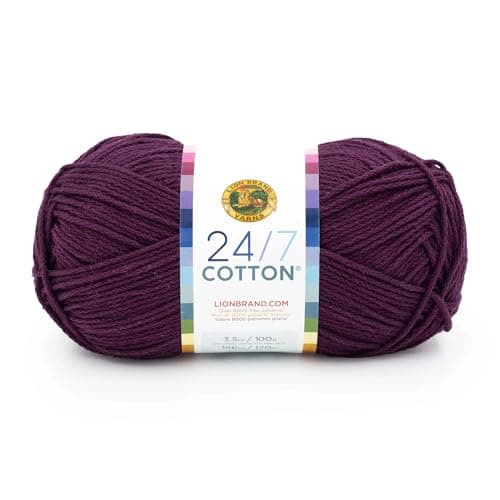
Lion Brand 24/7 Cotton
Cotton: no lanolin, no wool scales, no synthetic. The simplest thing to try when you are eliminating variables.
$6.99 - View on Amazon#ad disclosure - price as of October 20, 2026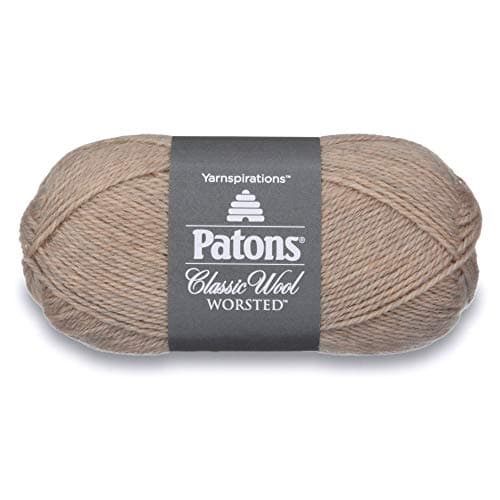
Patons Classic Wool Worsted
Untreated wool, for testing whether what bothers you is wool prickle rather than a reaction to acrylic.
$11.79 - View on Amazon#ad disclosure - price as of October 20, 2026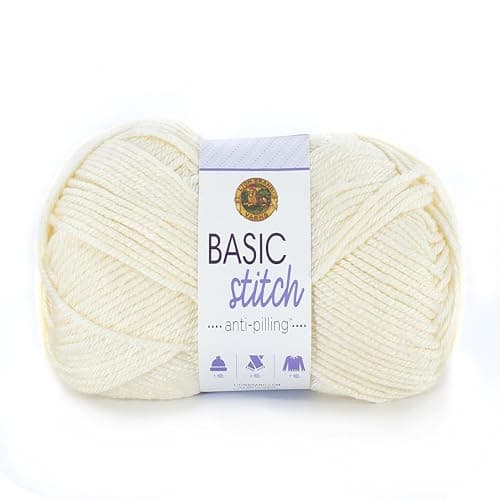
Lion Brand Basic Stitch Anti-Pilling
If acrylic suits you and it is loose fiber that irritates, an anti-pilling spin releases less of it.
$5.99 - View on Amazon$11.7649% off · #ad disclosure - price as of October 20, 2026
Questions people actually ask
Can acrylic yarn cause an allergic reaction?
Allergy to the acrylic polymer itself is not well documented. Documented textile reactions in the dermatology literature are mostly to disperse dyes, which color acrylic and other synthetics, and to formaldehyde-based textile resins.
Why does acrylic yarn make me itch?
The most likely causes are dye, a residual finish, or simple mechanical irritation from a coarse or scratchy yarn construction. Washing the yarn before use, and trying a paler shade, will separate those possibilities cheaply.
Is acrylic yarn hypoallergenic?
It is often described that way, and the fiber itself is rarely implicated. That is not the same as inert - the dye and finish on a synthetic yarn are the documented allergens, and they come with the yarn.
Am I allergic to wool if it makes me itch?
Probably not. Most wool itch is prickle - a mechanical effect from fibers coarser than about 30 micrometers pressing against skin. True wool allergy is rare. If fine merino is comfortable and coarse wool is not, that is prickle rather than allergy.
Does washing yarn reduce skin reactions?
It can, and it costs nothing to try. Washing removes loose surface dye and residual processing chemistry. If a washed swatch is comfortable and an unwashed one is not, the fiber was not the problem.