Head to head
Best Non-Itchy Yarn for Sweaters
Itch is a diameter problem, not a wool problem. That makes it cheap to solve.
By Sawyer V. · Published September 4, 2026
Disclosure: we earn a commission when you buy through the links on this page, at no extra cost to you. It never decides what we recommend or how we rank it - read the full disclosure.
The short answer
Wool itch is mechanical, not allergic. Textile research places the prickle threshold at roughly 30 micrometers of fiber diameter: fibers coarser than that do not bend when pressed against skin, so their ends push into it and trigger the nerve endings that register as itch. Merino at roughly 11.5 to 22 microns clears the threshold; generic wool often does not.
| # | Product | Best for | Fiber | Yards/skein | Price |
|---|---|---|---|---|---|
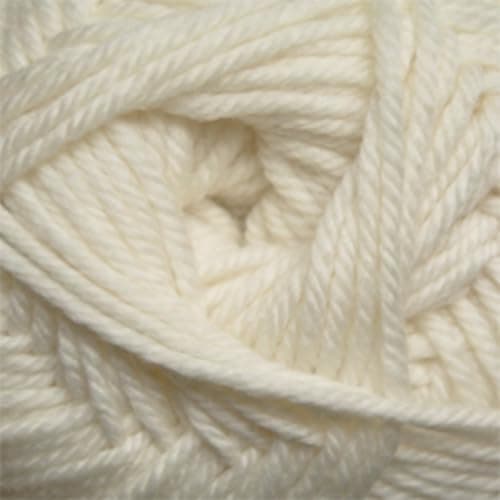
| 1 | Cascade 220 Superwash MerinoFine merino, well under the prickle threshold, and machine washable. | A wool sweater that does not itch | 100% superwash merino | 220 | $19.00 - View on Amazon |
| 2 | 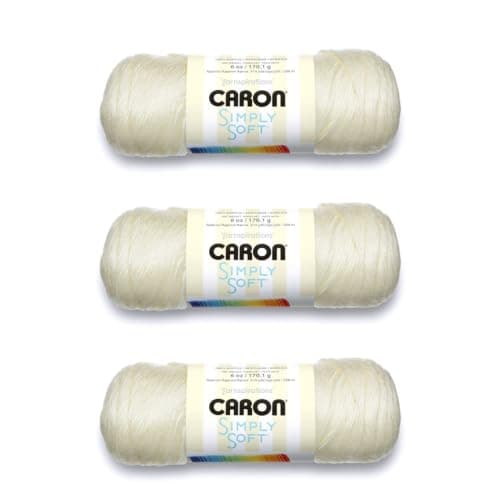 Caron Simply SoftAcrylic has no coarse fiber ends, so it cannot prickle. Caron Simply SoftAcrylic has no coarse fiber ends, so it cannot prickle. | Sidestepping the question entirely | 100% acrylic | 315 | $14.55 - View on Amazon |
| 3 | 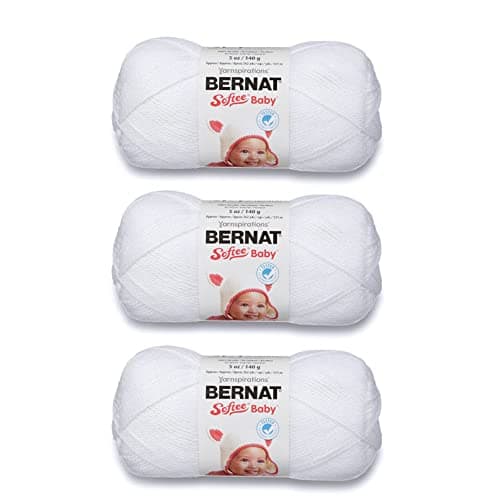 Bernat Softee BabySoft DK acrylic with a lot of yardage - and no fiber-end prickle at all. Bernat Softee BabySoft DK acrylic with a lot of yardage - and no fiber-end prickle at all. | Baby and toddler garments | 100% acrylic | 362 | $23.48 - View on Amazon#ad disclosure - price as of October 20, 2026 |
| 4 | 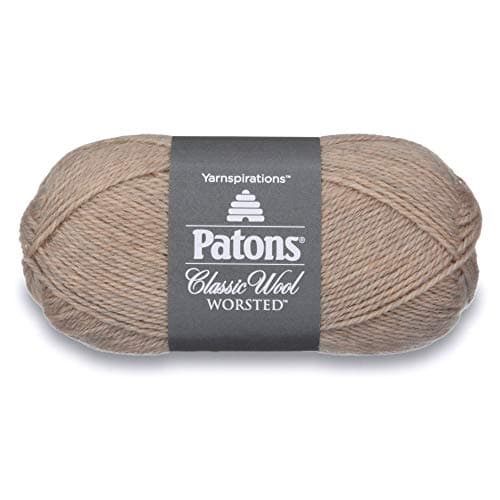 Patons Classic Wool WorstedExcellent wool, and not selected for fineness - which is what prickle depends on. Patons Classic Wool WorstedExcellent wool, and not selected for fineness - which is what prickle depends on. | Not sensitive skin | 100% wool | 194 | $11.79 - View on Amazon#ad disclosure - price as of October 20, 2026 |
Cascade 220 Superwash Merino
Cascade Yarns · Best for a wool sweater that does not itch
Machine-washable merino at 220 yards to the 100g skein - the standard answer when a sweater pattern says worsted and you want to be able to wash it.
- Fiber
- 100% superwash merino wool
- Skein
- 3.5oz / 100g, 220yd / 200m
- Gauge
- 20 sts x 28 rows in stockinette on US 7
- Weight class
- DK to light worsted
- Care
- Superwash treated - machine washable
Who it suits
Anyone who wants a wool sweater and has been put off by a scratchy one in the past.
Why it is here
100% superwash merino. Merino runs roughly 11.5 to 22 microns, comfortably below the roughly 30-micron threshold at which fiber ends stop bending against skin and register as prickle.
What you give up
Superwash grows when blocked and does not fully spring back. And it is several times the price of an acrylic.
Specifications from Cascade Yarns product page. We have not handled this item - see how we pick.
Caron Simply Soft
Caron · Best for sidestepping the question entirely
A softer, shinier acrylic worsted with noticeable drape - which is exactly why it is a poor choice for anything that needs to hold a shape.
- Fiber
- 100% acrylic
- Weight
- 4 Medium / worsted
- Skein
- 6oz / 170g, 315yd / 288m
- Gauge
- 18 sts x 24 rows on 5mm (US 8)
- Hook
- 5mm (US H/8), 13 sc x 14 rows
- Care
- Machine wash cool, dry flat, no bleach
Who it suits
Anyone with a genuine sensitivity, or making a garment for someone whose tolerance is unknown.
Why it is here
100% acrylic, 315 yards per 170g skein. Acrylic is a smooth extruded filament, not a scaled natural fiber, so the prickle mechanism does not apply to it at all.
What you give up
It is a poor sweater yarn structurally - lots of drape, no memory - so the cuffs and hem will relax. Fine for a loose or open sweater; wrong for a fitted one.
Specifications from Yarnspirations product page. We have not handled this item - see how we pick.
Bernat Softee Baby
Bernat · Best for baby and toddler garments
A DK-weight acrylic with 362 yards to the 140g ball - the practical default for anything a baby will wear and a parent will wash constantly.
- Fiber
- 100% acrylic
- Weight
- 3 DK / light
- Ball
- 5oz / 140g, 362yd / 331m (solids)
- Gauge
- 22 sts x 30 rows on 4mm (US 6)
- Hook
- 4mm (US G/6), 16 sc x 19 rows
- Care
- Machine wash cool, dry flat
Who it suits
Anyone knitting for a baby, or for an adult who reacts to every wool they have tried.
Why it is here
100% acrylic at DK weight, 362 yards per 140g ball, machine wash cool. Fine gauge means a lighter, softer fabric next to skin than a worsted acrylic gives.
What you give up
DK weight means a slower knit and more stitches, and being acrylic it has no springback for ribbing.
Specifications from Yarnspirations product page. We have not handled this item - see how we pick.
Patons Classic Wool Worsted
Patons · Best for not sensitive skin
100% non-superwash wool at supermarket money. It blooms when blocked, holds a cable, and it will felt if you put it in the machine.
- Fiber
- 100% wool (not superwash)
- Weight
- 4 Medium / worsted
- Ball
- 3.5oz / 100g, 194yd / 177m
- Gauge
- 20 sts x 26 rows on 4.5mm (US 7)
- Hook
- 5mm (US H/8), 14 sc x 17 rows
- Care
- Hand wash, lay flat to dry, do not machine wash
Who it suits
Not for anyone knitting a next-to-skin sweater because a previous wool itched. It is a very good yarn for structured outerwear worn over a shirt.
Why it is here
100% wool, not graded or sold on fiber diameter. Generic wool contains a proportion of fibers above the prickle threshold, and it only takes a small coarse fraction to be felt.
What you give up
If you love how it knits, use it for a cardigan or outer layer worn over a long-sleeved shirt, where nothing touches bare skin.
Specifications from Yarnspirations product page. We have not handled this item - see how we pick.
What is actually happening when wool itches
The mechanism is well described and it is worth understanding, because it changes what you buy.
A fabric surface has fiber ends sticking out of it. When a fiber end meets skin, one of two things happens: it bends out of the way, or it does not. A fine fiber bends. A coarse fiber is stiff enough to resist buckling, so the end presses into the skin surface and stimulates the nerve endings that register as itch.
The published threshold is around 30 to 32 micrometers. Below it, fibers bend. Above it, they do not.
Where the common fibers sit
| Fiber | Typical range (microns) | Against the ~30 micron threshold |
|---|---|---|
| Merino wool | 11.5-22 | Well under |
| Cashmere | 15-19 | Well under |
| Baby alpaca | 18-22 | Under |
| Standard alpaca | 26-30 | At or above - can prickle |
| Generic / unspecified wool | Varies widely | Often has a coarse fraction above |
| Acrylic | n/a - smooth filament | Mechanism does not apply |
| Cotton | n/a - short, soft fiber | Mechanism does not apply |
Read the last three rows together and the buying logic falls out. Fine merino solves the problem. So does acrylic, for free. The expensive fibers are not the answer to itch; they are the answer to something else.
The cheap fix people skip
If you already have a wool sweater that itches, three things are worth trying before you replace it:
- Wash it with a wool wash and a conditioner-style rinse. It softens the surface and lays fiber ends down. It is not permanent and it is very cheap.
- Wear a layer under it. A cotton long-sleeved tee removes the contact entirely, and is what wool sweaters were traditionally worn over.
- Line the cuffs and neckband with a soft fabric. Those are the highest-contact points and they are small enough to line by hand in an evening.
If it is not prickle
Some reactions are not mechanical. The tells: it appears hours after contact rather than immediately, it lingers after the garment is removed, and it happens regardless of how fine the fiber is.
The dermatology literature documents textile contact dermatitis mostly to disperse dyes - used to color synthetic fibers - and to formaldehyde-based textile resins, rather than to fibers themselves. That is a clinical question and patch testing is how it gets answered. Can acrylic yarn cause allergies sets out what is documented, and it is not a diagnosis.
How we picked
We ranked on fiber diameter against the published prickle threshold, then on whether the yarn is otherwise suitable for a sweater. Specifications are the manufacturers' published figures. We have not worn any of these. How we pick explains the method, and best yarn for a sweater ranks the same category on structure rather than on comfort.
Questions people actually ask
Why does wool itch?
Because fibers coarser than about 30 micrometers are stiff enough that their ends do not bend against skin - they press into it and stimulate the nerve endings that register as itch. It is mechanical, not an allergy.
Is merino wool itchy?
Generally not. Merino runs roughly 11.5 to 22 microns, well below the prickle threshold. A merino yarn with an unusually coarse fraction can still prickle, because it is the coarse tail rather than the average that matters.
What is the softest yarn for a sweater?
Cashmere and fine merino among the animal fibers, and any smooth acrylic if you want to remove the question entirely. Both fine merino and cashmere sit well below the prickle threshold, so the difference between them is handle rather than comfort.
Can I make an itchy sweater less itchy?
Partly. Washing with a wool wash and a softening rinse lays fiber ends down, wearing a cotton layer underneath removes the contact, and lining the cuffs and neckband fixes the highest-contact points.
Am I allergic to wool?
Probably not - true wool allergy is rare. If fine merino is comfortable and coarse wool is not, that is prickle. If every fiber reacts and the reaction appears hours later, that is worth a clinical opinion rather than a yarn recommendation.