Head to head
Cashmere vs Merino
Finer and softer, against stronger and a fraction of the price. The blend usually wins.
By Sawyer V. · Published September 4, 2026
Disclosure: we earn a commission when you buy through the links on this page, at no extra cost to you. It never decides what we recommend or how we rank it - read the full disclosure.
The short answer
Cashmere is finer - around 15 to 19 microns against merino's 11.5 to 22 - and noticeably softer and lighter, but it is weaker, pills faster and costs several times as much. For a garment you will wear often, merino or a merino-cashmere blend is the better purchase. Pure cashmere earns its money in small, gently-worn pieces.
The honest framing is that these two fibers are not really competing for the same job. Cashmere is a luxury handle at a durability cost. Merino is a workhorse that happens to be soft. Most of the disappointment with cashmere comes from buying it for a job merino should have done.
The comparison
| Cashmere | Merino wool | |
|---|---|---|
| Typical micron range | About 15-19 | About 11.5-22 |
| Handle | Very soft, light, almost weightless | Soft, with more body |
| Strength | Low - short, fine fibers | Higher - longer staple |
| Pilling | Fast, especially at friction points | Slower, construction-dependent |
| Memory | Moderate | Strong |
| Warmth per gram | Very high | High |
| Price | Several times merino | Widely available at moderate cost |
| Care | Hand wash, dry flat | Hand wash, or machine wash if superwash |
Why cashmere pills so fast
Cashmere fibers are short as well as fine. Short fibers have more free ends per length of yarn, and free ends are what migrate to the surface, tangle and form pills. Fineness makes them soft; shortness makes them fragile. It is the same property producing both effects, which is why you cannot have one without the other.
This is normal rather than a defect, and it is manageable - a fabric comb or a sweater stone, used gently, keeps a cashmere piece looking well. It is still a maintenance commitment that merino does not ask for. The mechanism is in why yarn pills.
Softness, and diminishing returns
The published prickle threshold is around 30 microns - above it, fiber ends stay stiff against skin and register as itch. Both cashmere at 15-19 and fine merino at 11.5-19 are far below that line, so neither will itch. Everything above 'does not itch' is refinement, not necessity.
That matters for the buying decision. If you are choosing cashmere because a wool sweater made you itch, fine merino solves that problem for a fraction of the money. Cashmere buys you a lighter, more fluid handle on top - real, but a luxury rather than a fix.
The blend argument
A merino-cashmere blend - commonly 10 to 30 percent cashmere - is the purchase we would actually make. The cashmere contributes handle and halo; the merino contributes staple length, strength and memory. The blend pills less than pure cashmere, holds ribbing better, and costs meaningfully less.
If you want the cashmere feel in something you will wear weekly, buy the blend. If you want pure cashmere, put it in a cowl, a hat or fingerless mitts, where there is little abrasion and the yardage is small enough that the price is bearable.
Where cashmere comes from, and why the price is what it is
Cashmere is the fine undercoat of a cashmere goat, separated from the coarse outer guard hair. A goat yields a very small quantity of usable fine fiber per year, and the separation is labor-intensive. Merino is sheared from a sheep in a single fleece and yields far more usable fiber per animal per year.
That is the whole price story, and it is worth knowing because it explains something else: cheap cashmere is usually cashmere with more guard hair left in. A garment sold as cashmere at merino money is generally coarser and shorter-stapled than the price suggests, which means it prickles more and pills faster - the two things you were buying cashmere to avoid.
So the sensible caution with cashmere is the opposite of the usual one. It is not that cashmere is overpriced; it is that unusually cheap cashmere is usually a different product wearing the same word.
Care
Both are hand wash unless superwash treated, and merino is far more commonly available superwash - which for anything worn weekly is a real practical advantage.
| Cashmere | Merino | |
|---|---|---|
| Washing | Hand wash cool, always | Hand wash, or machine if superwash |
| Drying | Dry flat, never hang | Dry flat |
| Storage | Folded, never on a hanger | Folded |
| Moths | Highly attractive to them - store sealed | Attractive to them - store sealed |
| De-pilling | Regularly, gently, by hand | Occasionally |
The hanging point matters more than it sounds. Both fibers stretch under their own weight when unsupported, and a cashmere sweater left on a hanger for a season comes off it a size longer and does not recover.
What to buy for what
- Everyday sweater - merino, or a merino blend. Cashmere will not survive the wear.
- Special-occasion sweater - cashmere or a high-cashmere blend, if the budget is there.
- Cowl, hat, mitts - pure cashmere is at its best here. Small yardage, low abrasion.
- Baby items - superwash merino. Cashmere is the wrong care regime for anything a baby owns.
- Socks - merino with nylon. Cashmere socks wear through.
- First fine-fiber project - merino. Learn on the forgiving one.
Availability is worth a warning: much of the well-known cashmere and cashmere-blend yarn in this category is sold through individual yarn retailers rather than the general marketplace, so it may not be buyable wherever you normally shop. We recommend from what is broadly available, which in practice means merino - see best budget merino wool yarn and the wider case in alpaca vs merino.
The merino side of this comparison
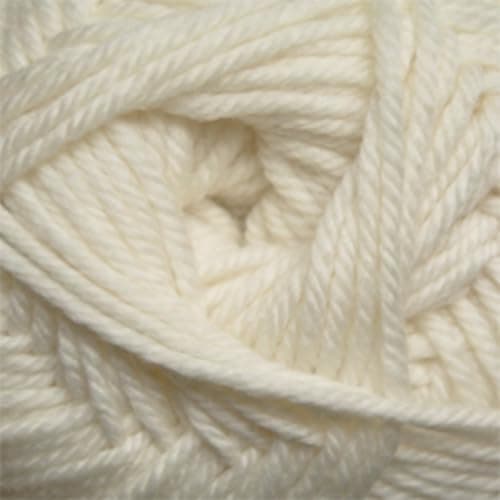
Cascade 220 Superwash Merino
Superwash merino - the fiber this page argues you should buy instead of cashmere for most projects.
$19.00 - View on Amazon$21.0010% off · #ad disclosure - price as of October 20, 2026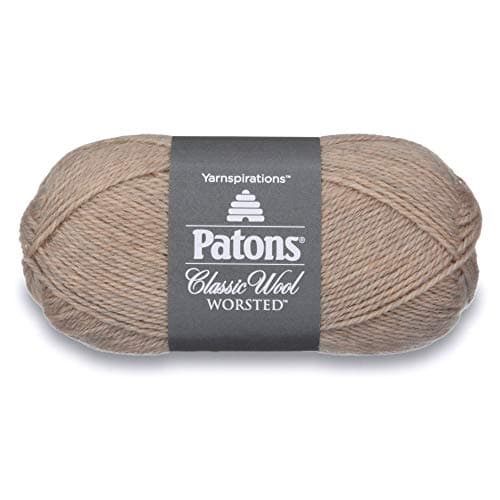
Patons Classic Wool Worsted
Standard wool, for the durability and price comparison.
$11.79 - View on Amazon#ad disclosure - price as of October 20, 2026
Questions people actually ask
Is cashmere worth it compared to merino?
For small, gently-worn pieces, yes - it is lighter and softer than anything else at the price of durability. For an everyday sweater, a merino or merino-cashmere blend is the better buy, because pure cashmere pills faster and costs several times as much.
Which is softer, cashmere or merino?
Cashmere, generally. It sits around 15 to 19 microns against merino's 11.5 to 22, and the fiber is shorter and finer, giving a lighter handle. Both are well below the roughly 30-micron threshold at which fiber ends start to feel prickly.
Why does my cashmere pill so quickly?
Because the fibers are short as well as fine, so there are more free ends to migrate to the surface and tangle. It is inherent to the fiber, not a fault. A fabric comb used gently keeps it under control.
Can I substitute merino for cashmere in a pattern?
Usually yes, if the weight matches - swatch and check gauge. Expect a slightly heavier fabric with more body and less halo, and expect it to hold ribbing better.
Is cashmere warmer than merino?
Per gram, yes. Cashmere has a very high warmth-to-weight ratio, which is why cashmere garments feel warm while weighing almost nothing.