Head to head
Alpaca vs Merino
One is warmer and hangs. The other springs back. That decides almost every project.
By Sawyer V. · Published September 4, 2026
Disclosure: we earn a commission when you buy through the links on this page, at no extra cost to you. It never decides what we recommend or how we rank it - read the full disclosure.
The short answer
Merino has memory and alpaca has drape. Choose merino for anything fitted, ribbed or shaped - sweaters, hats, socks. Choose alpaca for warmth and flow - shawls, wraps, loose cardigans, scarves. An alpaca garment worked to a merino pattern will hang longer and looser than the pattern intends, because alpaca has almost no springback.
Both are soft, both are expensive, and both get recommended interchangeably by people selling them. They behave very differently once they are fabric.
The comparison
| Alpaca | Merino wool | |
|---|---|---|
| Typical micron range | About 15-36; baby alpaca about 18-22 | About 11.5-22 |
| Memory | Very little. Fabric grows and stays grown. | Strong. Ribbing and shaping hold. |
| Drape | Heavy, fluid, hangs. | Moderate. Fabric stands up. |
| Warmth per gram | Higher - lighter for the same warmth. | High, but heavier for the same warmth. |
| Halo | Develops a soft fuzz over time. | Stays crisp; stitch definition holds. |
| Stitch definition | Soft and blurred. | Sharp - cables and texture read clearly. |
| Elasticity for socks | Poor. | Good, especially blended with nylon. |
| Lanolin | None. | Present in the raw fleece; scoured out in yarn. |
Memory is the whole story
Merino is a wool: crimped, scaled, springy. Alpaca is a camelid fiber with much less crimp, and the practical consequence is that alpaca fabric grows under its own weight and does not come back.
This is the most common alpaca disappointment and it is entirely predictable. A pure alpaca sweater knitted to a pattern written for wool will lengthen in the body and sleeves within a few wearings. A pure alpaca ribbed hat brim will not grip. If you want alpaca in a fitted garment, either choose a pattern written for alpaca, or knit a blend - alpaca blended with merino or nylon gets much of the warmth with some of the recovery back.
Test it before you commit: knit a swatch, hang it with a weight for a day, then measure. Alpaca will have grown measurably; merino will not have.
Warmth
Alpaca is warmer for its weight than merino. Fiber suppliers attribute this to a hollow or partly-medullated fiber structure that traps more air per gram, and the practical effect is real and consistent enough to be worth planning around: an alpaca garment can be lighter than a wool one for the same warmth.
We would flag that the 'completely hollow' claim you will read in marketing copy overstates it - medullation varies with fiber grade rather than being a uniform property of every alpaca fiber. The warmth advantage is well attested; the mechanism is described more confidently by sellers than the fiber science supports.
Softness and itch
Both fibers are fine enough to sit next to skin at their better grades. What matters is the same thing that matters for all animal fiber: the proportion of fibers coarser than about 30 micrometers, which is the published threshold at which fiber ends stop bending against skin and start registering as prickle.
Baby alpaca at roughly 18-22 microns and merino at roughly 11.5-22 microns both sit comfortably under that line. Standard-grade alpaca at 26-30 microns does not, which is why 'alpaca' as a single category is a bad guide - the grade is the specification, not the animal.
Alpaca contains no lanolin, and this gets marketed as hypoallergenic. Treat that carefully: true wool allergy is rare, and what most people call a wool allergy is the mechanical prickle effect above rather than an immune response. Alpaca often feels better on sensitive skin. Calling it hypoallergenic is a stronger claim than the evidence carries.
Which to knit
| Project | Better choice | Why |
|---|---|---|
| Fitted sweater | Merino | Needs memory in the ribbing and the shaping |
| Cabled anything | Merino | Alpaca blurs stitch definition; cables lose their relief |
| Shawl or wrap | Alpaca | Drape is the point, and growth does not matter |
| Scarf | Either | Alpaca for warmth and flow, merino for a crisper fabric |
| Socks | Merino, with nylon | Alpaca has no recovery and socks need it |
| Winter hat | Merino or a blend | The brim has to grip |
| Loose cardigan | Alpaca | Drape flatters it, and there is no fitted shaping to lose |
| Baby items | Merino, superwash | Washability wins; see the baby blanket picks |
Blends, which is what most people should buy
A 50/50 alpaca-merino gets most of alpaca's warmth and softness with enough of merino's recovery to survive a ribbed cuff. If you like the idea of alpaca and want to knit a garment rather than a wrap, the blend is the sensible purchase and it is usually cheaper than either pure fiber.
If you are buying merino specifically, Cascade 220 Superwash Merino is the widely-available machine-washable option at 220 yards to the 100g skein. More on where merino sits against cashmere in cashmere vs merino, and the fuller case for and against alpaca in alpaca yarn pros and cons.
The merino side of this comparison
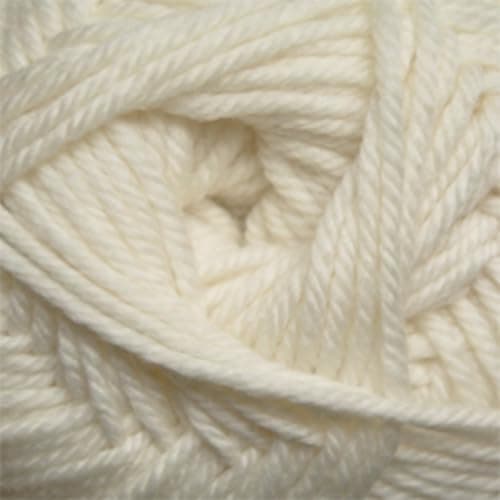
Cascade 220 Superwash Merino
The merino benchmark used throughout this page - 100% superwash merino, 220yd per 100g.
$19.00 - View on Amazon$21.0010% off · #ad disclosure - price as of October 20, 2026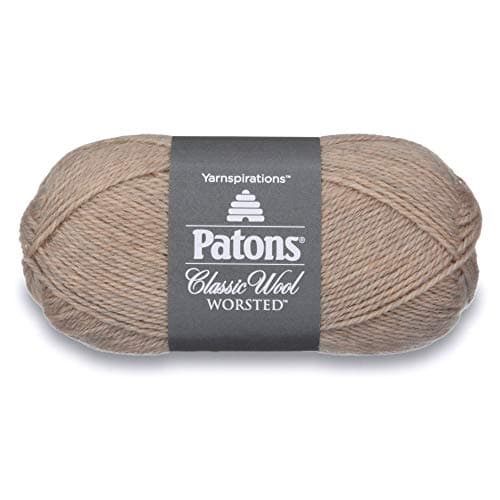
Patons Classic Wool Worsted
Standard untreated wool, for the coarser-fiber comparison the page makes.
$11.79 - View on Amazon#ad disclosure - price as of October 20, 2026
Questions people actually ask
Is alpaca warmer than merino wool?
Yes, for the same weight. Alpaca has a higher warmth-to-weight ratio, which fiber suppliers attribute to air trapped in a partly hollow fiber structure. An alpaca garment can be lighter than a wool one at the same warmth.
Does alpaca yarn stretch out?
Yes. Alpaca has very little crimp and therefore very little memory, so fabric grows under its own weight and does not recover. Plan for it, choose a pattern written for alpaca, or knit a blend.
Is alpaca hypoallergenic?
That is a marketing term rather than a clinical one. Alpaca contains no lanolin and is often more comfortable on sensitive skin, but most reported wool sensitivity is the mechanical prickle of coarse fibers rather than an allergy, so the comparison is less dramatic than the label suggests.
Can I substitute alpaca for merino in a pattern?
Only with care. Match gauge on a swatch, then hang the swatch with a weight overnight and measure again - alpaca will have grown. For anything fitted, ribbed or cabled, substitute a blend rather than pure alpaca.
Which is better for a beginner?
Merino. It springs back, forgives uneven tension, shows stitch definition clearly enough that you can see your mistakes, and behaves the way patterns assume.