Head to head
Mohair vs Alpaca
Both are goat or camelid hair with almost no elasticity. What differs is the direction they fail in.
By Sawyer V. · Published September 12, 2026
Disclosure: we earn a commission when you buy through the links on this page, at no extra cost to you. It never decides what we recommend or how we rank it - read the full disclosure.
The short answer
Mohair is Angora goat hair, usually brushed into a halo and sold as a fine lace weight to hold with other yarns. Alpaca is camelid hair, usually spun smooth and sold at yarn weights you can knit on its own. Both are warmer than wool and neither has wool's memory - but mohair's failure mode is a fabric you cannot unpick, and alpaca's is a garment that stretches downwards under its own weight.
The comparison
| Mohair | Alpaca | |
|---|---|---|
| Animal | Angora goat | Alpaca (camelid) |
| Usual weight sold | Lace, 25g balls | DK to worsted, 100g |
| Surface | Brushed halo | Smooth, slight sheen |
| Warmth | High | Very high |
| Weight of fabric | Very light | Heavy for its warmth |
| Elasticity | Almost none | Almost none |
| Stitch definition | None - the halo fills it | Fair, softening with wear |
| Drape | Airy and open | Heavy and fluid |
| Usually knitted | Held with another yarn | On its own or blended with wool |
| Can you rip it back? | Barely | Yes |
The halo against the drape
Mohair is processed to stand away from itself. Brushing pulls fiber ends out of the spun core, and those ends catch the light and bridge the gaps between stitches. A lace-weight mohair therefore produces an opaque-looking fabric out of almost no yarn.
Alpaca is processed to lie flat. Its scales sit closer to the fiber shaft than wool's do, which is why it feels slippery and smooth rather than grippy, and why it hangs instead of springing. Alpaca fabric is dense and fluid where mohair fabric is airy and open.
Warmth per gram
Both are warmer than wool for the same weight, and they get there differently. Mohair traps air in the halo; alpaca fiber is hollow-cored, which is why it is warm despite being smooth.
In practice, alpaca is the warmer garment and mohair is the warmer accessory - because you can put far more alpaca on a body than you can mohair, and mohair's warmth arrives in a fabric that weighs almost nothing. A mohair wrap over a shirt is warm and weightless; an alpaca sweater is hot.
Which one grows, and which way
- Alpaca grows downwards. The fabric is heavy and has no recovery, so a long garment lengthens and narrows under its own weight. Wash and lay flat, and be conservative with length.
- Mohair grows outwards. The halo develops with wear and with washing, so the fabric becomes denser and fuzzier rather than longer.
- Blending fixes both. Half wool and half alpaca, as in the worsted hank above, gives alpaca's warmth with enough of wool's crimp to hold a shape.
- Swatch and hang the swatch. Pin a weighted swatch for a day before committing a garment to either fiber.
Practical differences at the needle
- Mohair cannot be undone. Plan for that: lifelines, counting, and no complex shaping you might regret.
- Alpaca can be undone, and it flattens slightly each time - so a much-frogged alpaca yarn loses some loft.
- Mohair splits nothing - there is barely a ply to split. Alpaca can split on a sharp tip.
- Both slide on polished steel. Wood or bamboo tips help with either.
- Neither blocks like wool. Blocking sets wool by relaxing the crimp; neither of these has crimp to relax.
The needle recommendations are in best needles for mohair, and bamboo vs metal knitting needles covers the tip-material choice generally.
Which to choose
| If you want... | Choose |
|---|---|
| A weightless wrap | Mohair |
| A warm winter sweater | Alpaca, blended with wool |
| To add warmth to a yarn you already have | Mohair, held together |
| Stitch definition | Neither - use wool |
| Something machine washable | An alpaca blend with acrylic |
| Something you can rip back | Alpaca |
| Maximum warmth for minimum weight | Mohair |
| A garment that holds its shape | Neither alone - blend with wool |
Both are protein fibers
Mohair, alpaca, wool and cashmere are all animal fibers, which means all four are eaten by moths and all four felt if you agitate them in hot water. Storage and washing rules are identical across the group - see caring for hand knits and best yarn storage solutions.
It also means someone who reacts to wool may or may not react to these. Prickle is about fiber diameter rather than species, which is covered in what makes yarn itchy.
Both fibers in this comparison
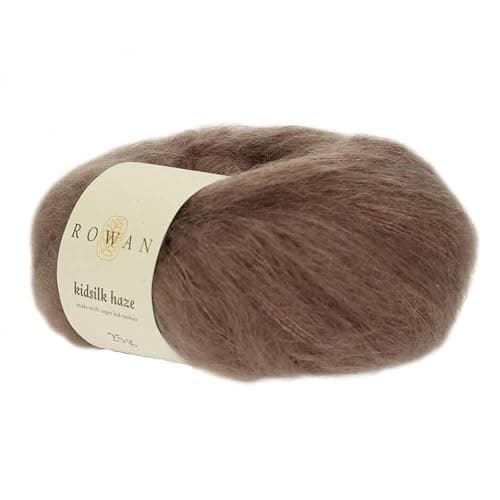
Rowan Kidsilk Haze
The mohair side: 70% mohair, 30% silk, lace weight, 210m / 229yd per 25g ball.
$25.00 - View on Amazon#ad disclosure - price as of September 21, 2026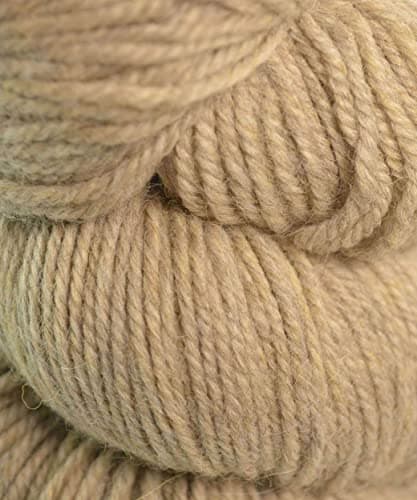
Berroco Ultra Alpaca
The alpaca side: 50% super fine alpaca, 50% Peruvian wool, worsted, 219yd per 100g hank. Made in Peru.
$17.00 - View on Amazon#ad disclosure - price as of September 21, 2026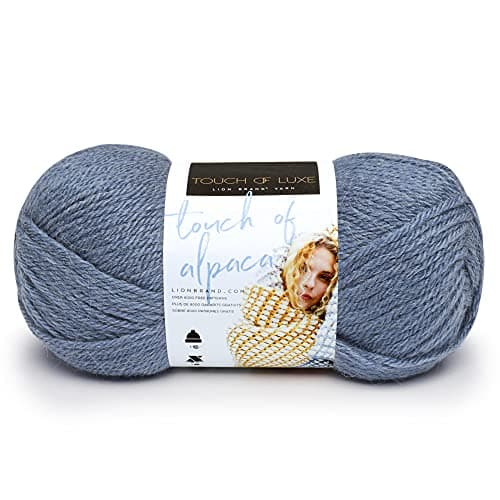
Lion Brand Touch of Alpaca
Alpaca at the practical end - 10% alpaca in acrylic, worsted, 207yd per 100g, machine washable.
$7.99 - View on Amazon#ad disclosure - price as of September 21, 2026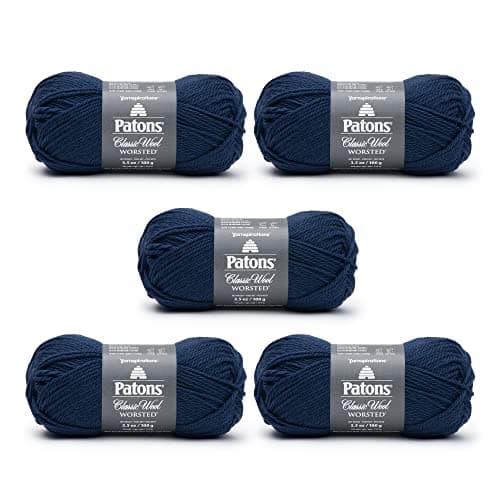
Patons Classic Wool Worsted
The wool benchmark both are measured against: 100% untreated wool, worsted, 194yd per 100g.
$43.65 - View on Amazon$47.228% off · #ad disclosure - price as of September 21, 2026
Questions people actually ask
Is mohair or alpaca warmer?
Alpaca makes the warmer garment because it is hollow-cored and you can put far more of it on a body. Mohair is warmer per gram, because the halo traps air - which is why a mohair wrap feels warm while weighing almost nothing.
What is the difference between mohair and alpaca?
Mohair is Angora goat hair, brushed into a halo, usually sold as a lace weight to hold with another yarn. Alpaca is camelid hair, spun smooth, usually sold at DK or worsted to knit on its own. Mohair fills space; alpaca hangs.
Does alpaca stretch out?
Yes. Alpaca has almost no crimp and therefore almost no memory, and the fabric is heavy - so a long garment lengthens under its own weight and stays that way. Blending with wool is the usual fix.
Can you knit mohair and alpaca together?
You can, and it is a reasonable combination - the mohair adds halo and the alpaca provides the body. Neither contributes memory, though, so the finished fabric will still have no recovery.
Which is easier to knit with?
Alpaca, clearly. It is a normal yarn weight, it behaves predictably and you can rip it back. Mohair cannot practically be unpicked, which means mistakes are expensive.