Guide
Best Yarn Storage Solutions
Three enemies, three answers. Only one of them is a box.
By Sawyer V. · Published September 6, 2026
Disclosure: we earn a commission when you buy through the links on this page, at no extra cost to you. It never decides what we recommend or how we rank it - read the full disclosure.
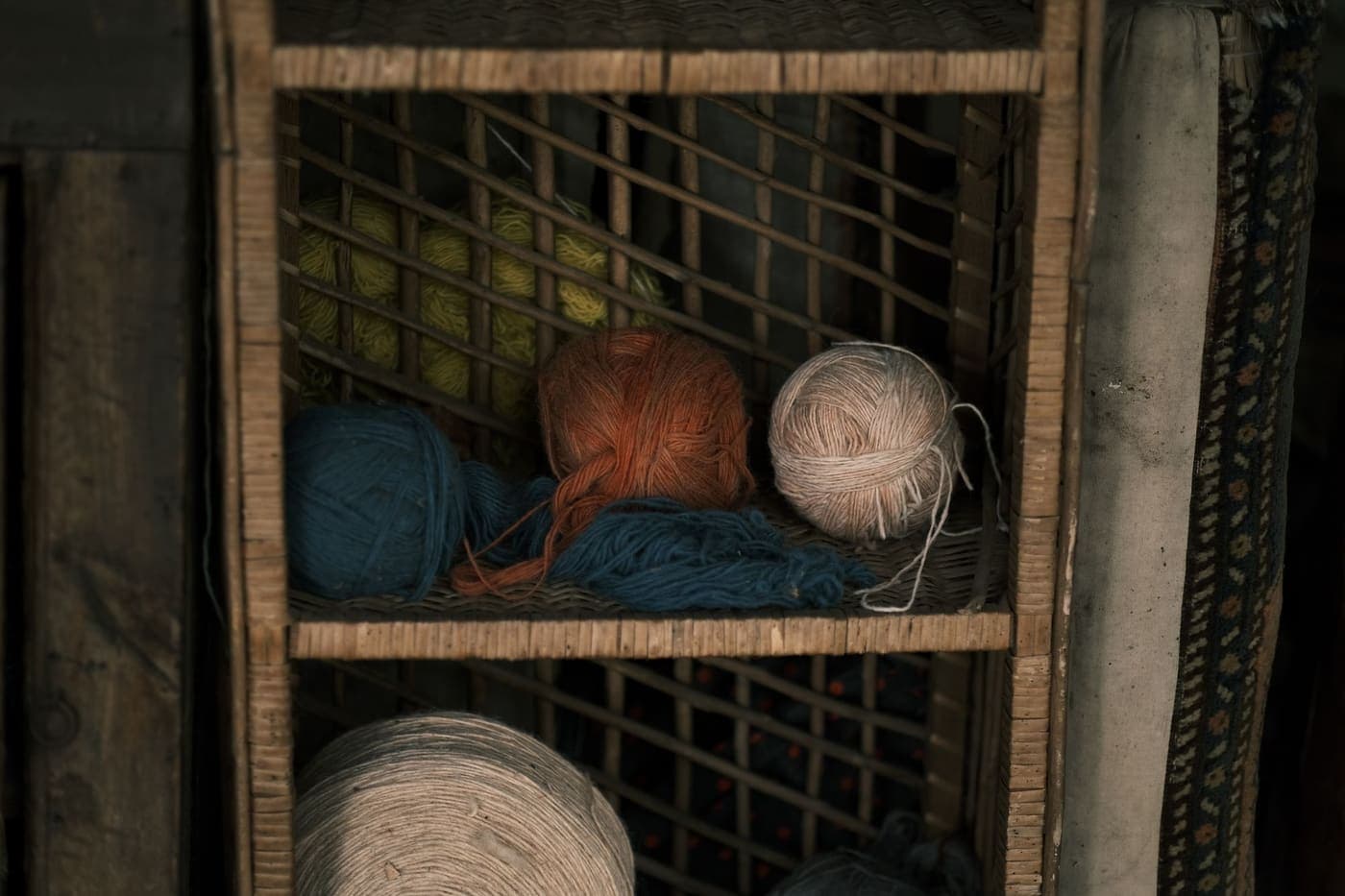
The short answer
Store yarn in breathable, opaque, lidded containers away from direct light. Wool and other animal fibers need protection from clothes moths; plant and synthetic fibers do not. Never store yarn in sealed plastic bags long-term - trapped moisture is the one thing worse than moths.
Three problems, and they need different answers
1. Moths, which only eat animal fiber
Clothes moth larvae feed on keratin, the protein wool is made of. That means wool, alpaca, cashmere and silk are at risk, and cotton, linen, acrylic and polyester are not.
The Woolmark Company describes wool's structure as keratin-based, which is why this is a fiber-specific problem rather than a general storage one. A stash of acrylic needs no moth protection at all.
2. Light, which fades everything
Sunlight fades dye and, over years, weakens fibers. A ball left on a windowsill will be visibly lighter on one side within a season, and if it is part of a sweater's worth you now have two shades.
This is the argument against the open-shelf stash that looks so good in photographs. It is beautiful and it is slowly bleaching your yarn.
3. Not being able to find anything
The least dramatic and by far the most common. A stash you cannot search is a stash you buy duplicates from.
What to store yarn in
| Container | Moth protection | Light | Verdict |
|---|---|---|---|
| Lidded fabric drum or tote | Good if lidded | Blocks light | Best all-round for an active stash |
| Clear plastic bins with lids | Good | Lets light through | Fine in a dark cupboard; not on show |
| Vacuum bags | Excellent | Blocks light | Long-term only; compresses fiber badly |
| Cotton pillowcases or bags | Moderate - breathable but not sealed | Blocks light | Good inside a bin |
| Open baskets and shelves | None | None | Looks wonderful; use only for acrylic |
| Sealed plastic bags | Good | Blocks light | Avoid - traps moisture and grows mildew |
The rule that resolves most of it: opaque, lidded, and breathable enough that moisture is not trapped. A fabric drum with a lid does all three, which is why our buy rows start there.
Keeping moths out, without mothballs
- Quarantine anything new. Second-hand yarn, thrifted sweaters and gift stash all arrive with a risk. Freeze at least 72 hours, thaw, and freeze again a week later to catch anything that hatched.
- Store clean. Moth larvae are attracted to residues - skin oils, food, perfume. Yarn from a finished project should be washed before it goes back in the stash.
- Use a sealed container for wool specifically. Not the whole stash. Wool, alpaca and silk in a lidded bin; everything else can live anywhere.
- Cedar and lavender are deterrents, not treatments. They discourage adults from laying; they do not kill larvae already present. Cedar also stops working once the surface oils have off-gassed - sand it lightly to refresh.
- Check twice a year. Look for fine webbing, sandy debris and grazed patches on the surface of a ball.
If you find damage, freeze the affected yarn and everything stored with it. Moth eggs survive a lot; deep freezing is the reliable domestic answer.
The vacuum bag question
Vacuum bags are excellent for long-term storage of yarn you will not touch for a year, and poor for anything else.
Compressing wool for months crushes the crimp, and crimp is what makes wool springy and warm - see does wool yarn shrink for what that structure does. Yarn recovers after a wash and a rest, but it comes out of the bag flat and disappointing, and people conclude the yarn has gone bad.
Organizing a stash you can actually search
- By weight, not by color. You shop your stash for a project, and projects specify weight. Color is what you choose after.
- Keep one ball band per yarn. It carries fiber content, dye lot and care - see yarn care symbols.
- Bag partial balls with their band. A leftover with no band is a leftover you cannot substitute from.
- Keep sweater quantities together and labeled. Enough yarn for a garment is the one thing worth being disciplined about.
- Store tools separately from yarn. Needles and hooks loose in a stash box get bent, lost and stood on.
Tools want different storage from yarn
This is the part people leave until they have already lost a 4mm hook. Needles and hooks are small, roll, and are effectively invisible against fabric.
A roll or a zipped case keeps them in size order and stops circular needles kinking - the cables take a permanent set if stored coiled tightly. Our needle case and hook case pages cover the options.
Project bags are a different job
Storage keeps yarn safe. A project bag keeps one active project together and travels with it. They are not interchangeable, and trying to use one for the other is how a stash ends up in carrier bags.
Best knitting bags covers the project side. The small drum in our buy rows sits between the two - one or two balls, contained, with the yarn feeding out through a grommet while you work.
What we would store yarn in
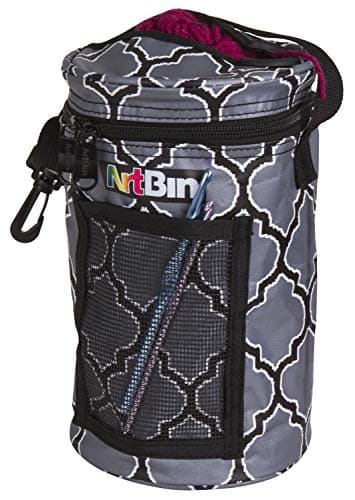
ArtBin Yarn Drum
A lidded drum with grommets - the yarn stays clean and contained while you work straight from it.
$12.99 - View on Amazon#ad disclosure - price as of October 20, 2026ArtBin Mini Yarn Drum
The same idea sized for one or two balls, for a project that travels rather than a stash.
$12.99 - View on Amazon#ad disclosure - price as of October 20, 2026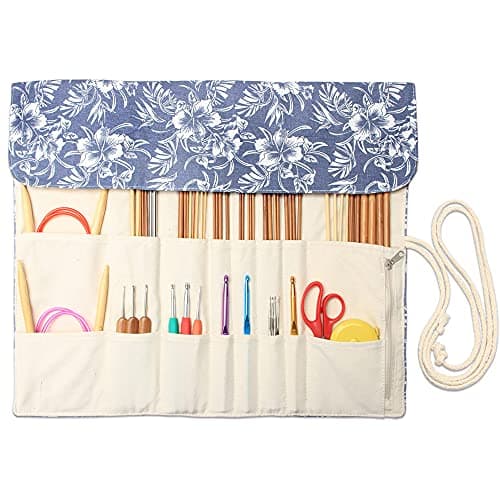
Teamoy Knitting Needle Roll Case
Needles do not belong loose in a stash box. A roll keeps them straight and findable.
$23.99 - View on Amazon#ad disclosure - price as of October 20, 2026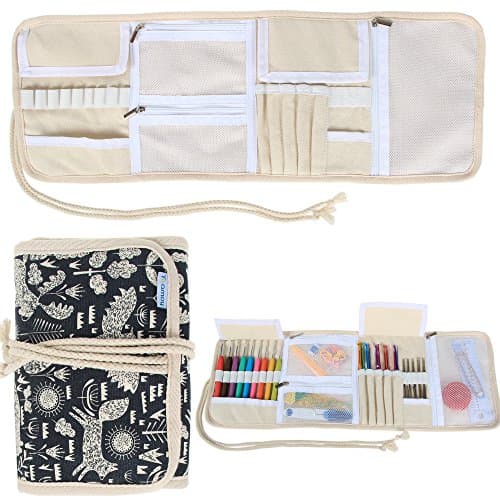
Teamoy Crochet Hook Roll Case
The hook equivalent, so the 4mm you own is not the 4mm you cannot find.
$13.49 - View on Amazon#ad disclosure - price as of October 20, 2026
Questions people actually ask
What is the best way to store yarn?
In opaque, lidded, breathable containers away from direct light. Wool and other animal fibers also need moth protection; cotton, linen and acrylic do not.
Can you store yarn in plastic bags?
Not sealed, and not long-term. Sealed plastic traps moisture, which grows mildew - a worse problem than moths. A lidded bin or a fabric drum lets the yarn breathe.
How do you keep moths out of yarn?
Store wool clean, in sealed or lidded containers, and freeze anything second-hand for 72 hours before it joins the stash. Cedar and lavender deter adults laying eggs but do not kill larvae already present.
Do moths eat acrylic yarn?
No. Clothes moth larvae feed on keratin, the protein in wool and other animal fibers. Acrylic, cotton, linen and polyester are not at risk.
Are vacuum bags good for storing yarn?
For long-term storage of yarn you will not touch for a year, yes. For anything active, no - compressing wool for months crushes the crimp that makes it springy, and it comes out flat until it has been washed and rested.