Reference
Yarn Care Symbols on a Ball Band
Five shapes, one per treatment. Every one of them is on the band you already own.
By Sawyer V. · Published September 4, 2026
Disclosure: we earn a commission when you buy through the links on this page, at no extra cost to you. It never decides what we recommend or how we rank it - read the full disclosure.
The short answer
Every ball band carries up to five care symbols: a tub for washing, a triangle for bleach, a square for drying, an iron for pressing, and a circle for dry cleaning. Dots inside a symbol mean temperature, bars underneath mean gentleness, and a cross through it means do not. Keep one band from every project.
The five shapes
The international care symbols are maintained by GINETEX and codified in ISO 3758, and they are used - with small regional variations - on textiles and yarn bands worldwide. Once you know the five base shapes, every variation is a modifier on one of them.
| Symbol | Governs | Read it as |
|---|---|---|
| Tub of water | Washing | Temperature by dots or a number; hand in the tub means hand wash |
| Triangle | Bleaching | Plain means bleach allowed; crossed means never |
| Square | Drying | A circle inside means tumble dry; lines inside mean line or flat dry |
| Iron | Ironing and pressing | Dots give the maximum temperature |
| Circle | Professional dry cleaning | Letters inside are instructions for the cleaner, not for you |
The modifiers
- A cross through any symbol means do not do that at all. This is the only one you must never test.
- Dots inside mean temperature. One dot is coolest, and each additional dot is hotter.
- A number inside the tub is the maximum wash temperature in degrees Celsius.
- Bars underneath mean reduced mechanical action. One bar is a gentle cycle, two bars is very gentle. This is the modifier that matters most for wool.
- A hand in the tub means hand wash only.
Drying, where hand knits differ from clothes
The square governs drying, and it carries the instruction most often ignored on a hand knit.
| Inside the square | Means | For a hand knit |
|---|---|---|
| A circle | Tumble dry permitted | Dots inside set the heat; low heat only for anything with wool in it |
| A crossed circle | Do not tumble dry | Common on wool and alpaca - it will felt or shrink |
| One horizontal line | Dry flat | The correct instruction for almost every hand knit |
| One vertical line | Drip dry | Hang wet; fine for cotton, bad for anything that grows |
| Three vertical lines | Line dry | Wring gently first |
Dry flat is the default for hand knits regardless of what the band permits. A wet knitted fabric hung on a line or a hanger stretches under its own weight and keeps the stretch - most obviously with superwash wool and cotton.
What the band tells you besides care
The care symbols are one corner of the band. The rest is the information you need to substitute the yarn.
- Fiber content, by percentage. The single most useful line. A blend behaves like the majority fiber - see wool-acrylic blends.
- Weight and yardage. Grams and meters or yards per ball. This is what yardage arithmetic runs on.
- Yarn weight category. The Craft Yarn Council number 0 to 7, in a skein-shaped symbol. See the yarn weight chart.
- Anti-pilling or superwash claims. Not universal and not standardized, but when a brand prints one it is telling you something about the spin or the treatment.
- Recommended needle and hook size, with gauge. A starting point, not an instruction - your own gauge decides.
- Dye lot. The one number that will ruin a project if you ignore it.
Dye lots, briefly
Yarn is dyed in batches, and two balls of the same color from different batches will not match exactly. In a small piece it does not matter. Across a sweater front it shows as a visible horizontal line at the point you changed balls.
Buy all the yarn for a project at once, from the same lot, and buy one ball more than the arithmetic says. If you cannot, alternate two balls every two rows so the transition is gradual rather than abrupt.
The two things a band does not tell you
How much it will pill. Nothing on the band predicts this. Fiber length and spin decide it, and the only labeled clue is a yarn that advertises anti-pilling in its name. See why yarn pills.
How much it will grow. Superwash wool and alpaca both stretch under their own weight, and no symbol covers it. The only way to find out is to hang a blocked swatch overnight.
Keep one band per project
Tuck it in the project bag, and when the piece is finished, keep it with the finished object or photograph it. It carries the fiber content, the dye lot and the care instructions - the three pieces of information you will want in two years and will not remember.
This matters most for gifts. A hand knit given without care instructions is a hand knit that will be washed by whatever the recipient guesses, and untreated wool does not survive guessing.
Yarns whose care instructions actually differ
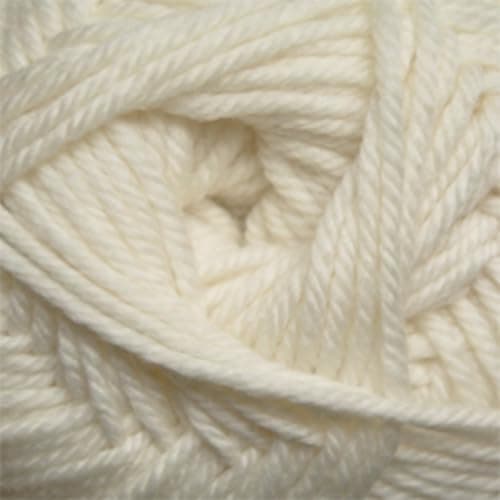
Cascade 220 Superwash Merino
Superwash merino - machine washable, and still happier dried flat than tumbled.
$19.00 - View on Amazon$21.0010% off · #ad disclosure - price as of October 20, 2026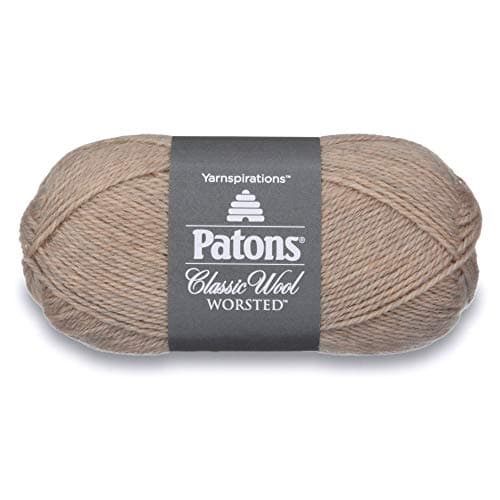
Patons Classic Wool Worsted
Untreated wool - hand wash only, and the band says so for a reason that cannot be argued with.
$11.79 - View on Amazon#ad disclosure - price as of October 20, 2026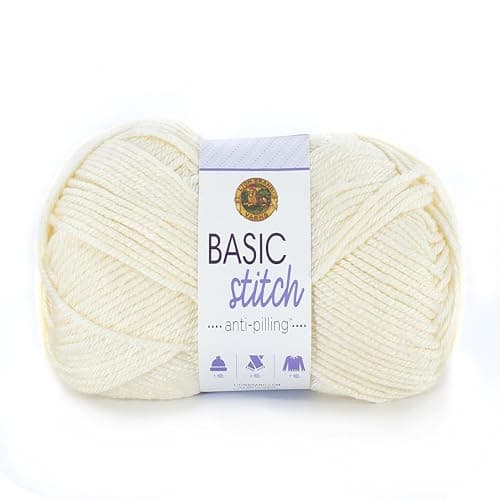
Lion Brand Basic Stitch Anti-Pilling
Acrylic spun against pilling - machine wash and tumble dry low, which is why it goes in baby projects.
$5.99 - View on Amazon$11.7649% off · #ad disclosure - price as of October 20, 2026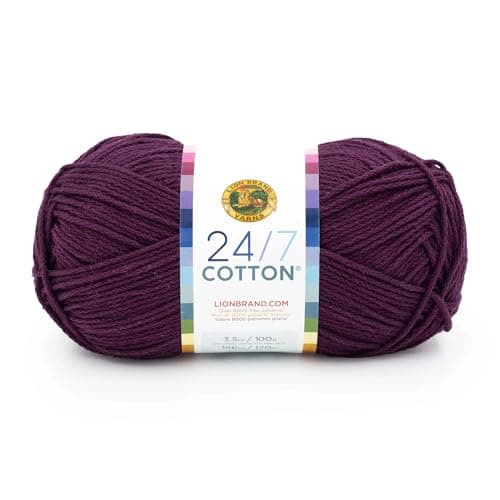
Lion Brand 24/7 Cotton
Mercerized cotton - the one fiber here that genuinely tolerates a hot wash.
$6.99 - View on Amazon#ad disclosure - price as of October 20, 2026
Questions people actually ask
What do the symbols on a yarn ball band mean?
A tub is washing, a triangle is bleaching, a square is drying, an iron is ironing and a circle is dry cleaning. Dots mean temperature, bars underneath mean a gentler cycle, and a cross through any symbol means do not do it.
What do the bars under a wash symbol mean?
Reduced mechanical action - one bar is a gentle cycle and two bars is very gentle. For wool this is the most important modifier, because agitation rather than temperature is what causes felting.
Can I tumble dry hand knits?
Only if the band shows a circle inside the square, and even then dry flat is safer. A wet knitted fabric that is tumbled or hung stretches under its own weight, and superwash wool and cotton keep the stretch.
What is a dye lot and does it matter?
The batch number for that dyeing run. Two balls of the same color from different lots differ slightly, which shows as a visible line where you change balls. Buy all the yarn for a project from one lot.
Should I keep the ball band?
Yes, one per project. It carries the fiber content, the dye lot and the care instructions - the three things you will want later and will not remember, particularly if the piece is a gift.