Guide
Why Yarn Pills
Fiber length and twist decide it - not whether the label says wool or acrylic.
By Sawyer V. · Published September 4, 2026
Disclosure: we earn a commission when you buy through the links on this page, at no extra cost to you. It never decides what we recommend or how we rank it - read the full disclosure.
The short answer
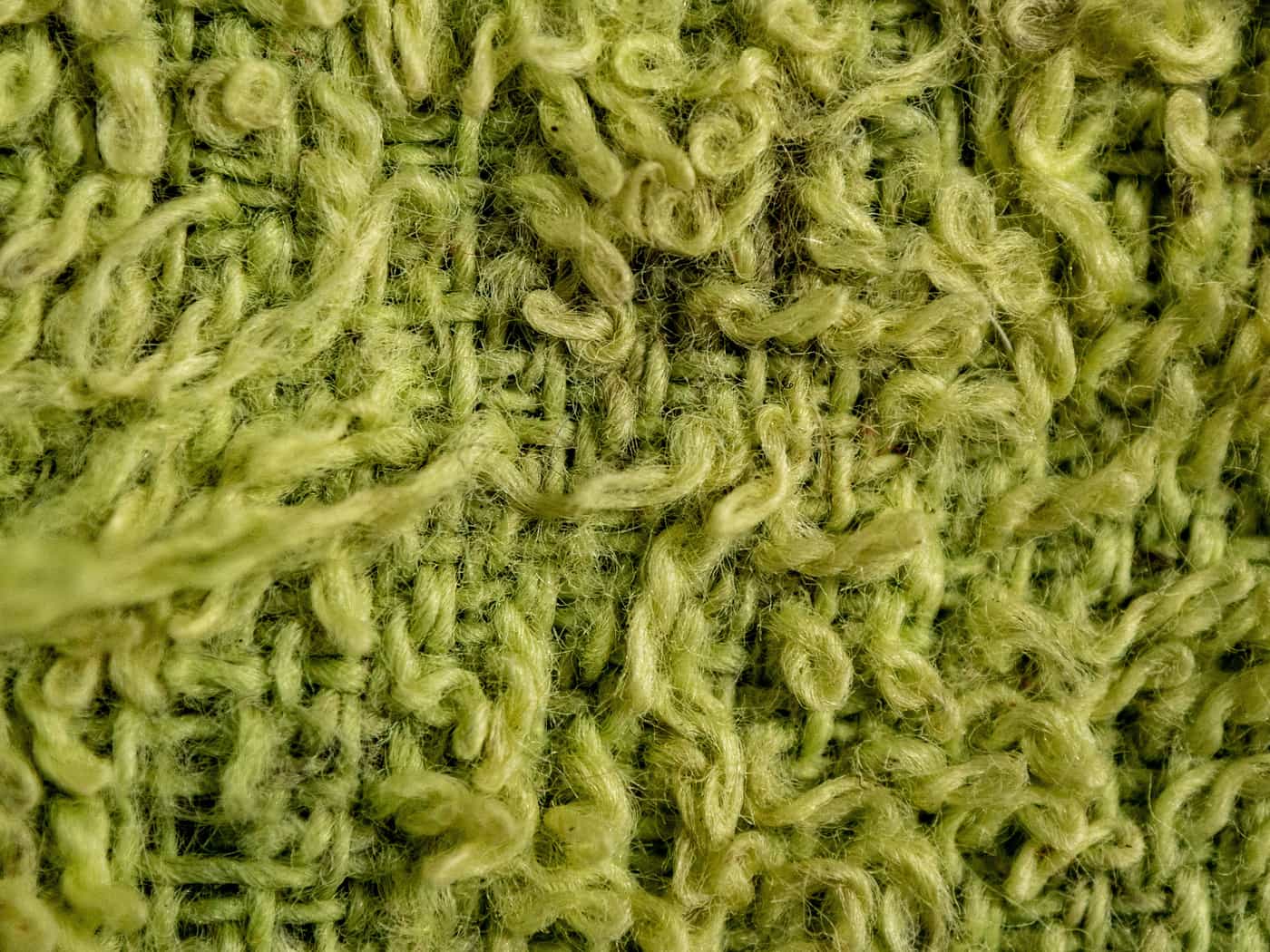
Pills form when short fiber ends work their way to the fabric surface, tangle under friction and ball up. Two things decide how bad it gets: fiber length and yarn twist. Short fibers and loose twist pill; long fibers and tight twist do not. Fiber type matters less than either - which is why some acrylics pill terribly and others barely do.
It is the complaint that ends more hand-knitted garments than anything else, and it is almost entirely predictable from the yarn before you cast on.
The mechanism, in three steps
- Migration. Every spun yarn has fiber ends. Friction - a bag strap, an arm against a side, a chair back - works those ends loose and out to the surface.
- Entanglement. Loose ends tangle with each other under continued rubbing and form a small ball: the pill.
- Attachment or release. The pill stays anchored by whatever fibers still run into the fabric. On weak fibers those anchors break and the pill falls off. On strong fibers they do not, and the pill stays.
That third step is the whole reason acrylic pilling is more visible than wool pilling. Acrylic is a strong fiber, so its pills are firmly anchored and stay put. Wool pills form just as readily and then break off, so the fabric appears to self-clean.
What actually predicts pilling
| Property | Pills more | Pills less |
|---|---|---|
| Fiber length (staple) | Short - cashmere, woolen-spun wool | Long - worsted-spun wool, filament |
| Twist | Loose, softly spun | Tight, firmly plied |
| Ply structure | Single ply | Multiple plies |
| Surface | Brushed, fuzzy, halo | Smooth, compact |
| Fiber strength | Strong fiber holds pills on | Weak fiber sheds pills off |
| Fabric density | Loose gauge, more movement | Tight gauge, less movement |
Read that table and the pattern is obvious: the properties that make a yarn feel soft and lofty in the skein are the same ones that make it pill. That is a genuine trade-off, not a defect to be engineered away, and any yarn sold on softness alone is likely to pill.
Is anti-pilling acrylic real?
Partly. Some acrylics are engineered and marketed specifically on pilling resistance - Lion Brand Basic Stitch Anti-Pilling is one, described by the manufacturer as designed to withstand wear and frequent washing without pilling, using an anti-pilling acrylic fiber.
What that means in practice is a smoother, more tightly-constructed yarn with fewer loose ends to migrate. The mechanism is sound and consistent with what the construction table above predicts.
What we will not tell you is how much better it is, because we have not tested it and we have not found independent testing that quantifies it. Manufacturer claims about durability are the manufacturer's claims. Buy it expecting a smoother, more tightly-plied acrylic - which it demonstrably is on its published specification - rather than a yarn that cannot pill.
Which yarns pill least
- Mercerized cotton - Lion Brand 24/7 Cotton and similar. Smooth, tightly plied, long fiber. Among the most pill-resistant yarns you can buy.
- Worsted-spun wool - the fibers are combed parallel before spinning, so fewer ends stick out. Not the same thing as worsted weight, confusingly.
- Tightly-plied multi-ply yarns in any fiber.
- Wool-nylon sock blends - the nylon is there specifically for abrasion resistance.
- Smooth, engineered acrylics with an anti-pilling specification.
Which pill most, and are worth it anyway
- Cashmere. Very short, very fine fibers. It will pill and it is still worth owning - see cashmere vs merino.
- Woolen-spun wool. Lofty and airy because the fibers are jumbled rather than combed, which is exactly why it pills.
- Single-ply yarn. No plies to trap fiber ends. Beautiful stitch definition, poor abrasion behavior.
- Brushed and halo yarns. The halo is loose fiber ends by design.
- Soft, loosely-spun acrylics. Caron Simply Soft is soft because it is smooth and lofty, and that is a pilling risk in a high-friction garment.
How to fix a pilled piece
- Use a fabric comb or a sweater stone by hand. Slow, controlled, and it will not cut the fabric. Best for anything delicate.
- Use a [battery fabric shaver](/accessories/best-fabric-shavers-for-knitwear) for large flat areas. Fast and effective; keep it moving and off ribbing and seams, where it can cut through.
- Never pull pills off. You are pulling a fiber that is still anchored in the fabric, and you thin the fabric doing it.
- De-pill before washing, not after. Washing tangles loose pills further into the surface.
How to prevent it in the first place
Choose a tightly-plied smooth yarn for anything high-friction: sweater underarms, bags, cushion covers, cuffs. Save the soft, lofty, single-ply yarns for scarves, cowls and shawls where nothing rubs. Wash garments inside out on a gentle cycle, and wash less often - most knitwear needs airing far more than it needs washing.
And if you are choosing between fibers rather than constructions, the fiber comparison table has pilling as one of its columns alongside everything else.
Yarns spun against pilling
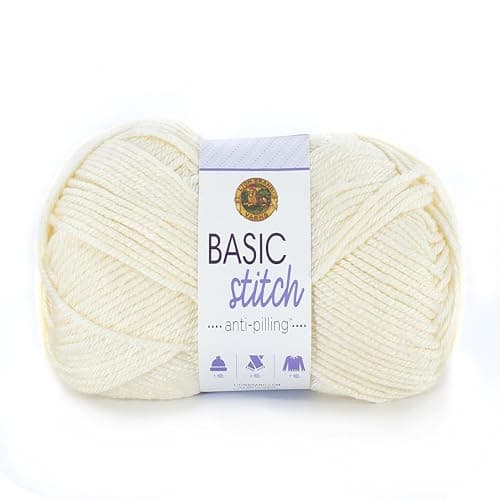
Lion Brand Basic Stitch Anti-Pilling
The one product claim on this page that maps to a spin: acrylic made to resist the fiber migration that becomes a pill.
$5.99 - View on Amazon$11.7649% off · #ad disclosure - price as of October 20, 2026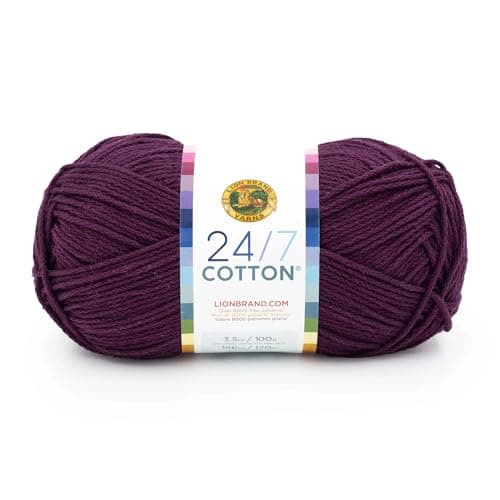
Lion Brand 24/7 Cotton
Mercerized cotton - long, smooth and tightly plied, which is the construction that pills least.
$6.99 - View on Amazon#ad disclosure - price as of October 20, 2026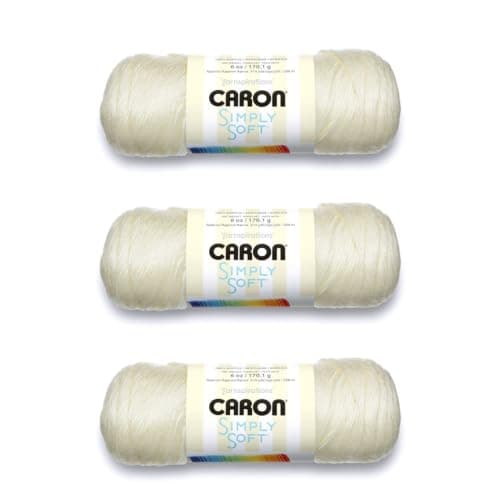
Caron Simply Soft
Worth knowing before you buy it for a coat-collar project: the loose spin that makes it soft is also what pills.
$14.55 - View on Amazon$16.1810% off · #ad disclosure - price as of October 20, 2026
Questions people actually ask
Is acrylic yarn anti-pilling?
Some acrylics are engineered and sold specifically as anti-pilling, using smoother, more tightly constructed fiber. Acrylic in general is not - and because acrylic is a strong fiber, the pills that do form stay attached rather than falling off.
Why does my sweater pill under the arms?
Friction. Underarms, sides and anywhere a bag strap sits get constant rubbing, which is what drives fiber ends to the surface. It is the fabric doing what fabric does, not a fault in your knitting.
Does washing cause pilling?
It contributes. Agitation is friction. Wash knitwear inside out, on a gentle cycle, and less often - and de-pill before washing rather than after, so loose pills do not get worked back into the surface.
What yarn does not pill?
None are pill-proof. Mercerized cotton and tightly-plied worsted-spun wool come closest, because both have long fibers, firm twist and few loose ends.
Should I use a fabric shaver or a comb?
A comb or sweater stone for anything delicate, ribbed or seamed - slow but safe. A battery shaver for large flat areas, kept moving and kept away from ribbing, where it can cut straight through.