The picks
Best Yarn for Beginners
Smooth, pale, worsted and cheap. Every other quality is a distraction right now.
By Sawyer V. · Published September 4, 2026
Disclosure: we earn a commission when you buy through the links on this page, at no extra cost to you. It never decides what we recommend or how we rank it - read the full disclosure.
The short answer
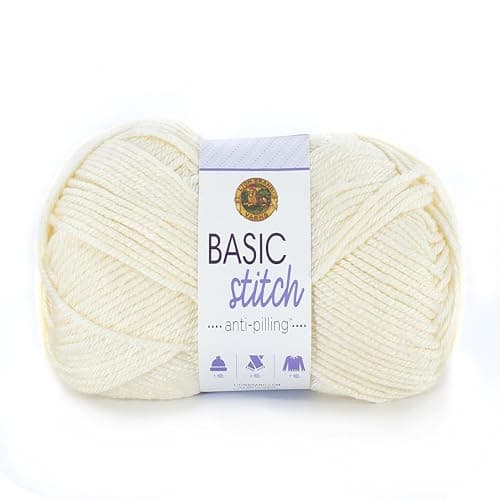
A first yarn should be smooth, pale, worsted weight and cheap. Smooth so you can see individual stitches, pale for the same reason, worsted because it is the weight almost every beginner pattern is written for, and cheap because you will undo it repeatedly. Lion Brand Basic Stitch Anti-Pilling meets all four.
| # | Product | Best for | Fiber | Yards/skein | Price |
|---|---|---|---|---|---|
| 1 | Lion Brand Basic Stitch Anti-PillingSmooth, tightly plied acrylic - your stitches are visible and it survives being undone. | Learning on, and keeping what you make | 100% acrylic | 185 | $5.99 - View on Amazon |
| 2 | 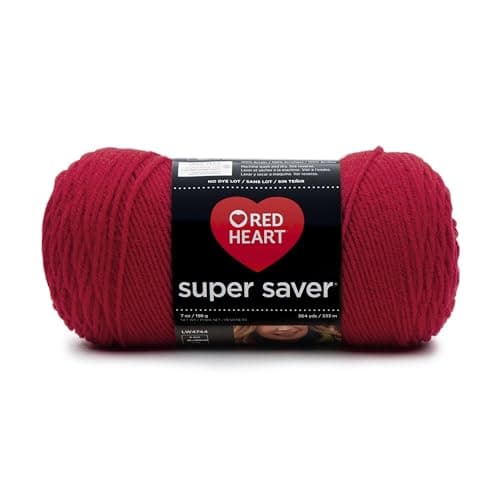 Red Heart Super Saver364 yards for very little money - undo it as many times as you need. Red Heart Super Saver364 yards for very little money - undo it as many times as you need. | Practicing without counting the cost | 100% acrylic | 364 | $4.18 - View on Amazon#ad disclosure - price as of October 20, 2026 |
| 3 | 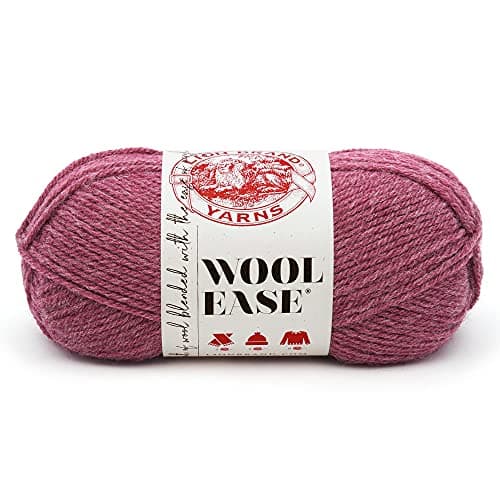 Lion Brand Wool-Ease80/20 acrylic-wool - some springback, still machine wash and dry. Lion Brand Wool-Ease80/20 acrylic-wool - some springback, still machine wash and dry. | Feeling what wool does, safely | 80% acrylic, 20% wool | 197 | $11.77 - View on Amazon#ad disclosure - price as of October 20, 2026 |
| 4 | 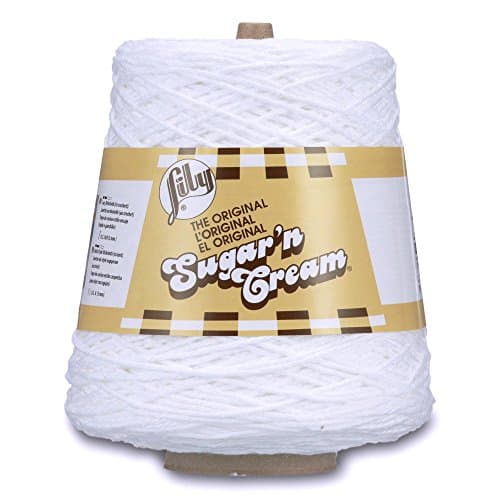 Lily Sugar'n CreamA small cheap ball that makes a genuinely useful thing in an evening. Lily Sugar'n CreamA small cheap ball that makes a genuinely useful thing in an evening. | Dishcloths and coasters | 100% cotton | 120 | $17.88 - View on Amazon#ad disclosure - price as of October 20, 2026 |
| 5 | 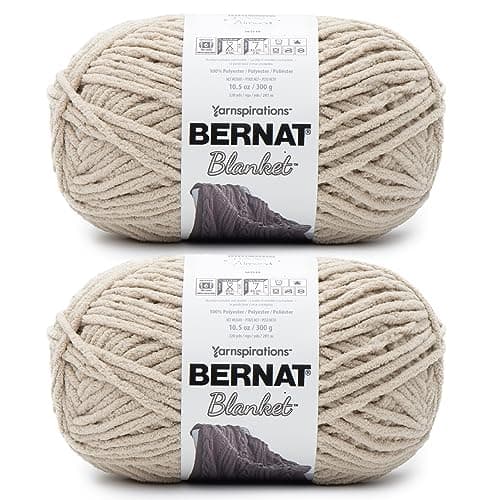 Bernat BlanketYou cannot see your own stitches in it - which is the one thing a beginner needs. Bernat BlanketYou cannot see your own stitches in it - which is the one thing a beginner needs. | Not learning | 100% polyester | 108 | $20.96 - View on Amazon#ad disclosure - price as of October 20, 2026 |
Lion Brand Basic Stitch Anti-Pilling
Lion Brand · Best for learning on, and keeping what you make
An acrylic worsted sold specifically on its pilling behavior, which is the one complaint that ends most acrylic garments.
- Fiber
- 100% acrylic
- Weight
- 4 Medium / worsted
- Skein
- 3.5oz / 100g, 185yd
- Gauge
- 18 sts x 26 rows on US 8 (5mm)
- Hook
- H-8 (5mm), 16 sc x 18 rows
- Care
- Machine wash, machine dry
Who it suits
Anyone learning to knit or crochet who wants the first finished object to still look decent in a year.
Why it is here
100% acrylic at worsted weight, 185 yards per 100g skein, 18 sts x 26 rows on 5mm, machine wash and dry. Smooth and firmly constructed, which is exactly what makes individual stitches readable while you are learning to see them.
What you give up
Slightly less yardage per skein than the economy acrylics, and a firmer hand than the soft ones. Neither matters while you are learning.
Specifications from Lion Brand product page. We have not handled this item - see how we pick.
Red Heart Super Saver
Red Heart · Best for practicing without counting the cost
The 7oz workhorse acrylic. Coarser than the softer acrylics here, and the cheapest yardage on the shelf by a distance.
- Fiber
- 100% acrylic
- Weight
- 4 Medium / worsted
- Skein
- 7oz / 198g, 364yd / 333m (no-dye-lot solids)
- Gauge
- 17 sts x 23 rows on 5mm (US 8)
- Hook
- 5.5mm (US I/9), 12 sc x 15 rows
- Care
- Machine wash warm gentle, tumble dry low, no bleach
Who it suits
Anyone who expects to unravel a lot, which is everyone at the start.
Why it is here
100% acrylic, 364 yards per 198g skein, 17 sts x 23 rows on 5mm, machine wash and tumble dry. Strong enough to be pulled out and reused repeatedly without breaking or fuzzing badly.
What you give up
The hand is coarse. It softens with washing, but a scarf made from it will never feel luxurious - which is fine for a practice piece.
Specifications from Yarnspirations product page. We have not handled this item - see how we pick.
Lion Brand Wool-Ease
Lion Brand · Best for feeling what wool does, safely
An 80/20 acrylic-wool worsted that machine washes and dries, and is the single most sensible first step away from all-acrylic.
- Fiber
- 80% acrylic, 20% wool (solids, heathers, twists)
- Weight
- 4 Medium / worsted
- Skein
- 3oz / 85g, 197yd / 180m
- Sold as
- Single skein on the listing we link
- Gauge
- 18 sts x 24 rows on US 8 (5mm)
- Hook
- J-10 (6mm), 13.2 sc x 16 rows
- Care
- Machine wash, water not above 105F; machine dry
Who it suits
Anyone past the first few projects who wants to feel the difference wool makes without the care commitment.
Why it is here
80% acrylic and 20% wool, 197 yards per 3oz skein, 18 sts x 24 rows on US 8. Enough wool to notice the springback in ribbing, and it still goes in the machine.
What you give up
Costs more per yard than plain acrylic, and 197 yards a skein is on the low side, so projects need more skeins.
Specifications from Lion Brand product page. We have not handled this item - see how we pick.
Lily Sugar'n Cream
Lily · Best for dishcloths and coasters
Unmercerized cotton in a small 2.5oz ball. Absorbent, hard-wearing, and the reason every dishcloth pattern ever written specifies it.
- Fiber
- 100% cotton
- Weight
- 4 Medium / worsted
- Ball
- 2.5oz / 71g, 120yd / 109m
- Gauge
- 20 sts x 26 rows on 4.5mm (US 7)
- Hook
- 5mm (US H/8), 13 sc x 14 rows
- Care
- Machine wash not above 86F delicate, tumble dry low
Who it suits
Anyone who wants a first finished object today rather than a half-finished scarf in a drawer.
Why it is here
100% cotton, 120 yards per 71g ball. A dishcloth takes one ball, takes an evening, and is actually used afterwards - which is a much better first project than a scarf you get bored of.
What you give up
Cotton has no give, so it is harder on the hands and less forgiving of tight tension than acrylic. Keep the projects small.
Specifications from Yarnspirations product page. We have not handled this item - see how we pick.
Bernat Blanket
Bernat · Best for not learning
Polyester chenille at 108 yards to a 150g ball. Fast, warm, machine washable, and it will shed and worm if the tension is loose.
- Fiber
- 100% polyester (chenille)
- Weight
- 6 Super Bulky
- Ball
- 5.3oz / 150g, 108yd / 98m
- Gauge
- 8 sts x 13 rows on 8mm (US 11)
- Hook
- 8mm (US L/11), 7 sc x 8 rows
- Care
- Machine wash delicate, tumble dry gentle
Who it suits
Nobody who is still learning. It is popular, plush and genuinely fun once you can already work without looking.
Why it is here
Super bulky polyester chenille with no stitch definition at all. Counting stitches, spotting a dropped one and undoing a mistake are all much harder in it.
What you give up
It is also unforgiving of tension - loose stitches worm out of the surface, and beginner tension is uneven by definition. Come back to it once you can crochet without watching your hands.
Specifications from Yarnspirations product page. We have not handled this item - see how we pick.
The four properties that matter, and nothing else
Smooth
You cannot fix a mistake you cannot see. A smooth, tightly-plied yarn shows every stitch as a distinct loop, which is what lets you count, spot a dropped stitch and find where you went wrong. Fuzzy, brushed, chenille and boucle yarns hide all of it.
Pale and solid
The same argument. A light solid color shows the stitch structure; a dark or variegated one buries it. Save the beautiful hand-dyed skein for project four - it will still be beautiful, and you will be able to see what you are doing to it.
Worsted weight
Worsted is category 4 in the standard - 16 to 20 knit stitches over 4 inches, on a 4.5 to 5.5mm needle. Almost every beginner pattern is written for it, most tutorials demonstrate in it, and the stitches are big enough to see and small enough to be quick to work.
Very thick yarn feels faster and is harder to control. Very thin yarn is slow and unforgiving. Worsted is the middle for a reason. Full details on the yarn weight chart.
Cheap
You will pull work out. Repeatedly, and probably several times in a single evening. Yarn that survives being unravelled without fuzzing or breaking - and that you do not mind unravelling - removes the reluctance that makes people carry on with a mistake instead of fixing it.
Yarns that make learning harder
| Yarn type | Why it is harder |
|---|---|
| Chenille / blanket yarn | No stitch definition - you cannot see or count your own stitches |
| Fuzzy or brushed yarn | The halo hides everything, including mistakes |
| Variegated or self-striping | Color changes camouflage the stitch structure |
| Dark colors | Same problem, especially in poor light |
| Boucle or textured novelty yarn | Impossible to see stitches, impossible to undo cleanly |
| Very fine yarn | Slow progress, and tiny stitches are hard to read |
| Cotton, for very first projects | No give, so tight tension gets painful quickly |
| Expensive hand-dyed skeins | You will be reluctant to undo them, so mistakes stay in |
What to make first
The classic advice is a scarf, and it is bad advice: a scarf is 60 inches of the same thing, and most people abandon it around inch fifteen.
- A dishcloth or a coaster. One ball, one evening, genuinely used afterwards. This is the best first project in either craft.
- A simple hat. Introduces working in the round, and it is finished in a few evenings.
- A small bag or pouch. Flat, forgiving, and useful.
- Then a scarf, once you actually enjoy the repetition rather than enduring it.
Tools, briefly
Match the tool to the yarn. Worsted wants a 5mm to 5.5mm needle or a 5 to 6mm hook. Do not buy a large set yet - two or three sizes covers everything you will make this month.
For knitting, best knitting needles for beginners; for crochet, best crochet hooks for beginners. If you have not chosen between the two crafts yet, knitting vs crochet is the honest comparison, and what belongs in a starter kit covers whether to buy a kit at all.
How we picked
We ranked on the four properties above, taken from each yarn's published specification, and weighted stitch visibility highest because it is the property a beginner cannot work around. We have not learned to knit on any of these. How we pick explains what we do instead.
Questions people actually ask
What yarn should a beginner start with?
A smooth, light-colored worsted-weight acrylic. Smooth and pale so you can see your stitches, worsted because that is what beginner patterns assume, and acrylic because you will undo it a lot.
Is acrylic or wool better for a beginner?
Acrylic, to start. It is cheap, it survives repeated unravelling, and it machine washes. Move to a wool blend once your tension is even and you want to feel what springback does.
What weight yarn is easiest to learn with?
Worsted, category 4. The stitches are big enough to see clearly and small enough that progress feels steady, and nearly every tutorial and beginner pattern uses it.
Should a beginner use chunky yarn?
It feels faster, and it is harder to control and harder to undo neatly. Chenille chunky yarn is the worst case, because you cannot see the stitches at all.
What should my first project be?
A dishcloth or a coaster. One ball, one evening, and something you actually use - which beats a scarf you abandon at inch fifteen.