Guide
Why Does My Yarn Split?
It is almost never the yarn alone, and almost never you alone. It is the pairing.
By Sawyer V. · Published September 24, 2026
Disclosure: we earn a commission when you buy through the links on this page, at no extra cost to you. It never decides what we recommend or how we rank it - read the full disclosure.
The short answer
Splitting happens when the point of your needle or hook goes between the plies of the yarn instead of under the whole strand. It is caused by a mismatch: a loosely twisted or lightly plied yarn paired with a sharp point, usually made worse by pushing the tool rather than guiding it. Fix it in this order - slow down and aim under the whole stitch, switch to a blunter tip or a tapered hook, then change the yarn only if the first two fail.
What splitting actually is
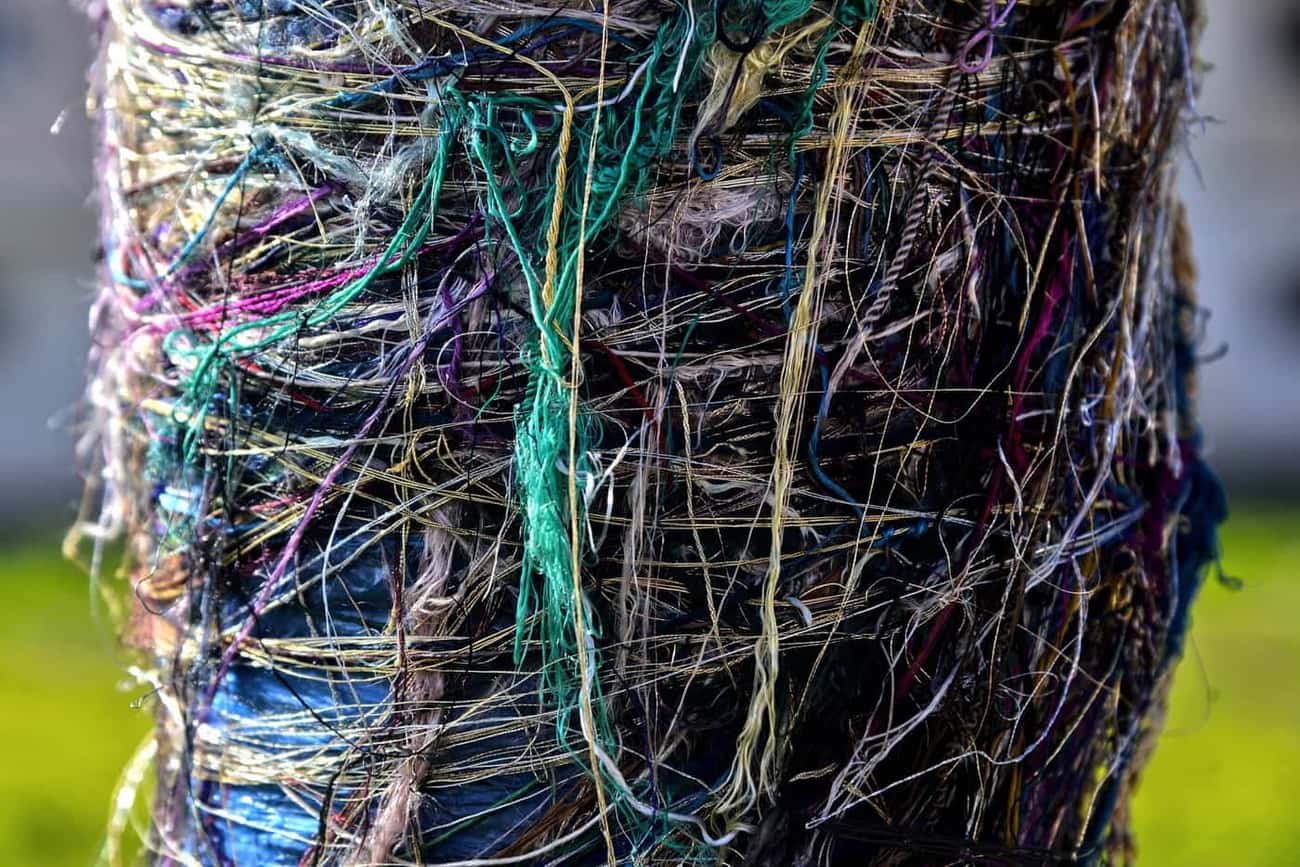
A yarn is two or more strands twisted together. The twist is what holds them as one. When the tip of a needle or hook enters between those strands rather than under all of them, you catch part of the yarn and leave the rest behind - and the stitch is left with a loose loop crossing it that shows permanently in the fabric.
That makes splitting a geometry problem: how much the yarn resists being parted, versus how easily the tool parts it. Yarn ply and twist explained covers the yarn structure in detail.
Which yarns split most
| Characteristic | Splits more | Splits less |
|---|---|---|
| Twist | Loose, soft twist | Firm, tight twist |
| Ply | Singles and loosely held multi-ply | Firmly plied, especially 3 or 4 ply |
| Fiber | Slippery - bamboo, rayon, silk | Grippy - wool, especially non-superwash |
| Finish | Mercerized cotton, superwash | Untreated wool |
| Construction | Chainette and chenille | Conventional plied yarn |
| Softness | Very soft acrylics | Firmer acrylics and blends |
This is why the softest yarn on the shelf is often the most frustrating. Softness usually comes from a looser twist, and a looser twist is exactly what a point can get into.
Which tools cause it
- Sharp-pointed metal needles. Excellent for lace and cables, where you need to get into a tight stitch; the worst possible partner for a soft single.
- In-line crochet hooks, whose head sits flush with the shaft, go into the ply more readily than a tapered head does.
- Blunt bamboo and wood tips are the standard answer for splitty yarn, and the surface grip helps too.
- Tapered crochet hooks narrow before the shaft and gather the whole strand - see inline vs tapered crochet hooks.
- A worn or damaged tip catches fibers regardless of shape. Run a tip over a stocking; if it snags, retire it.
The fixes, cheapest first
- Aim under the whole stitch, not at it. Slow down for twenty stitches and watch where the tip enters. Most splitting stops here.
- Loosen your tension. A stitch held tight on the needle has no room for the tip to pass under it cleanly, so it forces its way through instead.
- Guide, do not push. Let the tip find the gap rather than driving it. Splitting is strongly associated with a heavy hand.
- Change the tip. Bamboo instead of sharp steel; a tapered hook instead of an in-line one. This is the single most effective change.
- Go up a size. A slightly larger tool makes a slightly larger gap to enter.
- Change the yarn, last. If a soft single fights you at every stitch, a firmly plied yarn in the same weight will not.
Splitting in crochet versus knitting
Both suffer from it, differently. In knitting the split shows as a stray loop on the surface of a stitch, and it is usually spotted rows later. In crochet you often notice immediately, because the hook will not pull the loop through cleanly.
Crochet also has more of the problem, because the hook has to enter a stitch from the front and come out the back on every single stitch, where a knitting needle mostly slides. That is why head shape gets so much attention among crocheters and point shape rather less among knitters.
What to do with the splits already in your fabric
- Caught within a row or two: undo back to it. This is the only truly clean fix.
- Caught later, on a plain fabric: the loose strand can often be coaxed back into the stitch with a blunt darning needle.
- Caught much later: leave it. Blocking hides a surprising amount, and picking at it usually makes it worse.
- On a load-bearing piece, such as a bag handle, take it seriously - a split stitch is a weak stitch.
How to fix crochet mistakes and how to fix common knitting mistakes cover the repairs themselves.
The tools that stop it
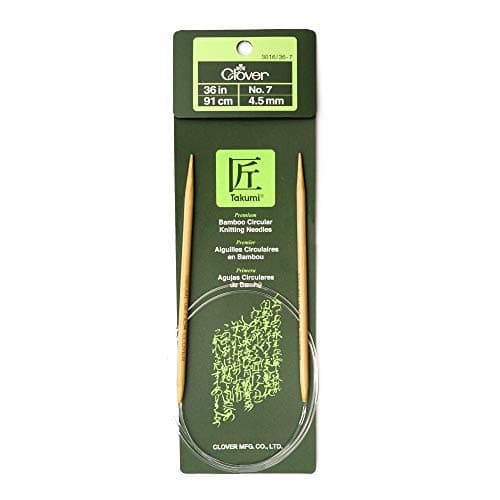
Clover Takumi Bamboo Circular Needles
Bamboo with a rounded tip and a grippy surface - the standard fix for a splitty yarn on needles. US 0 to 15, 9in to 60in cords.
$7.74 - View on Amazon$8.9914% off · #ad disclosure - price as of September 24, 2026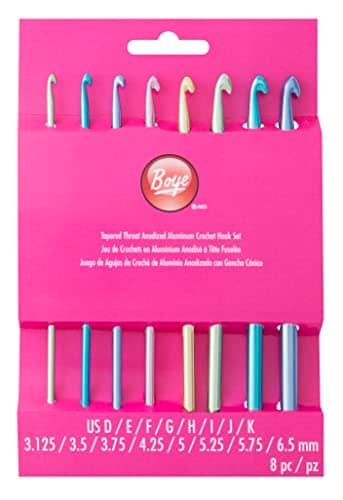
Boye Aluminum Crochet Hook Set
Eight hooks, D/3.125mm to K/6.5mm, with a tapered throat that catches the whole strand instead of diving into it.
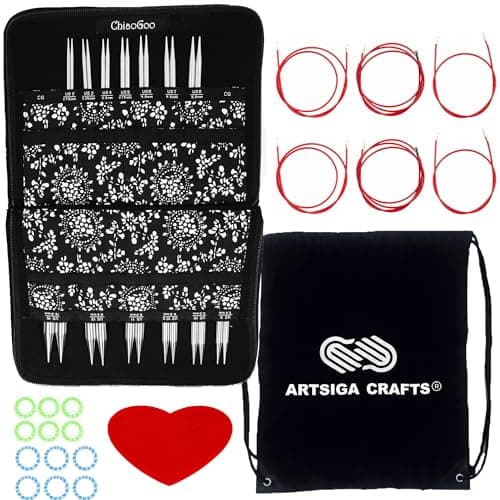
ChiaoGoo TWIST Red Lace Interchangeable Set (Complete, 5in tips)
The opposite tool, for context: stainless steel with sharp points. Superb for lace and cables, and the worst possible pairing with a loosely plied single.
$216.80 - View on Amazon#ad disclosure - price as of September 24, 2026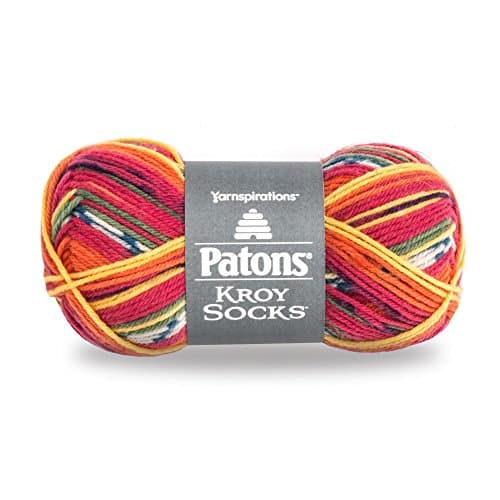
Patons Kroy Socks
A firmly plied yarn that resists splitting: 75% washable wool, 25% nylon, 166yd per 50g, 32 sts x 40 rows on 2.75mm.
$9.61 - View on Amazon#ad disclosure - price as of September 24, 2026
Questions people actually ask
Why does my yarn keep splitting?
Because the point of your tool is entering between the plies instead of passing under the whole strand. It is a mismatch between a loosely twisted yarn and a sharp point, usually made worse by pushing the tool rather than guiding it.
What needles are best for splitty yarn?
Blunt-tipped bamboo or wood. The rounded tip is less able to find the gap between plies, and the grippier surface helps hold the stitches. Sharp stainless steel tips are the worst pairing.
Which crochet hook stops yarn splitting?
A tapered throat, which narrows before the shaft and gathers the whole strand rather than diving into it. In-line heads, which sit flush with the shaft, split soft yarns more readily.
Is splitty yarn a defect?
No. Loose twist is what makes a yarn soft and lofty, and it is a deliberate design choice. The same skein behaves perfectly on a blunter tip, so change the tool before you return the yarn.
Does tension cause splitting?
It contributes. A stitch held tightly on the needle leaves no clean gap for the tip to pass under, so the point forces its way through the ply instead. Loosening slightly often fixes it on its own.