Head to head
In-line vs Tapered Crochet Hooks
Two head geometries, two very different feels. Almost nobody is told which one they bought.
By Sawyer V. · Published September 4, 2026
Disclosure: we earn a commission when you buy through the links on this page, at no extra cost to you. It never decides what we recommend or how we rank it - read the full disclosure.
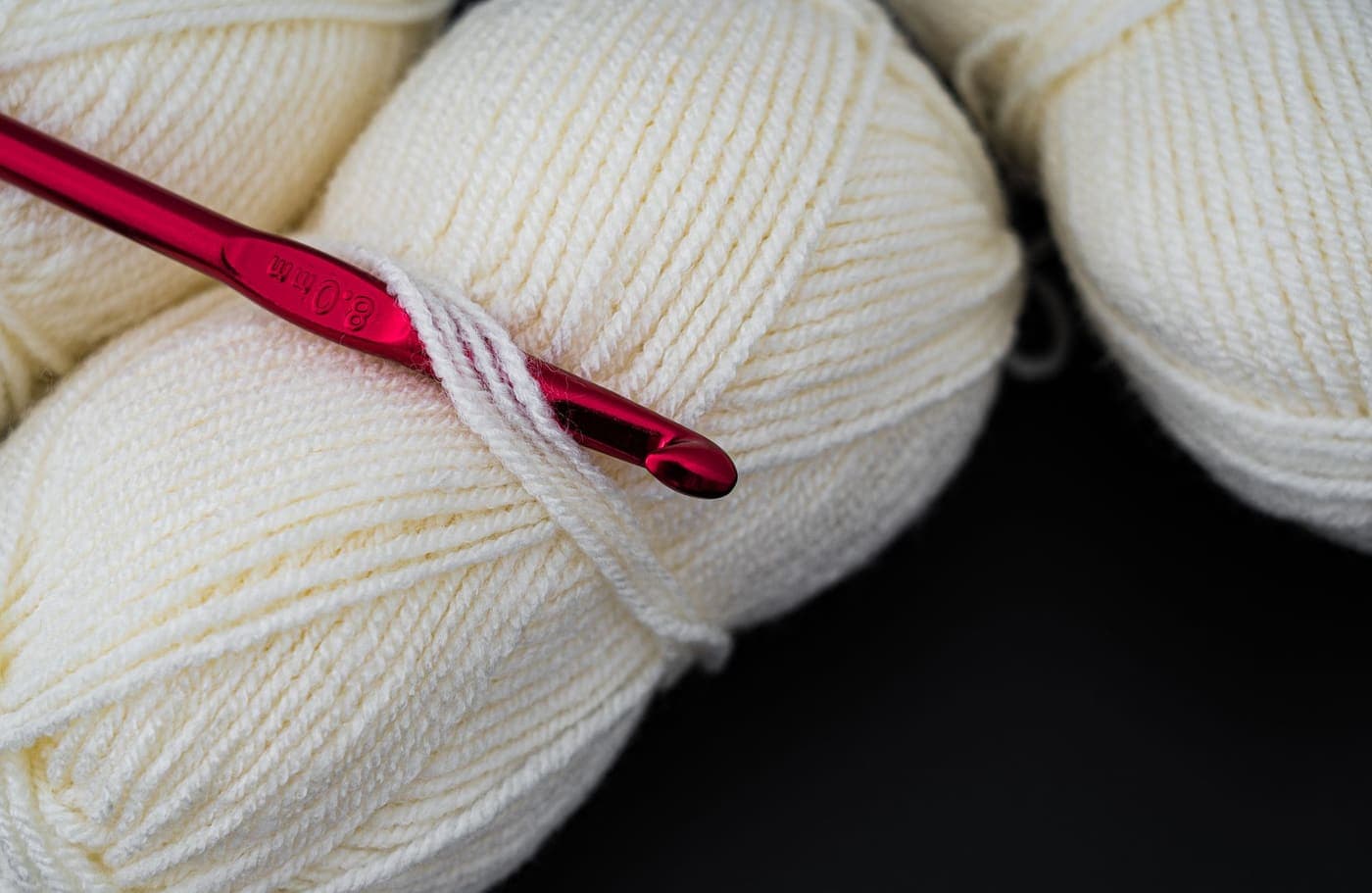
The short answer
In-line hooks - Susan Bates - have a head flush with the shaft, so they enter tight stitches at a predictable width and suit tight crocheters and amigurumi. Tapered hooks - Boye - have a narrower throat that grabs the loop more positively and splits plies less, which suits loose crocheters and soft yarn. Buy one of each; they cost very little and the difference is immediately obvious.
What the two geometries actually are
Every crochet hook has the same parts: the head that catches the yarn, the throat behind it, the shaft that sets the stitch size, and the grip. The argument is entirely about the relationship between the head and the shaft.
In-line. The hook is cut into the shaft so that the head does not project past it. Looked at from above, the head, throat and shaft form one straight line - the origin of the name. Susan Bates is the American reference for this profile.
Tapered. The throat narrows behind the head, so the shaft is wider than the throat and the head sits slightly proud. Boye is the American reference for this profile.
The comparison
| In-line (Susan Bates) | Tapered (Boye) | |
|---|---|---|
| Head relative to shaft | Flush | Slightly proud, narrower throat |
| Entering a tight stitch | Easier - consistent diameter | Harder - has to widen the stitch |
| Grabbing the loop | Less positive | More positive |
| Splitting plies | More likely on soft yarn | Less likely |
| Stitch size consistency | Very consistent | Depends how far up the throat you work |
| Suits | Tight crocheters, amigurumi, thread | Loose crocheters, soft or loosely plied yarn |
| Learning curve | Punishes a loose loop | Forgiving |
Why the throat is the whole argument
The shaft is what sets your stitch size. A 5mm hook makes 5mm stitches because the loop sits on a 5mm shaft.
On an in-line hook the throat is also close to 5mm, so a loop that sits anywhere along the working end is roughly the right size. On a tapered hook the throat is narrower, so a loop that stays in the throat is smaller than the label says.
That is why tapered hooks are described as producing tighter work for some people: they are not tighter, the crocheter is working in the narrow part. It is also why an in-line hook gives more consistent gauge for most people, and why gauge-sensitive work such as garments tends to favor it.
Which one are you?
There is a quick diagnostic, and it comes from what annoys you rather than what you like.
- Your hook keeps splitting the yarn. You want tapered. The narrower throat gathers the strand instead of pushing between plies.
- You struggle to get the hook back into your own stitches. You want in-line. Your tension is tight and you need a consistent diameter.
- Your stitches are uneven in size. In-line is more forgiving of where along the head the loop sits.
- Your loops keep falling off the hook. Tapered. The proud head holds a loop more positively.
Nothing about hand size, speed or experience predicts this. It is about your tension and your yarn, in exactly the way bamboo versus metal is on the knitting side.
How this interacts with yarn
Yarn construction shifts the answer. A tightly plied, smooth yarn - mercerized cotton, most sock yarn - is hard to split, so the in-line disadvantage largely disappears. A loosely spun single or a soft acrylic splits readily, and tapered helps.
Fiber follows from that. Cotton is usually tightly plied and suits in-line. Acrylic varies wildly by brand. Chenille and blanket yarn is its own problem entirely, and head shape is not the variable that solves it.
The middle ground, and why it exists
Clover, Tulip and most modern ergonomic brands do not build to either extreme. They use a rounded head that is neither flush nor sharply undercut, because a compromise profile annoys the fewest people.
That is a legitimate answer, and it is why the Clover Amour set is our general top pick rather than either reference hook. If you have no strong feelings, buy the compromise. If you have a specific complaint, buy the geometry that fixes it.
The cheapest possible experiment
A single Susan Bates hook and a single Boye hook in the same size cost less than a coffee each. Crochet ten rows of double crochet with each, in a yarn you already own, and pay attention to two things: how often the hook splits the yarn, and how hard it is to get back into the previous row.
That test settles the question in twenty minutes, and it is more reliable than any amount of reading - including this page.
One of each, so you can find out which you are
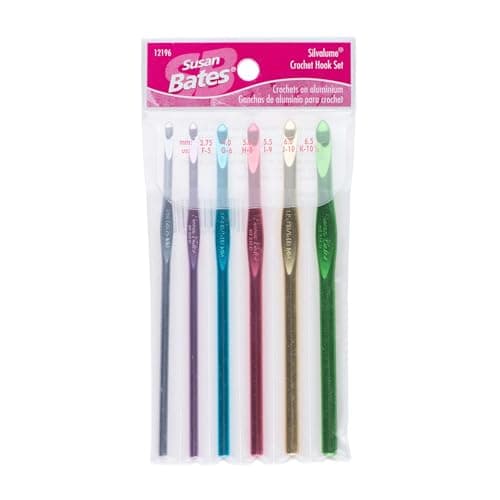
Susan Bates Silvalume Aluminum Crochet Hooks
The reference in-line hook: the head sits flush with the shaft, so the width entering the stitch is the width on the label.
$11.57 - View on Amazon#ad disclosure - price as of October 20, 2026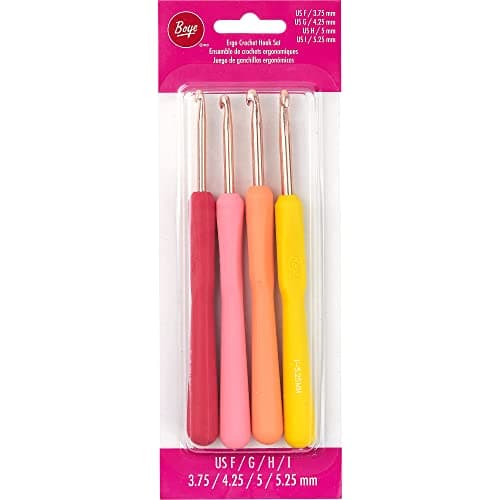
Boye Ergonomic Crochet Hook Set, Light and Medium Yarn (40-40044)
The reference tapered hook: a narrower throat behind the head, which grabs the loop more positively and splits plies less often.
$16.32 - View on Amazon#ad disclosure - price as of October 20, 2026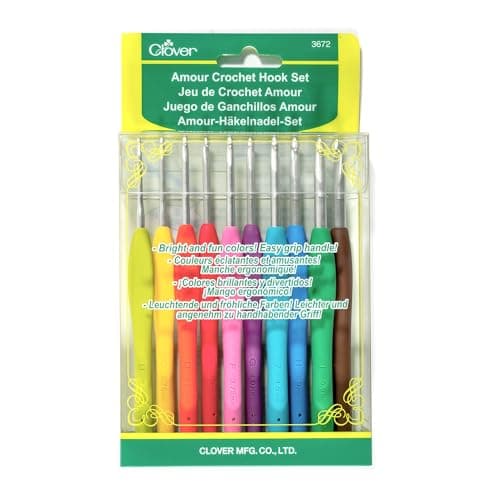
Clover Amour Crochet Hook Set
A rounded head deliberately between the two, with a cushioned grip - the safe answer if you do not want to pick a side.
$50.83 - View on Amazon#ad disclosure - price as of October 20, 2026
Questions people actually ask
What is the difference between in-line and tapered crochet hooks?
In-line hooks have the head flush with the shaft; tapered hooks have a narrower throat behind a slightly proud head. In-line enters tight stitches more easily and gives more consistent gauge; tapered grabs the loop more positively and splits yarn less.
Is Susan Bates in-line or tapered?
In-line. Susan Bates is the American reference for the in-line profile, and Boye is the reference for tapered.
Which crochet hook type is better for beginners?
Tapered, marginally - it is more forgiving of a loose loop and splits soft beginner-friendly yarn less. A mid-profile rounded head such as Clover's is a safe alternative to picking a side.
Does hook type change my gauge?
It can. On a tapered hook the throat is narrower than the shaft, so working in the throat produces smaller stitches than the label suggests. In-line hooks are more consistent for that reason.
Which hook shape is best for amigurumi?
In-line, or a mid-profile rounded head. Amigurumi is worked deliberately tight, and getting back into a very small stitch is exactly what a flush head is good at.