Head to head
Clover Amour vs Susan Bates
A grip and a rounded head against bare aluminum and an inline one. Two real differences.
By Sawyer V. · Published September 4, 2026
Disclosure: we earn a commission when you buy through the links on this page, at no extra cost to you. It never decides what we recommend or how we rank it - read the full disclosure.
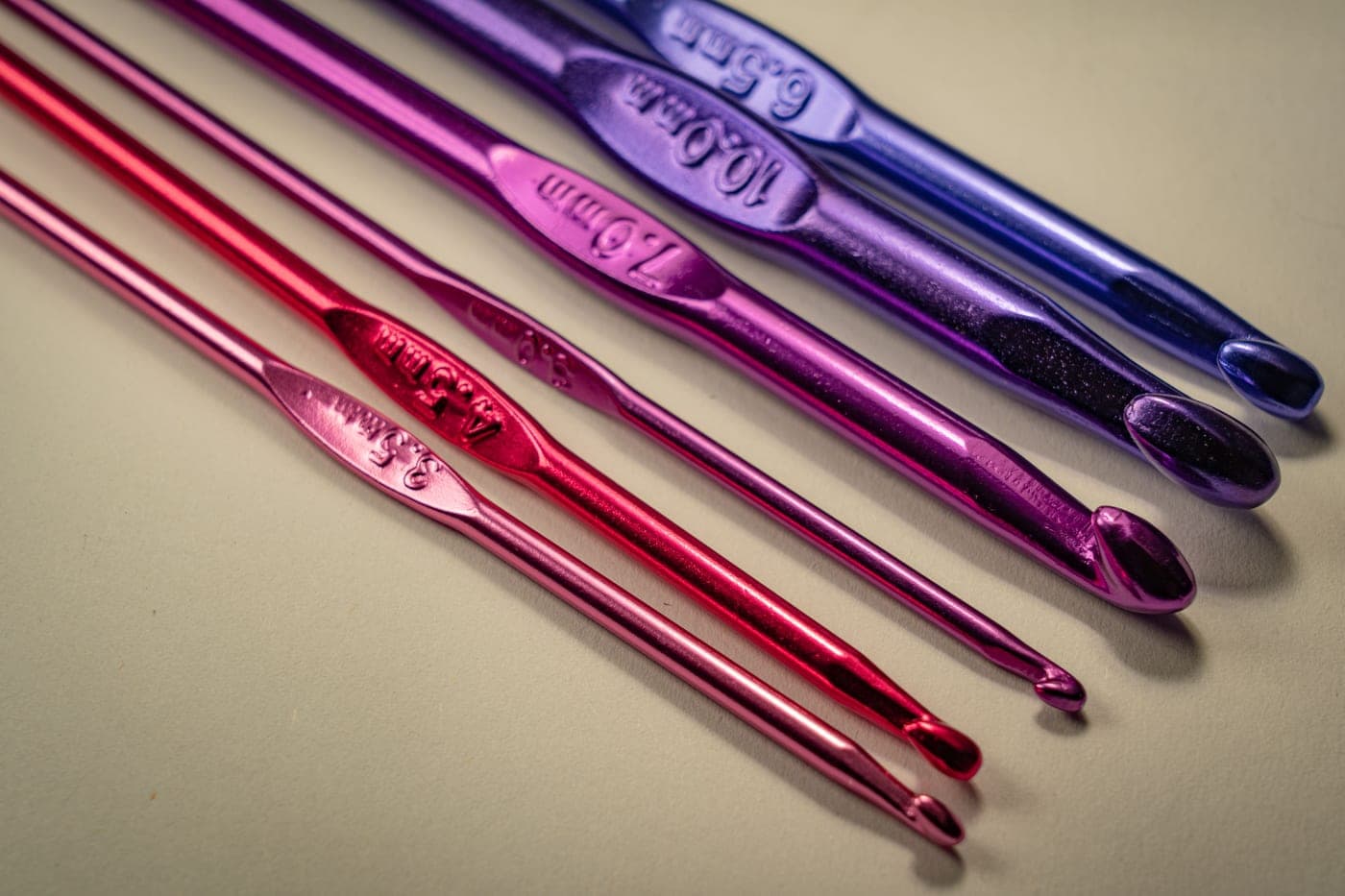
The short answer
Clover Amour has an elastomer rubber grip and a rounded head; Susan Bates Silvalume is a bare aluminum shaft with an in-line head. If your hands ache over a long session, the Clover is the answer. If you crochet tightly or work amigurumi, the Susan Bates in-line head goes into tight stitches more easily - and costs a fraction as much.
These are the two hooks new crocheters are most often told to buy, and the comparison is usually reduced to comfort against price. That misses the more consequential difference, which is head shape.
The comparison
| Clover Amour | Susan Bates Silvalume | |
|---|---|---|
| Head design | Rounded | In-line |
| Shaft | Aluminum | Anodized aluminum |
| Handle | Elastomer rubber, latex free | None - bare shaft |
| Set sizes | 10 hooks, B/2.25mm to J/6.0mm | Sold singly and in sets, B-1/2.25mm to N-15/10mm |
| Length | Not published as a figure | 5.5in for B-K; longer for L, M, N |
| Color coding | Handle color per size | Anodized color per size |
| Price band | Mid | Lowest |
Head shape: the difference that changes your stitches
The Susan Bates head is in-line: the hook is cut so that the head sits flush with the shaft diameter. The Clover head is rounded, sitting between a true in-line and a fully tapered Boye-style head.
In practice:
- In-line goes into a tight stitch more easily, because there is no wider shoulder to force through. If your tension is tight - which most beginners' is - that is a real, felt advantage.
- In-line holds gauge more consistently, because the working loop always sits on a single shaft diameter.
- A rounded or tapered head grabs the working loop more positively and splits plies less, which matters with soft or loosely-plied yarn.
Neither is better in the abstract. The full picture, including the fully-tapered Boye alternative, is in hook materials explained and best crochet hooks.
Grip: the difference that changes your hands
The Clover has a molded elastomer handle. The Susan Bates has nothing - it is a metal rod about the thickness of a pencil.
A larger, softer handle needs less pinch force to hold securely, and sustained pinch force is what produces the ache crocheters describe in the thumb web after a long session. If you crochet for hours, this is the difference you will notice, and it is why the Clover is worth its higher price to a lot of people.
If you crochet for twenty minutes at a time, it will not matter much. Be honest about which you are. Best ergonomic crochet hooks has the wider ergonomic picture.
Size coverage
The Clover Amour set spans B/2.25mm to J/6.0mm - ten hooks covering categories 1 through 4 in the standard, which is the range most published patterns use.
Susan Bates hooks are sold individually and in various small sets, and the range runs further at both ends: B-1/2.25mm through N-15/10mm. If you work in bulky yarn, that matters - the Clover set simply stops before you get there.
Which to buy
| If you... | Buy |
|---|---|
| Are just starting and crochet tightly | Susan Bates - the in-line head is more forgiving of tight tension |
| Crochet for hours at a time | Clover Amour - the grip is the difference |
| Have any hand pain | Clover Amour, or something thicker still |
| Work mostly in bulky yarn | Susan Bates - the range goes to 10mm |
| Fight split stitches constantly | Neither - try a fully tapered Boye head |
| Want spares in every size for a low price | Susan Bates |
| Want one comfortable set to cover most patterns | Clover Amour |
The genuinely cheapest way to decide is to buy one Susan Bates in 5mm and crochet a swatch. If your hands are fine, you have your answer and it cost almost nothing. If they ache, buy the Clover set knowing exactly why.
How we compared them
Both specifications come from the manufacturer or a retailer quoting the manufacturer - head design, materials, sizes and set contents. We have not crocheted with either hook and we make no claim about how either one feels. What we can do is set out what each is, which is what this page does. How we pick is the method.
Both hooks in this comparison
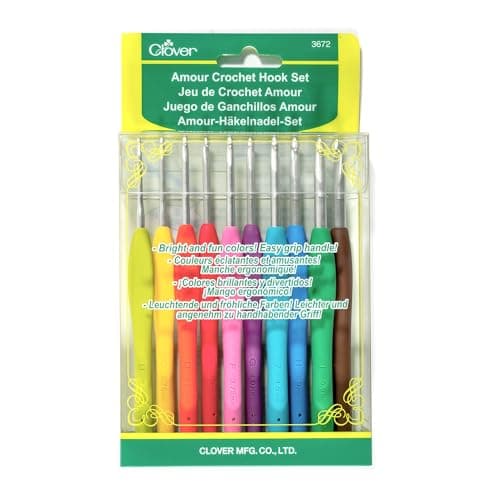
Clover Amour Crochet Hook Set
The Amour: molded elastomer grip, rounded mid-profile head, ten sizes from 2.25mm to 6.0mm.
$50.83 - View on Amazon#ad disclosure - price as of October 20, 2026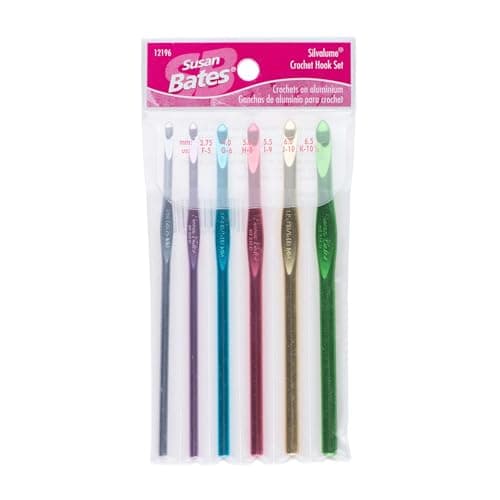
Susan Bates Silvalume Aluminum Crochet Hooks
The Silvalume: bare anodized aluminum, in-line head, 2.25mm to 10mm, at a fraction of the price.
$11.57 - View on Amazon#ad disclosure - price as of October 20, 2026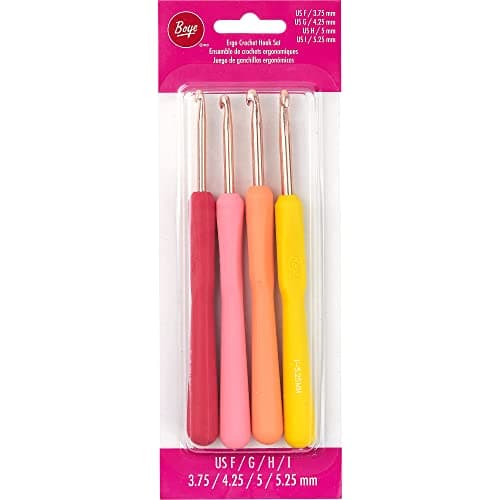
Boye Ergonomic Crochet Hook Set, Light and Medium Yarn (40-40044)
The third hook the comparison keeps referring to - Boye's tapered throat, the opposite geometry. Four hooks, F/3.75mm to I/5.25mm.
$16.32 - View on Amazon#ad disclosure - price as of October 20, 2026
Questions people actually ask
Is Clover Amour worth the extra money over Susan Bates?
If you crochet for hours at a time, or your hands ache, yes - the molded grip reduces the pinch force needed to hold the hook. If you crochet in short sessions, the Susan Bates makes the same fabric for far less.
Which is better for beginners, Clover or Susan Bates?
Susan Bates first, because it is cheap and its in-line head goes into tight stitches easily - and beginner tension is tight. Move to Clover once you know you will keep going.
What is an in-line crochet hook?
One where the head sits flush with the shaft rather than being cut back behind a narrower throat. Susan Bates is the classic in-line design; Boye is the classic tapered one.
Do Clover Amour hooks split yarn?
The rounded head grabs the working loop more positively than a true in-line head, which generally means less splitting. Splitting is also driven by the yarn - soft, loosely-plied yarn splits on any hook.
Does Clover Amour go up to bulky sizes?
The standard set stops at J/6.0mm. Larger Amour hooks are sold individually, but for bulky and super bulky yarn you will need to buy outside the set.