Head to head
Hook Materials Explained
Material decides how fast the yarn moves. That is a bigger deal than it sounds.
By Sawyer V. · Published September 4, 2026
Disclosure: we earn a commission when you buy through the links on this page, at no extra cost to you. It never decides what we recommend or how we rank it - read the full disclosure.
The short answer
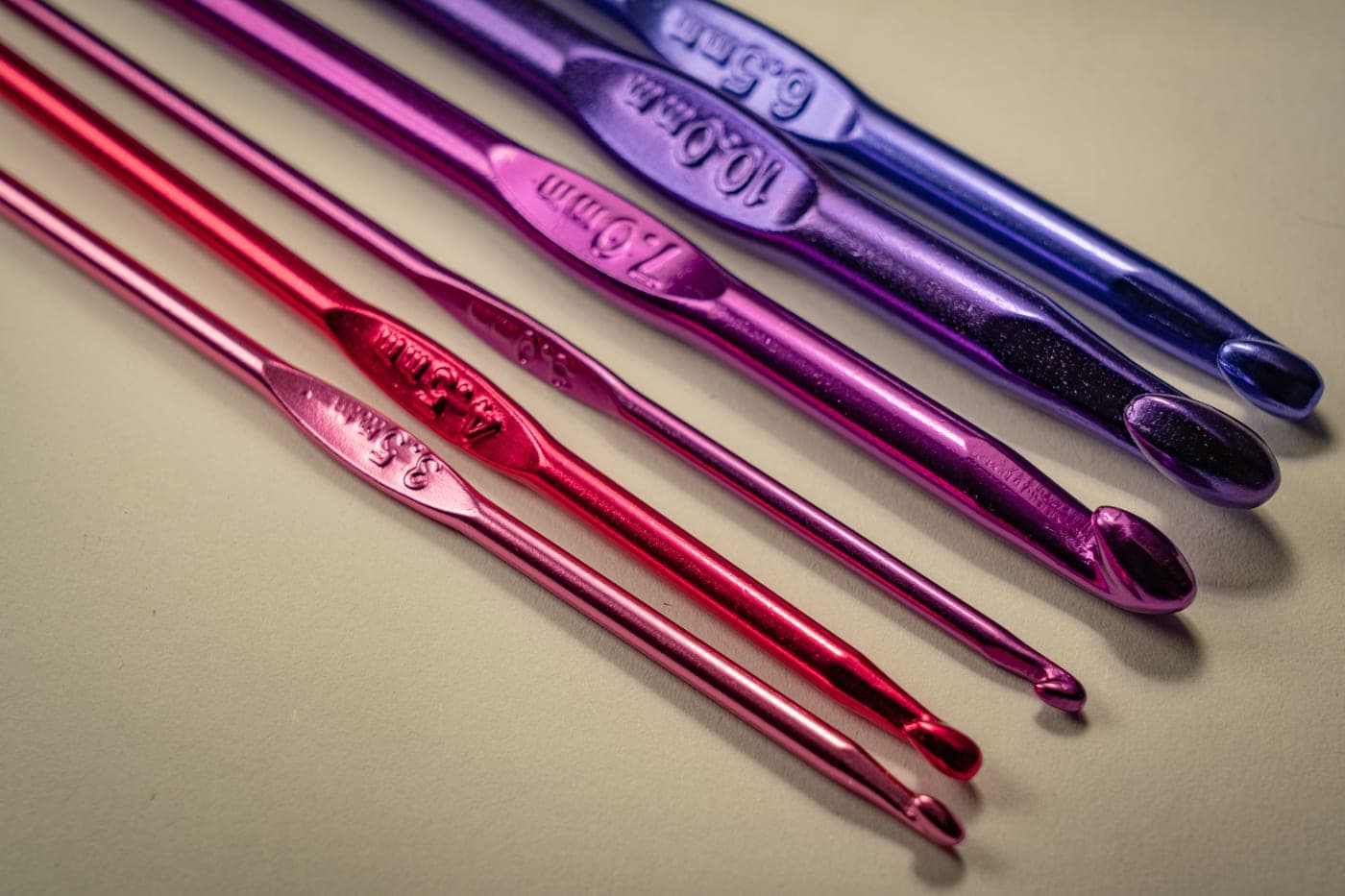
Aluminum is smooth and fast, and suits grabby yarns like wool and cotton. Bamboo and wood grip the yarn and slow it down, which suits slippery yarns like bamboo-viscose or silk blends. Steel is for crochet thread only. Resin and plastic vary widely, and are chosen for handle diameter rather than for surface.
Material is the specification most reviews lead with and it matters less than head shape or grip diameter. It does matter, though, and it matters in a specific way: it decides how easily the yarn slides over the hook.
The comparison
| Material | Glide | Weight | Warmth | Best with | Watch out for |
|---|---|---|---|---|---|
| Aluminum | Fast and smooth | Very light | Cold to start | Wool, cotton, acrylic - anything with grip | Slippery yarn slides off; bare shafts have no grip |
| Steel | Fastest | Light | Cold | Crochet thread only | Sized for thread; the numbering runs backwards |
| Bamboo | Slow, grippy | Very light | Warm immediately | Slippery yarn - silk, bamboo-viscose, some blends | Can snag if the finish wears; large sizes flex |
| Wood | Slow, grippy | Light | Warm | Same as bamboo | Finish quality varies enormously between makers |
| Plastic | Moderate | Very light | Neutral | Large sizes, where metal would be heavy | Flexes under tension; cheap ones have seam lines that snag |
| Resin | Moderate to fast | Heavier than it looks | Warm | Ergonomic use - chosen for the handle, not the surface | Sold as single hooks, so a range is expensive |
Glide is the property that actually matters
A smooth hook lets the yarn move quickly and with little resistance. A grippy hook holds the yarn slightly. Neither is better - the right one depends entirely on the yarn.
- Slippery yarn on a slippery hook is a fight. Loops slide off the head, and tension is hard to hold.
- Grabby yarn on a grippy hook is slow and tiring, because every stitch takes force.
- Match them the other way round. Slippery yarn to a bamboo or wood hook; grabby yarn to aluminum.
Most common yarns - acrylic, wool, cotton - have plenty of grip, which is why aluminum is the default in the American market and why almost every recommended set is aluminum. See best hook for acrylic yarn and best hook for cotton yarn for the specific cases.
Steel is a separate universe
Steel hooks are sized for crochet thread, not yarn, and they use their own numbering scale that runs backwards - a steel 14 is finer than a steel 0. They exist for doilies, edgings and fine lace.
If you have bought a hook set and found tiny numbered hooks you have no use for, that is what they are. It is a different craft with different patterns and different tension, and there is nothing wrong with the hooks - they are simply not for yarn. The hook size chart sets out both scales.
Weight, warmth and long sessions
Two secondary properties worth knowing about, because they affect how a hook feels over hours rather than minutes:
Weight. Aluminum and bamboo are very light. Resin is heavier than it looks - the Furls Streamline is a substantial object at 16-17mm diameter. Some people find a little weight helps them relax their grip; others find it tiring. There is no right answer and it is worth trying both if comfort is the goal.
Warmth. Metal starts cold and takes body heat from your hand; bamboo, wood and resin are warm immediately. For anyone with stiff or cold-sensitive hands, that is a real and frequently-reported comfort difference. It is one of the arguments for wooden hooks that has nothing to do with the yarn.
What material does not do
Being clear about the limits, because material gets over-sold:
- It does not change your gauge - hook diameter does.
- It does not make you faster in any meaningful sense. A smoother hook reduces friction slightly; your hands set your speed.
- It does not fix hand pain. That is handle diameter, and it is a separate variable - see best ergonomic crochet hooks.
- It does not decide splitting. Head shape does, and so does the yarn's construction.
What to buy
For most people: aluminum, with a comfortable grip. It suits the yarn most people use, it is light, and it is cheap enough to own in every size. That describes the Clover Amour set, which is why it is our default recommendation.
Add a bamboo hook in your most-used size if you work with slippery yarn, and buy resin only if you are buying it for the handle diameter. Steel only if you crochet thread.
How we compared them
Materials and construction are taken from the manufacturers' published specifications; the behavioral descriptions are the well-established properties of the materials themselves rather than test results, and we have not crocheted with any of these hooks. How we pick explains the distinction we are drawing there.
One hook per material
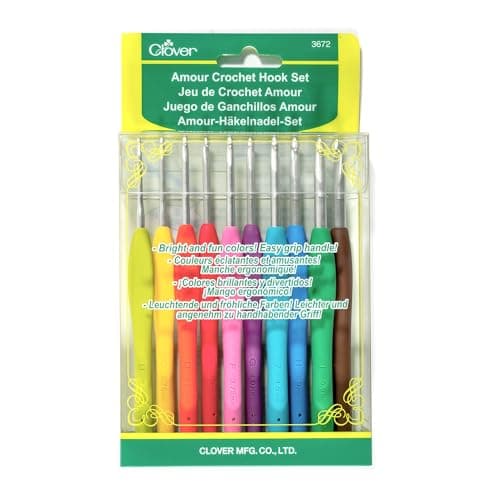
Clover Amour Crochet Hook Set
Aluminum shaft with an elastomer grip - the modern default.
$50.83 - View on Amazon#ad disclosure - price as of October 20, 2026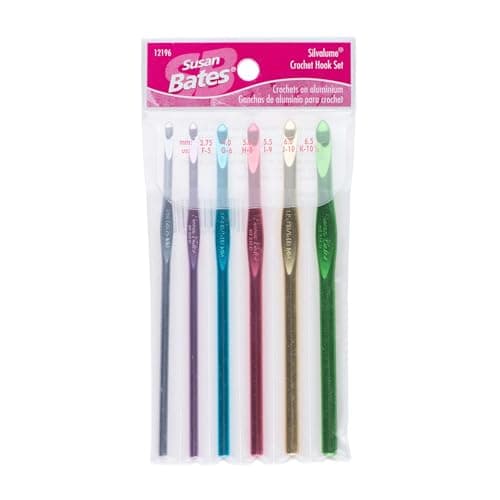
Susan Bates Silvalume Aluminum Crochet Hooks
Bare anodized aluminum: fastest, cheapest, hardest on the hand.
$11.57 - View on Amazon#ad disclosure - price as of October 20, 2026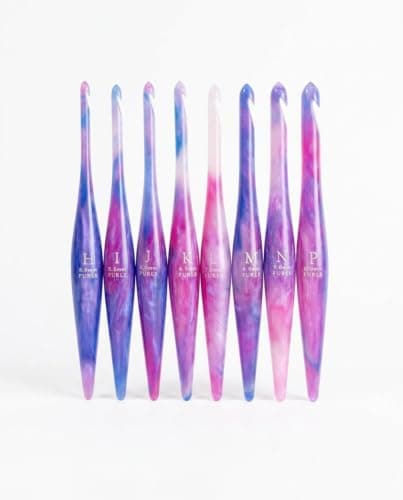
Furls Streamline Resin Crochet Hook
Hand-poured resin, with a 16-17mm handle. Warm in the hand, sold one size at a time.
$34.99 - View on Amazon#ad disclosure - price as of October 20, 2026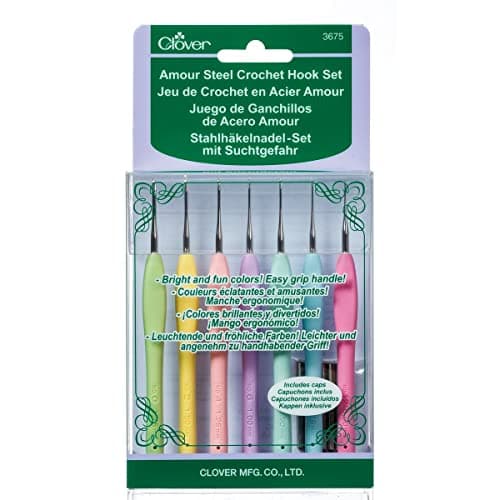
Clover Amour Steel Crochet Hook Set
Steel, for the thread sizes aluminum sets do not reach.
$37.78 - View on Amazon#ad disclosure - price as of October 20, 2026
Questions people actually ask
What is the best crochet hook material for beginners?
Aluminum. It suits the acrylic and wool yarn beginners use, it is light, it is smooth enough not to fight you, and it is cheap enough to buy in a couple of sizes while you work out what you like.
Are bamboo crochet hooks better than metal?
Only with slippery yarn. Bamboo grips the yarn, which helps when loops slide off a metal hook. With ordinary acrylic or wool, bamboo just makes each stitch slower.
What are steel crochet hooks for?
Crochet thread - doilies, edgings and fine lace. They use their own numbering scale that runs backwards, and they are not sized for yarn.
Do plastic crochet hooks work?
In large sizes, yes - plastic keeps a jumbo hook light where metal would be heavy. In small sizes, cheap plastic flexes under tension and molding seams can snag the yarn.
Does hook material change my gauge?
No. Gauge is set by hook diameter, your tension and the yarn. Material changes how easily the yarn slides, not the size of the loops.