Guide
Best Hook for Cotton Yarn
Cotton has no give. The hook has to be smooth, and your hands need the help.
By Sawyer V. · Published September 4, 2026
Disclosure: we earn a commission when you buy through the links on this page, at no extra cost to you. It never decides what we recommend or how we rank it - read the full disclosure.
The short answer
Use a smooth aluminum hook with a comfortable grip. Cotton has no elasticity, so every stitch takes more force than the same stitch in wool or acrylic, and the grip is doing genuine work. For amigurumi in cotton, go a half to a full size below the label - commonly 3.5 to 4mm on worsted cotton.
| # | Product | Best for | Head | Sizes | Price |
|---|---|---|---|---|---|
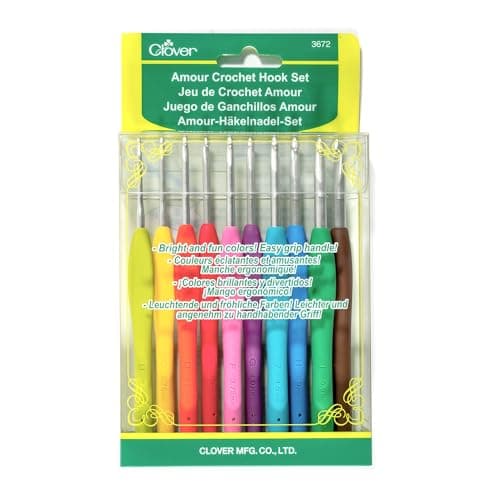
| 1 | Clover Amour Crochet Hook SetA smooth aluminum shaft with a grip - which is what cotton work actually needs. | Cotton, comfortably | Rounded | B/2.25 - J/6.0mm | $50.83 - View on Amazon#ad disclosure - price as of October 20, 2026 |
| 2 | 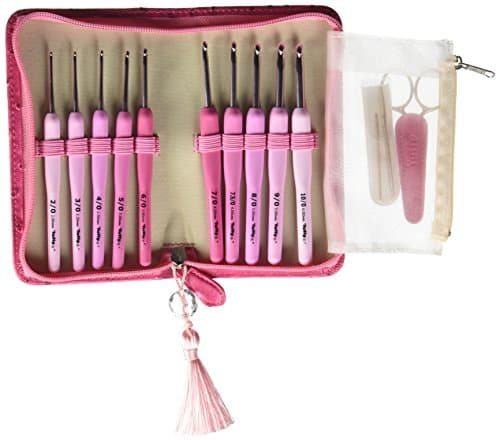 Tulip Etimo Rose Crochet Hook SetA polished tip and unusually fine size steps, with a cushioned grip. Tulip Etimo Rose Crochet Hook SetA polished tip and unusually fine size steps, with a cushioned grip. | Fine, tight cotton work | Tulip profile | 2.00 - 6.00mm | $117.00 - View on Amazon#ad disclosure - price as of October 20, 2026 |
| 3 | 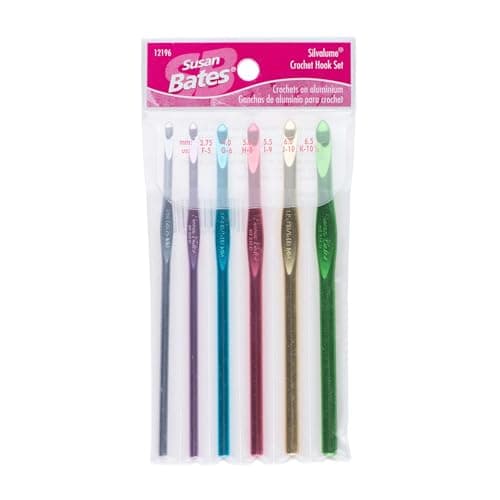 Susan Bates Silvalume Aluminum Crochet HooksCheap, smooth, and the in-line head suits the tight fabric cotton work wants. Susan Bates Silvalume Aluminum Crochet HooksCheap, smooth, and the in-line head suits the tight fabric cotton work wants. | Dishcloths and quick cotton projects | In-line | B-1/2.25 - N-15/10mm | $11.57 - View on Amazon#ad disclosure - price as of October 20, 2026 |
| 4 | 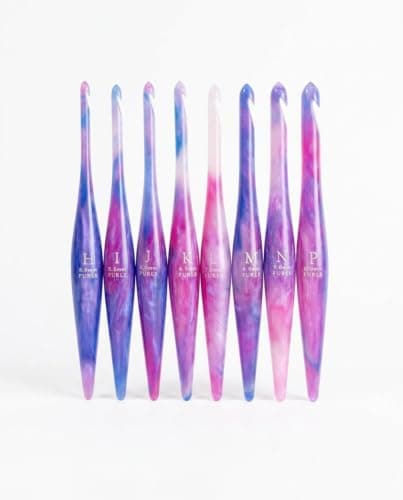 Furls Streamline Resin Crochet HookExcellent for painful hands, and it starts at 5.0mm - above where cotton work lives. Furls Streamline Resin Crochet HookExcellent for painful hands, and it starts at 5.0mm - above where cotton work lives. | Not general cotton work | Furls profile | H/5.0 - P/10.0mm, single hooks | $34.99 - View on Amazon#ad disclosure - price as of October 20, 2026 |
Clover Amour Crochet Hook Set
Clover · Best for cotton, comfortably
Ten aluminum hooks with a molded elastomer grip, covering 2.25mm to 6.0mm - the whole span most patterns for worsted and DK yarn ever ask for.
- Sizes
- 10 hooks: B/2.25mm to J/6.0mm
- Grip
- Elastomer rubber, latex free
- Shaft
- Aluminum
- Head
- Rounded, between inline and tapered
- Color coding
- Handle color differs per size
Who it suits
Anyone doing amigurumi, dishcloths, bags or summer garments in cotton, in sessions longer than half an hour.
Why it is here
Aluminum shaft with elastomer rubber handle, B/2.25mm to J/6.0mm - which covers the fine end that cotton work lives at. Cotton has no elasticity, so the force comes from your hand and the grip is doing real work.
What you give up
The rounded head is slightly less pointed than a dedicated fine hook, which matters at the very smallest amigurumi sizes.
Specifications from Clover USA product page. We have not handled this item - see how we pick.
Tulip Etimo Rose Crochet Hook Set
Tulip · Best for fine, tight cotton work
Ten cushion-grip hooks from 2.00mm to 6.00mm, made in Hiroshima, with the finest size steps of any set here.
- Sizes
- 10 hooks: 2.00, 2.20, 2.50, 3.00, 3.50, 4.00, 4.50, 5.00, 5.50, 6.00mm
- Grip
- Cushioned rubber grip
- Head
- Polished tip, Tulip's own hook profile
- Also included
- Two darning needles, scissors, zipped case
- Made in
- Hiroshima, Japan
Who it suits
Anyone working amigurumi in cotton, where the hook is small and the fabric is deliberately tight.
Why it is here
Sizes at 2.00, 2.20, 2.50, 3.00, 3.50, 4.00, 4.50, 5.00, 5.50 and 6.00mm with a polished tip and cushioned grip. Cotton amigurumi runs at the small end, and this set has the steps to fine-tune it.
What you give up
The most expensive set here, and part of the price is the case, scissors and needles.
Specifications from Tulip Etimo Rose set specification. We have not handled this item - see how we pick.
Susan Bates Silvalume Aluminum Crochet Hooks
Susan Bates · Best for dishcloths and quick cotton projects
The bare aluminum inline hook that a large share of American crocheters learned on, and still the cheapest way to find out which head shape suits you.
- Head
- In-line (head sits flush with the shaft)
- Material
- Anodized aluminum, heat treated and polished
- Size range
- B-1/2.25mm through N-15/10mm
- Length
- 5.5in for B through K; longer for L, M, N
- Color coding
- One color per size
Who it suits
Anyone making dishcloths, which is a small project with a small hook and a short session.
Why it is here
Anodized aluminum, polished, with an in-line head that enters tight cotton stitches easily. For a project that takes an evening, grip matters less than it does over a bag or a garment.
What you give up
No grip at all. Cotton is the least forgiving fiber on your hands, so a bare shaft over a long session is the wrong combination.
Specifications from Susan Bates Silvalume retail specification. We have not handled this item - see how we pick.
Furls Streamline Resin Crochet Hook
Furls · Best for not general cotton work
A single hand-poured resin hook with a 16-17mm handle - roughly the diameter of a fat marker pen, sold one size at a time.
- Handle diameter
- 16-17mm at the widest point
- Length
- About 6.75in
- Material
- Hand-poured resin, made in India
- Sizes
- H/5.00mm up to P/10.00mm depending on release
- Sold as
- Single hook, not a set
Who it suits
Not for amigurumi or fine cotton work. Its published range starts at H/5.0mm, and cotton amigurumi is usually 3.5 to 4mm.
Why it is here
16-17mm handle diameter with published sizes from H/5.0mm to P/10.0mm. The comfort is real; the sizes are wrong for most cotton projects.
What you give up
If your hands genuinely hurt and you work cotton at 5mm and above - bags, market totes - it becomes a sensible purchase. Below that, look at the cushioned sets.
Specifications from Furls Streamline collection page. We have not handled this item - see how we pick.
Why cotton is different
Cotton has no crimp and no elasticity. Wool stretches slightly as the hook passes through a stitch and springs back; acrylic gives a little; cotton does neither. Three consequences:
- Every stitch takes more force. There is no give to absorb the hook, so your hand supplies all of it. This is why cotton sessions tire hands faster than acrylic ones.
- Tension errors show and stay. A tight row in wool relaxes on blocking. A tight row in cotton is permanent.
- It splits if the hook is rough. Cotton plies separate cleanly under a burr, so surface finish matters more than with springier fibers.
Head shape
Cotton is well-behaved on either head design, and the choice follows the project:
- In-line for tight, dense work - amigurumi especially, where the fabric is deliberately tighter than the yarn wants and easy insertion matters.
- Rounded or tapered for general work, where a more positive grab on the loop helps with unmercerized cotton, which is fuzzier and splits a little more.
Mercerized cotton like Lion Brand 24/7 Cotton is smoother and more tightly plied than unmercerized cotton like Lily Sugar'n Cream, and splits noticeably less. The difference is real and worth knowing when you are choosing.
Size, by project
| Project | Yarn | Published hook | Use |
|---|---|---|---|
| Amigurumi | Worsted cotton | 5.0-5.5mm | 3.5-4mm - a tight fabric hides stuffing |
| Dishcloth | Lily Sugar'n Cream | 5mm (US H/8) | 5mm - the label is right here |
| Bag or basket | Worsted cotton | 5.0-5.5mm | 4-4.5mm - dense enough to hold shape |
| Summer top | Worsted cotton | 5.0-5.5mm | 5.5mm or above - drape is the goal |
Cotton has no memory, so anything that must hold a shape - a bag, a basket, a stuffed toy - needs a tighter fabric than the label suggests. Anything that should hang needs a looser one. The full logic is in hook size chart.
Protecting your hands
Cotton is the fiber most likely to leave your hand aching, and it is worth taking seriously:
- Use a hook with a real grip. This is where cushioned handles earn their price - see best ergonomic crochet hooks.
- Shorter sessions. Twenty to thirty minutes, then stop and stretch.
- Do not fight tight tension. If the stitches are hard to enter, go up a hook size rather than forcing it.
- Alternate projects. A cotton bag and a wool scarf on rotation load your hand differently.
Material
Aluminum, polished. Cotton has enough grip that a smooth hook is right, and it splits on a rough surface, so finish quality matters more than with wool or acrylic. Bamboo adds friction to a fiber that is already hard work. Hook materials explained has the full comparison.
Questions people actually ask
What is the best crochet hook for cotton yarn?
A smooth polished aluminum hook with a comfortable grip. Cotton has no give, so the force comes from your hand - the grip is doing real work, not just adding comfort.
What size hook for cotton amigurumi?
3.5 to 4mm with worsted cotton, which is a half to a full size below the label. The goal is a fabric tight enough that stuffing does not show through.
Why does cotton yarn hurt my hands?
Cotton has no elasticity, so every stitch takes more force than the same stitch in wool or acrylic. Use a cushioned hook, work shorter sessions, and go up a size rather than fighting tight stitches.
Is mercerized or unmercerized cotton easier to crochet?
Mercerized. It is smoother and more tightly plied, so it splits less and shows stitch definition more sharply. Unmercerized cotton is more absorbent, which is why dishcloths use it.
Should I use bamboo hooks with cotton?
Not usually. Cotton is already hard work, and a bamboo hook adds friction to every stitch. A polished aluminum hook moves through it more easily.
Sources
- Craft Yarn Council - Standard Yarn Weight System
- Clover USA - Amour Crochet Hook Set specification
- Tulip Etimo Rose crochet hook set specification
- Susan Bates Silvalume aluminum hook specification
- Furls Streamline resin crochet hooks
- Lion Brand - 24/7 Cotton specification
- Yarnspirations - Lily Sugar'n Cream specification