Guide
Best Hook for Acrylic Yarn
Soft acrylic splits. A tapered throat is the cheapest thing that fixes it.
By Sawyer V. · Published September 4, 2026
Disclosure: we earn a commission when you buy through the links on this page, at no extra cost to you. It never decides what we recommend or how we rank it - read the full disclosure.
The short answer
Use a hook with a tapered or rounded head rather than a true in-line one - a tapered throat grabs the whole strand instead of catching half the plies, which is the standard acrylic complaint. For worsted acrylic, 5.5 to 6.5mm follows the standard, though most acrylic labels suggest 5mm for a denser fabric.
| # | Product | Best for | Head | Sizes | Price |
|---|---|---|---|---|---|
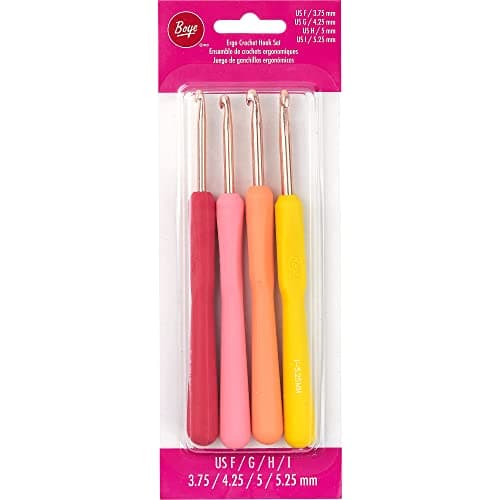
| 1 | Boye Ergonomic Crochet Hook Set, Light and Medium Yarn (40-40044)A tapered throat grabs the whole strand instead of half the plies. | Acrylic that splits | Tapered | F/3.75 - I/5.25mm | $16.32 - View on Amazon#ad disclosure - price as of October 20, 2026 |
| 2 | 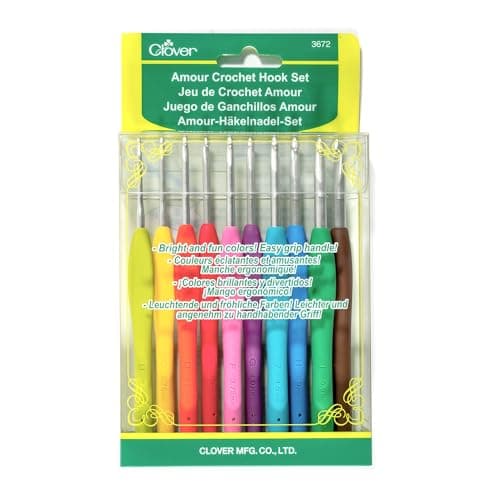 Clover Amour Crochet Hook SetA rounded head that resists splitting, plus a grip for the hours acrylic projects take. Clover Amour Crochet Hook SetA rounded head that resists splitting, plus a grip for the hours acrylic projects take. | Long sessions in acrylic | Rounded | B/2.25 - J/6.0mm | $50.83 - View on Amazon#ad disclosure - price as of October 20, 2026 |
| 3 | 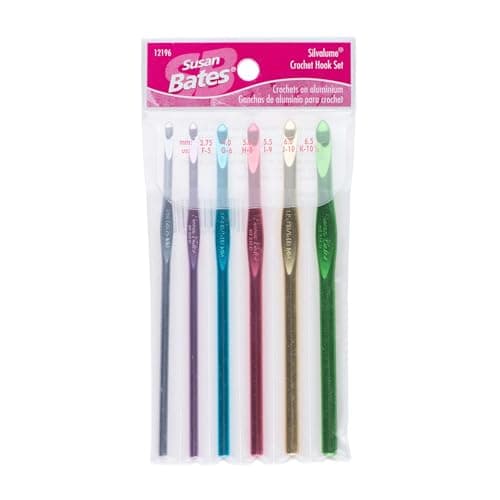 Susan Bates Silvalume Aluminum Crochet HooksAn in-line head goes into tight stitches - useful if your acrylic fabric is dense. Susan Bates Silvalume Aluminum Crochet HooksAn in-line head goes into tight stitches - useful if your acrylic fabric is dense. | Dense acrylic fabric | In-line | B-1/2.25 - N-15/10mm | $11.57 - View on Amazon#ad disclosure - price as of October 20, 2026 |
| 4 | 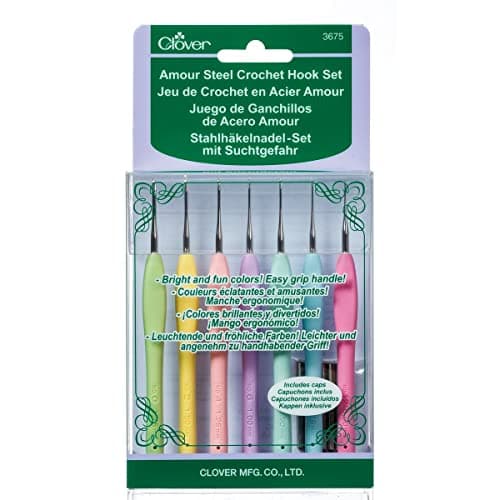 Clover Amour Steel Crochet Hook SetSteel thread hooks. Worsted acrylic will not fit through them. Clover Amour Steel Crochet Hook SetSteel thread hooks. Worsted acrylic will not fit through them. | Not yarn | Steel, in-line | Sub-2mm thread sizes | $37.78 - View on Amazon#ad disclosure - price as of October 20, 2026 |
Boye Ergonomic Crochet Hook Set, Light and Medium Yarn (40-40044)
Boye · Best for acrylic that splits
Boye's tapered throat - the American reference for the geometry that grabs the whole strand - now sold only with an ergonomic handle on it.
- Head
- Tapered throat with a rounded head
- Set contents
- 4 hooks: F/3.75mm, G/4.25mm, H/5.0mm, I/5.25mm
- Suits
- Light and medium weight yarn, per the model name
- Shaft
- Anodized aluminum
- Handle
- Molded ergonomic grip, color-coded by size
- Model
- 40-40044
Who it suits
Anyone whose acrylic work keeps catching part of the yarn - which is the standard acrylic complaint.
Why it is here
Tapered throat with a rounded head: the throat is narrower than the shaft, so the working loop is held rather than sliding. Four hooks, F/3.75mm to I/5.25mm, on a molded ergonomic handle - the band worsted acrylic is worked in.
What you give up
Four sizes and nothing above 5.25mm, so a chunky project needs the bulky set instead. Slightly harder to insert into a very tight stitch than an in-line head.
Specifications from Boye - ergonomic crochet hooks (manufacturer). We have not handled this item - see how we pick.
Clover Amour Crochet Hook Set
Clover · Best for long sessions in acrylic
Ten aluminum hooks with a molded elastomer grip, covering 2.25mm to 6.0mm - the whole span most patterns for worsted and DK yarn ever ask for.
- Sizes
- 10 hooks: B/2.25mm to J/6.0mm
- Grip
- Elastomer rubber, latex free
- Shaft
- Aluminum
- Head
- Rounded, between inline and tapered
- Color coding
- Handle color differs per size
Who it suits
Anyone making a large acrylic project - a blanket, an afghan - where session length is the real problem.
Why it is here
Aluminum shafts with an elastomer rubber handle, B/2.25mm to J/6.0mm. The rounded head sits between in-line and tapered, which resists splitting better than a true in-line while still inserting cleanly.
What you give up
Stops at 6.0mm, so a bulky acrylic project needs a separate hook.
Specifications from Clover USA product page. We have not handled this item - see how we pick.
Susan Bates Silvalume Aluminum Crochet Hooks
Susan Bates · Best for dense acrylic fabric
The bare aluminum inline hook that a large share of American crocheters learned on, and still the cheapest way to find out which head shape suits you.
- Head
- In-line (head sits flush with the shaft)
- Material
- Anodized aluminum, heat treated and polished
- Size range
- B-1/2.25mm through N-15/10mm
- Length
- 5.5in for B through K; longer for L, M, N
- Color coding
- One color per size
Who it suits
Anyone who crochets tightly and finds a tapered hook hard to insert, and anyone working acrylic amigurumi.
Why it is here
In-line head flush with the shaft, anodized aluminum, sizes to N-15/10mm. Consistent gauge and easy insertion are what it buys you.
What you give up
The in-line head is the one most prone to splitting soft plied acrylic, which is the exact problem this page is about. It suits tight, dense work rather than general acrylic use.
Specifications from Susan Bates Silvalume retail specification. We have not handled this item - see how we pick.
Clover Amour Steel Crochet Hook Set
Clover · Best for not yarn
The same elastomer handle fitted to steel thread hooks, sized for crochet cotton rather than yarn.
- Sizes
- Steel hooks, sub-2mm range (No. 10 is 0.75mm)
- Grip
- Elastomer rubber, latex free
- Shaft
- Steel
- Intended yarn
- Crochet thread, not worsted or DK yarn
Who it suits
Not anyone working acrylic yarn. It is a good set bought by mistake constantly, because the steel numbering runs backwards and looks like a bargain.
Why it is here
Steel hooks in the sub-2mm range - the No. 10 is 0.75mm. That is crochet thread territory, not worsted yarn.
What you give up
If you bought this expecting yarn hooks, the steel scale caught you out. The [hook size chart](/reference/hook-size-chart) explains both scales.
Specifications from Clover USA product page. We have not handled this item - see how we pick.
Why acrylic splits
Acrylic yarn is spun from staple fibers into plies, and the softer acrylics are spun with a low twist to feel pleasant. Low twist means the plies separate easily, and a hook that does not positively grab the whole strand will catch some plies and leave others.
So splitting is a function of two things:
- The yarn's twist. A soft, lofty acrylic like Caron Simply Soft splits more readily than a firm, tightly-plied one like Lion Brand Basic Stitch Anti-Pilling, which is smoother and more tightly constructed.
- The hook's head. A tapered throat holds the loop; an in-line head lets it sit loosely against the shaft where the hook tip can slip between plies.
Change either one and splitting drops. Changing the hook is cheaper and faster than changing the yarn mid-project.
Hook size for acrylic
The standard puts worsted at 5.5 to 6.5mm (I-9 to K-10.5). Most acrylic yarn labels suggest smaller:
| Yarn | Published hook | Published crochet gauge |
|---|---|---|
| Red Heart Super Saver | 5.5mm (US I/9) | 12 sc x 15 rows / 4in |
| Caron Simply Soft | 5mm (US H/8) | 13 sc x 14 rows / 4in |
| Lion Brand Basic Stitch Anti-Pilling | 5mm (US H/8) | 16 sc x 18 rows / 4in |
The labels are aiming at a denser fabric than the standard's balanced range, and for most acrylic projects that is what you want - acrylic has no memory, so a looser fabric has nothing pulling it back into shape. For a blanket, where drape is the goal, go the other way: hook size for a blanket.
Material
Aluminum. Acrylic has enough surface grip that a smooth, fast hook is the right match - a bamboo or wooden hook adds friction you do not need and slows every stitch. This is the straightforward case, and hook materials explained covers the exceptions.
The other fixes for splitting
- Slow down slightly and watch the insertion. Splitting often comes from working fast on autopilot.
- Go up a hook size. More room in the stitch means less chance of catching plies.
- Loosen your tension. Tight stitches are harder to enter cleanly.
- Switch to a firmer yarn. If you are only a few rows in, a tightly-plied acrylic will save you hours of irritation.
- Check the hook for burrs. A rough tip catches plies. Cheap hooks with molding seams are the usual culprit.
How we picked
We ranked head shape against the splitting problem, using each hook's published head design, and cross-checked hook sizing against the yarn labels' own published recommendations. We have not crocheted with any of these. How we pick is the method, and best crochet hooks is the general roundup.
Questions people actually ask
What is the best hook for acrylic yarn?
One with a tapered or rounded head, such as a Boye or a Clover Amour. A tapered throat grabs the whole strand rather than letting the hook tip slip between plies.
What size hook for worsted acrylic?
The standard range is 5.5 to 6.5mm, but most acrylic labels suggest 5 to 5.5mm for a denser fabric. Follow the label unless you want drape, in which case go larger.
Why does my acrylic yarn keep splitting?
Soft acrylics are loosely plied, so the plies separate easily. A tapered hook head, a slightly larger hook and a more tightly-plied yarn all reduce it.
Should I use bamboo hooks with acrylic?
Not usually. Acrylic has enough grip already, so a bamboo hook just adds friction and slows every stitch. Aluminum is the natural match.
Does a smaller hook stop splitting?
Usually the opposite. A smaller hook means tighter stitches that are harder to enter cleanly. Going up a size often helps.
Sources
- Craft Yarn Council - Standard Yarn Weight System
- Boye - ergonomic crochet hooks (manufacturer)
- Clover USA - Amour Crochet Hook Set specification
- Susan Bates Silvalume aluminum hook specification
- Yarnspirations - Red Heart Super Saver specification
- Yarnspirations - Caron Simply Soft specification
- Lion Brand - Basic Stitch Anti-Pilling specification