Guide
Hook Size for a Blanket
Going up a size makes a blanket faster, drapier and cheaper. Usually all three.
By Sawyer V. · Published September 4, 2026
Disclosure: we earn a commission when you buy through the links on this page, at no extra cost to you. It never decides what we recommend or how we rank it - read the full disclosure.
The short answer
For worsted weight yarn, use 5.5 to 6.5mm (I-9 to K-10.5) for a blanket - and going to the top of that range or a half size above is usually the right call. Larger hooks give a drapier fabric, faster progress and lower yarn consumption for the same area. For super bulky chenille, the published recommendation is 8mm (L-11).
Blankets are the one project where deliberately working looser than the label suggests is almost always correct, and it is worth understanding why before you commit several thousand yards.
Hook size by yarn weight, for blankets specifically
| Yarn weight | Standard range | For a blanket | Why |
|---|---|---|---|
| 3 Light / DK | 4.5-5.5mm | 5.5mm | Top of range for drape |
| 4 Medium / worsted | 5.5-6.5mm | 6.0-6.5mm | Faster, drapier, less yarn per area |
| 5 Bulky | 6.5-9mm | 8-9mm | Speed is the whole point of bulky |
| 6 Super bulky (chenille) | 9-15mm | 8mm per the yarn label | Chenille worms at loose tension |
Note the last row, which contradicts the trend. Chenille blanket yarns publish a tighter recommendation than their weight category suggests - Bernat Blanket specifies 8mm - because chenille pile works loose out of the fabric surface at loose tension. That failure is called worming, and it is the main way a chenille blanket goes wrong.
Why going up a hook size helps a blanket
Drape
A blanket should fall over a lap and around a shoulder. A tight fabric stands up like board; a looser one hangs. Since a blanket has no shaping to hold and nothing structural to preserve, there is no reason to prefer density.
Speed
Bigger stitches cover more ground per stitch, and a blanket is a lot of stitches. Going from 5.5mm to 6.5mm on the same yarn is a meaningful reduction in the total number of stitches to reach the same finished size.
Yarn consumption
This surprises people: a looser fabric uses less yarn for the same area. Fewer, larger stitches means less total yarn length. On a project measured in thousands of yards, that is real money.
Stitch choice does more than hook size
The single biggest lever on blanket speed is not the hook, it is the stitch. Taller stitches cover more ground per row:
- Single crochet - dense, slow, most yarn per area. Good for amigurumi, poor for blankets.
- Half double crochet - a good compromise; warm, reasonably fast, still solid.
- Double crochet - much faster than single crochet and uses less yarn for the same area. The standard blanket stitch for a reason.
- Treble crochet - faster again, and an open fabric with visible gaps.
A double crochet blanket at 6.5mm is dramatically faster than a single crochet blanket at 5.5mm, and uses noticeably less yarn. If a blanket feels like it will never finish, the stitch is usually the reason rather than the hook.
Work out the yarn before you start
Hook size changes yardage, so the order matters: choose the hook and stitch, make a swatch at that combination, then calculate. The method is in how much yarn do I need, and the short version is finished area times yards per square inch from your own swatch, plus 10 to 15 percent.
A 50 x 60in throw is 3,000 square inches. Swatching first and calculating properly is twenty minutes that prevents the classic blanket failure: running out of a dye lot at 80 percent complete.
What going up a size costs you
Nothing on a blanket is free, and it is worth naming the trade so the decision is deliberate rather than accidental:
- A looser fabric is less warm. Bigger stitches mean bigger gaps, and gaps let air through. For a summer throw that is a feature; for a winter blanket it is not.
- It shows tension unevenness more. Large stitches magnify a wobbly row. That matters on a piece you will look at for years.
- It stretches more in use. A loose blanket grows under its own weight over time, particularly in cotton or acrylic, which have no memory to pull back with.
- Very open fabric catches. Fingers, toes and jewelry go through large gaps, which is why baby blankets stay denser than adult throws.
The practical middle for a worsted throw is the top of the standard range - 6.0 to 6.5mm - rather than a size above it. That gets most of the drape and speed without the fabric becoming a net.
Blanket size, and what it means for your hands
Blankets are the largest thing most people make, and hook size interacts with that in a way no other project has to think about.
| Blanket | Finished size | Area (sq in) |
|---|---|---|
| Baby blanket | 36 x 42in | 1,512 |
| Lapghan | 36 x 48in | 1,728 |
| Throw | 50 x 60in | 3,000 |
| Afghan | 50 x 65in | 3,250 |
| Twin coverlet | 66 x 90in | 5,940 |
| King coverlet | 108 x 90in | 9,720 |
Every one of those square inches is repetitions of the same hand motion. A larger hook and a taller stitch reduce the total number of repetitions for the same finished area, which is why this is one of the few projects where tool choice has a genuine ergonomic consequence rather than just an aesthetic one.
If your hands already ache, that argues for going up rather than down - and for a hook with a real grip. Best crochet hook for arthritis covers the equipment side.
Borders, which need a different size
A border worked in the same hook as the body will usually ruffle or pull. The edge has a different stitch geometry from the body, so it needs a different tension to lie flat.
- If the border ruffles, there are too many stitches in it - go down a hook size, or work fewer stitches per row-end.
- If the border pulls the edge in, there are too few - go up a size, or add stitches.
- Work one round and look at it flat before committing to four. A border is quick to pull out and slow to regret.
This is the single most common reason a finished blanket does not lie flat, and it is a hook-size problem rather than a skill problem.
Which hook to use
For a blanket in worsted, a 6.0mm or 6.5mm - J-10 or K-10.5. Both are in the Susan Bates range and the 6.0mm is the top of the Clover Amour set.
Comfort matters more than usual here, because a blanket is many hours of the same motion. If you have any hand discomfort, this is the project where a cushioned grip earns its price - see best ergonomic crochet hooks. And for chenille specifically, best hook for chenille yarn covers the worming problem in detail.
For a blanket specifically
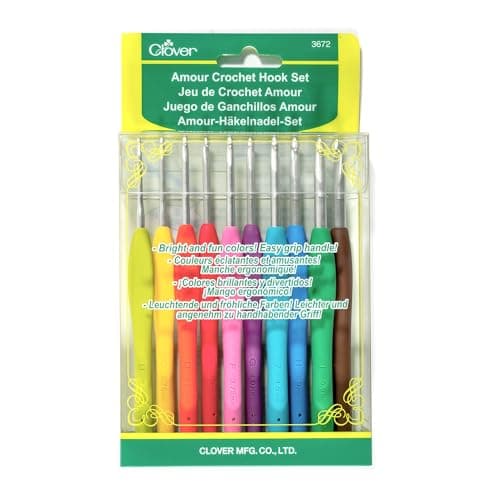
Clover Amour Crochet Hook Set
Sizes to 6.0mm with a grip that survives the thousands of stitches a blanket takes.
$50.83 - View on Amazon#ad disclosure - price as of October 20, 2026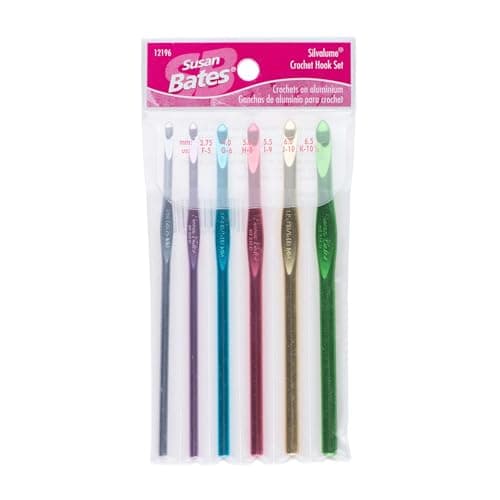
Susan Bates Silvalume Aluminum Crochet Hooks
Runs to N-15/10mm, which is where blanket-weight yarn actually lives.
$11.57 - View on Amazon#ad disclosure - price as of October 20, 2026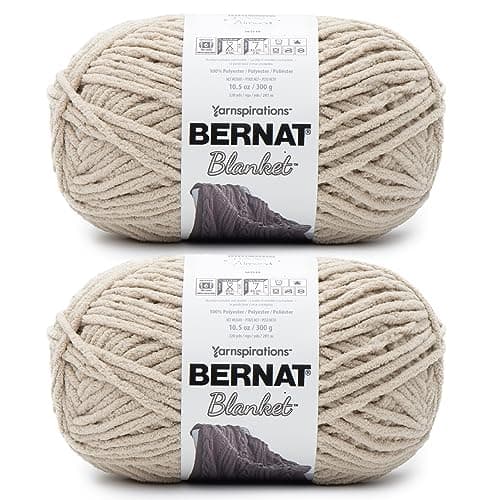
Bernat Blanket
The super bulky chenille most blanket questions are really about - 8mm hook, 7 sc per 4in.
$20.96 - View on Amazon#ad disclosure - price as of October 20, 2026
Questions people actually ask
What size crochet hook for a blanket?
For worsted weight, 6.0 to 6.5mm - the top of the standard range or a half size above. Larger hooks make a drapier fabric, work faster and use less yarn for the same area.
What hook for Bernat Blanket yarn?
8mm (L-11), which is the published recommendation. Going larger causes worming, where loops of pile work out of the fabric surface.
Does a bigger hook use less yarn?
Yes, for the same finished area. Fewer, larger stitches means less total yarn length - which on a blanket measured in thousands of yards is a meaningful saving.
What is the fastest stitch for a blanket?
Among the common stitches, double crochet or taller. Taller stitches cover more ground per row and use less yarn per area than single crochet.
Should a blanket be tight or loose?
Loose enough to drape. A blanket has no shaping to hold, so density buys you nothing except stiffness, extra yarn and a longer project.