The picks
Best Crochet Hooks for Amigurumi
Amigurumi is crocheted tight on purpose. That single fact rules out half the hooks people recommend.
By Sawyer V. · Published September 4, 2026
Disclosure: we earn a commission when you buy through the links on this page, at no extra cost to you. It never decides what we recommend or how we rank it - read the full disclosure.
The short answer
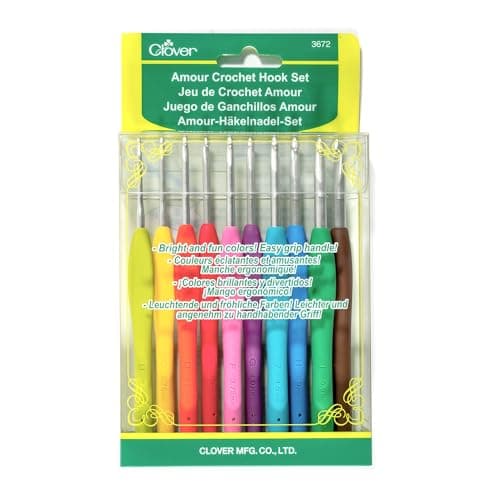
The Clover Amour set is the right default: a comfortable grip for thousands of tight single crochets, a head shape that suits most hands, and the 2.25mm to 6.0mm span amigurumi lives in. If your tension is already very tight, the in-line Susan Bates head gets into stitches the Amour struggles with, and it costs a fraction as much.
| # | Product | Best for | Head | Sizes | Price |
|---|---|---|---|---|---|
| 1 | Clover Amour Crochet Hook SetA grip you can hold for hours and a head shape between inline and tapered. | Most amigurumi, most hands | Rounded, mid-profile | 2.25-6.0mm | $50.83 - View on Amazon#ad disclosure - price as of October 20, 2026 |
| 2 | 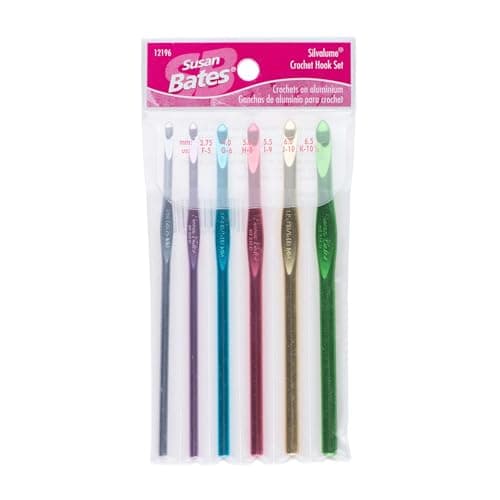 Susan Bates Silvalume Aluminum Crochet HooksAn in-line head that gets into a stitch you have already strangled. Susan Bates Silvalume Aluminum Crochet HooksAn in-line head that gets into a stitch you have already strangled. | Crocheters who already work tight | In-line | 2.25-10mm | $11.57 - View on Amazon#ad disclosure - price as of October 20, 2026 |
| 3 | 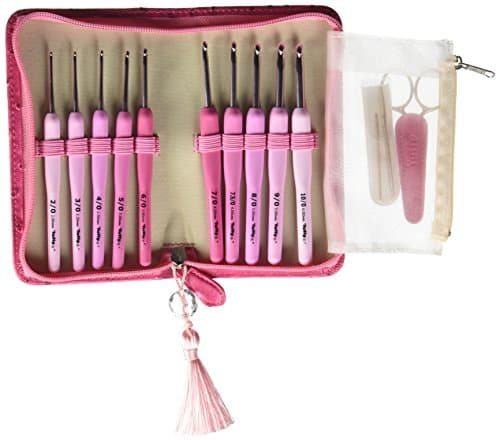 Tulip Etimo Rose Crochet Hook SetTen sizes in 0.5mm and 0.2mm steps, so you can go down one notch rather than one size. Tulip Etimo Rose Crochet Hook SetTen sizes in 0.5mm and 0.2mm steps, so you can go down one notch rather than one size. | Dialing in the exact gauge | Tulip house profile | 2.00-6.00mm | $117.00 - View on Amazon#ad disclosure - price as of October 20, 2026 |
| 4 | 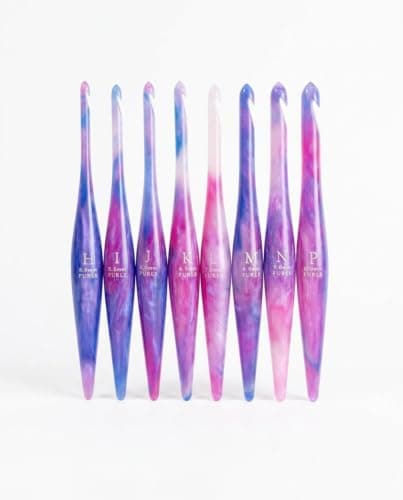 Furls Streamline Resin Crochet HookA beautiful hook, sold one size at a time, in the sizes amigurumi does not use. Furls Streamline Resin Crochet HookA beautiful hook, sold one size at a time, in the sizes amigurumi does not use. | Blankets and long relaxed sessions | Rounded resin | 5.00-10.00mm | $34.99 - View on Amazon#ad disclosure - price as of October 20, 2026 |
Clover Amour Crochet Hook Set
Clover · Best for most amigurumi, most hands
Ten aluminum hooks with a molded elastomer grip, covering 2.25mm to 6.0mm - the whole span most patterns for worsted and DK yarn ever ask for.
- Sizes
- 10 hooks: B/2.25mm to J/6.0mm
- Grip
- Elastomer rubber, latex free
- Shaft
- Aluminum
- Head
- Rounded, between inline and tapered
- Color coding
- Handle color differs per size
Who it suits
Anyone making stuffed toys in worsted or DK, especially anyone whose hand aches after an hour.
Why it is here
Ten aluminum hooks from B/2.25mm to J/6.0mm with a molded elastomer grip, a rounded head that sits between in-line and tapered, and a different handle color for each size. Amigurumi means thousands of single crochets at a tight gauge, and the grip is what makes that survivable.
What you give up
The rounded head is a compromise. A committed in-line crocheter will find it slightly less positive at picking up a very tight loop.
Specifications from Clover USA product page. We have not handled this item - see how we pick.
Susan Bates Silvalume Aluminum Crochet Hooks
Susan Bates · Best for crocheters who already work tight
The bare aluminum inline hook that a large share of American crocheters learned on, and still the cheapest way to find out which head shape suits you.
- Head
- In-line (head sits flush with the shaft)
- Material
- Anodized aluminum, heat treated and polished
- Size range
- B-1/2.25mm through N-15/10mm
- Length
- 5.5in for B through K; longer for L, M, N
- Color coding
- One color per size
Who it suits
Anyone whose amigurumi already has no visible gaps and who now cannot get the hook back in.
Why it is here
In-line head - the hook sits flush with the shaft rather than being cut into a narrower throat - in anodized, heat treated and polished aluminum, B-1/2.25mm through N-15/10mm, color coded by size. A flush head has a consistent diameter, so it enters a tight stitch at the size you expect.
What you give up
A bare aluminum shaft with a thumb rest and no cushioning. Over a long amigurumi session that is a real comfort difference against a molded grip.
Specifications from Susan Bates Silvalume retail specification. We have not handled this item - see how we pick.
Tulip Etimo Rose Crochet Hook Set
Tulip · Best for dialing in the exact gauge
Ten cushion-grip hooks from 2.00mm to 6.00mm, made in Hiroshima, with the finest size steps of any set here.
- Sizes
- 10 hooks: 2.00, 2.20, 2.50, 3.00, 3.50, 4.00, 4.50, 5.00, 5.50, 6.00mm
- Grip
- Cushioned rubber grip
- Head
- Polished tip, Tulip's own hook profile
- Also included
- Two darning needles, scissors, zipped case
- Made in
- Hiroshima, Japan
Who it suits
Anyone whose stuffing shows through, who needs to tighten the fabric without restarting at a wildly different gauge.
Why it is here
Ten cushion-grip hooks at 2.00, 2.20, 2.50, 3.00, 3.50, 4.00, 4.50, 5.00, 5.50 and 6.00mm, made in Hiroshima, with two darning needles, scissors and a zipped case. The 2.00 to 2.50mm span in three steps is exactly the range small amigurumi lives in.
What you give up
It is the most expensive set here by some distance, and the extras - scissors, case - are part of what you are paying for whether or not you need them.
Specifications from Tulip Etimo Rose set specification. We have not handled this item - see how we pick.
Furls Streamline Resin Crochet Hook
Furls · Best for blankets and long relaxed sessions
A single hand-poured resin hook with a 16-17mm handle - roughly the diameter of a fat marker pen, sold one size at a time.
- Handle diameter
- 16-17mm at the widest point
- Length
- About 6.75in
- Material
- Hand-poured resin, made in India
- Sizes
- H/5.00mm up to P/10.00mm depending on release
- Sold as
- Single hook, not a set
Who it suits
Not amigurumi crocheters. It is a genuinely comfortable hook for large relaxed work.
Why it is here
A hand-poured resin hook with a 16-17mm handle, about 6.75in long, in H/5.00mm up to P/10.00mm depending on release. That handle diameter is the point of it.
What you give up
Amigurumi runs from about 2.25mm to 4.0mm and this line starts at 5.00mm. It is also a single hook, and amigurumi needs at least two sizes as soon as you add a second yarn.
Specifications from Furls Streamline collection page. We have not handled this item - see how we pick.
Why amigurumi changes the hook question
Almost every other crochet project wants a fabric with some give. Amigurumi wants the opposite: the fabric is a skin over stuffing, and any gap between stitches is a gap you can see the stuffing through.
So the standard advice - use the hook size on the ball band - is wrong here. Amigurumi is worked one, often two, hook sizes below the recommendation for that yarn. A worsted yarn whose band says 5.0mm gets crocheted on a 3.5mm or 4.0mm hook.
The two specifications that follow from tight gauge
Head shape does more work here
An in-line head - Susan Bates - is cut so the hook lines up flush with the shaft. A tapered head - Boye - narrows the throat behind the hook. At normal gauge the difference is a preference. At amigurumi gauge it is not.
A tight stitch is a small hole. An in-line hook is the same width all the way through, so the width that enters the stitch is the width you chose. A tapered throat has to widen the stitch to pull the loop through, which is more force per stitch, several thousand times.
The full geometry is in in-line vs tapered crochet hooks. For amigurumi specifically, in-line or a mid-profile rounded head is the safer buy.
Grip becomes a health question
Tight stitches need more force, and amigurumi is made of nothing but single crochet. A small toy is well over a thousand stitches, and a larger one several thousand.
That is why every pick here except the skip has a molded or cushioned grip, and why we have a whole page on crochet hooks for arthritis that reaches the same conclusion from the other direction.
Which sizes amigurumi actually uses
| Yarn | Ball band suggests | Amigurumi uses | Result |
|---|---|---|---|
| Sport / DK (CYC 2-3) | 3.5-4.5mm | 2.5-3.25mm | Small, dense toys with fine detail |
| Worsted (CYC 4) | 5.0-5.5mm | 3.5-4.0mm | The standard amigurumi combination |
| Cotton, worsted weight | 5.0mm | 3.5-4.0mm | Crisp stitch definition, no fuzz |
| Bulky (CYC 5) | 6.5-9.0mm | 5.0-6.0mm | Fast, large toys - stuffing shows more easily |
Those ball band ranges come from the Craft Yarn Council standard. If you own one hook for amigurumi, make it 3.5mm. If you own two, add 4.0mm.
The yarn decides more than the hook
A hook cannot rescue the wrong yarn. Amigurumi wants a smooth, tightly plied yarn with clear stitch definition, which is why cotton and anti-pilling acrylic dominate and why chenille does not work at all.
Our best yarn for amigurumi page covers that side. The short version: a fuzzy or loosely spun yarn hides your stitch count, and in amigurumi the stitch count is the shape.
What else is genuinely needed
- Stitch markers. Amigurumi is worked in a continuous spiral with no join, so the start of the round is invisible without a marker. Locking markers are the ones that clip into a stitch rather than sliding on a needle.
- A blunt tapestry needle. For closing the final round and sewing limbs on. Bent-tip tapestry needles make it much easier to work into a stuffed piece.
- Two hook sizes, not one. As soon as a pattern uses two yarn weights - a body and a muzzle, say - you need both.
What we would buy
- First amigurumi hook: the Clover Amour set if you want the range, or a single 3.5mm hook if you want to test whether you like the craft.
- Already crocheting tight: Susan Bates Silvalume for the in-line head, at a fraction of the price.
- Fine-tuning gauge: the Tulip Etimo Rose set for its 0.2mm and 0.5mm steps.
- Alongside either: locking stitch markers, because a spiral without a marker is a spiral you will recount.
Questions people actually ask
What size crochet hook is best for amigurumi?
3.5mm for worsted weight yarn, and 4.0mm as a second size. Amigurumi is worked one or two hook sizes below the ball band recommendation so the fabric is dense enough that stuffing does not show through.
Are in-line or tapered hooks better for amigurumi?
In-line, or a mid-profile rounded head. A tight amigurumi stitch is a small hole, and an in-line head keeps a consistent diameter through it instead of having to widen the stitch to pull the loop back.
Do I need an ergonomic hook for amigurumi?
It is the project type where it matters most. Tight stitches take more force and a small toy is well over a thousand single crochets, so a molded or cushioned grip is a genuine comfort difference rather than a luxury.
Why does my stuffing show through my amigurumi?
The gauge is too loose. Go down one hook size, and check the yarn - a loosely spun or fuzzy yarn produces gaps that a tighter hook cannot fully close.
How many hooks do I need for amigurumi?
Two. Most patterns use one size throughout, but as soon as a design combines two yarn weights - a body and a smaller feature - you need the matching second hook.