The picks
Best Tapestry Needles
The cheapest tool on the site, and the one that decides how a finished piece looks.
By Sawyer V. · Published September 4, 2026
Disclosure: we earn a commission when you buy through the links on this page, at no extra cost to you. It never decides what we recommend or how we rank it - read the full disclosure.
The short answer
Buy a set of blunt, bent-tip tapestry needles in a storage tube. Blunt is essential - a sharp needle splits the plies of the stitches you pass through, which is what makes a woven end visible. Bent is a genuine improvement, because the curve hooks under a strand instead of skating over it.
| # | Product | Best for | Type | Capacity | Price |
|---|---|---|---|---|---|
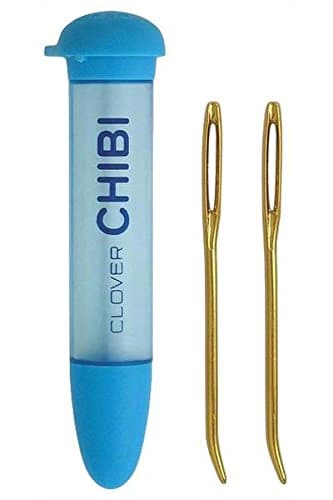
| 1 | Clover Chibi Darning Needle Set (Bent Tip)Three blunt bent-tip needles in a tube, which is the only reason you will find them twice. | Weaving in ends, seaming and grafting | Bent, blunt | 3 needles | $9.14 - View on Amazon#ad disclosure - price as of October 20, 2026 |
| 2 | 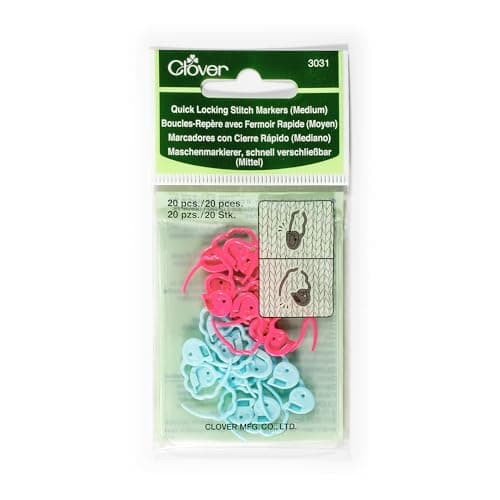 Clover Quick Locking Stitch Markers, MediumThe other notion no kit includes, and the one that makes seaming line up. Clover Quick Locking Stitch Markers, MediumThe other notion no kit includes, and the one that makes seaming line up. | Marking the row you are about to seam to | Locking markers | 20 markers | $8.00 - View on Amazon#ad disclosure - price as of October 20, 2026 |
| 3 | 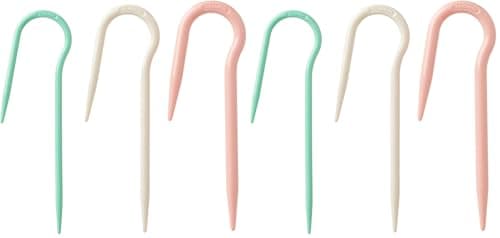 Clover U-Shaped Cable Stitch HoldersA deep U well, so held stitches cannot slide off while your hands are busy elsewhere. Clover U-Shaped Cable Stitch HoldersA deep U well, so held stitches cannot slide off while your hands are busy elsewhere. | Parking live stitches while you work | Stitch holders | 3 sizes | $11.86 - View on Amazon#ad disclosure - price as of October 20, 2026 |
| 4 | 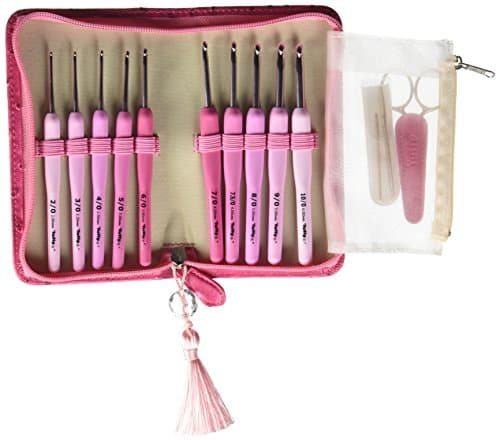 Tulip Etimo Rose Crochet Hook SetTwo bundled darning needles is not a tapestry needle purchase. Tulip Etimo Rose Crochet Hook SetTwo bundled darning needles is not a tapestry needle purchase. | The hooks | Hook set | 2 needles | $117.00 - View on Amazon#ad disclosure - price as of October 20, 2026 |
Clover Chibi Darning Needle Set (Bent Tip)
Clover · Best for weaving in ends, seaming and grafting
Three blunt bent-tip tapestry needles in a lidded tube, which is the only reason a tapestry needle is ever findable twice.
- Contents
- Three needles plus a holding tube
- Tip
- Bent, blunt - hooks the yarn without splitting the stitch
- Best with
- DK weight yarns and thinner
- Use
- Weaving in ends, seaming, grafting
Who it suits
Everyone who finishes a project, which is everyone.
Why it is here
Three bent-tip blunt needles suited to DK weight yarn and thinner, in a lidded holding tube. The bent tip hooks under a strand and lifts it without splitting the ply, which is the entire difference between a tidy woven end and a visible one.
What you give up
Sized for DK and thinner. Worsted works at a push, and bulky or chenille needs a larger jumbo needle this set does not include.
Specifications from Clover Chibi darning needle set (bent tip) - retail specification. We have not handled this item - see how we pick.
Clover Quick Locking Stitch Markers, Medium
Clover · Best for marking the row you are about to seam to
Markers that clip closed around a stitch instead of only sliding onto a needle - the medium size, which is the one that fits almost everything.
- Contents
- 20 markers, medium size
- Type
- Locking; also usable in the unlocked position
- Shape
- Undulated, so a marked stitch is not stretched
- Material
- Polyacetal
- Art. no.
- 3031; small is 3030 and large is 3032
Who it suits
Anyone seaming two pieces together, where matching row for row is the whole job.
Why it is here
20 locking markers in the medium size. Clipping a marker every ten rows on both pieces before you seam is what stops a sweater side seam drifting.
What you give up
Not a needle. This is a companion purchase and only useful if you seam or work in the round.
Specifications from Clover USA - Quick Locking Stitch Markers (Medium). We have not handled this item - see how we pick.
Clover U-Shaped Cable Stitch Holders
Clover · Best for parking live stitches while you work
The same idea with a deep U bend, which is what stops held stitches sliding off while the cable is crossed.
- Set
- 3 sizes
- Shape
- U-shaped, stitches sit in the well
- Suits
- Matched to needle or yarn size
Who it suits
Anyone knitting cables, and anyone who wants a few live stitches parked safely while seaming.
Why it is here
Three sizes of U-shaped cable stitch holder, matched to needle or yarn size, with the stitches sitting down in the well rather than balanced on a bent shaft. That shape is what stops them escaping when you put the work down.
What you give up
Narrow use. If you never cable and never park stitches, it will sit in the tin.
Specifications from Clover USA product page. We have not handled this item - see how we pick.
Tulip Etimo Rose Crochet Hook Set
Tulip · Best for the hooks
Ten cushion-grip hooks from 2.00mm to 6.00mm, made in Hiroshima, with the finest size steps of any set here.
- Sizes
- 10 hooks: 2.00, 2.20, 2.50, 3.00, 3.50, 4.00, 4.50, 5.00, 5.50, 6.00mm
- Grip
- Cushioned rubber grip
- Head
- Polished tip, Tulip's own hook profile
- Also included
- Two darning needles, scissors, zipped case
- Made in
- Hiroshima, Japan
Who it suits
Not people shopping for needles. Buy it for the hooks, which are excellent.
Why it is here
Ten cushion-grip hooks from 2.00 to 6.00mm with two darning needles, scissors and a zipped case.
What you give up
The bundled needles are straight rather than bent, and there are two of them with no tube. A dedicated set costs very little and is a better tool.
Specifications from Tulip Etimo Rose set specification. We have not handled this item - see how we pick.
Blunt is not a compromise. It is the specification
A sewing needle is sharp because it has to pierce woven cloth. Knitted and crocheted fabric is not woven - it is a mesh of loops with gaps already in it, and a tapestry needle is meant to travel through those gaps.
A sharp point does not find the gap. It goes through the middle of a strand, splitting the ply and anchoring the end in a way that shows on the right side and cannot be undone neatly. A blunt point pushes the strands apart and slides between them.
Bent tip against straight
A bent tip is a small curve in the last quarter inch. It sounds like a gimmick and it is not.
- It hooks under a strand. You approach the fabric at a shallow angle and the curve lifts the strand you want rather than sliding across it.
- It works on a stuffed piece. For amigurumi, where you are sewing a limb onto a firm ball, a straight needle has nowhere to go and a curved one can travel along the surface.
- It reaches into a seam. Mattress stitch runs along a vertical bar just under the edge, and a curve gets there without distorting the fabric.
Straight blunt needles are perfectly usable and cheaper. If you have a choice, take the bent ones.
Sizes, and matching them to yarn
Tapestry needle sizing runs backwards like steel hook sizing: the higher the number, the finer the needle. The eye has to be large enough for the yarn and the shaft small enough to pass through a stitch.
| Yarn weight | Needle | Note |
|---|---|---|
| Lace and fingering (CYC 0-1) | Finest available | Also the needle for threading a lifeline |
| Sport and DK (CYC 2-3) | Standard tapestry needle | What most three-needle sets are sized for |
| Worsted and aran (CYC 4) | Standard, at the top of its range | Works; the eye is tight with a doubled strand |
| Bulky and super bulky (CYC 5-6) | Jumbo needle | A normal tapestry needle will not take the yarn |
The weight numbers are from the Craft Yarn Council standard. If you work mostly in chenille or blanket yarn, buy a jumbo needle specifically - the standard sets will not thread.
The tube is not packaging
It is worth saying plainly: a tapestry needle is the single most-lost object in this craft. It is small, it is metal, it does not stay in a pincushion, and it ends up in the bottom of a project bag or in the sofa.
A set that ships in a lidded tube solves that, and it is a large part of why we pick a set with one. A needle you cannot find is a needle you do not have, and finishing gets postponed.
What you use it for
- Weaving in ends. Every project. Follow the path of the stitches for two inches, then reverse direction for one, so friction holds it.
- Seaming. Mattress stitch on knitting, whip stitch or slip stitch on crochet.
- Grafting. Kitchener stitch on a sock toe or a shoulder, where live stitches are joined invisibly.
- Sewing on limbs. Amigurumi assembly, where a bent tip earns its keep.
- Threading a lifeline. Running waste yarn through a row of live lace stitches - see best knitting needles for lace.
What we would buy
- The set: Clover Chibi bent-tip darning needles, three needles in a tube.
- At the same time: locking stitch markers, for matching rows when seaming.
- If you cable: U-shaped stitch holders, which park live stitches in a well rather than on a bent shaft.
- Not for the needles: the Tulip Etimo Rose set - buy it for the hooks, if you want the hooks.
Questions people actually ask
What is a tapestry needle used for in knitting?
Weaving in ends, seaming pieces together, grafting live stitches, sewing on amigurumi limbs and threading a lifeline through a lace row. It is the finishing tool for every project.
Should a tapestry needle be blunt or sharp?
Blunt, without exception. Knitted and crocheted fabric is a mesh of loops, and a blunt point travels between the strands. A sharp point splits the ply and leaves the woven end visible on the right side.
Are bent tip tapestry needles better?
Yes, noticeably. The curve hooks under a strand rather than skating over it, which matters most when sewing into a stuffed amigurumi piece or working a mattress stitch seam.
What size tapestry needle do I need?
A standard set covers DK and worsted weight. Fingering and lace need the finest needle in the set; bulky and chenille yarn needs a separate jumbo needle, because a standard eye will not take the strand.
Why do my woven-in ends show?
Usually a sharp needle splitting the plies of the stitches you pass through, which anchors the end where it shows. Switch to a blunt needle and follow the path of the existing stitches rather than crossing them.