The picks
Best Cable Needles
Its only job is not dropping the stitches you parked on it.
By Sawyer V. · Published September 4, 2026
Disclosure: we earn a commission when you buy through the links on this page, at no extra cost to you. It never decides what we recommend or how we rank it - read the full disclosure.
The short answer
A cable needle holds a few stitches to the front or back while you knit past them, so the crossing happens. The U-shaped holders are the better design, because the stitches sit in the well of the U rather than balancing on a straight rod. Use one a size or two smaller than your working needle.
| # | Product | Best for | Shape | Set | Price |
|---|---|---|---|---|---|
| 1 | Clover U-Shaped Cable Stitch HoldersThe U bend is what stops held stitches sliding off while you knit past them. | Stitches that stay put | U-shaped | 3 sizes | $11.86 - View on Amazon#ad disclosure - price as of October 20, 2026 |
| 2 | No photoClover Takumi Bamboo Double Pointed NeedlesA double-pointed needle is a cable needle. Buy nothing. | Cabling without buying anything | Straight | Packs of five | Check price on Amazon#ad disclosure |
| 3 | 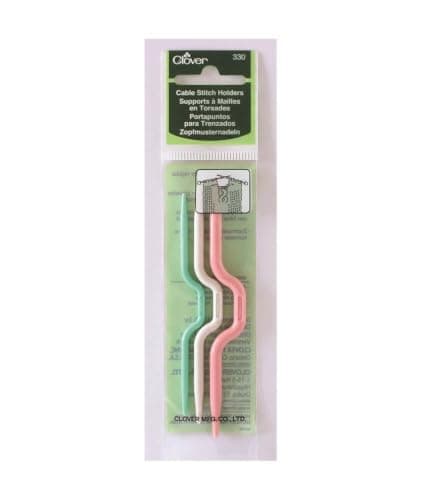 Clover Cable Stitch Holders (3-piece set)A good set in the shape the U-shaped holders exist to replace. Clover Cable Stitch Holders (3-piece set)A good set in the shape the U-shaped holders exist to replace. | Not secure holding | Straight / bent | 3 sizes | Check price on Amazon#ad disclosure |
Clover U-Shaped Cable Stitch Holders
Clover · Best for stitches that stay put
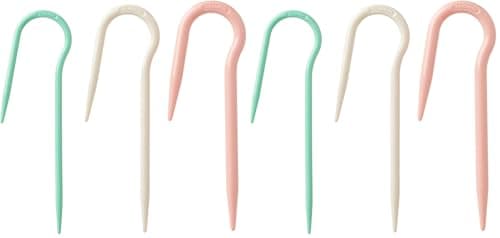
The same idea with a deep U bend, which is what stops held stitches sliding off while the cable is crossed.
- Set
- 3 sizes
- Shape
- U-shaped, stitches sit in the well
- Suits
- Matched to needle or yarn size
Who it suits
Anyone who has dropped a cable stitch mid-cross, which is everyone who has used a straight one.
Why it is here
A deep U shape, supplied in three sizes to match different needle and yarn sizes. The stitches sit in the well of the U rather than balancing on a straight rod.
What you give up
The U shape makes it slightly slower to slide stitches back off than a straight holder. That is the trade for not dropping them.
Specifications from Clover USA product page. We have not handled this item - see how we pick.
Clover Takumi Bamboo Double Pointed Needles
Clover · Best for cabling without buying anything
Bamboo DPNs in packs of five, in the small sizes that interchangeable sets cannot reach.
- Material
- Polished bamboo
- Lengths
- 5in and 7in
- Pack
- Five needles per pack
- Sizes
- 12 sizes in 5in; 15 sizes in 7in
- Point
- Tapered
Who it suits
Anyone who owns DPNs and does not want another small object to lose.
Why it is here
A DPN one or two sizes smaller than your working needle does the job exactly. Bamboo is the better choice here specifically because it grips - stitches parked on it stay parked.
What you give up
It is longer than a purpose-made cable needle, so it gets in the way and is easier to knock out of the work.
Specifications from Clover Takumi bamboo knitting needles. We have not handled this item - see how we pick.
Clover Cable Stitch Holders (3-piece set)
Clover · Best for not secure holding
Three sizes of bent resin cable needle in one pack, so the holder can be matched to the yarn rather than the other way round.
- Set
- 3 pieces: small, medium, large
- Material
- ABS resin and polyacetal
- Shape
- Standard bent profile
- Suits
- Regular-size yarns
Who it suits
Not anyone who has lost a held stitch mid-cross. It suits a fast, confident cabler working small crossings.
Why it is here
Three pieces in small, medium and large, in ABS resin and polyacetal, in a standard bent profile suited to regular-size yarns.
What you give up
The shallow bend does not hold stitches if you let the needle hang, which is exactly when they come off. Buy the U-shaped set instead and accept it is slightly slower.
Specifications from Clover USA product page. We have not handled this item - see how we pick.
What it does
A cable is made by knitting stitches out of order. You slip two or three stitches onto a cable needle, hold it in front of or behind the work, knit the next stitches from the left needle, then knit the held stitches. The crossing is what produces the rope effect.
So the cable needle's entire job is holding a handful of stitches securely for about ten seconds while your hands are busy elsewhere. That sounds trivial, and dropping a cable stitch mid-cross is genuinely annoying to fix.
Shape is the specification
- U-shaped or hooked - the stitches sit in a well and stay there while the needle hangs. Slower to load and unload; far more secure.
- Straight or gently bent - faster to work with, and stitches can slide off if the needle is left to dangle.
- Cranked (with a dip in the middle) - a compromise: the dip stops stitches migrating along the shaft.
If you are buying one, buy U-shaped. If you cable constantly and never drop a stitch, you already know you prefer the straight ones.
Size
Use a cable needle one or two sizes smaller than your working needle. Too large and the held stitches get stretched, which shows as loose stitches at the cable crossing. Too small and they can slip off.
This is why cable needles are sold in sets of three sizes rather than singly - you match the holder to the project, not the other way round.
Cabling without a cable needle
It is a real technique, widely used, and worth learning if you cable often. The short version: slip the stitches off the left needle entirely, hold them with your fingers in front of or behind the work, knit the next stitches, then put the held ones back on the left needle and knit them.
It is faster than using a needle and it involves briefly holding live stitches with no needle in them. Practice it on a swatch in grippy wool before doing it on a garment - it is much easier in untreated wool than in slippery superwash, for exactly the reason described in superwash vs non-superwash.
Which yarns cable well
Cables need the fabric to hold a raised shape, which means memory. Untreated wool is the best cabling fiber for that reason; acrylic flattens, and alpaca blurs the definition entirely.
If you are choosing yarn for a cabled project, best yarn for a sweater ranks on exactly this, and acrylic vs wool explains why acrylic cables disappoint.
How we picked
Specifications are the manufacturer's published figures - shape, materials and set contents. We have not knitted a cable with any of them. How we pick is the method.
Questions people actually ask
What is the best cable needle?
A U-shaped one. The stitches sit in the well of the U rather than balancing on a straight rod, which is what stops them sliding off while your hands are busy.
What size cable needle should I use?
One or two sizes smaller than your working needle. Too large stretches the held stitches and leaves the cable crossing loose.
Can you cable without a cable needle?
Yes. Slip the stitches off, hold them with your fingers in front of or behind the work, knit the next stitches, then return the held ones. Practice it in grippy wool before trying it on a garment.
Can I use a DPN as a cable needle?
Yes, and a bamboo one a size or two smaller than your working needle is ideal - the grip stops the stitches migrating. It is longer and therefore slightly more in the way.
Why do my cables look loose?
Usually the held stitches were stretched on a cable needle that was too large. Use a smaller holder, and pull the first stitch after the crossing firmly.