Guide
How to Join Yarn
Six ways to start a new ball. The right one depends on the fiber, and on whether the join will ever be seen.
By Sawyer V. · Published September 24, 2026
Disclosure: we earn a commission when you buy through the links on this page, at no extra cost to you. It never decides what we recommend or how we rank it - read the full disclosure.
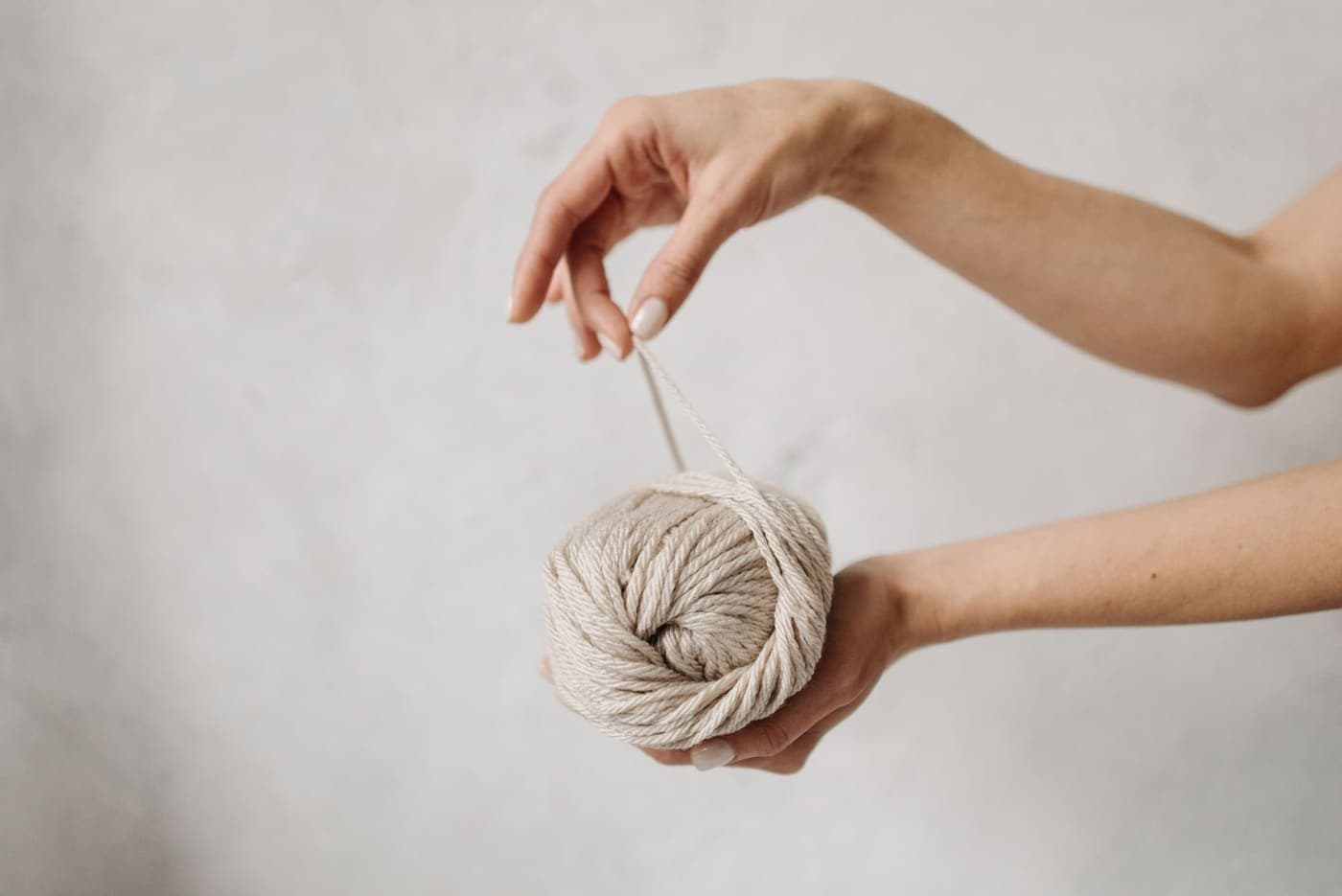
The short answer
For most projects, change yarn at the edge of a row and weave both ends in afterwards - it is the strongest and least visible option. Mid-row, use a Russian join for anything that will be washed, a spit splice for non-superwash wool only, and a simple overlap-and-weave for everything else. The magic knot is fast and popular and it does come undone; do not use it on anything load-bearing or heirloom.
First, decide where the join goes
Half of this problem disappears if you can put the join at the edge. A join at a seam or a row end is hidden, is supported by the seam, and needs no special technique at all.
- Flat pieces that will be seamed: join at the edge, always.
- Pieces worked in the round: there is no edge, so you need a mid-row join.
- Colorwork and stripes: the color change is the join.
- Lace: join at the plainest available point, never inside a decrease.
- Rule of thumb: if a row has fewer than about 20 percent of its stitches left in the old yarn, start the new ball anyway. A short tail is easier to weave in than a run-out mid-row.
The six methods
| Method | Works on | Strength | Visibility |
|---|---|---|---|
| Change at the edge | Everything | Strongest | None, once seamed |
| Overlap and weave | Everything | Good | Slight thickening |
| Russian join | Most plied yarns | Very good | Slight thickening |
| Spit splice | Non-superwash wool only | Very good | None |
| Braided or woven join | Plied yarns | Good | Slight |
| Magic knot | Everything | Unreliable | A small knot |
How to work each one
- Change at the edge. Drop the old yarn, start the new one, leave tails of about 6 inches on each and weave them in later along the edge.
- Overlap and weave. Work a few stitches holding old and new together, then drop the old. The doubled section is slightly thicker and disappears after blocking.
- Russian join. Thread the old end onto a tapestry needle, run it back through its own plies for about 2 inches, leaving a small loop. Do the same with the new end, passing it through that loop first. Trim the tips. The join is a locked loop of yarn inside itself.
- Spit splice. Untwist about 2 inches of each end, overlap them, wet them, and roll hard between your palms until the fibers felt together. Only works on wool that has not been superwash treated.
- Braided join. Separate the plies of each end, interleave them and let the natural twist hold them. Good on firmly plied yarn, poor on singles.
- Magic knot. Tie each tail around the other strand and pull so the knots slide together. Fast, and covered below.
Matching the join to the fiber
| Yarn | Best join | Avoid |
|---|---|---|
| Non-superwash wool | Spit splice | Nothing in particular |
| Superwash wool | Russian join | Spit splice - it cannot felt |
| Acrylic | Russian join or overlap | Spit splice |
| Cotton | Russian join | Spit splice |
| Rayon, bamboo and silk | Change at the edge | Magic knot - too slippery |
| Chenille | Change at the edge | Russian join - the pile fights the needle |
| Singles | Overlap and weave | Braided join |
The pattern is simple: only untreated wool can be spliced, and anything slippery should be joined where the join can be secured rather than relied on.
Afterwards
A join is only half finished when it is made. The tails still have to be dealt with, and that is a separate technique with its own rules - run the ends in different directions, follow the path of the stitches, and split the plies on the last inch so the end cannot pull free.
How to weave in ends covers it properly. How to seam knitting and crochet covers the edge joins between pieces, which is a different job again.
Joining a new color
- Stripes: change at the edge and carry the unused color up the side if the stripes are narrow.
- Crochet color changes: work the last yarn-over of the previous stitch in the new color, so the change happens cleanly at the top of the stitch.
- Colorwork: never use a splice or a knot - you need both colors available.
- Weave in as you go on anything with many color changes. Three hundred ends left to the end of a project is how projects get abandoned.
What joining yarn needs
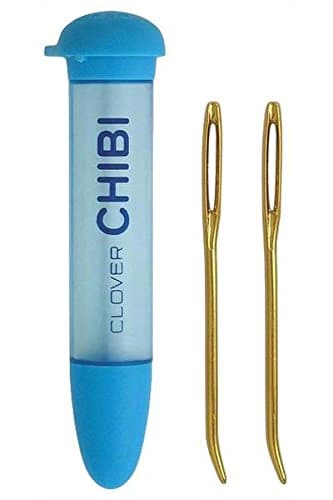
Clover Chibi Darning Needle Set (Bent Tip)
Three blunt bent-tip tapestry needles in a lidded tube. The bent tip hooks the yarn without splitting the stitch, which is what a Russian join needs.
$8.80 - View on Amazon#ad disclosure - price as of September 24, 2026
Clover Patchwork Scissors
Serrated stainless blades hold the strand instead of pushing it away, so a yarn end cuts square rather than skidding. 17cm in the regular size.
$69.10 - View on Amazon#ad disclosure - price as of September 24, 2026
Patons Classic Wool Worsted
100% non-superwash wool - the only kind of yarn a spit splice works on, because the join relies on the scales felting together.
$43.56 - View on Amazon$47.228% off · #ad disclosure - price as of September 24, 2026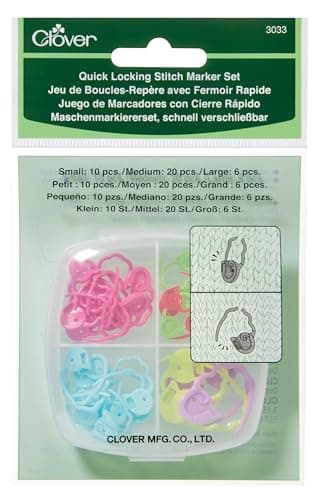
Clover Quick Locking Stitch Marker Set
36 markers in three sizes. Mark where a join sits so you can find it again if it works loose.
$12.72 - View on Amazon#ad disclosure - price as of September 24, 2026
Questions people actually ask
What is the strongest way to join yarn?
Changing yarn at the edge of a row and weaving the ends in along the seam. It puts the join where the fabric is already reinforced. Mid-row, a Russian join is the strongest general-purpose option.
Is the magic knot safe to use?
Not for anything that matters. It is a knot rather than a splice, it can slip open under load, and when it fails the two pieces separate completely. Use a Russian join or change at the edge instead.
Can you spit splice superwash wool?
No. The splice works by felting the scales of the wool fiber together, and superwash treatment is specifically designed to stop those scales interlocking. Use a Russian join instead.
How do you join yarn without a knot?
A Russian join threads each end back through its own plies around a loop of the other, so the two lock together with no knot. A spit splice felts the fibers into one strand, and an overlap-and-weave simply works a few stitches doubled.
How long should the tails be when joining yarn?
About 6 inches for a woven end. Shorter than that is hard to thread onto a tapestry needle and more likely to work loose; much longer is just waste.