Guide
How to Seam Knitting and Crochet
Forty hours of knitting can be undone by twenty minutes of bad seaming. It is worth doing properly.
By Sawyer V. · Published September 7, 2026
Disclosure: we earn a commission when you buy through the links on this page, at no extra cost to you. It never decides what we recommend or how we rank it - read the full disclosure.
The short answer
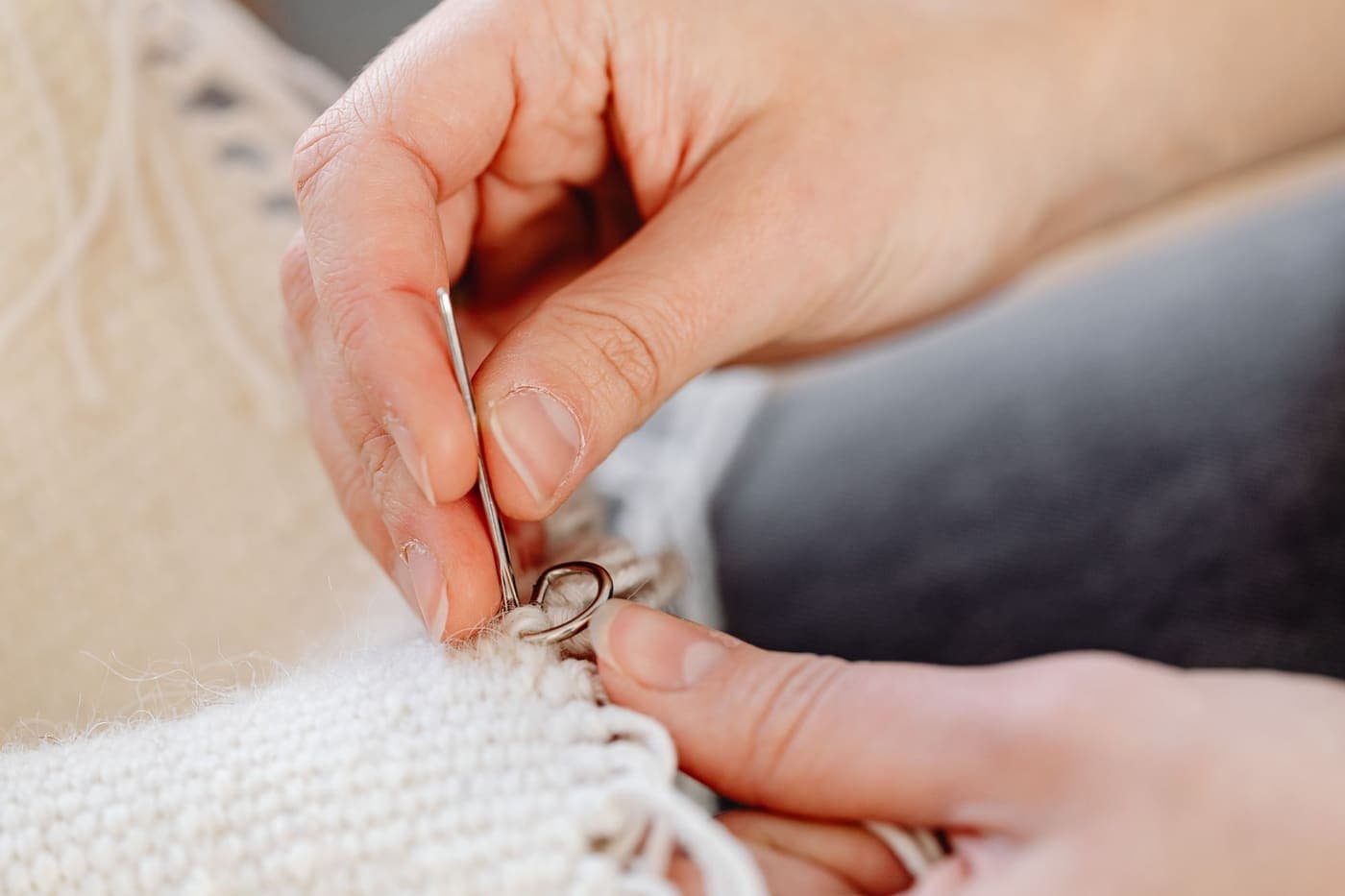
Match the method to the edge. Mattress stitch joins two vertical edges invisibly and is the one to learn first. Whip stitch joins any two edges quickly and shows slightly. Three-needle bind-off joins two sets of live stitches. Crochet seams are fast and bulky. Block the pieces before you seam them.
Block first. This is the whole trick
Seaming two curling, uneven pieces is difficult. Seaming two flat, correctly-sized pieces is straightforward, and the difference is one wash and a night on a mat.
Blocking also tells you whether the pieces are actually the same length before you sew them together, which is considerably better than finding out afterwards. Our how to block your knitting page has the method.
The four methods
| Method | Joins | Visibility | Best for |
|---|---|---|---|
| Mattress stitch | Two vertical edges | Invisible | Side seams, sleeve seams |
| Whip stitch | Any two edges | Slight ridge | Motifs, toys, quick joins |
| Three-needle bind-off | Two sets of live stitches | A neat ridge | Shoulders |
| Kitchener / grafting | Two sets of live stitches | Invisible | Sock toes, underarms |
| Slip stitch crochet | Any two edges | A visible ridge | Blankets, deliberately decorative |
| Single crochet join | Any two edges | A bold ridge | Motif blankets, sturdy joins |
Mattress stitch, step by step
The one worth learning. It joins two vertical edges from the right side, and done properly the seam disappears completely into the fabric.
- Lay both pieces right side up, edges together. Not overlapping, and not right sides facing.
- Find the running bars. One stitch in from the edge, between two columns of stitches, there is a horizontal bar per row. That is what you sew through.
- Thread a long tail on a blunt tapestry needle. Use the cast-on tail if it is long enough.
- Go under one bar on the left piece, then one bar on the right. Alternate, working upward.
- Do two bars at a time once you are confident - it is faster and equally invisible.
- Pull gently every inch or so. The seam closes and the stitches interlock. Do not pull hard or the seam puckers.
Matching row for row
The commonest seaming failure is a side seam that ends up longer on one side than the other, because the two pieces drifted apart by a few rows.
- Count the rows on both pieces first. They should match; if they do not, ease the difference over the whole seam rather than at the end.
- Pin every ten rows before you start, with locking markers, on both pieces. It takes two minutes and it is what keeps the seam honest.
- Check as you go. Every few inches, look at whether the markers are still aligned.
- Ease, do not gather. If one piece is two rows longer over 60 rows, take two double-bars on the longer side. Spread over the seam, it is invisible.
Shoulders, which want a different method
Shoulder seams carry the weight of the whole garment, so they want structure rather than invisibility.
The three-needle bind-off joins two sets of live stitches by knitting them together and binding off in one pass, leaving a neat internal ridge that acts as a structural spine. It is faster than sewing and stronger.
If the shoulders are already bound off, a backstitch seam does the same job. Do not use mattress stitch on a shoulder - it is invisible and it stretches.
Crochet seams
Fast, and they show. That is not always a fault.
- Slip stitch join. A firm, low ridge. Good for blankets and anywhere you want a defined edge.
- Single crochet join. A bolder ridge that becomes part of the design. Standard on granny square blankets.
- Join-as-you-go. Attaches each motif during its final round, which removes both the seaming session and most of the ends.
- Whip stitch with a tapestry needle is the flattest crochet join, and the right one for anything that has to sit against skin.
Which yarn to seam with
The same yarn, in almost every case - it behaves and washes identically, and it disappears.
- Bulky or chenille: split the yarn, or use a smooth thinner yarn in the same color. A bulky seam in bulky yarn is a rope.
- Textured or novelty yarn: use a smooth yarn in a matching shade. Textured yarn will not pull through cleanly.
- Anything that will take strain: consider adding a fine matching thread alongside for strength.
- Never a contrast color, unless it is deliberate - it will show at every stitch.
Seamed or seamless?
Worth knowing that seaming is a choice rather than an obligation, and that the fashion for seamless construction is not straightforwardly an improvement.
| Seamed | Seamless | |
|---|---|---|
| Structure | Seams support the shoulders | Relies on the fabric alone |
| Growth over time | Resists it | Heavier garments can stretch |
| Portability | Small pieces, easy to carry | The whole garment on one needle |
| Trying it on | Only at the end | Any time |
| Finishing time | An evening of seaming | Almost none |
| Needles required | One | Several lengths - see best needles for a sweater |
For a heavy garment, seams are a genuine structural advantage. For a lightweight one, seamless is less work. Neither is the correct answer in general.
What seaming needs
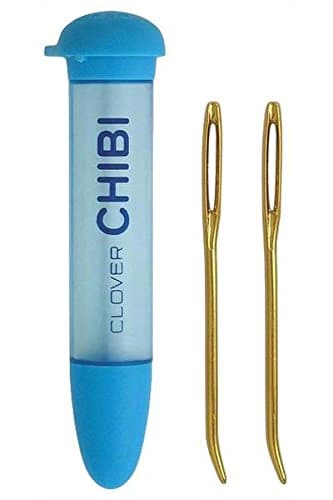
Clover Chibi Darning Needle Set (Bent Tip)
Blunt bent-tip needles - the curve is what reaches into a mattress stitch bar without distorting the fabric.
$8.80 - View on Amazon#ad disclosure - price as of October 22, 2026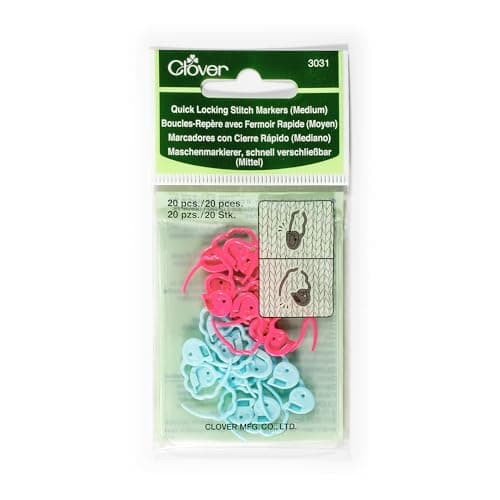
Clover Quick Locking Stitch Markers, Medium
Pin both pieces every ten rows before you start. This is what stops a side seam drifting.
$8.00 - View on Amazon#ad disclosure - price as of October 22, 2026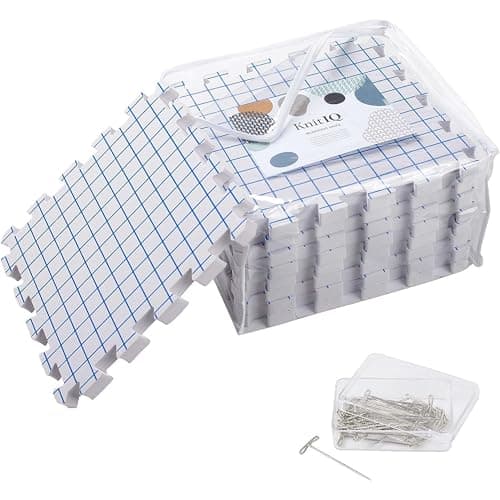
KnitIQ Blocking Mats
Block the pieces flat before seaming. Straight edges are far easier to join than curling ones.
$49.99 - View on Amazon$54.999% off · #ad disclosure - price as of October 22, 2026
Clover Patchwork Scissors
A clean cut end threads onto a tapestry needle; a frayed one does not.
$59.74 - View on Amazon#ad disclosure - price as of October 22, 2026
Questions people actually ask
What is the best way to seam knitting?
Mattress stitch for two vertical edges - it is invisible and it is the method worth learning first. Three-needle bind-off for shoulders, where structure matters more than invisibility.
How do you do mattress stitch?
Lay both pieces right side up with the edges together. One stitch in from each edge there is a horizontal running bar per row - go under one bar on the left piece, then one on the right, alternating upward, and pull gently every inch.
Should you block before or after seaming?
Before. Flat, correctly sized pieces are far easier to join than curling ones, and blocking tells you whether the pieces actually match in length before you sew them together.
What yarn should you seam with?
The same yarn, in almost every case - it washes and behaves identically and disappears into the fabric. For bulky or textured yarn, use a smooth thinner yarn in a matching shade.
Why is my seam puckered?
You pulled too hard. Mattress stitch closes under gentle tension - pull just enough that the two edges meet and the stitches interlock, then stop. Puckering also happens if you seam through the edge stitch rather than one stitch in.