Guide
Mohair Yarn Explained
Twenty-five grams that looks like nothing and knits like a cloud. It is also the one yarn you cannot undo.
By Sawyer V. · Published September 12, 2026
Disclosure: we earn a commission when you buy through the links on this page, at no extra cost to you. It never decides what we recommend or how we rank it - read the full disclosure.

The short answer
Mohair is hair from the Angora goat, usually spun as a fine core with the fiber brushed out to form a halo. It is normally sold as a lace weight and blended with silk, and it is most often held together with another yarn rather than knitted alone. The halo is the whole point and the whole problem: it makes the fabric look like a cloud, and it makes the stitches grip each other so firmly that ripping back tears the yarn.
What mohair actually is
Mohair comes from the Angora goat - not the Angora rabbit, which produces angora, a different fiber with a confusingly similar name. Kid mohair is the first clip from a young goat and is the finest grade; the fiber coarsens as the animal ages.
The two yarns above are both super kid mohair blended with silk, at 70/30 and 75/25. That blend is close to a standard in this category, and there is a structural reason for it: mohair on its own has very little elasticity, and the silk provides a strong, smooth core for the brushed mohair to sit on.
The halo
Mohair fiber is long, smooth and highly reflective, with far less surface scale than wool. Brushing pulls fiber ends out of the spun yarn so they stand away from the core, and light catching those loose ends is what produces the halo.
- It fills the gaps. A lace-weight mohair knitted at a much larger gauge than the yarn suggests still produces an opaque-looking fabric, because the halo bridges the space between stitches.
- It hides stitch definition. Cables, texture and colorwork all disappear. Mohair is for shape and color, never for pattern.
- It grows. The halo develops further with wear and with washing, so the fabric you take off the needles is not the final fabric.
- It is directional. Brushing the finished piece, gently, with a soft brush increases the halo deliberately.
Gauge, and why the ball band spans so much
The Rowan yarn's own tension is given as a range - 18 to 25 stitches and 23 to 34 rows over 10cm, on needles from 3.25mm to 5mm. That is an unusually wide band for a ball band, and it is deliberate.
Mohair is knitted at whatever gauge suits the fabric you want, not at a gauge the yarn dictates, because the halo fills the gaps at almost any needle size. The same ball can give a dense, warm fabric at 3.25mm and an airy, translucent one at 5mm - and both are correct. Swatch and pick, rather than hunting for the right number: knitting gauge and swatching has the method.
Held together, which is how most people use it
A single strand of lace-weight mohair makes a very light, very open fabric. Most mohair in circulation is instead held together with a second yarn, and that is worth understanding as a technique in its own right.
- Take one strand of mohair and one of your main yarn and knit them as one.
- The gauge barely moves. A lace-weight mohair adds almost no thickness - it adds halo, warmth and color depth.
- Color mixes optically. A gray merino held with a rust mohair reads as neither; it reads as a third color.
- It rescues a yarn that is too thin, and it softens a yarn that is too crisp.
- It doubles the yardage you need of the mohair, which is why 25g balls are a normal put-up.
This is the single most useful thing to know about mohair, and it is why a fiber that seems impractical alone is on so many shelves.
You cannot rip it back
This is the real cost and it is not a small one. Those loose fiber ends do not just catch the light - they catch each other. A mohair stitch grips its neighbors, and the fabric behaves as if it were lightly felted from the moment it comes off the needle.
- Pulling back a row is slow and damaging. The yarn breaks before the stitches release.
- Freezing helps a little. An hour in the freezer stiffens the fiber and makes a short rip-back just about possible. It is a rescue, not a routine.
- Use a lifeline on anything complex. Thread waste yarn through a row of live stitches so a mistake means frogging to a known point rather than to disaster.
- Count as you go, because fixing later is not really an option.
If your needles have a hole through the tip, the lifeline places itself as you knit - see chiaogoo vs knitters pride dreamz. The needle side of working mohair is in best needles for mohair.
Care
- Hand wash, cold. Both yarns above say so; the Rowan care code also rules out bleaching and tumble drying and specifies drying flat in the shade.
- Do not wring. Press the water out and dry flat.
- Expect it to bloom. Washing opens the halo further, which is why mohair swatches should be washed before you judge them.
- Store it away from moths. Mohair is a protein fiber and moths eat it exactly as they eat wool - see best yarn storage solutions.
Is it itchy?
It can be, and it depends on grade rather than on the fiber's name. Kid mohair is the fine first clip and is the grade in most yarn sold for garments; adult mohair is considerably coarser and is used more for upholstery and rugs.
The mechanism is the same as with wool: prickle comes from coarse fiber ends pressing against the skin, not from an allergy. A halo means a lot of fiber ends by definition, which is why even fine mohair is felt more on the neck than a smooth yarn is. What makes yarn itchy sets out the threshold.
What it is good for, honestly
| Project | Mohair? | Why |
|---|---|---|
| Airy shawl or wrap | Yes | The halo is the design |
| Lightweight sweater, held double | Yes | Warmth without weight |
| Cardigan with cables | No | The halo erases them |
| Socks | No | No elasticity, and it felts underfoot |
| Baby items | No | Loose fibers and a face are a bad combination |
| Anything you might need to alter | No | You cannot undo it |
Mohair's companion fibers are covered in mohair vs alpaca, and the buying page is best mohair yarn.
The two mohair yarns this page uses
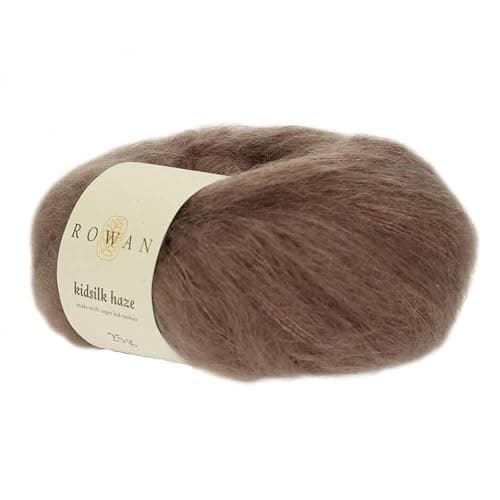
Rowan Kidsilk Haze
70% mohair, 30% silk, lace weight. 25g gives 210m / 229yd, on 3.25-5mm needles at 18-25 sts over 10cm.
$25.00 - View on Amazon#ad disclosure - price as of September 21, 2026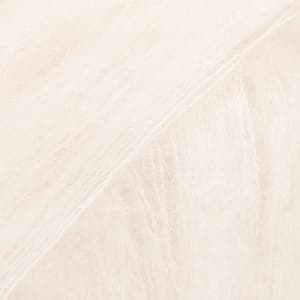
DROPS Kid-Silk
75% super kid mohair, 25% silk. 25g gives about 200m; yarn group A, 24 sts x 32 rows over 10cm on 3mm.
$8.75 - View on Amazon#ad disclosure - price as of September 21, 2026
Cascade 220 Superwash Merino
What people most often hold mohair together with - 100% superwash merino, 220yd per 100g.
$21.00 - View on Amazon#ad disclosure - price as of September 21, 2026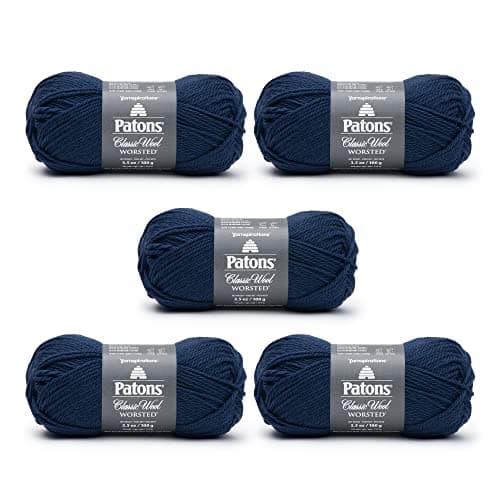
Patons Classic Wool Worsted
The untreated-wool comparison this page keeps making: 194yd per 100g of worsted, scales intact.
$43.65 - View on Amazon$47.228% off · #ad disclosure - price as of September 21, 2026
Questions people actually ask
What is mohair yarn made from?
Hair from the Angora goat. Kid mohair is the finest first clip and is what most garment yarn uses. It is a different animal from the Angora rabbit, which produces angora - the names are confusingly similar and the fibers are not substitutes.
Why can't you rip back mohair?
The brushed fiber ends that create the halo also grip each other, so the fabric behaves as if lightly felted from the moment it leaves the needle. The yarn tends to break before the stitches release. Use a lifeline, and freeze the piece for an hour if you must rip a short section.
Do you knit mohair on its own?
Sometimes, for very light open shawls. More often it is held together with a second yarn as one strand - which adds halo, warmth and color depth while barely changing the gauge.
What gauge do you knit mohair at?
Whatever suits the fabric you want. One ball band gives a tension range of 18 to 25 stitches over 10cm across needles from 3.25mm to 5mm, because the halo fills the gaps at almost any needle size. Swatch and choose.
Is mohair itchy?
It depends on the grade. Kid mohair is fine and is what garment yarn uses; adult mohair is much coarser. Even fine mohair is felt more than a smooth yarn because a halo means a lot of loose fiber ends by definition.