Head to head
Mohair vs Merino
Two wools that have almost nothing in common except the animal being a mammal.
By Sawyer V. · Published September 27, 2026
Disclosure: we earn a commission when you buy through the links on this page, at no extra cost to you. It never decides what we recommend or how we rank it - read the full disclosure.
The short answer
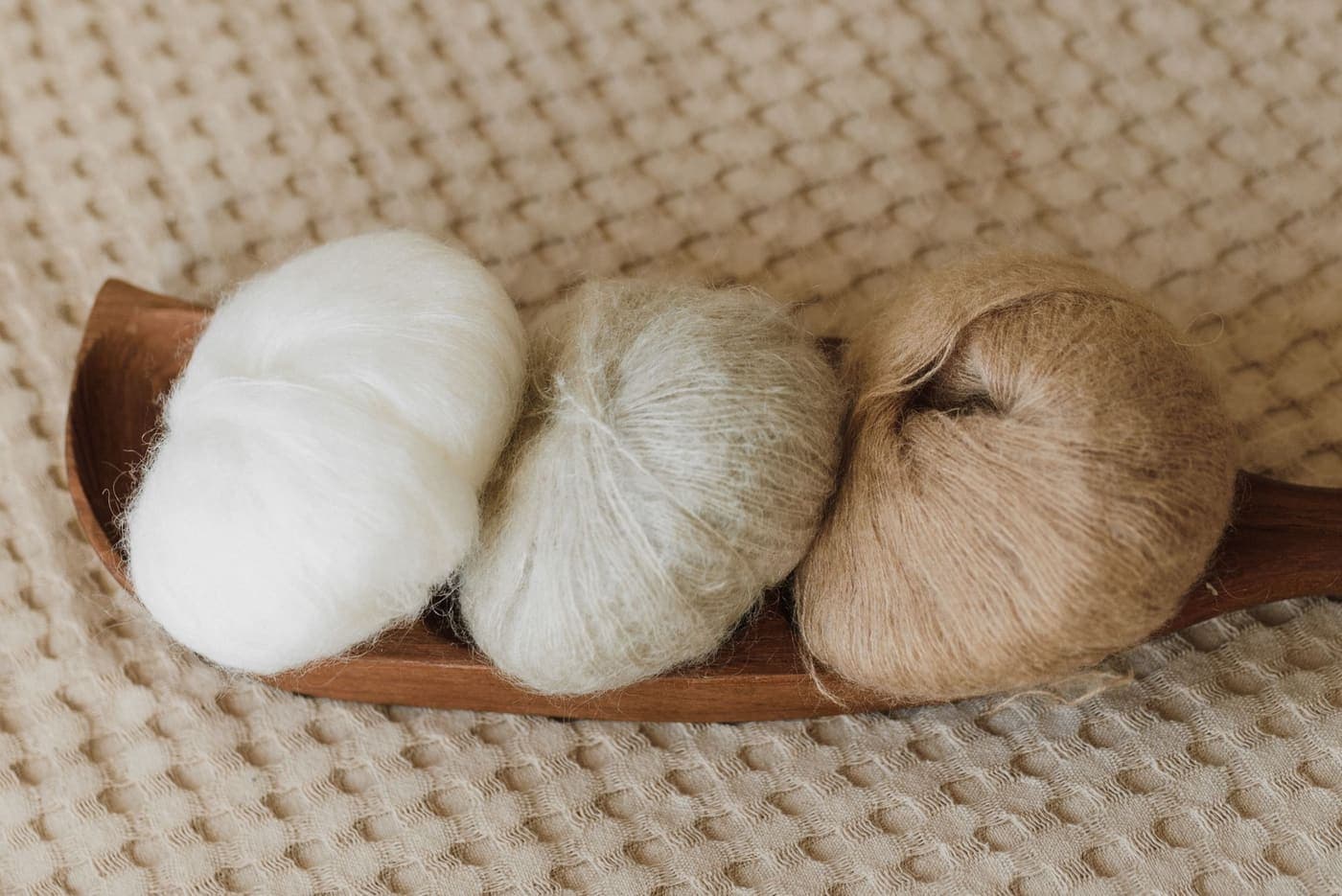
Merino is the default sweater wool - soft, springy, available in every weight, and the fiber most patterns assume. Mohair is a lace-weight halo fiber from the angora goat, usually blended with silk, and it is bought for the fuzz rather than for the yarn underneath. They are not alternatives to each other. If a pattern says merino, use wool; if it says mohair, it wants the halo, and the usual technique is to hold mohair together with something else rather than knit it alone.
Different animals, different purposes
Merino comes from merino sheep and is wool in the ordinary sense - crimped, elastic, and the fiber the standard weight system is effectively built around. Mohair comes from the angora goat, has almost no crimp, and is long, smooth and lustrous, which is what produces the halo.
| Mohair | Merino | |
|---|---|---|
| Animal | Angora goat | Merino sheep |
| Usually sold as | Lace weight, blended with silk | Every weight, often pure |
| Typical ball | 25g, around 200-230yd | 100g, around 220yd |
| Elasticity | Very little | High |
| Stitch definition | Obscured by halo | Crisp |
| Warmth for the weight | Very high | High |
| Care | Hand wash, dry flat | Superwash versions machine wash |
| Bought for | The halo | The fabric |
Halo, and why people want it
The halo is the cloud of fine fibers standing away from the spun core. It is why a mohair sweater looks lit from within and why it blurs everything underneath it.
- It hides stitch definition, which is a feature for plain stockinette and a problem for cables.
- It hides uneven tension, which makes mohair unexpectedly forgiving for a lace-weight yarn.
- It makes the fabric warmer than the weight suggests, because the halo traps air.
- It sheds, onto everything dark you own.
- It is effectively permanent. You cannot undo mohair easily - the halo felts the stitches to each other, which is why frogging it is a known misery.
The held-together technique
The commonest way to use mohair is not to knit it alone. You hold one strand of mohair-silk together with one strand of another yarn and knit them as one.
- Held with a fingering or DK yarn, it adds halo and warmth without much thickness.
- Held with itself, doubled, it makes a light fabric with a strong halo.
- It changes gauge, so swatch the combination rather than either yarn alone.
- It is the standard way to soften a scratchy wool, because the halo sits between the wool and your skin.
- It makes frogging worse, because now two yarns are felted together.
Where merino wins
Almost everywhere that is not about halo. Merino is springy, so ribbing grips and a garment holds its shape. It takes dye beautifully, shows cables and texture crisply, comes in every weight from lace to bulky, and the superwash versions machine wash - which is why it is the default answer for a sweater.
Merino vs regular wool covers how it compares to ordinary sheep wool, and superwash vs non-superwash the treatment question.
Which to buy for what
| Project | Better fiber | Why |
|---|---|---|
| Sweater with cables | Merino | Mohair's halo hides the cables |
| Plain stockinette sweater | Either | Mohair for glow, merino for structure |
| Lightweight shawl | Mohair | Warmth for almost no weight |
| Hat with ribbing | Merino | Mohair has no recovery to grip with |
| Socks | Merino with nylon | Mohair has no elasticity and sheds |
| Baby items | Merino | Mohair sheds; babies put things in their mouths |
| Softening a scratchy wool | Mohair, held together | The halo sits between wool and skin |
The practical warnings
- Mohair sheds and the fibers travel. If you knit in bed, expect to find it in the bed.
- Mohair is close to unfrogging. Be more certain of your gauge than usual before committing.
- Mohair can feel prickly to some people despite being soft - the halo is made of fiber ends and some skins object. What makes yarn itchy covers why.
- Merino pills more than coarser wools, because the fibers are fine and short - see why yarn pills.
- Both are hand wash unless the merino is explicitly superwash.
One of each
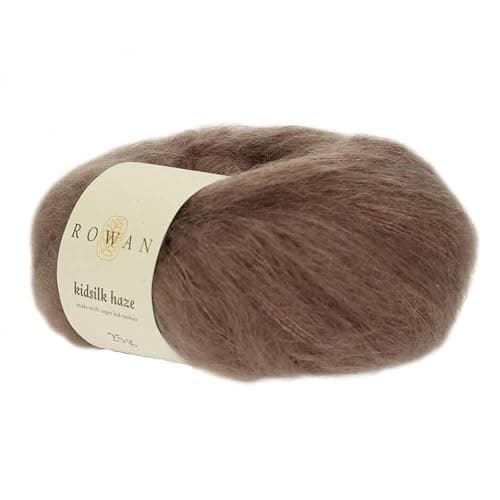
Rowan Kidsilk Haze
The mohair reference: 70% mohair, 30% silk, lace weight, 25g ball at 229yd, knit at 18-25 sts over 10cm on 3.25-5mm.
$25.00 - View on Amazon#ad disclosure - price as of September 27, 2026
DROPS Kid-Silk
The same construction at a different price: 75% kid mohair, 25% silk, 25g at about 200m, 24 sts over 10cm on 3mm.
$8.75 - View on Amazon#ad disclosure - price as of September 27, 2026
Cascade 220 Superwash Merino
The merino reference: 100% superwash merino, 220yd per 100g, 20 sts x 28 rows on US 7, and machine washable.
$21.00 - View on Amazon#ad disclosure - price as of September 27, 2026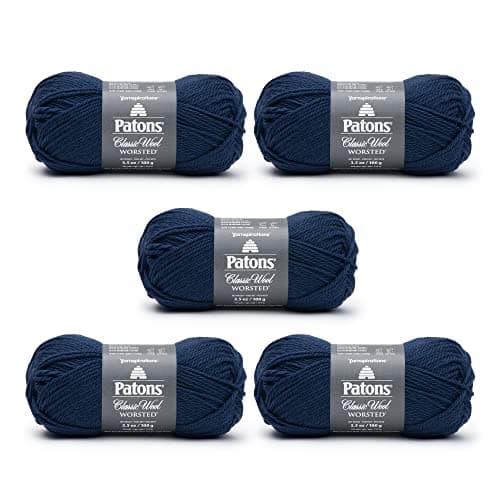
Patons Classic Wool Worsted
Untreated wool for comparison: 100% non-superwash wool, 194yd per 100g, 20 sts x 26 rows on 4.5mm.
$43.54 - View on Amazon$47.218% off · #ad disclosure - price as of September 27, 2026
Questions people actually ask
Is mohair warmer than merino?
For its weight, yes, by a wide margin - the halo traps air, so a 25g ball of mohair-silk produces a warmer fabric than 25g of merino would. Merino is warmer gram for gram in a dense fabric.
Can you substitute mohair for merino?
Not directly. Mohair is lace weight with almost no elasticity, so it will not match a merino pattern's gauge or hold ribbing. The usual approach is to hold mohair together with another yarn rather than swap it in.
Why is mohair always blended with silk?
Mohair has a long, slippery, low-crimp staple that is hard to spin into a stable lace yarn alone. The silk gives it a core with some strength - both mohair yarns we list are 70/30 and 75/25 mohair-silk.
Can you undo mohair knitting?
Only with difficulty. The halo felts adjacent stitches to each other, so frogging tends to shred rather than unravel. Swatch carefully, because a mohair mistake is expensive in time.
Which is better for a first wool sweater?
Merino. It is springy, crisp, available in every weight, and the superwash versions machine wash. Mohair is a specialist fiber bought for its halo rather than a general-purpose sweater yarn.