Guide
Holding Mohair Double
The technique the pattern assumes you already know.
By Sawyer V. · Published October 6, 2026
Disclosure: we earn a commission when you buy through the links on this page, at no extra cost to you. It never decides what we recommend or how we rank it - read the full disclosure.
The short answer
Hold mohair with one strand of a smooth yarn and knit the two together as one. The commonest pairing is a lace-weight mohair-silk with a fingering or DK partner, worked on a needle one to two sizes larger than the partner yarn alone would want. The mohair adds halo, warmth and about half a weight category of thickness; it adds almost no strength and no elasticity. Do it when you want glow, drape and warmth without bulk. Do not do it for cables, for socks, or for anything you expect to rip back - mohair felts stitches to each other and frogging it is genuinely miserable.
Why nobody knits mohair alone
Mohair comes from the angora goat and has almost no crimp - the fiber is long, smooth and slippery. Spun alone at lace weight it has very little elasticity and not much structural integrity, which is why both of the mohair yarns this site lists are mohair-silk blends: the silk is the core that holds the yarn together.
Even blended with silk, a mohair-silk lace yarn knitted alone gives a fabric that is beautiful, extremely light, and almost structureless. It has no recovery, so ribbing does not grip and a garment grows. Holding it with a second yarn gives it a backbone. Mohair yarn explained covers the fiber itself.
What to hold it with
| Partner yarn | Resulting weight | Needle to start from | What it is for |
|---|---|---|---|
| Mohair + mohair (doubled) | Light fingering | 3.25-4mm | Maximum halo, minimum weight - shawls |
| Mohair + lace | Fingering | 3.5-4mm | A glowing lightweight shawl with some body |
| Mohair + fingering | Sport to DK | 4-4.5mm | The lightweight halo sweater. The most useful pairing |
| Mohair + sport | DK | 4.5-5mm | A sweater with structure and a strong halo |
| Mohair + DK | Worsted | 5-5.5mm | A warm, fuzzy, substantial sweater |
| Mohair + worsted | Aran to bulky | 5.5-6.5mm | Fast and very warm. The halo gets lost in the bulk |
| Mohair + cotton DK | Worsted | 5-5.5mm | Halo without a second warm fiber - a summer option |
The arithmetic nobody writes down
Two things surprise people the first time: the needle size, and the yardage.
- Go up, but not by the thickness you expect. Mohair is mostly air. Held with a DK yarn it does not make a bulky yarn - it makes a worsted-ish yarn with a halo. Start one to two sizes above what the partner yarn alone would take and swatch.
- You need the same yardage of each. This is the one that catches people out. Held-double projects consume both yarns at the same rate, so a sweater needing 1,200yd of DK also needs roughly 1,200yd of mohair. At 229yd a 25g ball that is five or six balls, not one.
- Swatch the combination, never either yarn alone. The ball-band gauge on the mohair is for mohair knitted alone, which almost nobody does. It is close to irrelevant here.
- Wash the swatch. Mohair blooms when it is wet - the halo opens and the fabric grows. A swatch measured dry off the needles will lie to you.
- Expect the fabric to be warmer than it looks. The halo traps air, so a lightweight mohair-held sweater is warmer than a heavier plain one.
When not to do it
- Cables and textured stitch patterns. The halo fills in exactly the shadows that make a cable readable. You will have done the work and it will not show.
- Socks, and anything that takes abrasion. Mohair has no elasticity and sheds; a sock needs recovery and wear resistance. Use sock yarn instead.
- Anything for a baby. Mohair sheds loose fiber continuously - see is this yarn safe for a baby.
- A first sweater. If your gauge is not yet consistent, you will want to rip back, and mohair is very close to unrippable once it has been worked.
- Ribbing that must grip. Neither yarn is doing much for recovery. Work the ribbing in the partner yarn alone and add the mohair after it.
Softening a scratchy wool with it
This is the other reason knitters reach for mohair, and it works. Held together with a coarse, grabby wool, the mohair halo sits between the wool and your skin, so the stiff fiber ends that cause prickle are standing in a cloud of something much finer.
It does not change the wool - it changes what touches you. If the underlying problem is a genuine sensitivity rather than mechanical prickle, this does not help. What makes yarn itchy distinguishes the two.
Washing and the shed
Both mohair yarns listed here are hand wash, and that governs the finished garment regardless of what the partner yarn says - a superwash merino held with mohair is a hand-wash fabric.
The shedding is permanent and there is no technique that stops it. It is worst in the first few wears and settles down without ever stopping. If you knit in bed, expect to find mohair in the bed. Plan around it rather than trying to fix it.
The mohair, and what to hold it with
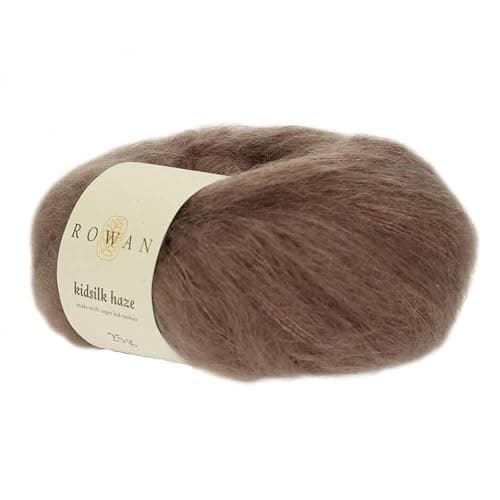
Rowan Kidsilk Haze
The reference mohair: 70% mohair, 30% silk, 25g at 229yd, knit at 18-25 sts over 10cm on 3.25-5mm. Priced per gram it is expensive; priced per project it is one or two balls.
$24.98 - View on Amazon#ad disclosure - price as of October 7, 2026
DROPS Kid-Silk
The same construction cheaper: 75% kid mohair, 25% silk, 25g at about 200m, 24 sts over 10cm on 3mm.
$8.70 - View on Amazon#ad disclosure - price as of October 7, 2026
Cascade 220 Superwash Merino
The usual partner. Worsted merino at 220yd/100g held with mohair gives a halo sweater at a sane gauge.
$21.00 - View on Amazon#ad disclosure - price as of October 7, 2026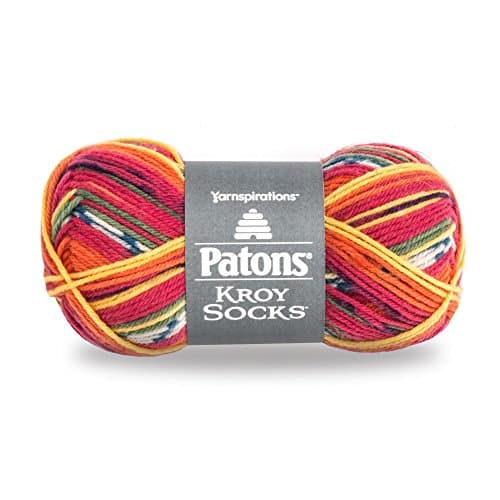
Patons Kroy Socks
A fingering-weight partner when you want the fabric light. Sock yarn's nylon also adds the abrasion resistance mohair has none of.
$9.13 - View on Amazon$9.797% off · #ad disclosure - price as of October 7, 2026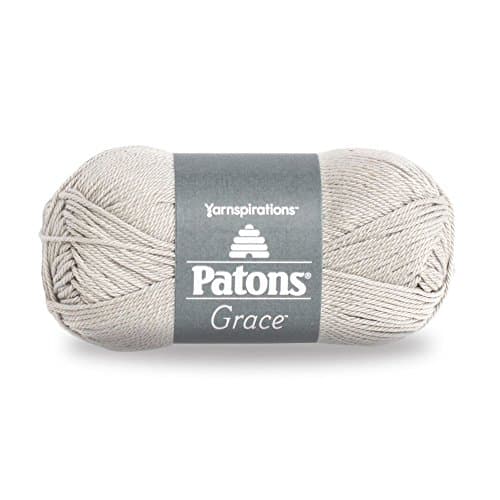
Patons Grace
A DK cotton partner, for a summer version. The mohair adds halo without the warmth of a second wool strand.
$7.99 - View on Amazon#ad disclosure - price as of October 7, 2026
Questions people actually ask
What weight is mohair held double?
Two strands of lace-weight mohair-silk held together give roughly a light fingering fabric. The more common question is mohair held with something else: mohair plus fingering lands around sport or DK, and mohair plus DK lands around worsted. Swatch the combination - mohair is mostly air, so it adds less thickness than its bulk suggests.
How much mohair do I need to hold double?
Roughly the same yardage as the partner yarn, because both are consumed at the same rate. A sweater needing 1,200yd of DK needs about 1,200yd of mohair too - at 229yd per 25g ball, that is five or six balls.
What needle size for mohair held double?
Start one to two sizes above what the partner yarn alone would take and swatch from there. Mohair adds halo more than it adds thickness, so the jump is smaller than the two-strand count suggests.
Can you hold mohair with cotton?
Yes, and it is a good trick for a summer garment - you get the halo and the glow without adding a second warm fiber. Hold a lace mohair-silk with a DK cotton and expect roughly a worsted fabric.
Can you hold mohair with acrylic?
You can, and it works mechanically. The reason few people do is cost logic: mohair-silk is an expensive yarn and pairing it with the cheapest possible partner gives you a fabric with the acrylic's hand and the mohair's price.
Can you unravel mohair held double?
Barely. The halo felts adjacent stitches to each other, and with two yarns the problem doubles. Be more certain of your gauge than usual before you commit, because a mohair mistake is expensive in time rather than in yarn.