The picks
Is This Yarn Safe for a Baby?
Three things decide it, and softness is not the first of them.
By Sawyer V. · Published October 6, 2026
Disclosure: we earn a commission when you buy through the links on this page, at no extra cost to you. It never decides what we recommend or how we rank it - read the full disclosure.
The short answer
For a baby, the safest yarns are machine-washable acrylic, mercerized cotton, and superwash merino - in that order for convenience, and in reverse for warmth. Avoid anything that sheds loose fiber (mohair, angora, long-pile chenille and most novelty eyelash yarns), avoid pure untreated wool unless you know the family hand washes, and avoid acrylic specifically for sleepwear because it melts rather than chars. Softness is the question everyone asks and it is the third most important one. The first is whether the yarn sheds fibers a baby can inhale; the second is whether the finished item survives a hot machine wash.
The three questions, in order
Baby yarn gets discussed as if it were a softness contest. It is not. A yarn that is beautifully soft and sheds, or that is soft and must be hand washed, is a worse choice for an infant than a merely acceptable yarn that does neither.
- Does it shed? A loose fiber near a newborn's face is the only genuinely acute risk on this list. Mohair, angora and eyelash novelty yarns shed by design - the halo *is* detached fiber. Rule them out first, before considering anything else.
- Can it be washed hot and dried? Babies produce laundry at a rate first-time knitters underestimate. A hand-wash-only garment gets worn twice and then lives in a drawer. Check the ball band for a machine-wash symbol and a tumble-dry symbol, not just the word 'washable'.
- Is it soft enough not to prickle? Only now. Prickle is a mechanical effect - coarse fiber ends stiff enough not to bend against skin - so it tracks fiber diameter, not fiber type. Fine merino does not prickle; coarse wool does.
Fiber by fiber
| Fiber | Safe next to a baby? | The reason |
|---|---|---|
| Acrylic | Yes, except sleepwear | No protein allergens, machine washable, dries fast. Melts rather than chars in a flame |
| Cotton | Yes | No allergens, no shed, washes hot. Heavy and has no stretch |
| Superwash merino | Yes, unless wool sensitivity is known | Fine enough not to prickle, machine washable |
| Untreated wool | Only if the family hand washes | Felts permanently in a normal wash - the garment is destroyed, not dangerous |
| Bamboo viscose | Yes | Smooth, cool, low shed. Weak when wet, so seams can give |
| Nylon in a blend | Yes | Adds abrasion resistance. Common and unproblematic in baby yarn |
| Chenille / velvet | With care | Short pile can shed and the worming makes stitches slip. Check the ball band |
| Mohair, angora | No | Sheds loose fiber continuously - the halo is detached fiber |
| Eyelash / novelty | No | Long loose strands near a face, and almost never washable |
| Alpaca | Usually | Low shed and very warm, but can be too warm for an indoor baby |
The acrylic question, answered honestly
Acrylic has a reputation problem among knitters and it is mostly aesthetic snobbery. On the specific question of infant safety it performs well: it carries none of the protein allergens that wool does, it washes and dries at high temperatures, and it does not shed.
There is one real exception and it is worth taking seriously. Acrylic is thermoplastic - in a flame it melts and the molten fiber sticks to skin, whereas wool chars and self-extinguishes. The US flammability standard for clothing textiles is 16 CFR Part 1610, and children's sleepwear sits under a separate, stricter rule. A hand-knitted acrylic garment is not certified sleepwear and should not be used as sleepwear. Daywear is a different matter and is fine.
Is acrylic yarn flammable works through the standard in full, and acrylic yarn allergies and sensitivity covers the reaction question, which is usually a reaction to finishing chemistry rather than to the polymer.
The wool question
Wool is the warmest option by a distance and the one most likely to produce an actual complaint. Two distinct things get confused:
- Prickle is mechanical and near-universal. Coarse fibers have stiff ends that do not bend against skin and trigger a pressure response. It is not an allergy and it goes away with a finer fiber - which is the whole reason merino exists. What makes yarn itchy covers the mechanism.
- A genuine wool allergy is rare, and what is usually reported as one is a reaction to lanolin residue or to a dye or finishing agent. It is still real to the person having it. If there is any family history, use cotton.
- Untreated wool felts in a household wash. That is a laundry disaster rather than a safety problem, but it is why superwash is the right wool for a gift - you cannot police how someone else washes things.
Things that are not on the label
- Buttons, beads and safety eyes are the actual choking risk in hand-knitting, far more than fiber. For anything a baby can reach, embroider the feature or use a tie closure.
- Long ties and drawstrings around a neck or hood. Use a button-through or a seamed closure instead.
- Open lace at a baby's hand size. Fingers go through lace holes and get stuck. Keep the stitch pattern dense for the first year.
- Dye bleed. A deeply saturated hand-dyed yarn can crock onto skin before its first wash. Wash the finished item before it is worn - see does superwash wool bleed.
- Gift knitting goes in the hot wash eventually. Assume the recipient will not read your care note, and pick accordingly.
What we would actually give
For a gift to someone you do not know well: the acrylic-nylon, because it tolerates any laundry treatment. For your own baby in a cold climate: superwash merino. For a summer baby, eczema-prone skin, or anything that will be chewed: mercerized cotton. For charity and hospital knitting: machine-washable acrylic, every time, because the receiving institution has no way to hand wash and no way to know who is sensitive to what.
| # | Product | Best for | Fiber | Machine wash | Price |
|---|---|---|---|---|---|
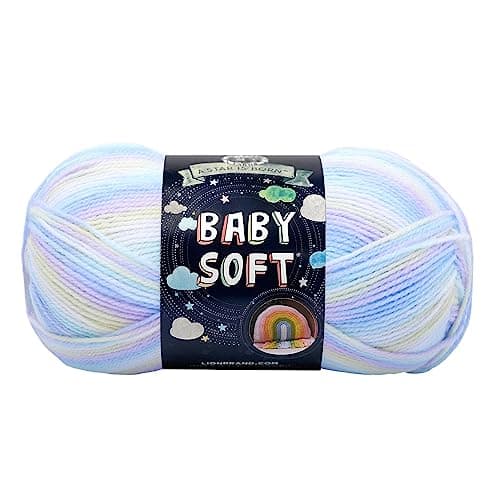
| 1 | Lion Brand Baby SoftA DK acrylic-nylon that survives a hot machine dry, which is the single most useful safety property a baby yarn can have. | Hats, cardigans and booties that will be washed constantly | 60% acrylic, 40% nylon | Yes - hot dry permitted | $13.37 - View on Amazon#ad disclosure - price as of October 7, 2026 |
| 2 | 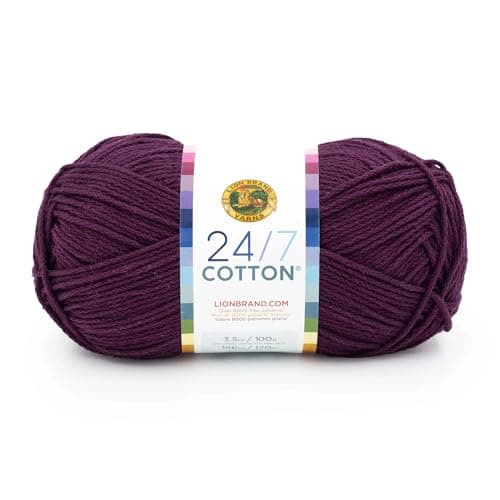 Lion Brand 24/7 CottonMercerized cotton: no animal protein, no halo to inhale, no shed, and it washes hot. Lion Brand 24/7 CottonMercerized cotton: no animal protein, no halo to inhale, no shed, and it washes hot. | Summer babies, eczema-prone skin, and anything that goes near a mouth | 100% mercerized cotton | Yes - tumble dry | $6.99 - View on Amazon#ad disclosure - price as of October 7, 2026 |
| 3 |  Cascade 220 Superwash MerinoSuperwash merino is the one wool worth giving a new parent - fine enough not to prickle, and machine washable so it does not get ruined. Cascade 220 Superwash MerinoSuperwash merino is the one wool worth giving a new parent - fine enough not to prickle, and machine washable so it does not get ruined. | A heirloom blanket or a cold-weather sweater | 100% superwash merino | Yes | $21.00 - View on Amazon#ad disclosure - price as of October 7, 2026 |
| 4 | 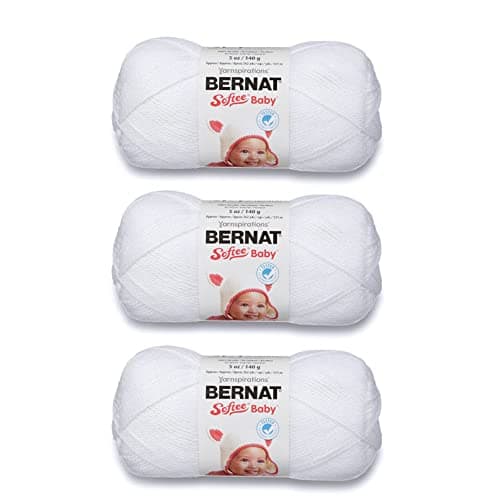 Bernat Softee BabyThe default supermarket baby acrylic - soft enough, cheap enough, and machine washable. Bernat Softee BabyThe default supermarket baby acrylic - soft enough, cheap enough, and machine washable. | Multiples, charity knitting and anything you expect to lose | 100% acrylic | Yes | $23.48 - View on Amazon#ad disclosure - price as of October 7, 2026 |
| 5 | 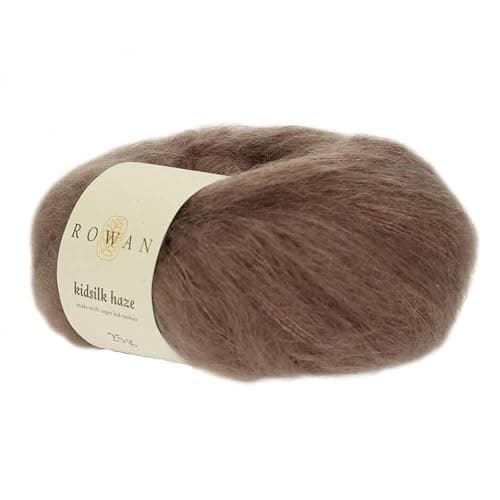 Rowan Kidsilk HazeMohair sheds fine loose fibers continuously. Do not knit it for anything an infant wears, sleeps under or can reach. Rowan Kidsilk HazeMohair sheds fine loose fibers continuously. Do not knit it for anything an infant wears, sleeps under or can reach. | Adult shawls - not infants | 70% mohair, 30% silk | No - hand wash | $24.98 - View on Amazon#ad disclosure - price as of October 7, 2026 |
Lion Brand Baby Soft
Lion Brand · Best for hats, cardigans and booties that will be washed constantly
A DK acrylic-nylon aimed squarely at baby knitting - 459yd on a 5oz ball, and the care label permits a hot machine dry.
- Fiber
- 60% acrylic, 40% nylon (solids and prints)
- Weight
- 3 Light / DK
- Ball
- 5oz (140g), 459yd (420m)
- Knit gauge
- 22 sts x 30 rows on US 6 (4mm)
- Crochet gauge
- 16 sc x 20 rows on G-6 (4mm)
- Care
- Machine wash to 40C/105F, no bleach, machine dry at hottest setting
Who it suits
Anyone knitting for a baby they will not see every week, and anyone giving a gift to a first-time parent.
Why it is here
60% acrylic, 40% nylon at DK weight, 459yd on a 5oz ball, 22 sts x 30 rows on US 6 (4mm). The published care instruction is the point: machine wash to 40C/105F and a machine dryer 'may be regularly used at the hottest available temperature setting'. A garment that can be washed hot and tumbled is a garment that gets washed, and clean is the safety property parents actually need.
What you give up
It is a synthetic, so it does not breathe the way cotton or wool do, and it will not keep a baby warm if it gets wet. The hand is good for acrylic but it is not merino.
Specifications from Lion Brand - Baby Soft specification. We have not handled this item - see how we pick.
Lion Brand 24/7 Cotton
Lion Brand · Best for summer babies, eczema-prone skin, and anything that goes near a mouth
Mercerized cotton with a sheen and a stiff hand. Stitch definition is the best on this page, which is why amigurumi people keep buying it.
- Fiber
- 100% mercerized cotton
- Weight
- Worsted
- Skein
- 3.5oz / 100g, 186yd / 170m
- Gauge
- 19 sts x 26 rows on 5mm (US 8)
- Hook
- 5.5mm (US I/9), 16 sc x 18 rows
- Care
- Machine wash, water not above 105F; medium heat dryer
Who it suits
Parents who have had a reaction to wool, babies in a warm climate, and any item a baby will chew - a lovey, a toy, a washcloth.
Why it is here
100% mercerized cotton, worsted weight, machine wash and tumble dry. Cotton is the fiber with the fewest ways to go wrong around an infant: it carries none of the protein allergens of wool, it sheds essentially nothing, and mercerizing gives it a smooth surface that does not shed lint either.
What you give up
Cotton is heavy, has no elasticity and no memory, so a cotton hat stretches out and stops gripping. It is also a poor insulator when wet, which matters for an outdoor winter garment.
Specifications from Lion Brand product page. We have not handled this item - see how we pick.
Cascade 220 Superwash Merino
Cascade Yarns · Best for a heirloom blanket or a cold-weather sweater
Machine-washable merino at 220 yards to the 100g skein - the standard answer when a sweater pattern says worsted and you want to be able to wash it.
- Fiber
- 100% superwash merino wool
- Skein
- 3.5oz / 100g, 220yd / 200m
- Gauge
- 20 sts x 28 rows in stockinette on US 7
- Weight class
- DK to light worsted
- Care
- Superwash treated - machine washable
Who it suits
Anyone knitting a keepsake, and anyone whose baby is outdoors in real cold.
Why it is here
100% superwash merino, 220yd per 100g, 20 sts x 28 rows on US 7, machine washable. Merino's fineness is what stops the prickle - the sensation is caused by coarse fiber ends being stiff enough to trigger a pressure response in skin, and fine merino fibers bend instead. The superwash treatment removes the felting risk that ruins hand-knit wool in a household wash.
What you give up
It is still wool, so it is not an option if there is a known wool sensitivity in the family. It costs several times what the acrylic does, and superwash wool grows when wet, so a wet garment should be supported when lifted.
Specifications from Cascade Yarns product page. We have not handled this item - see how we pick.
Bernat Softee Baby
Bernat · Best for multiples, charity knitting and anything you expect to lose
A DK-weight acrylic with 362 yards to the 140g ball - the practical default for anything a baby will wear and a parent will wash constantly.
- Fiber
- 100% acrylic
- Weight
- 3 DK / light
- Ball
- 5oz / 140g, 362yd / 331m (solids)
- Gauge
- 22 sts x 30 rows on 4mm (US 6)
- Hook
- 4mm (US G/6), 16 sc x 19 rows
- Care
- Machine wash cool, dry flat
Who it suits
Anyone knitting at volume: twins, a baby shower, a hospital donation run.
Why it is here
100% acrylic in a DK/light weight, machine washable and tumble-dry safe. For charity knitting this is close to the correct answer by definition, because the receiving hospital or shelter cannot hand wash anything and has no way to track fiber sensitivities.
What you give up
It pills with wear, and acrylic's hand goes flat after enough washes. Like all acrylic it melts rather than chars if it meets a flame, which is why it should not be used for sleepwear.
Specifications from Yarnspirations product page. We have not handled this item - see how we pick.
Rowan Kidsilk Haze
Rowan · Best for adult shawls - not infants
The brushed kid mohair and silk lace yarn most mohair patterns are written for, and the reason mohair has a reputation for halo.
- Fiber
- 70% mohair, 30% silk
- Weight
- Lace
- Ball
- 25g, 210m / 229yd
- Needles
- 3.25-5mm (US 3-8)
- Tension
- 18-25 sts, 23-34 rows over 10cm
- Care
- Hand wash cold, do not bleach, dry flat in shade, do not tumble dry
Who it suits
Nobody, for this purpose. It is a fine adult yarn and the wrong yarn for a baby.
Why it is here
70% mohair, 30% silk at lace weight. The halo that makes mohair desirable is a cloud of loose fiber ends standing away from the core, and those fibers detach and travel. An infant who mouths a mohair item inhales or swallows them, and there is no version of this yarn that does not shed.
What you give up
You give up the single prettiest fabric in knitting for a baby gift. Knit the mohair shawl for the mother instead - that is the gift that actually gets used.
Specifications from Rowan - Kidsilk Haze. We have not handled this item - see how we pick.
Questions people actually ask
Is acrylic yarn safe for babies?
Yes for daywear - blankets, hats, cardigans, booties. It carries no protein allergens, washes hot and does not shed. The exception is sleepwear: acrylic melts rather than chars in a flame, and a hand-knitted garment is not certified children's sleepwear, so do not use it for that.
What is the safest yarn for a newborn?
Mercerized cotton or a machine-washable acrylic-nylon. Both are non-shedding, free of protein allergens and survive a hot wash. Superwash merino is the best option if you want warmth and there is no known wool sensitivity.
Is mohair safe for a baby?
No. Mohair's halo is loose fiber standing away from the yarn core, and it detaches continuously. An infant can inhale or swallow it. The same applies to angora and eyelash novelty yarns. Knit the mohair for an adult instead.
Is wool itchy for babies?
Coarse wool is, and that is mechanical rather than allergic - stiff fiber ends do not bend against skin. Fine merino does not prickle. A true wool allergy is rare and is usually a reaction to lanolin or to a finishing chemical rather than to the wool protein.
Is cotton yarn safe for baby toys?
It is the best choice for anything a baby mouths. Cotton has no protein allergens, sheds essentially nothing, and washes hot. The real risk in a crocheted toy is not the fiber but the safety eyes and buttons - embroider features instead.
Does baby yarn need to be machine washable?
In practice, yes. A hand-wash-only baby garment gets worn once or twice and then stays in a drawer. Look for the machine-wash and tumble-dry symbols on the ball band rather than the marketing word 'washable' - yarn care symbols decodes them.
Sources
- Craft Yarn Council - Standard Yarn Weight System
- Lion Brand - Baby Soft specification
- Lion Brand - 24/7 Cotton specification
- Cascade Yarns - 220 Superwash Merino specification
- Yarnspirations - Bernat Softee Baby specification
- Rowan Kidsilk Haze - retail specification
- 16 CFR Part 1610 - Standard for the Flammability of Clothing Textiles
- The Woolmark Company - What is the wool fiber
- GINETEX - International care labeling symbols