The picks
Best Yarn for a Baby Sweater
Softness, washability, and nothing that sheds near a face. A blanket only needs two of those.
By Sawyer V. · Published September 7, 2026
Disclosure: we earn a commission when you buy through the links on this page, at no extra cost to you. It never decides what we recommend or how we rank it - read the full disclosure.
The short answer
Use a soft DK-weight yarn that survives a machine wash. Bernat Softee Baby is the default for good reason; superwash merino is the natural-fiber version and costs more. Avoid chenille and anything that sheds - a baby garment sits close to a face, which a blanket does not.
| # | Product | Best for | Fiber | Weight | Price |
|---|---|---|---|---|---|
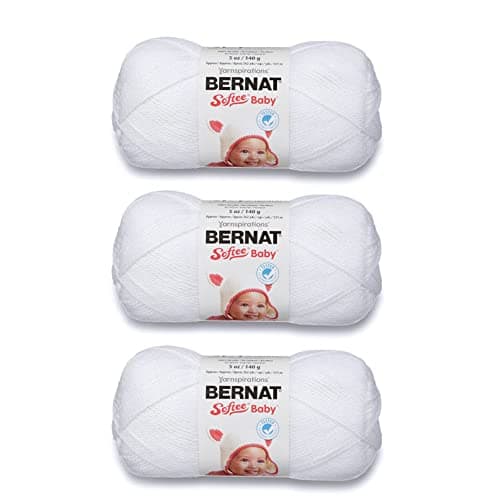
| 1 | Bernat Softee BabyDK weight, soft, machine washable and dry flat - the specification a baby garment actually needs. | The default baby garment yarn | 100% acrylic | DK (3) | $23.48 - View on Amazon#ad disclosure - price as of October 22, 2026 |
| 2 | 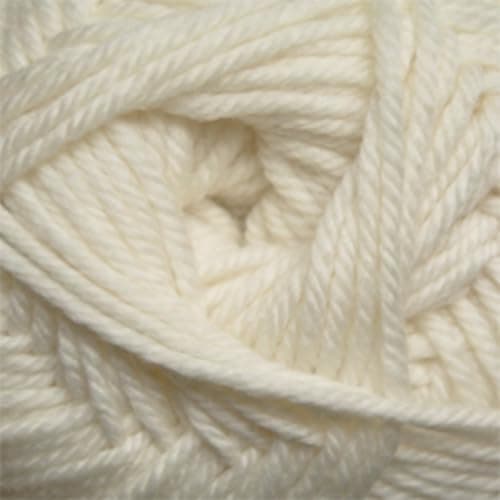 Cascade 220 Superwash MerinoMerino softness against skin, with a machine wash the recipient cannot ruin. Cascade 220 Superwash MerinoMerino softness against skin, with a machine wash the recipient cannot ruin. | A heirloom garment that still washes | Superwash merino | DK / light worsted | $19.00 - View on Amazon |
| 3 | 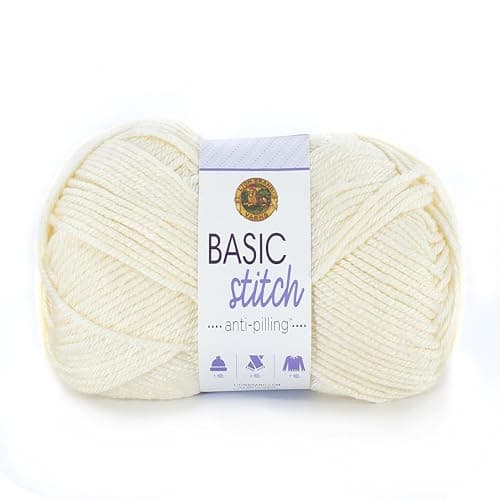 Lion Brand Basic Stitch Anti-PillingAcrylic spun against pilling, which is what a baby garment washed twice a week needs. Lion Brand Basic Stitch Anti-PillingAcrylic spun against pilling, which is what a baby garment washed twice a week needs. | Everyday wear rather than a gift | 100% acrylic | Worsted (4) | $5.99 - View on Amazon |
| 4 | 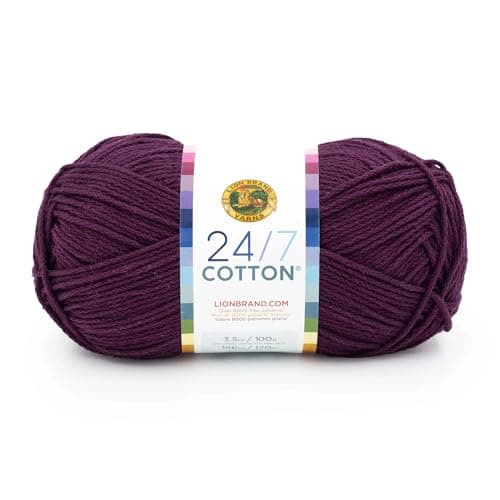 Lion Brand 24/7 CottonMercerized cotton breathes, which is the one thing acrylic cannot do. Lion Brand 24/7 CottonMercerized cotton breathes, which is the one thing acrylic cannot do. | Summer babies and hot rooms | Mercerized cotton | Worsted (4) | $6.99 - View on Amazon#ad disclosure - price as of October 22, 2026 |
| 5 | 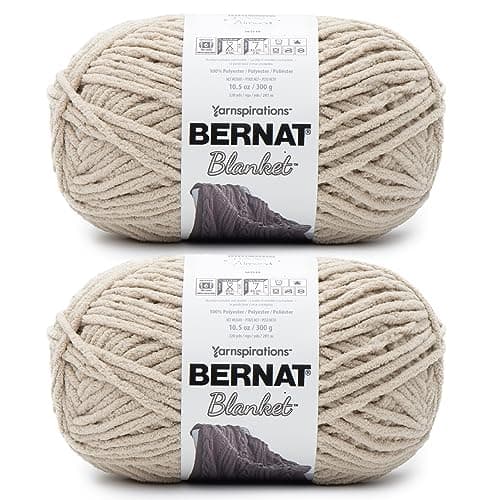 Bernat BlanketChenille sheds, and a shedding fiber near an infant's face is the one thing to avoid. Bernat BlanketChenille sheds, and a shedding fiber near an infant's face is the one thing to avoid. | Blankets, which is what the name says | Polyester chenille | Super bulky (6) | $20.96 - View on Amazon#ad disclosure - price as of October 22, 2026 |
Bernat Softee Baby
Bernat · Best for the default baby garment yarn
A DK-weight acrylic with 362 yards to the 140g ball - the practical default for anything a baby will wear and a parent will wash constantly.
- Fiber
- 100% acrylic
- Weight
- 3 DK / light
- Ball
- 5oz / 140g, 362yd / 331m (solids)
- Gauge
- 22 sts x 30 rows on 4mm (US 6)
- Hook
- 4mm (US G/6), 16 sc x 19 rows
- Care
- Machine wash cool, dry flat
Who it suits
Anyone knitting a baby cardigan or pullover as a gift, which is most baby knitting.
Why it is here
100% acrylic, DK / light weight (CYC 3), 5oz / 140g for 362yd in solids, at 22 sts x 30 rows on 4mm. DK is the traditional baby garment weight because it makes a fabric warm enough without being stiff on a small body, and 362yd per ball means one ball often finishes a newborn size.
What you give up
Acrylic does not breathe, which matters more on a baby than on an adult - babies regulate temperature poorly. Do not layer it under a synthetic outer layer.
Specifications from Yarnspirations product page. We have not handled this item - see how we pick.
Cascade 220 Superwash Merino
Cascade Yarns · Best for a heirloom garment that still washes
Machine-washable merino at 220 yards to the 100g skein - the standard answer when a sweater pattern says worsted and you want to be able to wash it.
- Fiber
- 100% superwash merino wool
- Skein
- 3.5oz / 100g, 220yd / 200m
- Gauge
- 20 sts x 28 rows in stockinette on US 7
- Weight class
- DK to light worsted
- Care
- Superwash treated - machine washable
Who it suits
Anyone who wants a wool baby garment and knows the parents will not hand wash it.
Why it is here
100% superwash merino, DK to light worsted, 220yd per 100g, 20 sts x 28 rows on US 7. Merino's fine fiber diameter is what makes it comfortable next to skin, and superwash treatment means the garment survives a machine - which for baby clothes is the difference between worn and stored.
What you give up
Considerably more expensive than acrylic, and superwash wool grows when wet - dry it flat and reshaped or the sweater gains a size.
Specifications from Cascade Yarns product page. We have not handled this item - see how we pick.
Lion Brand Basic Stitch Anti-Pilling
Lion Brand · Best for everyday wear rather than a gift
An acrylic worsted sold specifically on its pilling behavior, which is the one complaint that ends most acrylic garments.
- Fiber
- 100% acrylic
- Weight
- 4 Medium / worsted
- Skein
- 3.5oz / 100g, 185yd
- Gauge
- 18 sts x 26 rows on US 8 (5mm)
- Hook
- H-8 (5mm), 16 sc x 18 rows
- Care
- Machine wash, machine dry
Who it suits
Anyone knitting for a baby who will actually wear it daily.
Why it is here
100% acrylic, worsted weight, 185yd per 100g, machine wash and machine dry. Baby clothes are washed more often than any other garment, and pilling after twenty washes is what makes a hand knit look tired - this is spun specifically to resist that.
What you give up
Worsted is heavier than DK for a small body, so size down the pattern or accept a chunkier garment. Same breathability limitation as any acrylic.
Specifications from Lion Brand product page. We have not handled this item - see how we pick.
Lion Brand 24/7 Cotton
Lion Brand · Best for summer babies and hot rooms
Mercerized cotton with a sheen and a stiff hand. Stitch definition is the best on this page, which is why amigurumi people keep buying it.
- Fiber
- 100% mercerized cotton
- Weight
- Worsted
- Skein
- 3.5oz / 100g, 186yd / 170m
- Gauge
- 19 sts x 26 rows on 5mm (US 8)
- Hook
- 5.5mm (US I/9), 16 sc x 18 rows
- Care
- Machine wash, water not above 105F; medium heat dryer
Who it suits
Anyone knitting for a hot climate, or for a baby who overheats.
Why it is here
100% mercerized cotton, worsted weight, 186yd per 100g, machine wash with a medium dryer. Cotton moves moisture vapor away from skin, and mercerizing makes it smooth enough to sit against a baby without the slight fuzz untreated cotton has.
What you give up
Cotton has no elasticity, so the neck opening will not spring back over a head. Design around it - buttons at the shoulder, or an envelope neck.
Specifications from Lion Brand product page. We have not handled this item - see how we pick.
Bernat Blanket
Bernat · Best for blankets, which is what the name says
Polyester chenille at 108 yards to a 150g ball. Fast, warm, machine washable, and it will shed and worm if the tension is loose.
- Fiber
- 100% polyester (chenille)
- Weight
- 6 Super Bulky
- Ball
- 5.3oz / 150g, 108yd / 98m
- Gauge
- 8 sts x 13 rows on 8mm (US 11)
- Hook
- 8mm (US L/11), 7 sc x 8 rows
- Care
- Machine wash delicate, tumble dry gentle
Who it suits
Not baby garments. It is a reasonable yarn for a plain baby blanket, kept away from the face.
Why it is here
100% polyester chenille, super bulky (CYC 6), 108yd per 150g. It is soft and fast, which is exactly why it appears in baby patterns.
What you give up
Chenille is a pile construction and it sheds short fibers continuously, particularly at cut edges and seams. It is also super bulky, which makes a stiff, heavy garment on a body that weighs a few kilos.
Specifications from Yarnspirations product page. We have not handled this item - see how we pick.
Three requirements, and a blanket only has two
Baby blankets get most of the attention in baby knitting, and a sweater is a harder problem. Our baby blanket page covers softness and washability. A garment adds a third constraint.
- Next to skin, with no shirt underneath. An adult sweater is worn over something. A baby cardigan often is not, so prickle matters the way it does for a hat.
- Washed constantly, hot, by someone who will not read a label. Baby clothes are the most-laundered garments in a house.
- Nothing loose near a face. A shedding or highly fuzzy yarn sits inches from an infant's nose and mouth. This is the constraint that rules out chenille and mohair-type halos.
Weight: DK, and here is why
Baby garment patterns cluster hard around DK - category 3 in the Craft Yarn Council system - and it is not arbitrary.
| Weight | Result on a baby | Verdict |
|---|---|---|
| Fingering (1) | Fine, light, heirloom; slow to knit | Lovely; a long project |
| Sport (2) | Light and neat | Excellent, less widely stocked |
| DK (3) | Warm without stiffness; fast enough | The standard, and the right default |
| Worsted (4) | Warm and slightly stiff on a small body | Fine; size down or accept the bulk |
| Bulky and up (5+) | Stiff, heavy, restricts movement | Avoid for garments |
A newborn cardigan is roughly 300 to 400 yards of DK - often a single large ball. That is one of the genuine pleasures of baby knitting: a whole garment from one ball, finished in a week.
Yardage by size
- Newborn to 3 months: 300-400yd DK.
- 6 to 12 months: 400-550yd DK.
- 12 to 24 months: 550-700yd DK.
- 2 to 4 years: 700-900yd DK.
Buy one ball more than the arithmetic says, from the same dye lot. A baby garment that runs out four rows from the end of the second sleeve is a particular kind of misery, and dye lots are covered on our how yarn is dyed page.
Design decisions that come from the fiber
Two of them, and both catch people out.
Necks have to open. A baby's head is large relative to its body and does not enjoy having a sweater pulled over it. Buttoned shoulders, envelope necks and cardigans all solve this - and if the yarn has no elasticity, as cotton has none, they stop being optional.
Superwash grows. A superwash merino garment blocked generously will keep some of that growth, so a 6-month sweater becomes a 12-month one. Block to the pattern's measurements, not beyond, and use standard garment measurements as the target.
Safety, briefly
- No shedding fibers. Chenille and heavy-halo yarns near a face.
- Buttons sewn properly. Sew through the fabric several times and knot on the inside. A loose button is a choking hazard.
- No ties or drawstrings at the neck. A standard safety guidance point for infant clothing, and it applies to hand knits.
- Keep the ball band. The recipient needs the fiber content and the wash instructions - see yarn care symbols.
What we would buy
- The default: Bernat Softee Baby in DK.
- A natural-fiber gift: Cascade 220 Superwash Merino.
- Everyday wear: Basic Stitch Anti-Pilling.
- A hot climate: Lion Brand 24/7 Cotton.
- Not this: chenille - fine for a blanket, wrong next to a face.
Questions people actually ask
What is the best yarn for a baby sweater?
A soft DK-weight yarn that machine washes. Bernat Softee Baby is the standard; superwash merino is the natural-fiber equivalent. Both are soft enough next to skin and survive the laundry a baby garment gets.
How much yarn do I need for a baby sweater?
300 to 400 yards of DK for newborn to three months, rising to 550 to 700 yards for 12 to 24 months. Buy one ball more than the arithmetic says, in the same dye lot.
Is acrylic yarn safe for babies?
Yes, and it is the most common choice because it is soft, cheap and machine washable. Its limitation is breathability - acrylic does not move moisture away from skin, which matters more on a baby than an adult.
What yarn should you avoid for baby clothes?
Anything that sheds or has a heavy halo, because a garment sits close to an infant's face. Chenille is the common mistake - it is fine in a blanket kept away from the face and wrong in a sweater.
What weight yarn for a baby cardigan?
DK, category 3. It makes a fabric warm enough without being stiff on a small body, and almost every published baby garment pattern is written for it.