The picks
Best Mohair Yarn
Two yarns dominate this shelf and they are built the same way. The interesting decision is what you hold it with.
By Sawyer V. · Published September 12, 2026
Disclosure: we earn a commission when you buy through the links on this page, at no extra cost to you. It never decides what we recommend or how we rank it - read the full disclosure.
The short answer
Buy a mohair-silk lace yarn in a 25g ball - the two on this page are built almost identically at 70/30 and 75/25 - and plan to hold it together with a smooth DK or worsted rather than knitting it alone. Buy a lifeline's worth of waste yarn at the same time, because mohair cannot practically be ripped back.
| # | Product | Best for | Fiber | Price |
|---|---|---|---|---|
| 1 | 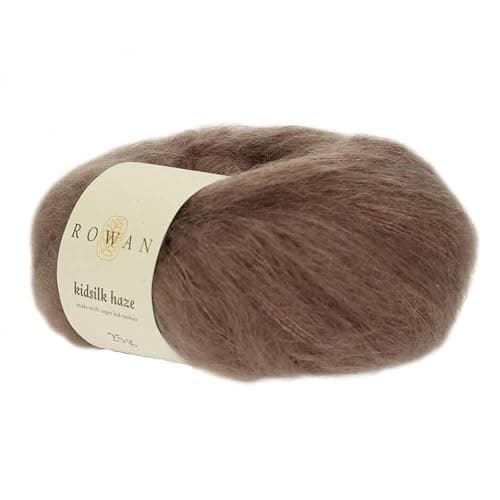 Rowan Kidsilk HazeThe mohair-silk lace yarn most published mohair patterns were written around. Rowan Kidsilk HazeThe mohair-silk lace yarn most published mohair patterns were written around. | Any pattern that says mohair | 70% mohair, 30% silk | $25.00 - View on Amazon#ad disclosure - price as of September 21, 2026 |
| 2 |  DROPS Kid-SilkThe same construction at a lower price, which matters when a garment needs several balls. DROPS Kid-SilkThe same construction at a lower price, which matters when a garment needs several balls. | Holding double across a whole sweater | 75% mohair, 25% silk | $8.75 - View on Amazon#ad disclosure - price as of September 21, 2026 |
| 3 |  Cascade 220 Superwash MerinoA smooth DK merino is what mohair is usually held against, and it is why the trick works. Cascade 220 Superwash MerinoA smooth DK merino is what mohair is usually held against, and it is why the trick works. | The other strand | Merino | $21.00 - View on Amazon#ad disclosure - price as of September 21, 2026 |
| 4 | 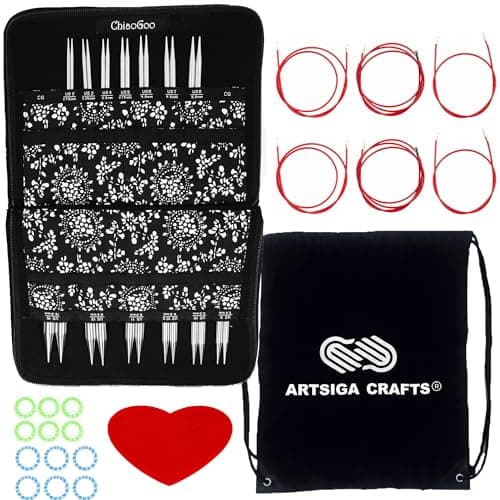 ChiaoGoo TWIST Red Lace Interchangeable Set (Complete, 5in tips)Mohair cannot be ripped back. A lifeline is the only insurance, and these place it as you knit. ChiaoGoo TWIST Red Lace Interchangeable Set (Complete, 5in tips)Mohair cannot be ripped back. A lifeline is the only insurance, and these place it as you knit. | Placing a lifeline before you need one | Needles | $216.80 - View on Amazon#ad disclosure - price as of September 21, 2026 |
| 5 | 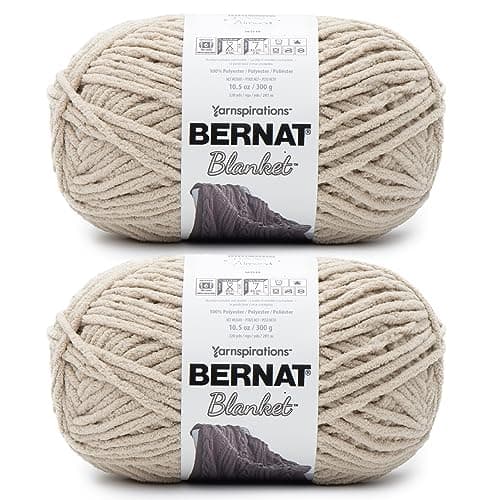 Bernat BlanketChenille is pile, not halo. It looks fluffy in a photograph and behaves nothing like mohair. Bernat BlanketChenille is pile, not halo. It looks fluffy in a photograph and behaves nothing like mohair. | Crochet blankets, where it is genuinely good | Polyester chenille | $20.96 - View on Amazon#ad disclosure - price as of September 21, 2026 |
Rowan Kidsilk Haze
Rowan · Best for any pattern that says mohair
The brushed kid mohair and silk lace yarn most mohair patterns are written for, and the reason mohair has a reputation for halo.
- Fiber
- 70% mohair, 30% silk
- Weight
- Lace
- Ball
- 25g, 210m / 229yd
- Needles
- 3.25-5mm (US 3-8)
- Tension
- 18-25 sts, 23-34 rows over 10cm
- Care
- Hand wash cold, do not bleach, dry flat in shade, do not tumble dry
Who it suits
Anyone following a pattern, and anyone who wants the widest color range on this shelf.
Why it is here
70% mohair, 30% silk at lace weight, 25g giving 210m / 229yd, with a published tension range of 18-25 stitches and 23-34 rows over 10cm on needles from 3.25mm to 5mm. That deliberately wide band is the yarn telling you it works at almost any gauge - the halo fills the gaps either way.
What you give up
It is the expensive option in a category where the alternative is built identically. Care is hand wash cold, dry flat in the shade, no tumble drying and no bleach - so anything you make from it is a hand-wash garment.
Specifications from Rowan - Kidsilk Haze. We have not handled this item - see how we pick.
DROPS Kid-Silk
DROPS / Garnstudio · Best for holding double across a whole sweater
Three quarters super kid mohair, a quarter mulberry silk - the same construction as the classic, at a noticeably lower price per ball.
- Fiber
- 75% kid mohair super, 25% silk
- Ball
- 25g, approximately 200m
- Yarn group
- A (23-26 stitches)
- Needles
- 3mm recommended
- Tension
- 24 sts x 32 rows over 10 x 10cm
- Care
- Hand wash, max 30C, dry flat
Who it suits
Anyone knitting a full garment held double, where the ball count makes price the deciding factor.
Why it is here
75% super kid mohair, 25% silk, 25g giving approximately 200m, in yarn group A at 24 stitches and 32 rows over 10 x 10cm on 3mm needles. Slightly more mohair and slightly less silk than the classic, which means marginally more halo and marginally less core strength.
What you give up
A narrower color range, and the published tension is a single figure rather than a range - so you are on your own working out what it does at 5mm. Hand wash at a maximum of 30C, dry flat.
Specifications from Garnstudio - DROPS Kid-Silk. We have not handled this item - see how we pick.
Cascade 220 Superwash Merino
Cascade Yarns · Best for the other strand
Machine-washable merino at 220 yards to the 100g skein - the standard answer when a sweater pattern says worsted and you want to be able to wash it.
- Fiber
- 100% superwash merino wool
- Skein
- 3.5oz / 100g, 220yd / 200m
- Gauge
- 20 sts x 28 rows in stockinette on US 7
- Weight class
- DK to light worsted
- Care
- Superwash treated - machine washable
Who it suits
Almost everyone buying mohair, because almost nobody knits it alone.
Why it is here
100% superwash merino, DK to light worsted, 220yd per 100g. A lace-weight mohair adds almost no thickness to it, so the gauge barely moves - what changes is halo, warmth and the optical color mix of two shades read as one.
What you give up
Superwash merino pills, and holding it with mohair does not stop that. It is also machine washable on its own and stops being so the moment you add hand-wash mohair to it.
Specifications from Cascade Yarns product page. We have not handled this item - see how we pick.
ChiaoGoo TWIST Red Lace Interchangeable Set (Complete, 5in tips)
ChiaoGoo · Best for placing a lifeline before you need one
Thirteen pairs of surgical stainless lace tips on memory-free red nylon-coated steel cables, with a lifeline hole through every tip.
- Tips
- 13 pairs, 5in (13cm), US 2-15 (2.75-10mm)
- Tip material
- Surgical-grade stainless steel, lace point
- Cables
- Multi-strand steel core, red nylon coating; 2 x 14in, 2 x 22in, 2 x 30in
- Notable
- Lifeline hole in each tip; memory-free cable
- Also included
- Stitch markers, two keys, needle gauge, stoppers, connector, case
Who it suits
Anyone knitting anything complicated in mohair - which is most mohair projects.
Why it is here
13 pairs of 5in surgical stainless lace tips covering US 2-15, on memory-free cables, with a lifeline hole drilled through every tip. Thread waste yarn through the hole, knit a round, and the lifeline is placed automatically.
What you give up
Stainless steel is slick, and mohair on slick needles slides. Many people prefer wood for mohair specifically - see [best needles for mohair](/knitting-needles/best-needles-for-mohair) for the argument both ways.
Specifications from ChiaoGoo TWIST Red Lace set specification. We have not handled this item - see how we pick.
Bernat Blanket
Bernat · Best for crochet blankets, where it is genuinely good
Polyester chenille at 108 yards to a 150g ball. Fast, warm, machine washable, and it will shed and worm if the tension is loose.
- Fiber
- 100% polyester (chenille)
- Weight
- 6 Super Bulky
- Ball
- 5.3oz / 150g, 108yd / 98m
- Gauge
- 8 sts x 13 rows on 8mm (US 11)
- Hook
- 8mm (US L/11), 7 sc x 8 rows
- Care
- Machine wash delicate, tumble dry gentle
Who it suits
Not anyone after a mohair effect. As a soft blanket yarn it is a reasonable buy.
Why it is here
100% polyester chenille, super bulky, 108yd per 150g. It is soft and it is visibly fuzzy, which is why it gets suggested as a cheap mohair substitute.
What you give up
A halo is loose fiber ends standing away from a fine core; chenille is cut pile on a thick core. The result has no drape, no lightness and no translucency, and chenille worms - loops pull out of the fabric. See [chenille yarn explained](/fiber-guide/chenille-yarn-explained).
Specifications from Yarnspirations product page. We have not handled this item - see how we pick.
Why this shelf looks so similar
Almost every mohair yarn sold for hand knitting is brushed kid mohair blended with silk, at roughly three parts mohair to one part silk, in a 25g ball of lace weight. That is not a coincidence.
Mohair has almost no elasticity and, brushed, very little structural integrity on its own. The silk is a smooth strong core for the halo to sit on. Take the silk out and you have a yarn that breaks; make the ball bigger and you have a yarn nobody can afford. The format is the format because the fiber demands it.
How much you need
| Project | Mohair | Main yarn |
|---|---|---|
| Cowl | 1 ball | 1-2 x 100g |
| Large shawl | 2-3 balls | 3-4 x 100g |
| Lightweight sweater | 4-6 balls | 5-7 x 100g |
| Mohair alone, open shawl | 3-4 balls | - |
Those are starting points, not a substitute for the arithmetic - work out the yardage properly with how much yarn do I need, because held-double projects consume both yarns at the same rate and people routinely under-buy the mohair.
Choosing the partner yarn
- Smooth DK merino is the default. It has memory, which mohair does not, and it gives the fabric structure.
- Worsted wool makes a heavier, warmer fabric - good for outerwear, too warm for a top.
- A second strand of mohair doubles the halo and keeps the weightlessness. Beautiful, and structurally very soft.
- Not cotton or bamboo. Neither has memory either, and two inelastic yarns together make a fabric with nothing holding it up.
- Not superwash on its own if you want washability - the mohair's hand-wash care label wins.
The color trick
Holding two different colors together is the single best reason to use mohair, and it is underused.
Because the mohair sits as a haze over the main yarn rather than as a ply within it, the eye reads the two shades as one blended color with depth - a gray merino under a rust mohair produces something neither yarn contains. It is the closest thing hand knitting has to a glaze.
Swatch it. Two colors that look beautiful side by side in the ball can read as mud once combined, and the only way to know is to knit a few inches. Best yarn for colorwork covers the stranded alternative.
What to make, and what not to
- Shawls and wraps. The obvious one, and the best one - see best yarn for a shawl.
- Lightweight sweaters, held double. Warmth with no weight on the shoulders.
- Cowls. One ball, fast, and the halo is nice at the neck.
- Not socks. No elasticity, and it felts underfoot.
- Not baby items. Loose fibers near a face are a bad idea.
- Not anything with cables. The halo erases them entirely.
Before you cast on
- Place a lifeline every few rows on anything with shaping or lace.
- Count obsessively. Finding a mistake ten rows later is a real problem here.
- Wash your swatch. Mohair blooms, so the unwashed swatch is not the fabric.
- Keep it away from moths. Mohair is a protein fiber - see best yarn storage solutions.
The fiber itself, including why it cannot be unpicked, is in mohair yarn explained.
What we would buy
- Following a pattern: 70/30 mohair silk.
- A whole sweater held double: 75/25 mohair silk, on ball count.
- The other strand: smooth DK merino.
- Insurance: needles with a lifeline hole.
- Not a mohair substitute: chenille.
Questions people actually ask
What is the best mohair yarn?
A brushed kid mohair and silk lace yarn in a 25g ball - the category is dominated by two yarns built almost identically at 70/30 and 75/25. Choose the classic if you are following a pattern and want the color range; choose the value option if a whole garment needs several balls.
Do you knit mohair by itself?
Sometimes, for very open shawls. Most mohair is held together with a smooth DK or worsted as one strand, which adds halo, warmth and color depth while barely changing the gauge.
How many balls of mohair do I need?
Roughly one for a cowl, two to three for a large shawl and four to six for a lightweight sweater held double - but work the yardage out properly, because held-double projects consume both yarns at the same rate and mohair is the one people under-buy.
Why is mohair sold in 25g balls?
It is a lace weight, so 25g still gives roughly 200 to 210 meters - more length than a 100g ball of worsted. The small put-up keeps the price of a ball reasonable for a fiber that is expensive by weight.
Can I use chenille instead of mohair?
No. A halo is loose fiber ends standing away from a fine core; chenille is cut pile on a thick core. Chenille has no drape, no translucency and no lightness, and it worms - loops work out of the fabric.