Guide
Alpaca Yarn Pros and Cons
Warmer than wool for its weight, with almost no springback. Both matter.
By Sawyer V. · Published September 4, 2026
Disclosure: we earn a commission when you buy through the links on this page, at no extra cost to you. It never decides what we recommend or how we rank it - read the full disclosure.
The short answer
Alpaca is warmer per gram than wool, softer at comparable grades, and drapes beautifully. It also has almost no memory, so anything ribbed or fitted grows and stays grown, and it blurs stitch definition so cables and texture disappear. Use it for shawls, wraps, scarves and loose cardigans. Do not use it for socks, fitted sweaters or anything cabled.
Alpaca gets sold on warmth and softness, which are both true, and the case against it is rarely made at the same counter. Here is the whole ledger.
The pros
Warmth per gram is the best of the common fibers
Alpaca has a higher warmth-to-weight ratio than wool. Suppliers attribute this to air trapped in a partly hollow fiber, and whatever the exact mechanism, the practical effect is consistent: an alpaca garment is lighter than a wool one for the same warmth. For anyone who finds wool sweaters heavy, that is the real selling point.
Softness without needing the finest grade
Alpaca scales lie flatter against the fiber shaft than wool scales, which produces a smoother, more slippery handle. Baby alpaca at roughly 18 to 22 microns sits well under the roughly 30-micron threshold at which fiber ends start registering as prickle, so it is comfortable next to skin.
Drape
Alpaca fabric hangs and flows. In a shawl, a wrap or a loose cardigan that is exactly what you want, and it is something wool has to be persuaded into.
No lanolin
Alpaca fleece does not contain lanolin, which means less processing and often a better experience for people who find wool uncomfortable. Note the marketing term 'hypoallergenic' overstates this - true wool allergy is rare, and most reported wool sensitivity is mechanical prickle rather than an immune response.
The cons
Almost no memory - this is the big one
Alpaca has very little crimp, so it does not spring back. Fabric grows under its own weight and stays grown. Ribbing does not grip. A pure alpaca sweater knitted to a wool pattern will lengthen in the body and sleeves within a few wearings, and a pure alpaca hat brim will not stay on your head.
This is not a quality problem. It is the fiber, and it is entirely predictable if you know to look for it.
Poor stitch definition
The soft, slightly hazy surface that makes alpaca beautiful in a plain fabric is the same property that swallows texture. Cables lose their relief, bobbles look soft, and a complicated stitch pattern becomes a suggestion of one. If the pattern's whole appeal is its texture, alpaca is the wrong yarn.
It grows a halo
Alpaca fabric develops a fuzz over time as fiber ends work loose. Many people like it; it also means the fabric you finish is not the fabric you will have in a year, and detail gets softer with wear.
Warm to the point of impracticality
The warmth advantage cuts both ways. A heavy alpaca sweater can be genuinely too warm for indoor wear or for a mild climate. This gets reported often enough by knitters that it is worth planning for - go lighter than you would in wool.
Care and cost
Alpaca is usually hand wash and dry flat, and it is expensive relative to wool. Wet alpaca is heavy and stretches badly, so it needs supporting when you lift it and laying flat without stretching to dry.
Projects it suits
| Project | Verdict | Why |
|---|---|---|
| Shawl or wrap | Excellent | Drape is the design goal and growth does not matter |
| Scarf or cowl | Excellent | Warmth per gram, no shaping to lose |
| Loose cardigan | Good | Drape flatters it; avoid ribbed cuffs in pure alpaca |
| Blanket | Good but expensive | Warm and light; the yardage cost is real |
| Fitted sweater | Poor in pure alpaca | It will grow; knit a blend instead |
| Cabled anything | Poor | Stitch definition disappears |
| Socks | Poor | No recovery, and socks need it |
| Winter hat | Poor in pure alpaca | The brim will not grip; blend it |
The blend recommendation
If you like alpaca and want to knit garments rather than wraps, buy a blend. Alpaca blended with merino keeps most of the warmth and softness and borrows enough springback to survive a ribbed cuff. Alpaca with a little nylon does the same for durability. Blends are usually cheaper than either pure fiber, and for a fitted garment they are simply the better yarn.
For the head-to-head against the fiber it is most often compared with, see alpaca vs merino. If softness against skin is the whole reason you are looking at alpaca, best non-itchy yarn for sweaters covers the cheaper routes to the same outcome, and the fiber comparison table puts alpaca alongside everything else.
One practical note on buying: much of the good alpaca in this category comes from small mills and independent dyers rather than the mass market, so availability where you normally shop may be limited. That is a real constraint on what we can recommend, and we would rather say so than pretend otherwise.
The blend partner we can actually point at
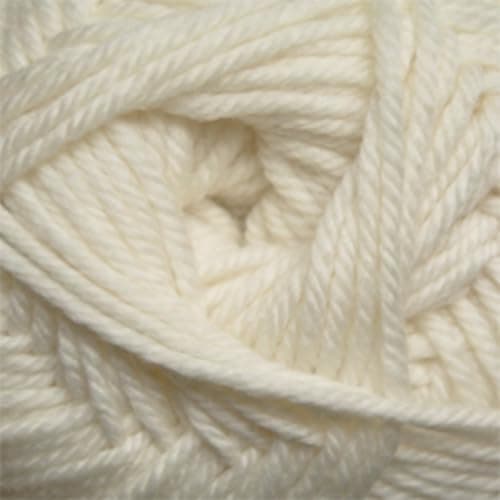
Cascade 220 Superwash Merino
Alpaca-merino is the blend this page recommends for garments. This is the merino half - the alpaca itself is mostly small-mill and independent-dyer stock we cannot link to reliably, which is the constraint the page states above.
$19.00 - View on Amazon$21.0010% off · #ad disclosure - price as of October 20, 2026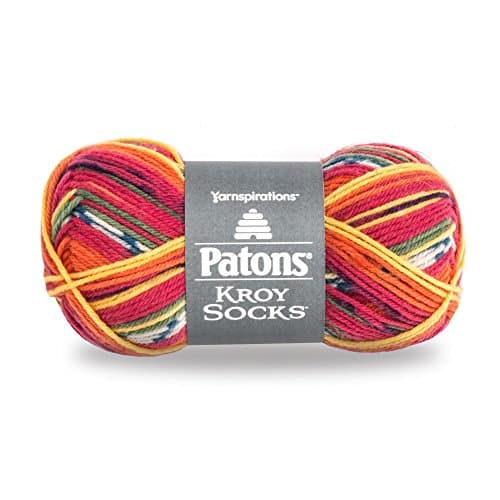
Patons Kroy Socks
The other blend logic in miniature: 75% wool, 25% nylon, where a minority fiber is added purely for durability.
$9.99 - View on Amazon#ad disclosure - price as of October 20, 2026
Questions people actually ask
Is alpaca yarn good for beginners?
Not as a first yarn. It is expensive, it has no springback to forgive uneven tension, and it blurs stitch definition so mistakes are harder to spot. Learn on a smooth worsted wool or acrylic and come to alpaca once your tension is even.
Does alpaca yarn stretch out?
Yes. It has very little crimp and therefore very little memory, so fabric grows under its own weight and does not recover. Plan for it, or knit a blend.
Is alpaca warmer than wool?
Per gram, yes. Alpaca has a higher warmth-to-weight ratio, so an alpaca garment can be lighter than a wool one for the same warmth - which is often the main reason to choose it.
Can you machine wash alpaca?
Usually not. Most alpaca yarn is hand wash and dry flat unless it has been superwash treated, and the label will say. Wet alpaca is heavy and stretches, so support it when you lift it.
Why does my alpaca sweater feel too warm?
Because it probably is. Alpaca's warmth-to-weight advantage means a sweater knitted at wool weights can be too warm for indoor wear. Go lighter than you would in wool for anything you plan to wear inside.