Head to head
Wool vs Cotton Yarn
Same gauge on the band, opposite fabric in the hand. The difference is elasticity, and it decides almost everything.
By Sawyer V. · Published September 24, 2026
Disclosure: we earn a commission when you buy through the links on this page, at no extra cost to you. It never decides what we recommend or how we rank it - read the full disclosure.
The short answer
Wool stretches and springs back; cotton does not. That single difference decides the rest. Wool makes garments that hold their shape, insulates when damp and is usually hand wash. Cotton makes fabric that drapes and grows, absorbs water, washes hot and is cool to wear. Use wool for sweaters, hats and socks; use cotton for dishcloths, summer tops, baskets and anything that will be washed hard.
The one comparison that makes the point
Patons Classic Wool Worsted and Lily Sugar'n Cream both publish the same knitted gauge: 20 stitches and 26 rows over 4 inches on a 4.5mm needle. By the standard weight system they are the same yarn. In the hand they could not be less alike.
| Patons Classic Wool | Lily Sugar'n Cream | |
|---|---|---|
| Fiber | 100% wool, not superwash | 100% cotton, unmercerized |
| Gauge, 4in | 20 sts x 26 rows | 20 sts x 26 rows |
| Needle | 4.5mm (US 7) | 4.5mm (US 7) |
| Ball | 100g, 194yd | 71g, 120yd |
| Yards per 100g | 194 | 169 |
| Care | Hand wash, lay flat | Machine wash to 86F, tumble dry low |
The yardage line is the one people miss. Cotton gives about 13 percent fewer yards for the same weight, because the fiber is denser and has no loft. A cotton project therefore weighs noticeably more than the same project in wool - which is why a cotton sweater hangs off the shoulders and a cotton blanket is heavy to lift.
Elasticity, and everything that follows from it
Wool fibers are crimped and behave like tiny springs. Cotton fibers are straight and behave like string. Almost every practical difference below comes from that.
| Wool | Cotton | |
|---|---|---|
| Stretch and recovery | Stretches, springs back | Stretches, stays stretched |
| Ribbing | Pulls in and grips | Does not grip |
| Gauge forgiveness | Uneven stitches even out | Every uneven stitch shows |
| Weight of fabric | Light for its bulk | Heavy for its bulk |
| Warmth | Insulates, even when damp | Cool, conducts heat away |
| Absorbency | Holds water without feeling wet | Soaks and feels wet |
| Blocking | Can be reshaped permanently | Only flattens; shape does not set |
| On the hands | Grippy, easy to control | Slick, harder on the hands |
Which to use, by project
| Project | Better fiber | Why |
|---|---|---|
| Sweaters and cardigans | Wool | Shape memory; a cotton sweater grows and stays grown |
| Hats | Wool | Ribbing needs to grip |
| Socks | Wool with nylon | Elasticity and moisture handling |
| Dishcloths | Cotton | Absorbent, scrubs, washes hot |
| Summer tops | Cotton | Cool against the skin and drapes |
| Baby blankets | Either | Cotton washes hotter; wool is lighter and warmer |
| Market bags | Cotton | Strong, and stretch is a fault here |
| Baskets | Cotton | Stiffness holds the shape |
| Colorwork | Wool | Blocking evens out the floats |
| Potholders | Cotton | It chars rather than melting - see the safety note below |
For anything going near heat, cotton is not a preference but a requirement: best yarn for potholders and trivets covers why.
Care, honestly
- Untreated wool felts if agitated in warm water. Patons Classic Wool is explicitly hand wash, lay flat to dry.
- Superwash wool machine washes, which is the whole point of it - Cascade 220 Superwash Merino is treated for exactly that.
- Cotton washes hot and hard, though Sugar'n Cream still specifies a delicate cycle under 86F to limit shrinkage.
- Cotton takes far longer to dry, because it holds so much water. A cotton blanket laid flat is a multi-day job.
- Neither likes a hot dryer. Wool felts; cotton shrinks.
Does wool yarn shrink and yarn care symbols cover the label side.
Mercerized cotton is a different animal
Not all cotton behaves the same. Mercerizing treats the fiber under tension, which gives it a sheen and makes it stronger and stiffer. Lion Brand 24/7 Cotton is mercerized; Sugar'n Cream is not.
- Mercerized: shiny, strong, excellent stitch definition, stiffer hand. Better for amigurumi, bags and anything structural.
- Unmercerized: matte, softer, more absorbent. Better for dishcloths, washcloths and anything against skin.
- Both are still inelastic. Mercerizing does not add stretch.
What about the middle ground
Cotton and wool are rarely blended with each other, because the two take dye differently and shrink differently. The usual middle ground is a blend of one of them with something else - cotton with bamboo or acrylic for drape, wool with nylon for durability.
See cotton yarn pros and cons, wool acrylic blends and what nylon does in yarn.
One of each, at the same published gauge
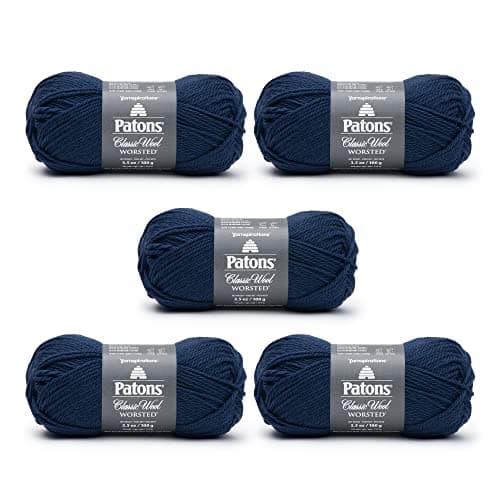
Patons Classic Wool Worsted
100% non-superwash wool, worsted, 194yd per 100g, 20 sts x 26 rows on 4.5mm (US 7). Hand wash only - it will felt in a machine.
$43.56 - View on Amazon$47.228% off · #ad disclosure - price as of September 24, 2026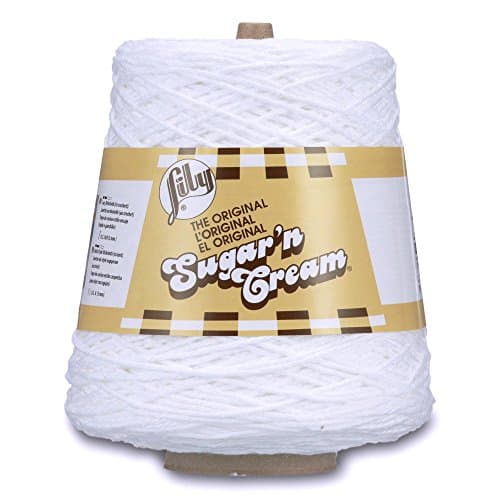
Lily Sugar'n Cream
100% unmercerized cotton, worsted, 120yd per 71g, 20 sts x 26 rows on 4.5mm (US 7). The same gauge as the wool above, on the same needle.
$18.93 - View on Amazon#ad disclosure - price as of September 24, 2026
Cascade 220 Superwash Merino
Wool that does machine wash: 100% superwash merino, 220yd per 100g, 20 sts x 28 rows on US 7.
$21.00 - View on Amazon#ad disclosure - price as of September 24, 2026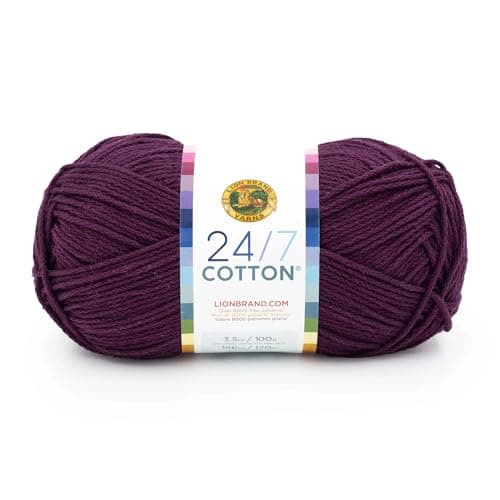
Lion Brand 24/7 Cotton
Mercerized cotton with a sheen and much better stitch definition: 186yd per 100g, 19 sts x 26 rows on 5mm.
$6.99 - View on Amazon#ad disclosure - price as of September 24, 2026
Questions people actually ask
Is wool or cotton better for a sweater?
Wool, in almost every case. Wool has elasticity, so the garment springs back into shape; cotton has none, so a cotton sweater stretches under its own weight and stays stretched.
Is cotton yarn harder to knit with than wool?
Yes, for most people. Cotton is slick and inelastic, so it is harder on the hands and shows every irregularity in tension. Wool's give hides small inconsistencies and blocking evens out the rest.
Does cotton yarn shrink?
It can, which is why manufacturers specify cool washes - Lily Sugar'n Cream publishes a delicate cycle not above 86F. Wool does not so much shrink as felt, which is a different and permanent problem.
Which is warmer, wool or cotton?
Wool, by a wide margin, and it keeps insulating when damp. Cotton conducts heat away from the body and feels cold once wet, which is exactly why it is the summer fiber.
Is cotton yarn heavier than wool?
Yes. At the same weight, cotton gives fewer yards - about 13 percent fewer in the two worsted yarns compared on this page - so the same project in cotton comes out heavier.