Guide
What Nylon Does in Yarn
The 25 percent in your sock yarn is doing a specific job, and it is not making it cheaper.
By Sawyer V. · Published September 6, 2026
Disclosure: we earn a commission when you buy through the links on this page, at no extra cost to you. It never decides what we recommend or how we rank it - read the full disclosure.
The short answer
Nylon is added to wool for abrasion resistance. The standard ratio is 75 percent wool to 25 percent nylon, and it exists because a sock heel is the one place hand-knitted fabric gets destroyed by friction rather than by washing. It is not a filler and it does not make the yarn cheaper.
The one job nylon is doing
Nylon is a synthetic polyamide with very high abrasion resistance and high tensile strength. Blended into a wool yarn it does not change the warmth much, the drape much, or the color much. It changes how long the fabric survives being rubbed.
That matters in exactly one situation: a sock heel inside a shoe, taking friction on every step. It matters secondarily at mitten fingertips, glove palms and elbows - the same friction points, less severely.
Why 75/25
The proportion is a convention rather than a physical constant, and it sits where it does because of a trade-off.
| Ratio | Effect | Where you see it |
|---|---|---|
| 100% wool | Warmest, softest, wears fastest at friction points | Sweaters, hats, shawls |
| 90/10 | Slight durability gain; feels like pure wool | Premium sock yarns |
| 75/25 | Substantial durability gain; still feels like wool | The standard sock yarn ratio |
| 50/50 | Very durable; noticeably less warm and less springy | Hard-wearing work socks |
| Reinforcing thread | Nylon only at heel and toe | Sold separately, added by the knitter |
Past about 25 percent, nylon starts costing you the properties you wanted the wool for - warmth when damp, springiness, and the ability to block. Below about 10 percent it is not doing enough to justify the change.
What it costs you
Three things, and it is worth being clear about them because sock yarn gets recommended for projects it does not suit.
- Less warm when wet. Nylon is hydrophobic. A 75/25 yarn holds less moisture vapor than pure wool, so the insulating-when-damp advantage is reduced.
- Less springy. Wool's crimp is what makes ribbing grip. Diluting it with a smooth synthetic reduces stretch recovery slightly - which is why sock cuffs are usually worked with extra ribbing rather than relying on the fiber.
- Crisper hand. Sock yarn is spun hard as well as blended, so the fabric is firm rather than fluid. Excellent in a sock, less good in a shawl - see best yarn for a shawl.
When to buy nylon-blend, and when not to
| Project | Nylon? | Why |
|---|---|---|
| Socks | Yes - 75/25 | The heel is the whole reason the blend exists |
| Gloves and mitten fingertips | Yes | Same friction problem, smaller area |
| Children's sweaters | Helpful | Elbows and cuffs take real abuse |
| Adult sweaters | Not needed | Nothing rubs; you lose warmth for nothing |
| Shawls | No | You want drape and bloom, not a crisp hand |
| Blankets | No | No friction; nylon adds cost and nothing else |
| Hats | No | See best yarn for a hat |
The alternative: reinforcing thread
There is a second way to solve the same problem, and it is worth knowing because it lets you use a yarn you love in a sock.
Reinforcing thread is a fine nylon strand sold on its own. You hold it together with your main yarn for the heel flap and the toe only, which puts the durability exactly where the wear is and leaves the rest of the sock pure wool. It is the traditional solution, and it predates blended sock yarn.
Nylon in yarns that are not sock yarn
You will see small nylon percentages in two other places.
- Novelty and eyelash yarns, where nylon carries the structure of a yarn that is mostly decoration.
- Amigurumi yarns, where a cotton-nylon blend is used because nylon resists the fraying that tight amigurumi stitches cause - see best yarn for amigurumi.
In both cases the reasoning is the same as in socks: nylon is a durability additive, not a bulk one.
Care
A wool-nylon blend follows the wool half of its content, not the nylon half. Patons Kroy Socks specifies machine wash cool and dry flat, and that is typical - the superwash treatment on the wool is what makes it machine washable, not the nylon.
One thing nylon does add: it cannot be felted. A high-nylon yarn will not full properly, so it is the wrong choice for deliberately felted mittens or slippers.
With nylon, and without
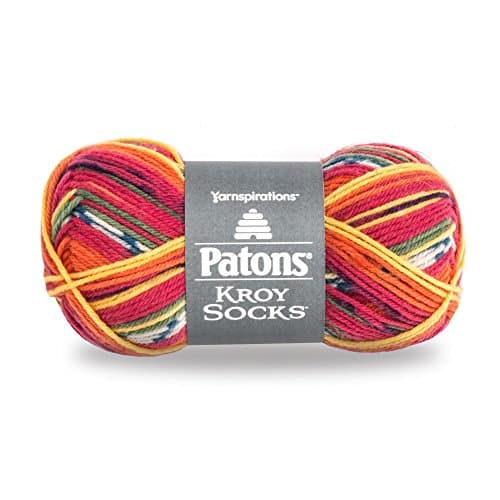
Patons Kroy Socks
75% washable wool, 25% nylon, fingering weight - the standard ratio this whole page is about.
$9.99 - View on Amazon#ad disclosure - price as of October 21, 2026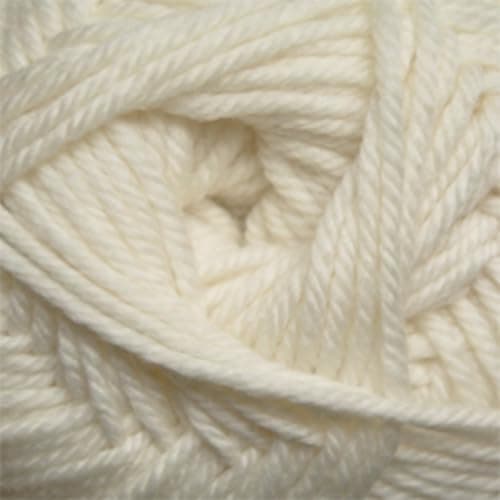
Cascade 220 Superwash Merino
Superwash merino with no nylon: softer next to skin, and it will wear through at a heel sooner.
$19.00 - View on Amazon$21.0010% off · #ad disclosure - price as of October 21, 2026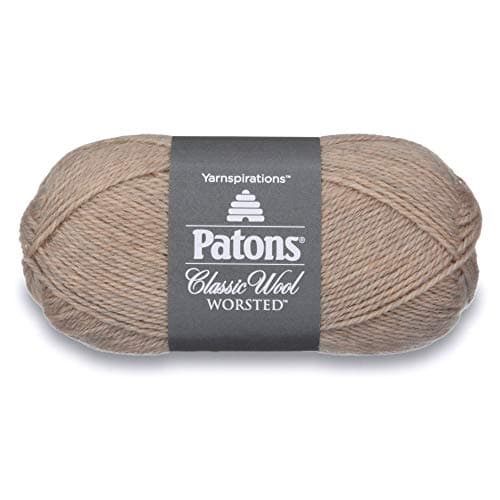
Patons Classic Wool Worsted
Untreated wool, no nylon, no superwash - the baseline the other two are modifications of.
$11.79 - View on Amazon#ad disclosure - price as of October 21, 2026
Questions people actually ask
Why is there nylon in sock yarn?
For abrasion resistance. A sock heel takes friction on every step, and nylon has far higher abrasion resistance than wool. The standard ratio is 75 percent wool to 25 percent nylon.
Is nylon in yarn a cheap filler?
No. Nylon-reinforced sock yarn is generally priced at or above the equivalent pure wool, because a blend is harder to spin evenly than a single fiber.
Can you knit socks without nylon?
Yes, and they wear through at the heel sooner. The traditional alternative is reinforcing thread - a fine nylon strand held with your main yarn for the heel and toe only.
Does nylon make yarn less warm?
Slightly. Nylon is hydrophobic, so a 75/25 blend holds less moisture vapor than pure wool and loses some of wool's warm-when-damp advantage. At 25 percent the difference is small.
Can you felt wool-nylon yarn?
Not properly. Nylon does not felt, so a blend will not full into a dense fabric. For deliberately felted mittens or slippers, use untreated wool with no nylon.