The picks
Best Yarn for Mittens and Gloves
Mittens get wet. Whether they still work when they are is a fiber question, not a pattern question.
By Sawyer V. · Published September 4, 2026
Disclosure: we earn a commission when you buy through the links on this page, at no extra cost to you. It never decides what we recommend or how we rank it - read the full disclosure.
The short answer
Untreated wool is the right answer for mittens that will meet snow: it keeps insulating when damp, which acrylic does not. If the pair will be machine washed - a child's mittens, or a gift - use superwash merino. A wool-acrylic blend is the sensible compromise for making several pairs cheaply.
| # | Product | Best for | Fiber | Weight | Price |
|---|---|---|---|---|---|
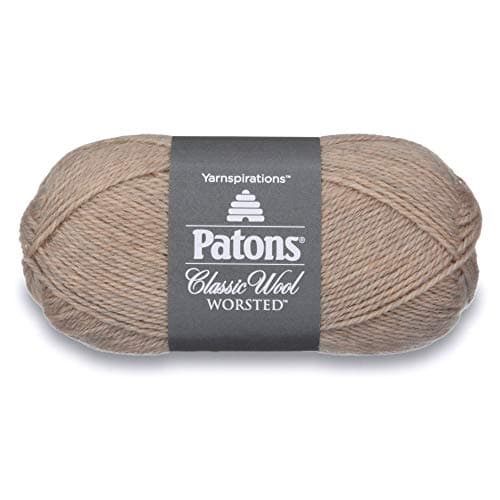
| 1 | Patons Classic Wool WorstedUntreated wool keeps insulating when it is wet. Almost nothing else here does. | Real winter, real snow | 100% wool | Worsted (4) | $11.79 - View on Amazon#ad disclosure - price as of October 20, 2026 |
| 2 | 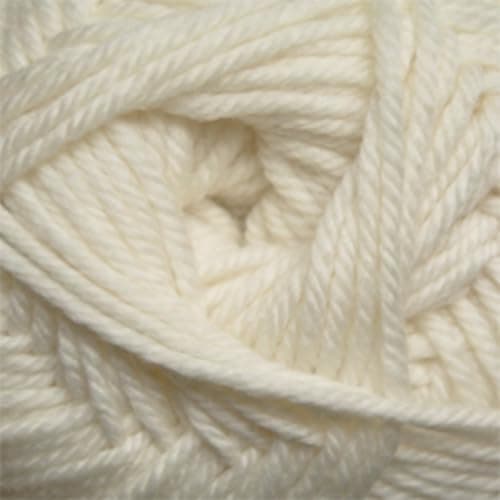 Cascade 220 Superwash MerinoWool warmth without the felting risk, and soft enough for children. Cascade 220 Superwash MerinoWool warmth without the felting risk, and soft enough for children. | Mittens that will be washed carelessly | Superwash merino | DK / light worsted | $19.00 - View on Amazon |
| 3 | 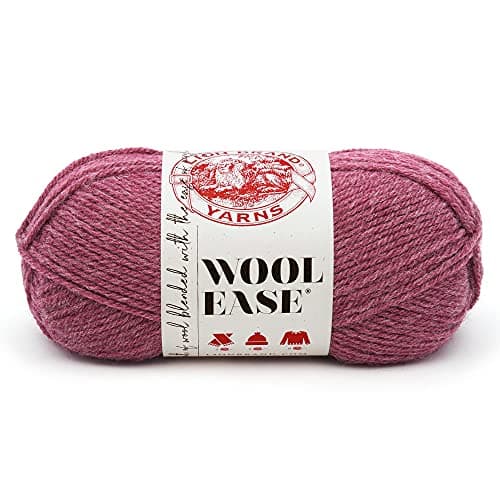 Lion Brand Wool-EaseEnough wool to stay warm damp, enough acrylic to survive being a child's mitten. Lion Brand Wool-EaseEnough wool to stay warm damp, enough acrylic to survive being a child's mitten. | Several pairs, cheaply | 80/20 acrylic-wool | Worsted (4) | $11.77 - View on Amazon#ad disclosure - price as of October 20, 2026 |
| 4 | 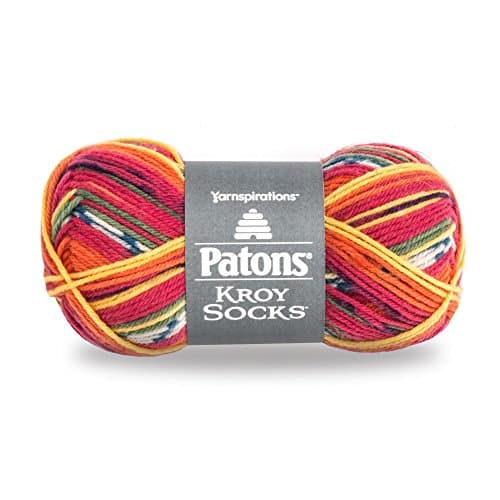 Patons Kroy SocksFingering weight with nylon for abrasion - built for exactly this kind of wear. Patons Kroy SocksFingering weight with nylon for abrasion - built for exactly this kind of wear. | Fingered gloves and anything worn inside another mitten | 75/25 wool-nylon | Fingering (1) | $9.99 - View on Amazon#ad disclosure - price as of October 20, 2026 |
| 5 | 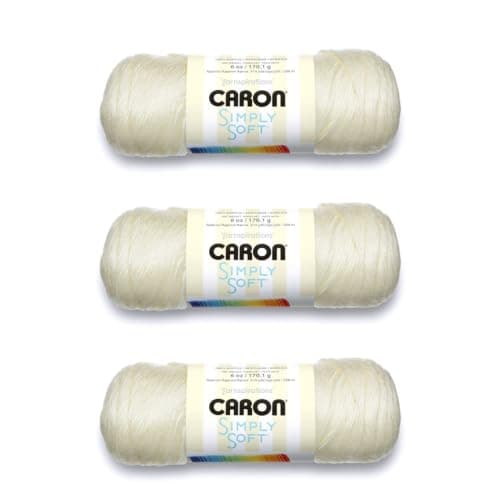 Caron Simply SoftSoft, cheap, and cold the moment it gets wet. Caron Simply SoftSoft, cheap, and cold the moment it gets wet. | Blankets and wraps, where softness is the point | 100% acrylic | Worsted (4) | $14.55 - View on Amazon |
Patons Classic Wool Worsted
Patons · Best for real winter, real snow
100% non-superwash wool at supermarket money. It blooms when blocked, holds a cable, and it will felt if you put it in the machine.
- Fiber
- 100% wool (not superwash)
- Weight
- 4 Medium / worsted
- Ball
- 3.5oz / 100g, 194yd / 177m
- Gauge
- 20 sts x 26 rows on 4.5mm (US 7)
- Hook
- 5mm (US H/8), 14 sc x 17 rows
- Care
- Hand wash, lay flat to dry, do not machine wash
Who it suits
Anyone whose mittens will meet snow, which is most people who need mittens.
Why it is here
100% wool, worsted weight, 194yd per 100g. Wool is hygroscopic - it takes up moisture vapor into the fiber while the outer scales shed liquid water - and its crimp keeps trapping air even when the surface is damp. It is also the only fiber here that can be felted deliberately for a wind-resistant mitten.
What you give up
Hand wash only, and it will felt in a machine - which is a genuine risk for a garment that gets dropped in snow and thrown in the wash.
Specifications from Yarnspirations product page. We have not handled this item - see how we pick.
Cascade 220 Superwash Merino
Cascade Yarns · Best for mittens that will be washed carelessly
Machine-washable merino at 220 yards to the 100g skein - the standard answer when a sweater pattern says worsted and you want to be able to wash it.
- Fiber
- 100% superwash merino wool
- Skein
- 3.5oz / 100g, 220yd / 200m
- Gauge
- 20 sts x 28 rows in stockinette on US 7
- Weight class
- DK to light worsted
- Care
- Superwash treated - machine washable
Who it suits
Anyone knitting mittens for a child, or for an adult who will not read a care label.
Why it is here
100% superwash merino, DK to light worsted, 220yd per 100g. Superwash treatment stops the scales interlocking, so a machine wash does not felt the fabric - which for mittens is the failure mode that ends most hand-knit pairs.
What you give up
Superwash wool wears faster at the fingertips than untreated wool, and treated merino is not the most abrasion-resistant fiber you could pick for a thumb.
Specifications from Cascade Yarns product page. We have not handled this item - see how we pick.
Lion Brand Wool-Ease
Lion Brand · Best for several pairs, cheaply
An 80/20 acrylic-wool worsted that machine washes and dries, and is the single most sensible first step away from all-acrylic.
- Fiber
- 80% acrylic, 20% wool (solids, heathers, twists)
- Weight
- 4 Medium / worsted
- Skein
- 3oz / 85g, 197yd / 180m
- Sold as
- Single skein on the listing we link
- Gauge
- 18 sts x 24 rows on US 8 (5mm)
- Hook
- J-10 (6mm), 13.2 sc x 16 rows
- Care
- Machine wash, water not above 105F; machine dry
Who it suits
Anyone making mittens in quantity, especially for children who lose them.
Why it is here
80% acrylic, 20% wool, worsted weight, 197yd per 85g. Acrylic contributes abrasion resistance and machine washability; the wool contributes enough moisture management to matter. It is the standard family mitten yarn.
What you give up
At 20% wool it goes cold when properly soaked, unlike an all-wool mitten. Fine for a school run, less good for a day in deep snow.
Specifications from Lion Brand product page. We have not handled this item - see how we pick.
Patons Kroy Socks
Patons · Best for fingered gloves and anything worn inside another mitten
75/25 washable wool and nylon at fingering weight - the standard sock construction, at the cheapest price it comes in.
- Fiber
- 75% washable wool, 25% nylon
- Weight
- 1 Super Fine / fingering
- Ball
- 1.8oz / 50g, 166yd / 152m
- Gauge
- 32 sts x 40 rows on 2.75mm (US 2)
- Hook
- 3.25mm (US D/3), 22 sc x 24 rows
- Care
- Machine wash cool, dry flat
Who it suits
Anyone knitting gloves with individual fingers, or a thin liner to wear under a mitten.
Why it is here
75% wool, 25% nylon, fingering weight, 166yd per 50g. Nylon is there for abrasion resistance, which is why it is in sock yarn - and glove fingertips wear out exactly the way sock heels do.
What you give up
Fingering weight makes a thin fabric. A glove in it is dexterous and not especially warm on its own.
Specifications from Yarnspirations product page. We have not handled this item - see how we pick.
Caron Simply Soft
Caron · Best for blankets and wraps, where softness is the point
A softer, shinier acrylic worsted with noticeable drape - which is exactly why it is a poor choice for anything that needs to hold a shape.
- Fiber
- 100% acrylic
- Weight
- 4 Medium / worsted
- Skein
- 6oz / 170g, 315yd / 288m
- Gauge
- 18 sts x 24 rows on 5mm (US 8)
- Hook
- 5mm (US H/8), 13 sc x 14 rows
- Care
- Machine wash cool, dry flat, no bleach
Who it suits
Not mitten knitters. It is a good blanket yarn and a poor outdoor one.
Why it is here
100% acrylic, worsted weight, 315yd per 170g. It is genuinely soft and drapes well, which is why people reach for it.
What you give up
Acrylic does not absorb moisture, so wet acrylic holds water against your skin and conducts heat away. A wet acrylic mitten is colder than no mitten, which is the one failure mode that actually matters here.
Specifications from Yarnspirations product page. We have not handled this item - see how we pick.
The property that matters is warmth when wet
Mittens are the one garment most people knit that is expected to work in bad conditions. A scarf gets damp; mittens get pushed into snow.
Wool is hygroscopic: it takes moisture vapor into the fiber while its outer cuticle scales shed liquid water, and its crimp keeps trapping air regardless. The Woolmark Company describes exactly that structure - overlapping hydrophobic scales over a fiber that absorbs and retains moisture vapor. So a damp wool mitten is still an insulating mitten.
Acrylic does the opposite. It is hydrophobic, so water sits on the surface and in the gaps between stitches, in direct contact with your skin, conducting heat away. That is why our skip verdict here is a yarn we recommend elsewhere: it is the wrong fiber for this specific job.
Abrasion, which mittens get more of than socks
Think about what a mitten does: it grips sled ropes, scrapes car windscreens, gets pulled off with teeth and dragged out of pockets. The thumb and fingertips take constant friction.
| Fiber | Abrasion resistance | Note |
|---|---|---|
| Wool with nylon | Highest | Nylon is added to sock yarn for exactly this reason |
| Untreated wool | High | Can be felted deliberately for a denser, tougher fabric |
| Acrylic | High | Durable, but fails on warmth when wet |
| Superwash wool | Moderate | Treatment removes some surface resilience |
| Alpaca | Low | Warm and beautiful; wears through at the fingertips |
| Cotton | Moderate | Not warm; absorbs water and stays cold |
If you knit one pair to last, a wool with nylon in it, or a felted all-wool pair, is the durable answer. The same logic drives our best yarn for socks picks.
Felting on purpose
This only works with untreated wool. Superwash has been processed specifically to prevent it, which is the whole point of superwash - see superwash vs non-superwash.
It is also irreversible and hard to control. Felt in stages, checking the size, and expect to lose 20 to 30 percent of the dimensions.
Yardage and gauge
Mittens are small, which makes them a good use for a single leftover ball.
- Adult mittens, worsted: 150-200yd for the pair. One ball.
- Adult gloves with fingers, fingering: 250-350yd. Fingers use more yarn than you expect.
- Child mittens, worsted: 80-120yd.
- Colorwork mittens: roughly double, split between two colors, because stranded knitting carries a second yarn behind every stitch.
Knit mittens tighter than the ball band suggests - usually one needle size down. A dense fabric blocks wind, and a loose one lets it straight through. That is the reverse of the shawl advice, for the same underlying reason.
The needles
Mittens are knitted in the round at a small circumference, so they need double points or magic loop. In worsted-weight mitten sizes - 4mm to 5mm - bamboo double points are entirely safe, unlike in sock sizes.
The thumb gusset is the fiddly part and it is where a sharp tip helps, because you are picking up stitches along an edge. Best double pointed needles covers the format.
What we would buy
- Serious winter mittens: Patons Classic Wool Worsted, optionally felted.
- Machine washable, for children: Cascade 220 Superwash Merino.
- Several pairs on a budget: Lion Brand Wool-Ease.
- Gloves and liners: Patons Kroy Socks for the nylon content.
- The needles: Clover Takumi bamboo DPNs - at mitten sizes, wood is fine.
Questions people actually ask
What is the warmest yarn for mittens?
Untreated wool. It insulates when damp because it absorbs moisture into the fiber while continuing to trap air, and it can be felted for a denser, near-windproof fabric.
Is acrylic yarn good for mittens?
It is durable and washable but it fails the one test that matters: wet acrylic holds water against your skin and conducts heat away, so a soaked acrylic mitten is colder than no mitten.
How much yarn do I need for a pair of mittens?
150 to 200 yards of worsted weight for adult mittens - usually one ball. Gloves with individual fingers take 250 to 350 yards of fingering, and colorwork roughly doubles the total.
Should mittens be knit tightly?
Yes, usually one needle size below the ball band. A dense fabric blocks wind; a loose one lets it straight through, which is the opposite of what you want in the one garment that goes outdoors.
Can you felt mittens on purpose?
With untreated wool, yes - knit them oversized and wash hot with agitation. The fabric densifies and becomes close to windproof. It does not work with superwash wool, which is treated specifically to prevent felting.