Guide
Does Acrylic Yarn Shed Microplastics
Yes. Here is what the studies measured, and the part they never tested.
By Sawyer V. · Published September 4, 2026
Disclosure: we earn a commission when you buy through the links on this page, at no extra cost to you. It never decides what we recommend or how we rank it - read the full disclosure.
The short answer
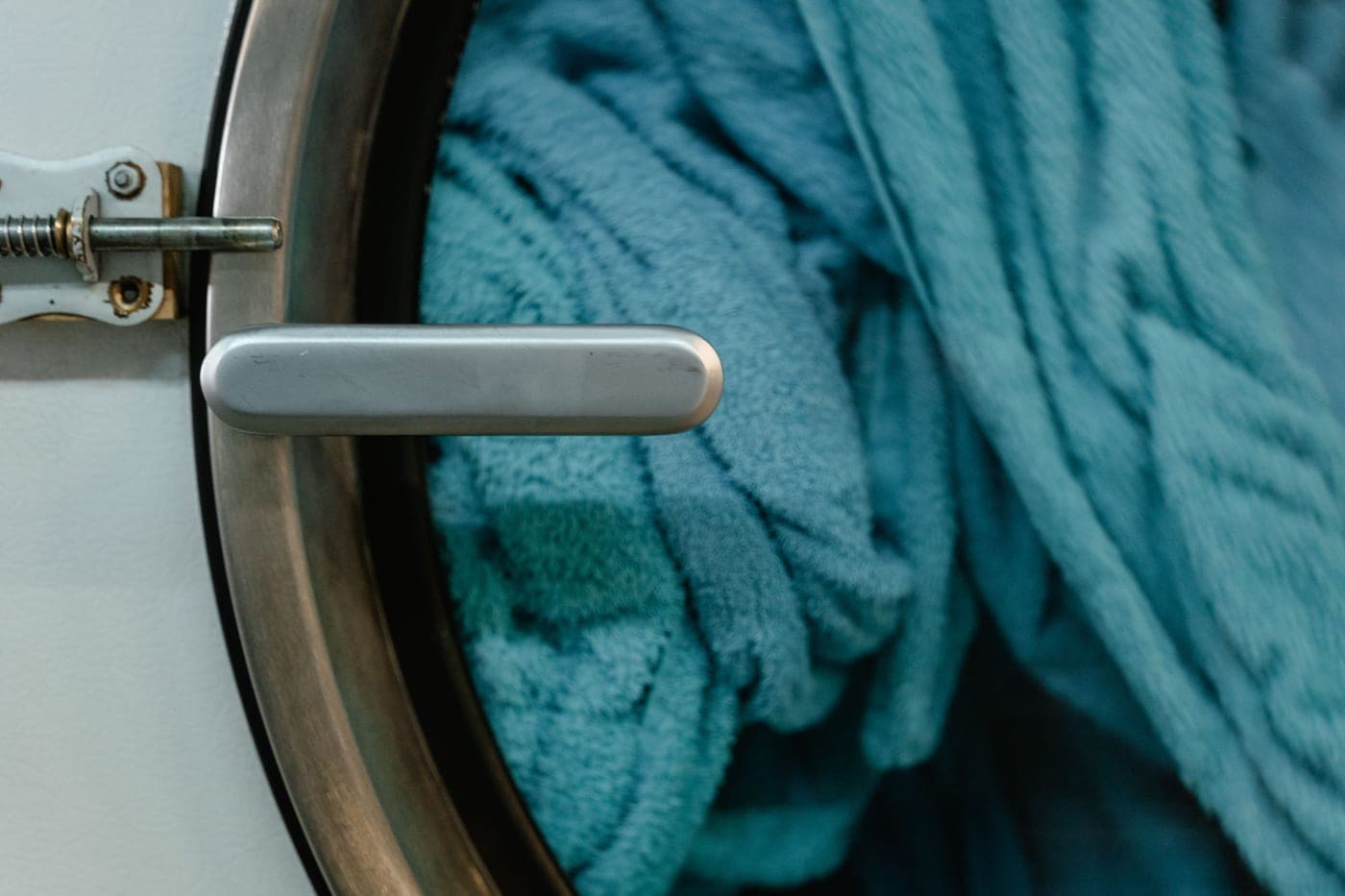
Yes. Acrylic is a synthetic polymer, and published research on machine washing found that synthetic fabrics release large numbers of microfibers per wash - Napper and Thompson (2016) reported that a typical 6kg domestic wash load can release over 700,000 fibers, with acrylic among the highest-shedding fabrics tested. Those studies tested manufactured apparel fabric, not hand-knitted yarn, and we have not found one that tested hand knits.
This question deserves a plain answer rather than a reassuring one, so here it is in full - including the part that is genuinely unresolved.
What acrylic actually is
Acrylic fiber is a synthetic polymer, made from petroleum-derived monomers and extruded into continuous filament, then cut and spun into yarn. It is plastic in the same sense that polyester is plastic. Fibers that break off it are, by definition, microplastic fibers.
That is not a controversial claim and no manufacturer disputes it. The open question is how much a hand-knitted acrylic object sheds, over what timescale, and how that compares with the alternatives.
What the published research measured
The most-cited work here is Napper and Thompson (2016), published in Marine Pollution Bulletin, which washed polyester, polyester-cotton blend and acrylic fabrics under varied domestic conditions and counted the fibers released. Their headline finding was that an average 6kg wash load of synthetic fabric can release over 700,000 fibers in a single wash, with acrylic among the highest shedders in the set.
Later work broadly agrees on the direction while disagreeing on the magnitude, because the numbers depend heavily on fabric construction, wash temperature, detergent and machine type. Published ranges across studies span roughly 9.6 mg to 1,240 mg of fiber per kilogram of textile per wash - a factor of more than a hundred. Fleece and mechanically brushed fabrics shed the most; tightly-woven filament fabrics shed the least.
What we can say with confidence
- Acrylic is a plastic, so any fiber it loses is a microplastic fiber. That much is definitional.
- Synthetic textiles shed substantially during machine washing, in quantities measured in the hundreds of thousands of fibers per wash load.
- Shedding is highest in the first several washes of a new item, then declines.
- Brushed, fleecy and loosely-constructed fabrics shed far more than smooth, tightly-plied ones.
- Tumble drying adds a further, separately-measured release.
What we cannot say
- How much a hand-knitted acrylic blanket sheds. No study we found tested one.
- How acrylic hand knits compare with the natural-fiber alternatives on total environmental impact. Wool has its own footprint - land, methane, scouring effluent - and the comparison is not a single number.
- Whether the shedding from a garment you keep for a decade is significant next to the fast-fashion apparel in the same wash load. It is very likely not, but we have no study that isolates it.
What actually reduces shedding
If this matters to you and you still want to use acrylic - which is a reasonable position - the interventions with support in the literature are unglamorous:
- Wash less often, and only when the item needs it. Every wash is a shedding event. This is the largest single lever and it costs nothing.
- Wash cool and on a shorter, gentler cycle. Agitation and temperature both drive fiber release.
- Fill the machine. A fuller load means less water per garment and less free movement, and studies consistently find lower per-item release.
- Skip the tumble dryer. Drying is a measured, separate source of release.
- Use a filter bag or an in-machine filter. These capture a meaningful fraction; they are not perfect and they are not a license to wash more.
- Choose tightly-plied smooth yarn over brushed or fleecy acrylic. Construction is one of the strongest predictors in the data.
If you want to move away from acrylic
The honest sequence is not 'replace everything'. It is to put natural fiber where it also performs better, and leave acrylic where it genuinely wins. Wool belongs in fitted garments, hats and socks, where it outperforms acrylic on every axis except washability. Acrylic keeps earning its place in blankets that get washed weekly, where wool would felt and superwash wool would cost several times as much.
Acrylic vs wool works the comparison through properly, and upgrading from acrylic is the step-by-step version for someone making the switch. If the concern is specifically what is next to a baby's skin, best yarn for a baby blanket covers the options including the washable wool route.
One thing we will not do is tell you that a wool-acrylic blend solves this. It does not - a blend still sheds its acrylic component. Wool-acrylic blends is honest about what blending does and does not buy you.
If you want to move away from acrylic
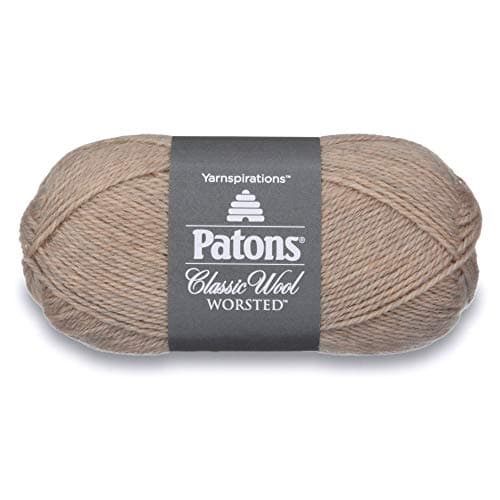
Patons Classic Wool Worsted
100% untreated wool. No synthetic content to shed, and no polymer coating either.
$11.79 - View on Amazon#ad disclosure - price as of October 20, 2026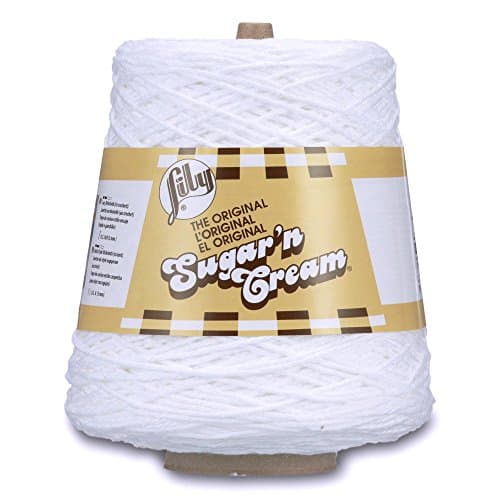
Lily Sugar'n Cream
100% cotton - a plant fiber, and the cheapest way to work with no synthetic at all.
$17.88 - View on Amazon#ad disclosure - price as of October 20, 2026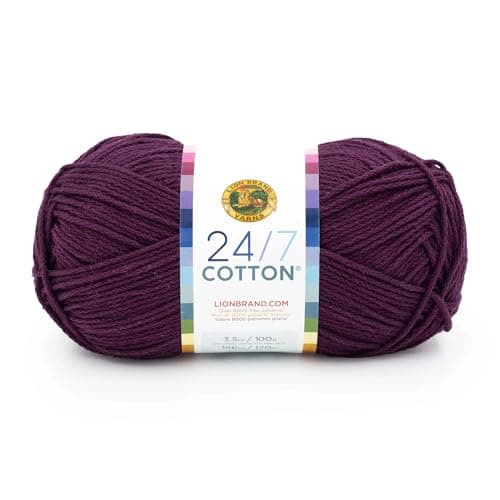
Lion Brand 24/7 Cotton
Mercerized cotton, if you want a smoother, stronger plant fiber than Sugar'n Cream.
$6.99 - View on Amazon#ad disclosure - price as of October 20, 2026
Questions people actually ask
Does acrylic yarn contain microplastics?
Acrylic is itself a plastic - a petroleum-derived synthetic polymer. It does not contain microplastics as a contaminant; fibers shed from it are microplastic fibers.
Does acrylic yarn contain plastic?
Yes. Acrylic fiber is made by extruding a synthetic polymer into filament. It is a plastic fiber in the same way polyester is.
How many microfibers does one wash release?
Published figures vary by more than a hundredfold depending on fabric and conditions. Napper and Thompson (2016) found that a 6kg domestic load of synthetic fabric could release over 700,000 fibers in a single wash.
Does acrylic yarn cause cancer?
We have not found evidence that finished acrylic yarn or fabric poses a cancer risk to the person using it. Acrylonitrile, one of the industrial monomers used to make the fiber, is classified as a workplace hazard - that is an occupational exposure question in manufacturing, not a property of the finished yarn in your hands.
Is a wool-acrylic blend better for microplastic shedding?
Somewhat, in proportion to how much acrylic it contains - but it still sheds acrylic. A blend reduces the synthetic fraction; it does not remove it.
Does a washing machine filter stop microfiber release?
It captures a meaningful fraction, not all of it. Filter bags and in-machine filters are worth using, and they work best alongside washing less often and washing cooler rather than instead of it.
Sources
- Napper & Thompson (2016), Marine Pollution Bulletin 112:39-45 - synthetic microplastic fiber release from domestic washing machines
- Domestic laundry and microfiber pollution: exploring fiber shedding from consumer apparel textiles, PLOS ONE
- Environmental Science and Pollution Research - quantifying synthetic fiber shedding from textiles as a source of environmental microplastics