Reference
Wraps Per Inch Explained
The method is exact. The tables people publish for it are not, and there is a better way to use it.
By Sawyer V. · Published September 12, 2026
Disclosure: we earn a commission when you buy through the links on this page, at no extra cost to you. It never decides what we recommend or how we rank it - read the full disclosure.

The short answer
Wrap the yarn around a ruler in a single layer with the strands touching but not squashed, count how many wraps fill one inch, and that number is the wraps per inch. More wraps means finer yarn. Use it to compare a mystery yarn against a yarn you already own and know rather than against a published table, because published WPI bands disagree with each other and the Craft Yarn Council standard does not define them at all.
The method
- Find something straight with a known inch. A ruler, a pencil marked at an inch, or a purpose-made WPI gauge.
- Wrap the yarn around it in a single layer, each wrap touching its neighbor.
- Do not pull it tight. Compressing a lofty yarn makes it read finer than it is - this is the single biggest source of error.
- Do not leave gaps either. Touching, not squashed.
- Count the wraps across one inch. Measure in the middle of the wrapped section, not at the end.
- Do it three times in different places along the yarn and take the middle figure.
Why we do not publish a WPI-to-weight table
You will find WPI tables everywhere, and they do not agree with each other. The reason is structural rather than sloppy.
- The Craft Yarn Council standard does not define WPI. Its weight system is built on knitted gauge over 4 inches, not on yarn diameter.
- Loft varies enormously at the same diameter. A woolen-spun single and a firmly plied yarn can wrap identically and knit completely differently.
- How hard you wrap changes the answer, and there is no standard wrapping tension.
- The bands overlap in every published version, which means any given number sits in two categories.
We are not going to print a table we cannot source to a standards body, because the whole point of this site is not inventing numbers. What we can give you is a better method.
The comparison method, which is reliable
Instead of measuring your mystery yarn and looking the number up, measure it and measure a yarn you already own and have a ball band for. Compare the two numbers directly.
- Take a yarn with a known weight category from your own stash - a labeled worsted, DK or fingering.
- Wrap both on the same ruler, at the same tension, on the same day.
- Compare. If the mystery yarn wraps the same number of times as your known worsted, it is a worsted-ish yarn.
- Confirm with a swatch. WPI narrows it to one or two categories; gauge settles it.
This removes every problem with published tables at once, because you are measuring both yarns with the same ruler, the same hands and the same tension. It is the version of the method that actually works.
Reference yarns to keep for this
| Yarn | CYC weight | Published knit gauge |
|---|---|---|
| Patons Kroy Socks | 1 Super Fine | 32 sts x 40 rows on 2.75mm |
| Lion Brand Truboo | 3 Light / DK | 23 sts x 32 rows on 4mm |
| Cascade 220 Superwash Merino | DK to light worsted | Published as DK to light worsted |
| Red Heart Super Saver | 4 Medium | 17 sts x 23 rows on 5mm |
| Bernat Blanket | 6 Super Bulky | Super bulky; 108yd per 150g |
Keep a short length of two or three of these taped to a card. It turns every future mystery skein into a two-minute job. The full weight bands are on the yarn weight chart.
What WPI cannot tell you
- Fiber content. A burn test can indicate it; wrapping cannot.
- Yardage. Weigh the ball and compare against a known yards-per-gram, or measure a length and weigh that.
- How it will knit. Loft, ply and twist all change the fabric at the same diameter.
- Whether it is superwash. Nothing visible will tell you this, and it changes the care label completely.
For the rest of the identification job - yardage by weight, and what the fiber is likely to be - see yarn substitution and how to read a yarn label.
Working out yardage without a label
- Measure a known length - a yard, or a meter - and cut it.
- Weigh it on a kitchen scale that reads to a gram, or to 0.1g if you have one.
- Weigh the whole ball.
- Divide. Ball weight divided by sample weight, times the sample length, gives total yardage.
- Round down, and buy a margin.
That arithmetic is exact, unlike the WPI lookup, and it is what you actually need before starting a project. How much yarn do I need takes it from there.
Then swatch
Wraps per inch narrows an unknown yarn to a category or two. A swatch tells you what it does on your needles in your hands, which is the number a pattern actually cares about.
Wrap first because it takes two minutes and tells you roughly which needle to reach for. Swatch second because it is the only thing that settles it - knitting gauge and swatching has the method.
What identifying a mystery yarn needs
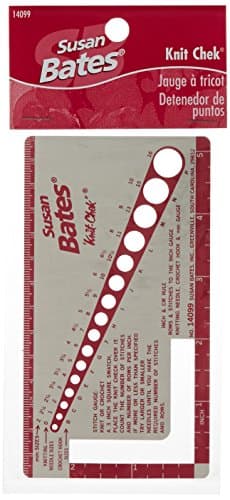
Susan Bates Knit-Chek Needle Gauge
Measures US 0 / B-1 to P-16 (2.0mm to 11.5mm) and does stitch and row gauge, 5.5 x 3in. The tool for an unmarked needle as well as an unmarked yarn.
$7.99 - View on Amazon$9.9820% off · #ad disclosure - price as of September 21, 2026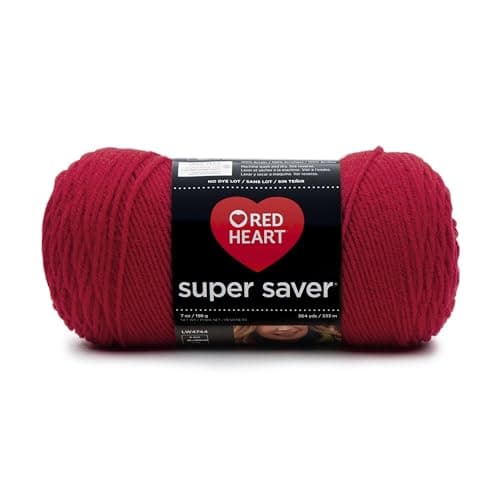
Red Heart Super Saver
A known worsted to compare against: 100% acrylic, 364yd per 198g, 17 sts x 23 rows on 5mm.
$4.18 - View on Amazon#ad disclosure - price as of September 21, 2026
Cascade 220 Superwash Merino
A known DK to light worsted: 100% superwash merino, 220yd per 100g.
$21.00 - View on Amazon#ad disclosure - price as of September 21, 2026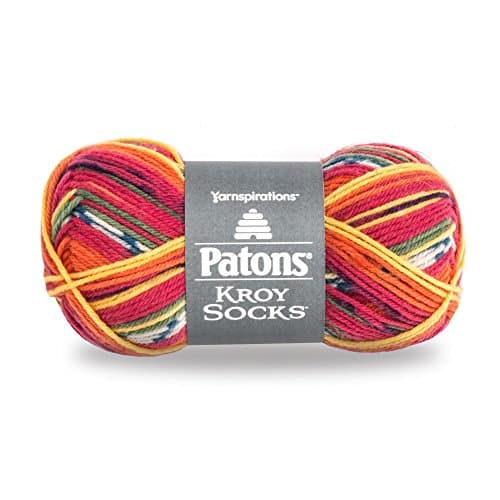
Patons Kroy Socks
A known fingering: 75% washable wool, 25% nylon, 166yd per 50g, 32 sts x 40 rows on 2.75mm.
$9.79 - View on Amazon#ad disclosure - price as of September 21, 2026
Questions people actually ask
How do you measure wraps per inch?
Wrap the yarn around a ruler in a single layer with the strands touching but not compressed, count the wraps across one inch measured in the middle of the section, and repeat three times taking the middle figure. Pulling tight is the biggest source of error.
What is a good WPI for worsted weight yarn?
Published tables disagree, and the Craft Yarn Council standard does not define WPI at all - its system is built on knitted gauge, not yarn diameter. Rather than looking a number up, wrap a labeled worsted from your own stash on the same ruler and compare the two directly.
Why do WPI charts disagree with each other?
Because there is no standard wrapping tension, loft varies hugely between yarns of the same diameter, and the published bands overlap. Two yarns that wrap identically can knit completely differently.
Can wraps per inch tell me the fiber content?
No. WPI measures diameter only. It cannot tell you the fiber, the yardage, whether the yarn is superwash, or how it will behave once knitted.
How do I work out the yardage of an unlabeled ball?
Cut a known length, weigh it, weigh the whole ball, then divide the ball weight by the sample weight and multiply by the sample length. That arithmetic is exact - unlike a WPI lookup - and it is what you need before starting a project.
Sources
- Susan Bates Knit-Chek 14099 - retail specification
- Yarnspirations - Red Heart Super Saver specification
- Cascade Yarns - 220 Superwash Merino specification
- Yarnspirations - Patons Kroy Socks specification
- Lion Brand - Truboo specification
- Yarnspirations - Bernat Blanket specification
- Craft Yarn Council - Standard Yarn Weight System